


Developing Staff Retention Strategies To Reduce Turnover Rate Powerpoint Presentation Slides





Try Before you Buy Download Free Sample Product
 Impress Your
 Audience
 100%
100% Editable
 Save Hours
 of Time


Retaining the best employees is still one of the organizations biggest challenges, and a lower staff retention rate can significantly reduce the companys sales and profit. Check out our professionally designed Developing Staff Retention Strategies to Reduce Turnover Rate PowerPoint Presentation, which includes the current organization scenario and a complete employee retention program. The Purpose of this deck is to reduce the employee turnover rate, and improve employee satisfaction, productivity, and customer experience rate. It exhibits the major retention strategies that will assist corporates in boosting employee job satisfaction and creating a positive work environment. This PPT covers the Training and development programs, employee health and well-being, work-life balance, and monetary and non-monetary incentives. Additionally, it includes a section on different tools through which human resource managers can boost employee productivity, addressing the challenges managers face in retaining staff and its solutions. At last, through key performance indicators KPI metrics and dashboards, HR managers can analyze the success of retention strategies on employee performance. Get access now.
People who downloaded this PowerPoint presentation also viewed the following :
Content of this Powerpoint Presentation
Slide 1: This slide introduces Developing Staff Retention Strategies to Reduce Turnover Rate. Commence by stating Your Company Name.
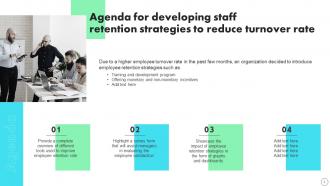
Slide 2: This slide depicts the Agenda of the presentation.
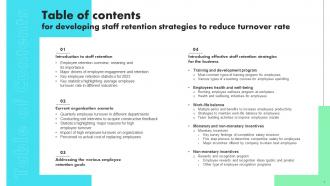
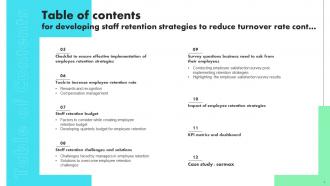
Slide 3: This slide incorporates the Table Of Contents.
Slide 4: This is yet another slide continuing the Table Of Contents.
Slide 5: This slide showcases the Title for the Topic to be discussed in the upcoming template.
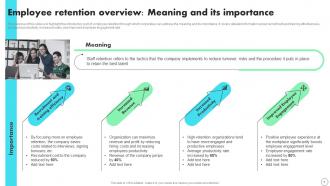
Slide 6: This slide gives a glimpse about the Employee retention overview showing it's Meaning and its importance.
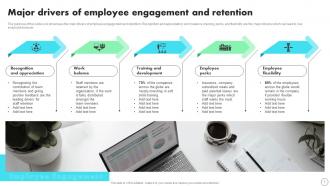
Slide 7: This slide reveals the Major drivers of employee engagement and retention.
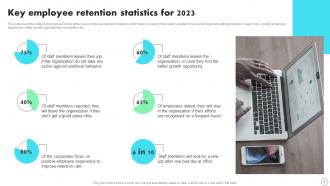
Slide 8: This slide elucidates the Key employee retention statistics for 2023.
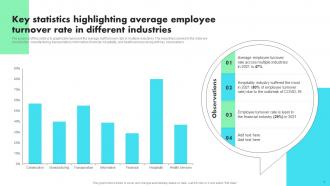
Slide 9: This slide contains the Key statistics highlighting average employee turnover rate in different industries.
Slide 10: This slide reveals the Heading for the Contents to be discussed further.
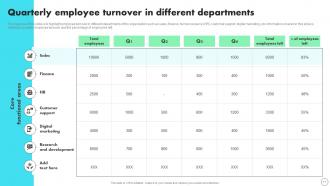
Slide 11: This slide elucidates the Quarterly employee turnover in different departments.
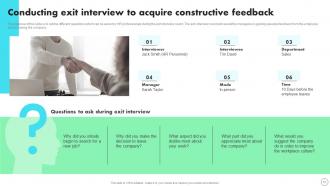
Slide 12: This slide displays the Conduction of exit interview to acquire constructive feedback.
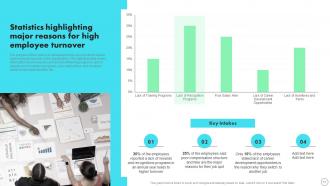
Slide 13: This slide illustrates the Statistics highlighting major reasons for high employee turnover.
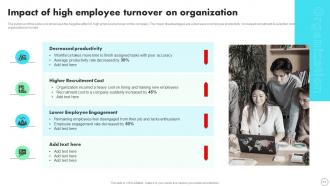
Slide 14: This slide showcases the Impact of high employee turnover on organization.
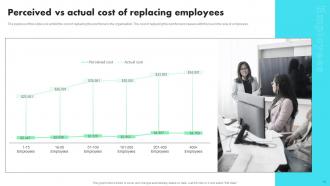
Slide 15: This slide compares Perceived and actual cost of replacing employees.
Slide 16: This slide contains the Heading for the Contents to be covered next.
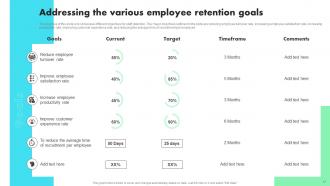
Slide 17: This slide deals with Addressing the various employee retention goals.
Slide 18: This slide depicts the Title for the Topics to be covered in the next template.
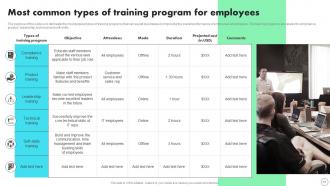
Slide 19: This slide presents the Most common types of training program for employees.
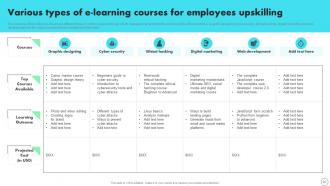
Slide 20: This slide exhibits the Various types of e-learning courses for employees upskilling.
Slide 21: This slide includes the Title for the Topics to be discussed further.
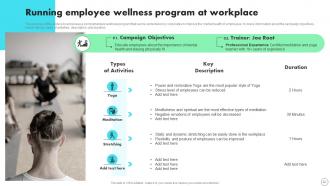
Slide 22: This slide elucidates Running employee wellness program at workplace.
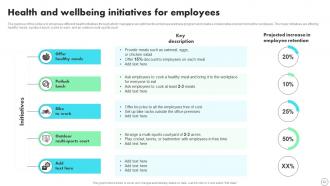
Slide 23: This slide highlights the Health and wellbeing initiatives for employees.
Slide 24: This slide displays the Heading for the Topics to be discussed in the forth-coming template.
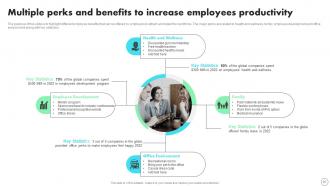
Slide 25: This slide focuses on Multiple perks and benefits to increase employees productivity.
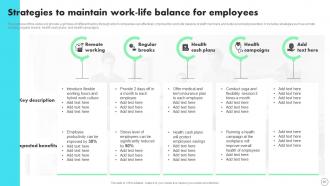
Slide 26: This slide shows the Strategies to maintain work-life balance for employees.
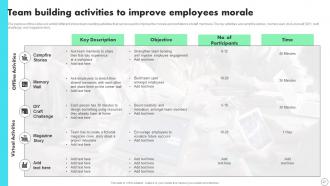
Slide 27: This slide provides information about Team building activities to improve employees morale.
Slide 28: This slide reveals the Heading for the Contents to be discussed further.
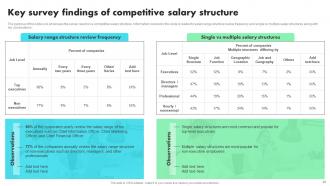
Slide 29: This slide illustrates the Key survey findings of competitive salary structure.
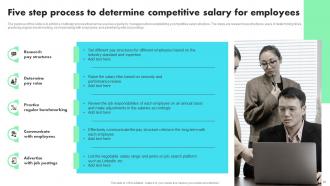
Slide 30: This slide includes Five step process to determine competitive salary for employees.
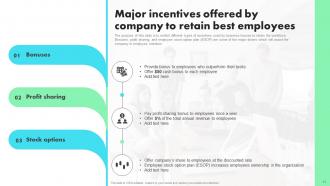
Slide 31: This slide showcases the Major incentives offered by company to retain best employees.
Slide 32: This slide incorporates the Title for the Ideas to be discussed next.
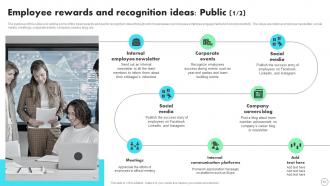
Slide 33: This slide elucidates the Employee rewards and Public recognition ideas.
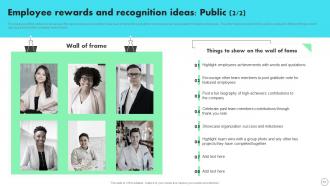
Slide 34: This is another slide continuing the Employeerewards and Public recognition ideas.
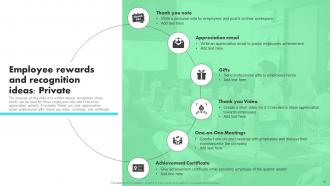
Slide 35: This slide highlights the Private Employee rewards and recognition ideas.
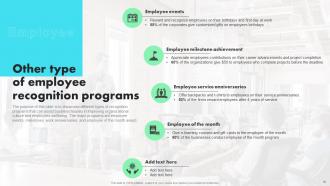
Slide 36: This slide deals with the Other type of employee recognition programs.
Slide 37: This slide contains the Heading for the Contents to be discussed further.
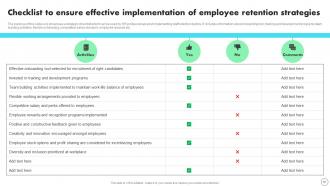
Slide 38: This slide exhibits the Checklist to ensure effective implementation of employee retention strategies.
Slide 39: This slide shows the Title for the Topics to be covered in the upcoming slide.
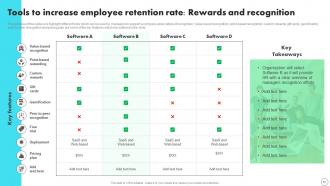
Slide 40: This slide reveals the Tools to increase employee retention rate through Rewards and Recognition.
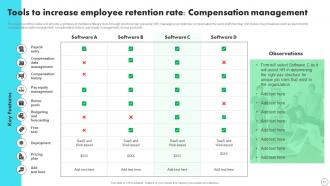
Slide 41: This slide represents the Tools to increase employee retention rate by Compensation management.
Slide 42: This slide exhibits the Title for the Topics to be discussed further.
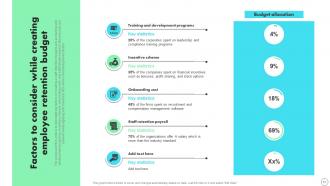
Slide 43: This slide emphasizes on the Factors to consider while creating employee retention budget.
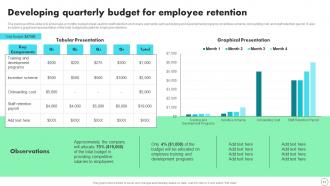
Slide 44: This slide covers the Development of quarterly budget for employee retention.
Slide 45: This slide includes the Title for the Ideas to be discussed further.
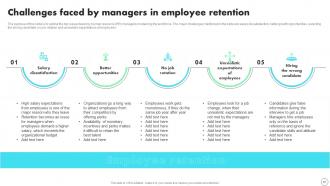
Slide 46: This slide deals with the Challenges faced by managers in employee retention.
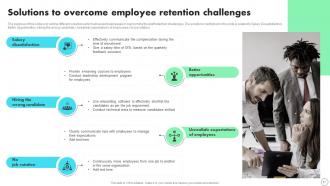
Slide 47: This slide focuses on the Solutions to overcome employee retention challenges.
Slide 48: This slide incorporates the Heading for the Topics to be covered in the next slide.
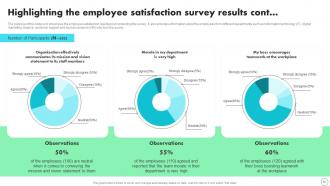
Slide 49: This slide highlights the Conduction of employee satisfaction survey post implementing retention strategies.
Slide 50: This is the continuation of Highlighting the Conduction of employee satisfaction survey post implementing retention strategies.
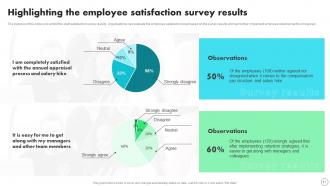
Slide 51: This slide illustrates the Highlightedthe employee satisfaction survey results.
Slide 52: This slide contains the Title for the Ideas to be discussed in the upcoming template.
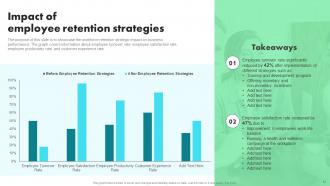
Slide 53: This slide includes the Impact of employee retention strategies.
Slide 54: This slide depicts the Title for the Ideas to be discussed further.
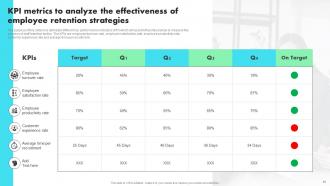
Slide 55: This slide elucidates the KPI metrics to analyze the effectiveness of employee retention strategies.
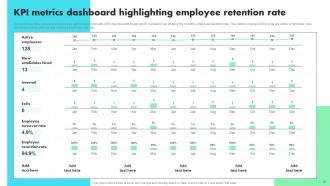
Slide 56: This slide exhibits the KPI metrics dashboard highlighting employee retention rate.
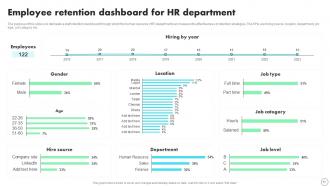
Slide 57: This slide showcases the Employee retention dashboard for HR department.
Slide 58: This slide reveals the Title for the Contents to be covered next.
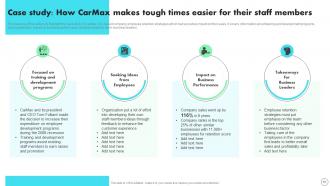
Slide 59: This slide represents the Case study of How CarMax makes tough times easier for their staff members.
Slide 60: This is the Icons slide containing all the Icons used in the plan.
Slide 61: This slide is titled as Additional slides for providing some extra information.
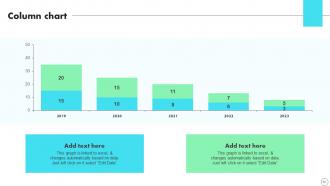
Slide 62: This is the Column chart slide for comparison.
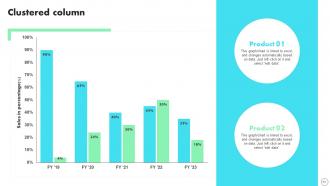
Slide 63: This slide represents the Clustered column for revealing some vital information.
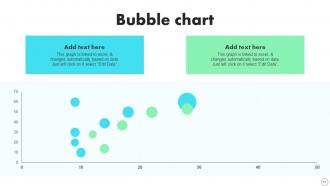
Slide 64: This is the Bubble chart with related imagery.
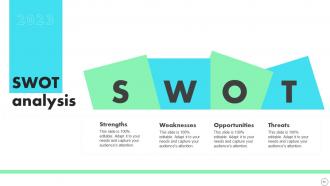
Slide 65: This slide depicts the SWOT analysis.
Slide 66: This is Meet our team slide. State the information about the team members here.
Slide 67: This is Our mission slide for stating the Organization's Vision, Mission and Goals.
Slide 68: This is the Timeline slide showcasing Company information with respect to the time period.
Slide 69: This is the About us slide for stating Organization's information.
Slide 70: This slide displays the Venn diagram for Company related information.
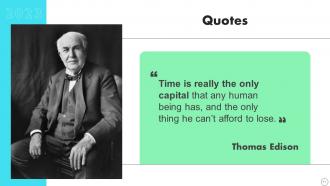
Slide 71: This is the Quotes slide for inspiration.
Slide 72: This is the Thank You slide for acknowledgement.
Developing Staff Retention Strategies To Reduce Turnover Rate Powerpoint Presentation Slides with all 77 slides:
Use our Developing Staff Retention Strategies To Reduce Turnover Rate Powerpoint Presentation Slides to effectively help you save your valuable time. They are readymade to fit into any presentation structure.










FAQs for Developing Staff Retention Strategies To Reduce Turnover Rate
Key factors influencing employee retention include competitive compensation, flexible work arrangements, career development opportunities, strong management relationships, and meaningful work alignment with personal values. These elements work together to create engaging workplace cultures, with many organizations finding that employees increasingly prioritize work-life balance, professional growth pathways, and recognition programs that ultimately deliver higher satisfaction and reduced turnover rates.
Organizations can assess staff turnover rates by calculating monthly and annual departure percentages, conducting exit interviews, analyzing turnover by department and role level, and benchmarking against industry standards. Through comprehensive data analysis, companies identify patterns in voluntary versus involuntary departures, seasonal trends, and cost impacts per position, ultimately enabling targeted retention strategies that address specific organizational vulnerabilities and enhance workforce stability.
Company culture serves as the foundation for talent retention by creating an environment where employees feel valued, aligned with organizational values, and motivated to contribute long-term. A strong culture fosters engagement, career development, and work-life balance, with many organizations finding that employees who connect with company values show significantly higher retention rates, ultimately delivering reduced turnover costs and sustained competitive advantage.
Training and development programs improve staff retention by enhancing employee skills, creating clear career advancement pathways, and demonstrating organizational investment in personnel growth. These strategic initiatives enable companies to build internal talent pipelines, reduce recruitment costs, and boost employee engagement, with many organizations finding that comprehensive development programs significantly decrease turnover while strengthening competitive advantage.
**INPUT**: What are the best practices for onboarding that enhance long-term employee commitment? **OUTPUT**: Effective onboarding practices include structured orientation programs, mentorship assignments, clear role expectations, cultural integration activities, and regular feedback sessions. These approaches enhance commitment by creating meaningful connections, reducing early-stage anxiety, and demonstrating organizational investment, with many companies finding that comprehensive onboarding ultimately delivers higher retention rates and stronger employee engagement. **Word count**: 55 words
Flexible work arrangements enhance employee loyalty by improving work-life balance, reducing commute stress, and accommodating personal responsibilities. These arrangements enable organizations to attract top talent, decrease turnover costs, and boost productivity, with many companies finding that remote and hybrid options ultimately deliver higher engagement and competitive advantage in today's increasingly flexible workforce landscape.
Employee recognition significantly improves retention by boosting morale, increasing job satisfaction, reducing turnover intentions, and strengthening emotional connection to the organization. Through personalized acknowledgment programs, companies across healthcare, retail, and financial services enhance productivity, reduce recruitment costs, and create competitive workplace cultures, with many organizations finding that consistent recognition delivers measurably higher engagement scores.
Exit interviews provide actionable insights by revealing patterns in departure reasons, identifying management issues, uncovering compensation gaps, and highlighting workplace culture concerns that drive turnover. Through structured conversations with departing employees, organizations can pinpoint specific departmental challenges, training deficiencies, and career development gaps, ultimately enabling targeted retention improvements that address root causes rather than symptoms.
The most effective ways to promote internal mobility include creating clear career pathways, implementing mentorship programs, offering cross-departmental rotations, providing skill development opportunities, and maintaining transparent job posting systems. These strategies enhance employee engagement and retention by enabling professional growth, reducing recruitment costs, and building institutional knowledge, with many organizations finding that structured mobility programs significantly improve workforce satisfaction and operational continuity.
Leadership style significantly impacts employee satisfaction and retention through communication approaches, decision-making processes, recognition practices, and team development methods. Transformational leaders who provide clear direction, regular feedback, and growth opportunities see higher engagement rates, while supportive leadership styles in sectors like healthcare and technology deliver improved job satisfaction, reduced turnover costs, and ultimately stronger organizational performance.
Mentorship programs enhance staff retention by fostering professional development, creating stronger workplace relationships, and providing clear career advancement pathways. These programs streamline knowledge transfer while building employee engagement, with many organizations finding that structured mentoring reduces turnover by up to 50%, ultimately delivering improved job satisfaction and competitive talent retention advantages.
Employee feedback mechanisms minimize turnover by identifying retention risks early, addressing workplace concerns proactively, and creating transparent communication channels that build trust. Through regular pulse surveys, exit interviews, and open-door policies, organizations enhance job satisfaction, streamline management responses, and foster engagement, with many companies finding that systematic feedback collection reduces turnover by 25-40%.
Competitive compensation and benefits significantly enhance staff loyalty by demonstrating organizational value for employees, reducing turnover intentions, creating financial security, and fostering long-term commitment. Companies offering comprehensive packages, including healthcare, retirement plans, and performance bonuses, often find that employees become more engaged and productive, ultimately delivering lower recruitment costs and stronger organizational stability in increasingly competitive talent markets.
Small businesses can enhance retention through personalized career development, flexible work arrangements, competitive compensation packages, strong company culture initiatives, and direct leadership accessibility. While larger organizations offer extensive resources, small businesses deliver more intimate work environments, faster decision-making, and greater individual impact visibility, with many employees finding these personal connections and growth opportunities ultimately more fulfilling than corporate bureaucracy.
Diversity and inclusion initiatives support workforce commitment by creating psychological safety, fostering belonging, reducing turnover through equitable opportunities, and enhancing employee engagement across all demographics. These programs enable organizations to leverage diverse perspectives, improve decision-making, and build stronger team cohesion, with many companies finding that inclusive cultures ultimately deliver higher retention rates and competitive talent advantage.
-
Fantastic collection. Loved how we can personalize these templates as per the requirements.
-
I have just started downloading templates for my presentations and I must say this is a great design. It helped accelerate my presentation design process and made it more visually appealing.