


Devops infinity loop example ppt presentation




Try Before you Buy Download Free Sample Product
 Impress Your
 Audience
 100%
100% Editable
 Save Hours
 of Time


Devops infinity loop example ppt presentation is a very useful tool that can help organizations to streamline their operations and improve their efficiency. Devops infinity loop example ppt presentation can help you to understand the Devops concepts better and apply them in your organization to achieve better results. Devops infinity loop example ppt presentation can also help you to learn about the best practices in Devops and how to implement them in your organization. Devops infinity loop example ppt presentation is a very powerful tool that can help organizations to improve their performance and efficiency. So if these are your goals, then these ppts are for you.
People who downloaded this PowerPoint presentation also viewed the following :
Devops infinity loop example ppt presentation with all 5 slides:
Use our Devops Infinity Loop Example Ppt Presentation to effectively help you save your valuable time. They are readymade to fit into any presentation structure.




FAQs for Devops infinity loop
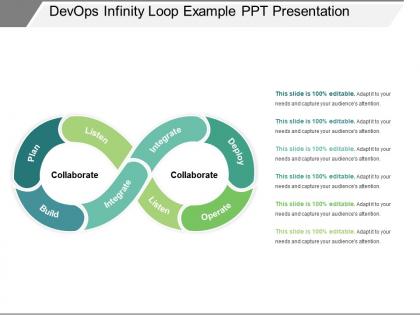
So basically you've got 8 stages that keep cycling: Plan, Code, Build, Test, Release, Deploy, Operate, Monitor. Developers write the code after planning, then you build and test everything. Once it's deployed to production, you're operating and watching how it performs. Here's the thing though - monitoring results loop back to inform your next planning phase, which is why they call it an infinity loop instead of just steps 1-8. The magic happens when handoffs between stages are smooth. Actually, that's probably where most teams struggle initially. Each stage feeds into the next one continuously.
So basically the Infinity Loop gets rid of those annoying silos where dev and ops barely talk. Instead of passing stuff back and forth, they work together throughout everything - ops jumps into planning early, devs actually stick around for monitoring. Way less blame game when things break! Everyone's using the same tools and metrics too, which honestly makes such a difference. The feedback happens constantly instead of that whole "throw code over the wall" thing. Oh and here's a super easy first step - just have your dev and ops people sit in on each other's standups. Sounds simple but it changes everything.
So CI basically lives in the build and test parts of DevOps, but it kinda touches everything else too. Every time you commit code, it automatically kicks off builds and runs your tests - then feeds right into your deployment pipeline. Think of it as the thing that keeps code moving smoothly from dev to production. The real win? You get instant feedback when stuff breaks instead of finding out weeks later during a deploy (been there, not fun). Just set it up to run on every commit and you'll catch problems early before they turn into disasters.
So basically track metrics at each part of the DevOps loop - deployment frequency, lead time, failure rates for dev stuff. Then uptime and user satisfaction on the ops side. The cycle time from idea to production is huge to watch. Also look at how fast you recover from incidents and whether you're cutting down on manual handoffs between teams. Honestly, the best indicator is how quickly you're getting user feedback and actually doing something with it. That's when you know your DevOps setup is really working - not just moving fast but moving smart, you know?
So for planning, Jira or Azure Boards work great. Git's obviously essential for version control, plus whatever IDE you prefer. CI/CD is where I'd go with Jenkins, GitLab CI, or GitHub Actions - seriously though, just pick one and get good at it instead of bouncing between them. You'll save yourself so much headache. Monitoring tools like Prometheus with Grafana are solid, or New Relic if you want something simpler. The real trick isn't finding the "perfect" tool for each step, but making sure everything actually plays nice together. Integration beats perfection every time.
Honestly, feedback is what makes DevOps actually work instead of just looking good on paper. Pull data from monitoring, user behavior, performance stuff - whatever tells you if things are going well or totally sideways. Otherwise you're just throwing features out there and crossing your fingers (spoiler: that never ends well). The trick is automating these feedback loops everywhere so you can change course fast when needed. I always tell people to figure out what metrics your users and business actually care about first - then build dashboards that are so obvious you can't ignore the data when it's screaming at you.
Honestly, the biggest pain is usually people being weird about their turf. Your devs won't want to deal with production headaches, and ops teams hate giving up control over deployments - it's like asking parents to share custody or something. Tool integration is absolutely brutal too. Getting CI/CD, monitoring, and all that stuff to play nice together? Way harder than anyone tells you upfront. Oh, and good luck getting teams to agree on what success even looks like when you're trying to measure results. My advice? Pick one small team first. Prove it works, then expand from there.
Dude, automation just cuts out all the manual stuff that bogs down your DevOps pipeline. Your code flies through way faster - like hours instead of weeks. Testing, deployments, monitoring - automate it all and you won't have people screwing things up at every step. The cool part is when everything triggers automatically, like auto-deploying after tests pass. Honestly, I'd start with whatever takes you the longest to do manually. You'll notice the difference right away. Oh, and your team will actually thank you for not having to babysit deployments anymore.
Think of monitoring as your safety net - it tells you what's *actually* happening with your apps, not what you hoped would happen. Real-time data on system health and user experience means you can catch problems before users start complaining (trust me, that's way better). Honestly, I've seen too many teams skip this step and then wonder why everything crashes at 2am. The cool part is how it feeds back into your dev cycle - you spot issues, fix them, deploy better code. Just focus on metrics that actually help your team make decisions, not the flashy ones that just look good in meetings.
Dude, it's all connected - change one thing and everything else has to adjust. Your dev team switches frameworks or changes how they deploy? Ops suddenly needs different monitoring tools, new infrastructure setup, the whole nine yards. Think of it like dominoes falling. The trick is getting everyone talking *before* stuff goes live, not scrambling after. I've seen teams get burned by this so many times. Dev makes changes in isolation, then ops finds out when things break at 2am. Communication is everything here - ops needs a heads up so they can prep their tools and processes. Otherwise you're just setting yourself up for chaos.
So basically you want security baked into every step of your DevOps process, not just slapped on afterward. I'd start by adding at least one automated security check to whatever pipeline you're already running. The "shift left" approach means catching problems during builds and CI/CD - way better than dealing with them in production (seriously, those late-night emergency calls are the worst). Infrastructure as code helps keep everything consistently secure. Oh, and continuous monitoring is huge once stuff goes live. The whole idea is finding issues early when they're actually manageable to fix.
Yeah totally! The DevOps loop works for way more than just software stuff. Marketing teams use it all the time - plan campaign, create content, test it out, launch, then see how it performs and adjust. Same with product launches or honestly even HR workflows. What you need to do is figure out what "deploying" means for your project (like publishing content or rolling out a new process), then what monitoring looks like. Content creators are probably the best example I've seen - they're constantly putting stuff out there and tweaking based on feedback. Just map your specific steps to each phase and you're good to go.
Dude, culture will absolutely make or break your DevOps efforts. That whole "throw it over the wall" thing between dev and ops? Yeah, that's gotta go first. People need to feel safe screwing up - sounds weird but trust me on this. Leadership has to actually do what they preach about collaboration, not just talk about it in meetings. I've watched blame games destroy entire projects. It's brutal. Teams won't give honest feedback if they think they'll get thrown under the bus. You really need that trust built up before any of the continuous improvement stuff works. Honestly? Figure out your worst cultural problems and fix those before you even think about new tools.
Honestly, automation is your best friend here - testing, deployments, all that stuff should run without you babysitting it. Teams need to actually talk to each other too. I've watched so many projects crash because ops spots problems but dev doesn't find out until way later. Super frustrating. Make sure you're tracking metrics that matter at each step, then do something about what they tell you. Short feedback loops between everyone will save your sanity. Oh, and run regular retrospectives to catch those annoying bottlenecks before they completely derail everything.
Keep your feedback loops tight and actually useful - don't just track random metrics. Set up alerts for stuff that matters, like when deployments fail or recovery takes forever. Most teams drown in data they never look at anyway. Pick maybe 3-5 things you'll actually check weekly and do something about. Monthly reviews are honestly too slow. Make sure someone owns each metric and can fix problems when they pop up. Focus on what hits users or revenue directly. Oh, and automated monitoring beats manual checking every time - saves you from staring at dashboards all day.
-
Very unique, user-friendly presentation interface.
-
Very unique and reliable designs.