


Digital Advancement Playbook Powerpoint Presentation Slides





Try Before you Buy Download Free Sample Product
 Impress Your
 Audience
 100%
100% Editable
 Save Hours
 of Time


The Digital advancement playbook is an all-encompassing guide for policy makers and companies who are embarking on a digital transformation journey. It emphasizes the importance of digital transformation and its associated benefits, along with the major focus areas of the process. The digital services presentation also provides guiding principles for successful digital transformation and pre-considerations that are essential for project redesign. The agile product development process is then explored, covering the principles associated with agile software management, key steps involved in the agile software development lifecycle, and the core members associated with an agile team. Furthermore, the digital transformation deck outlines digital services plays for product development, including developing services through agile and iterative practices, selecting a modern technology stack, and administering security and privacy through reusable procedures. At last, the playbook concludes with a section on managing IT services spending tracking dashboard. Get access now to this comprehensive guide that will help you successfully navigate the digital transformation journey.
People who downloaded this PowerPoint presentation also viewed the following :
Content of this Powerpoint Presentation
Slide 1: This slide introduces Digital advancement playbook. Commence by stating Your Company Name.
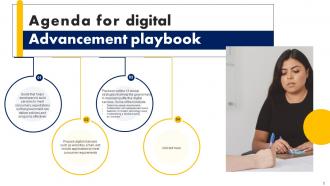
Slide 2: This slide depicts the Agenda of the presentation.
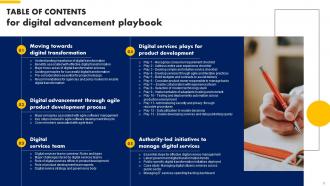
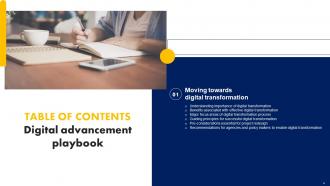
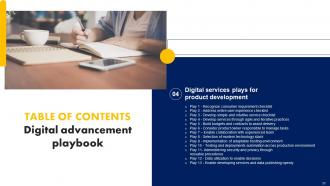
Slide 3: This slide incorporates the Table of contents.
Slide 4: This slide highlights the Title for the Topics to be covered next.
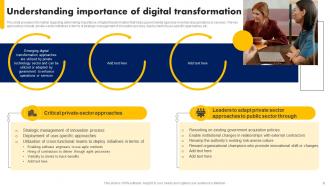
Slide 5: This slide focuses on Understanding importance of digital transformation.
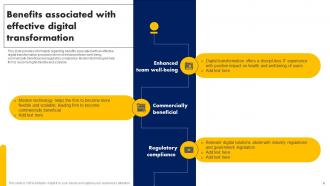
Slide 6: This slide exhibits the Benefits associated with effective digital transformation.
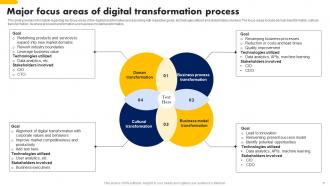
Slide 7: This slide showcases the Major focus areas of digital transformation process.
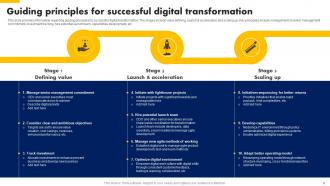
Slide 8: This slide deals with the Guiding principles for successful digital transformation.
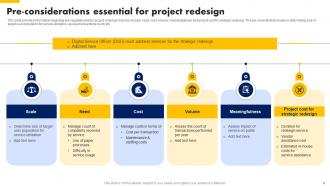
Slide 9: This slide highlights the Pre-considerations essential for project redesign.
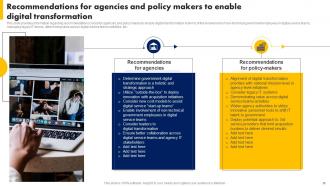
Slide 10: This slide portrays the Recommendations for agencies and policy makers to enable digital transformation.
Slide 11: This slide indicates the Heading for the Contents to be discussed next.
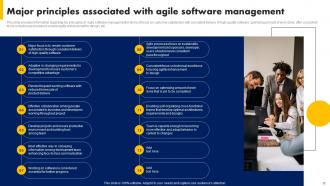
Slide 12: This slide provides information regarding key principles of Agile software management.
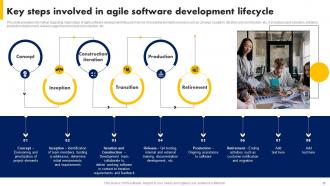
Slide 13: This slide provides information about the Key steps involved in agile software development lifecycle.
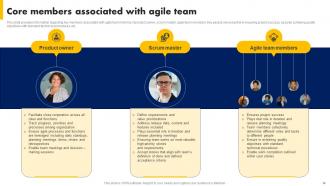
Slide 14: This slide shows the Core members associated with agile team.
Slide 15: This slide presents the Title for the Ideas to be covered in the next template.
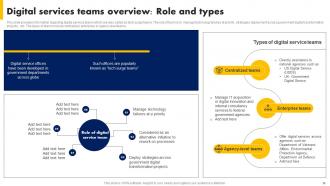
Slide 16: This slide provides information regarding digital services teams which are also called as tech surge teams.
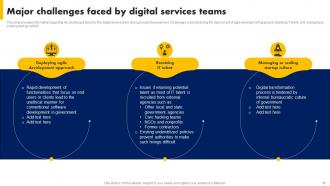
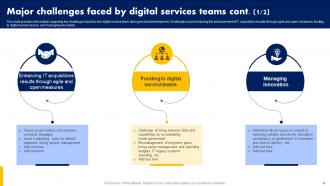
Slide 17: This slide exhibits the Major challenges faced by digital services teams.
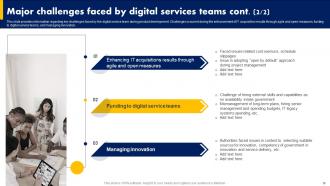
Slide 18: This slide continues the Major challenges faced by digital services teams.
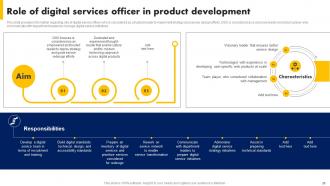
Slide 19: This slide highlights the Role of digital services officer in product development.
Slide 20: This slide portrays the Role of product development team experts.
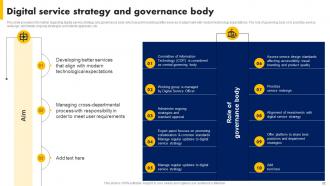
Slide 21: This slide talks about the Digital service strategy and governance body.
Slide 22: This slide includes the Heading for the Ideas to be discussed further.
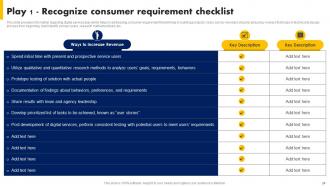
Slide 23: This slide deals with addressing consumer requirement that will help in building products.
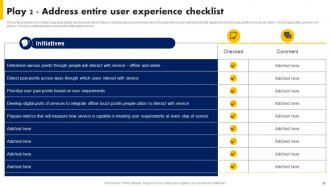
Slide 24: This slide focuses on addressing consumer experience.
Slide 25: This slide highlights developing simple and intuitive service checklist.
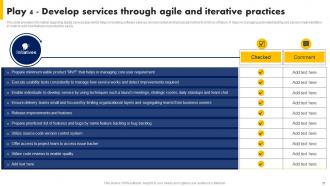
Slide 26: This slide presents building software services at incremental and fast-paced method to limit risk of failure.
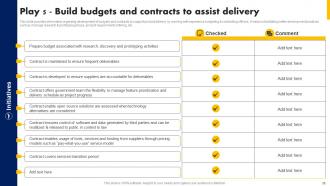
Slide 27: This slide shows development of budgets and contracts to support product delivery.
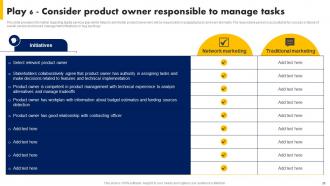
Slide 28: This slide portrays digital services play to administer product owner responsible in assigning tasks and work elements.
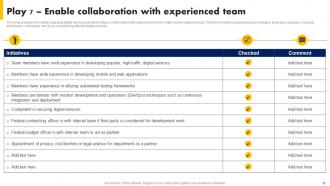
Slide 29: This slide reveals digital services play which helps in collaboration with experience team to create modern digital services.
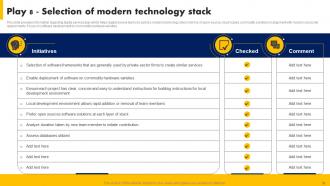
Slide 30: This slide presents digital services play which helps digital service teams to select a modern technology stack.
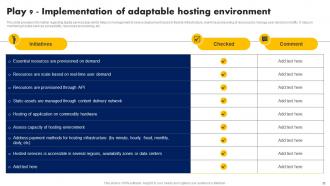
Slide 31: This slide depicts Play 9-Implementation of adaptable hosting environment.
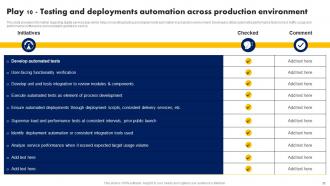
Slide 32: This slide represents Play 10-Testing and deployments.
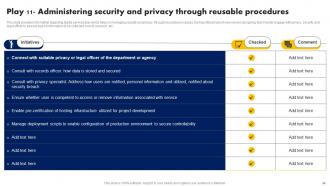
Slide 33: This slide shows digital services play which helps in managing security and privacy through reusable processes.
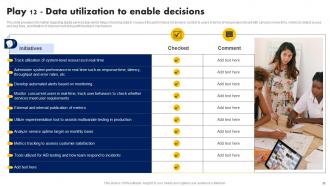
Slide 34: This slide presents the digital services play which helps in tracking data.
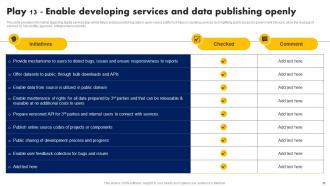
Slide 35: This slide focuses on Play 13-Enable developing services and data publishing openly.
Slide 36: This slide displays the Title for the Contents to be discussed next.
Slide 37: This slide states the Essential steps for effective digital service management.
Slide 38: This slide continues the essential steps for effective digital service management.
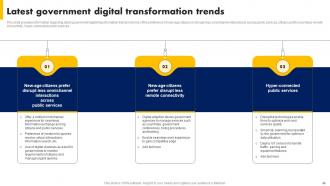
Slide 39: This slide talks about the Latest government digital transformation trends.
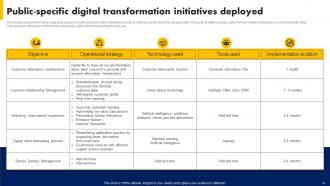
Slide 40: This slide provides information regarding customer-centric transformation initiatives.
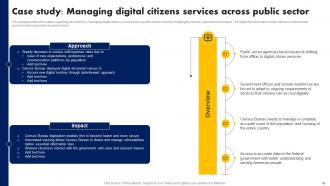
Slide 41: This slide shows the case study in managing digital citizens service across public sector.
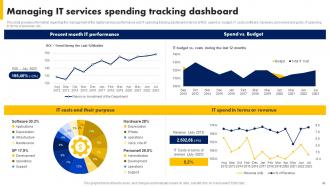
Slide 42: This slide focuses on Managing IT services spending tracking dashboard.
Slide 43: This is the Icons slide containing all the Icons used in the plan.
Slide 44: This slide is used for depicting some Additional information.
Slide 45: This is the 30-60-90 days plan slide for effective planning.
Slide 46: This is Our mission slide. State your company's Vision, Mission, and Goal here.
Slide 47: This slide contains the Post it notes for reminders and deadlines.
Slide 48: This is the Venn diagram slide.
Slide 49: This slide presents the SWOT analysis.
Slide 50: This is Our team slide. State your team-related information here.
Slide 51: This is the Idea generation slide for encouraging fresh ideas.
Slide 52: This is the Puzzle slide with related imagery.
Slide 53: This is Our target slide for showcasing the organization's targets.
Slide 54: This is the Thank You slide for acknowledgement.
Digital Advancement Playbook Powerpoint Presentation Slides with all 60 slides:
Use our Digital Advancement Playbook Powerpoint Presentation Slides to effectively help you save your valuable time. They are readymade to fit into any presentation structure.


















FAQs for Digital Advancement Playbook
Key components include digital infrastructure modernization, data analytics capabilities, employee training programs, customer experience optimization, and strategic technology partnerships. These elements work together by streamlining operations, enhancing decision-making, and accelerating innovation, with many organizations finding that this integrated approach delivers improved efficiency, competitive advantage, and sustainable growth in increasingly digital markets.
Organizations can assess their digital maturity by evaluating technology infrastructure, data analytics capabilities, employee digital skills, customer experience platforms, and organizational change readiness. Through comprehensive audits and maturity frameworks, companies in sectors like retail, healthcare, and financial services identify gaps in automation, integration, and digital processes, ultimately enabling strategic roadmap development and competitive positioning in an increasingly digital marketplace.
Data analytics serves as the foundation for digital transformation by enabling data-driven decision making, predictive insights, operational optimization, and customer behavior understanding. Through advanced analytics platforms, organizations streamline processes, enhance customer experiences, and identify new revenue opportunities, with many financial services and retail companies finding that analytics-driven strategies deliver significant competitive advantages and measurable ROI.
Businesses ensure alignment by establishing clear digital governance frameworks, integrating technology roadmaps with strategic objectives, and creating cross-functional teams that bridge IT and business operations. Through regular strategy reviews and performance metrics, organizations streamline decision-making processes, enhance resource allocation, and accelerate implementation timelines, ultimately delivering competitive advantage and measurable business outcomes.
Latest digital technology trends include artificial intelligence and machine learning, cloud computing, Internet of Things (IoT), blockchain technology, and robotic process automation. These technologies enhance operational efficiency by streamlining workflows, automating repetitive tasks, and enabling data-driven decision making, with many organizations finding that strategic implementation delivers improved customer experiences, reduced operational costs, and significant competitive advantages.
Small businesses can leverage digital tools by utilizing cloud-based platforms, social media marketing, e-commerce solutions, automated customer service systems, and data analytics platforms to level the playing field. These technologies enable smaller organizations to streamline operations, reach broader audiences, and deliver personalized customer experiences at lower costs, with many finding that strategic digital adoption ultimately delivers competitive advantages previously exclusive to larger corporations.
Key digital transformation metrics include customer satisfaction scores, operational efficiency ratios, revenue growth from digital channels, employee productivity measures, and technology adoption rates. These indicators help organizations track progress by measuring improved customer experiences, streamlined processes, and enhanced competitive positioning, with many companies finding that balanced scorecards combining financial and operational metrics deliver the most comprehensive transformation insights.
Companies foster innovation culture through encouraging experimentation, investing in employee training, establishing cross-functional collaboration teams, implementing idea management systems, and rewarding creative problem-solving. These approaches streamline digital transformation by breaking down silos, accelerating skill development, and enabling rapid prototyping, with many organizations finding that empowered employees drive breakthrough solutions and competitive advantage.
Digital technology implementation challenges include resistance to change, integration complexities, cybersecurity vulnerabilities, skill gaps, and budget overruns. While these obstacles can initially slow progress, organizations increasingly find that phased rollouts, comprehensive training programs, and strategic partnerships with technology providers help mitigate risks, ultimately delivering smoother transitions and sustainable competitive advantages.
Organizations balance innovation with cybersecurity through integrated security frameworks, risk-based assessments, and secure development practices that embed protection from project inception. This strategic approach enables companies to pursue digital transformation while maintaining robust defenses, with many financial institutions and healthcare organizations finding that early security integration actually accelerates innovation timelines and reduces long-term costs.
Employee training serves as the foundation for digital transformation success, enabling workforce adaptation, reducing resistance to change, enhancing productivity, and ensuring effective technology adoption across all organizational levels. Through comprehensive upskilling programs, companies streamline transitions, minimize operational disruptions, and accelerate ROI on digital investments, with many organizations finding that well-trained employees become transformation champions who drive innovation.
Customer feedback integrates into digital advancement through continuous user research, real-time analytics monitoring, A/B testing protocols, and iterative development cycles. This strategic combination enables organizations to refine digital solutions based on actual user experiences, with many financial services and retail companies finding that feedback-driven development reduces deployment risks while enhancing customer satisfaction and competitive positioning.
Digital advancement revolutionizes customer experience through personalized interactions, omnichannel integration, real-time support, predictive analytics, and automated service delivery. These technologies enable businesses to anticipate customer needs, streamline purchasing processes, and deliver seamless experiences across touchpoints, with retail and financial services organizations finding significantly improved satisfaction rates and customer loyalty.
Businesses can prioritize digital initiatives by assessing current technology gaps, aligning projects with strategic objectives, evaluating ROI potential, and considering implementation complexity. Organizations increasingly focus on customer-facing improvements first, followed by operational efficiency enhancements, with many finding that phased approaches in retail, healthcare, and financial services deliver measurable results while minimizing disruption.
Managing digital transformation change requires clear communication strategies, comprehensive employee training programs, phased implementation approaches, strong leadership commitment, and continuous feedback mechanisms. These practices streamline adoption by reducing resistance, enhancing user confidence, and maintaining operational continuity, with many organizations finding that structured change management ultimately delivers faster implementation timelines and significantly higher employee engagement rates.
-
Excellent Designs.
-
Top Quality presentations that are easily editable.