


Digital Asset Investment Guide Powerpoint Presentation Slides
Cryptocurrencies are digital assets or digital currency designed to serve as a medium of exchange. Bitcoin is one of these cryptocurrencies that various investors can use to increase their ROI and invest in the crypto market. Grab our professionally designed Digital Asset Investment Guide template that will guide the organization willing to invest in Bitcoin as it highlights multiple strategies for the same. The playbook will help increase returns on investment on the investment made in Bitcoin. The following playbook is strategically divided into 4 sections that highlight essential steps you need to follow before investing in Bitcoin. The first part provides an overview of the playbook and introduces Bitcoin as an investment tool for the organization. It displays the history and various types of cryptocurrency. The second portion of the playbook shows an overview of the Bitcoin market size, key trends, and historical performance. The third part of the playbook highlights the organizations key strategies. The final portion of the playbook identifies critical metrics that the organization can use to track its investment performance effectively. Download our investment presentation ppt now.
Cryptocurrencies are digital assets or digital currency designed to serve as a medium of exchange. Bitcoin is one of these ..
















-

- Google Slides is a new FREE Presentation software from Google.
- All our content is 100% compatible with Google Slides.
- Just download our designs, and upload them to Google Slides and they will work automatically.
- Amaze your audience with SlideTeam and Google Slides.
-

Want Changes to This PPT Slide? Check out our Presentation Design Services
-

- WideScreen Aspect ratio is becoming a very popular format. When you download this product, the downloaded ZIP will contain this product in both standard and widescreen format.
-

- Some older products that we have may only be in standard format, but they can easily be converted to widescreen.
- To do this, please open the SlideTeam product in Powerpoint, and go to
- Design ( On the top bar) -> Page Setup -> and select "On-screen Show (16:9)” in the drop down for "Slides Sized for".
- The slide or theme will change to widescreen, and all graphics will adjust automatically. You can similarly convert our content to any other desired screen aspect ratio.
Compatible With Google Slides

Get This In WideScreen
You must be logged in to download this presentation.


Do you want to remove this product from your favourites?
PowerPoint presentation slides
Enthrall your audience with this Digital Asset Investment Guide Powerpoint Presentation Slides. Increase your presentation threshold by deploying this well-crafted template. It acts as a great communication tool due to its well-researched content. It also contains stylized icons, graphics, visuals etc, which make it an immediate attention-grabber. Comprising thirty three slides, this complete deck is all you need to get noticed. All the slides and their content can be altered to suit your unique business setting. Not only that, other components and graphics can also be modified to add personal touches to this prefabricated set.

People who downloaded this PowerPoint presentation also viewed the following :
Content of this Powerpoint Presentation
Slide 1: This slide displays the title Digital Asset Investment Guide.
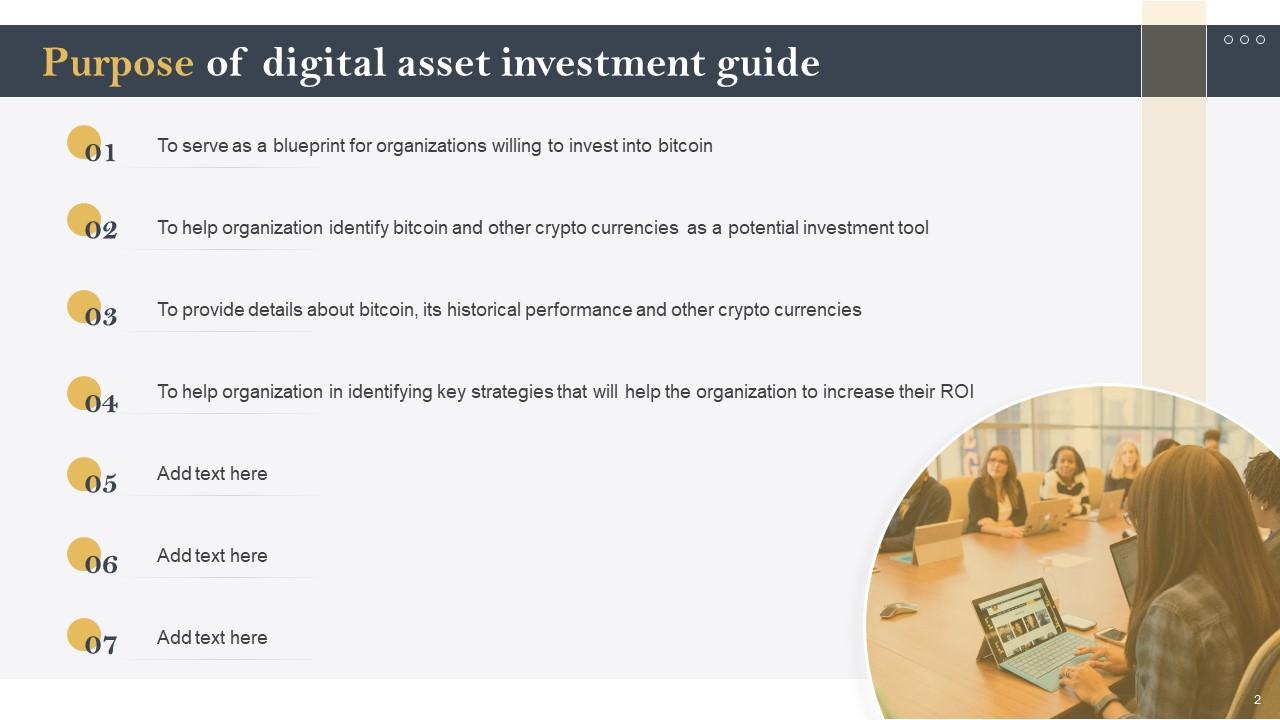
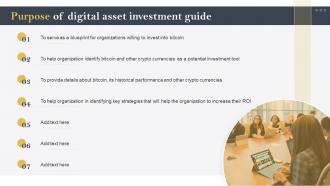
Slide 2: This slide displays Purpose of digital asset investment guide.
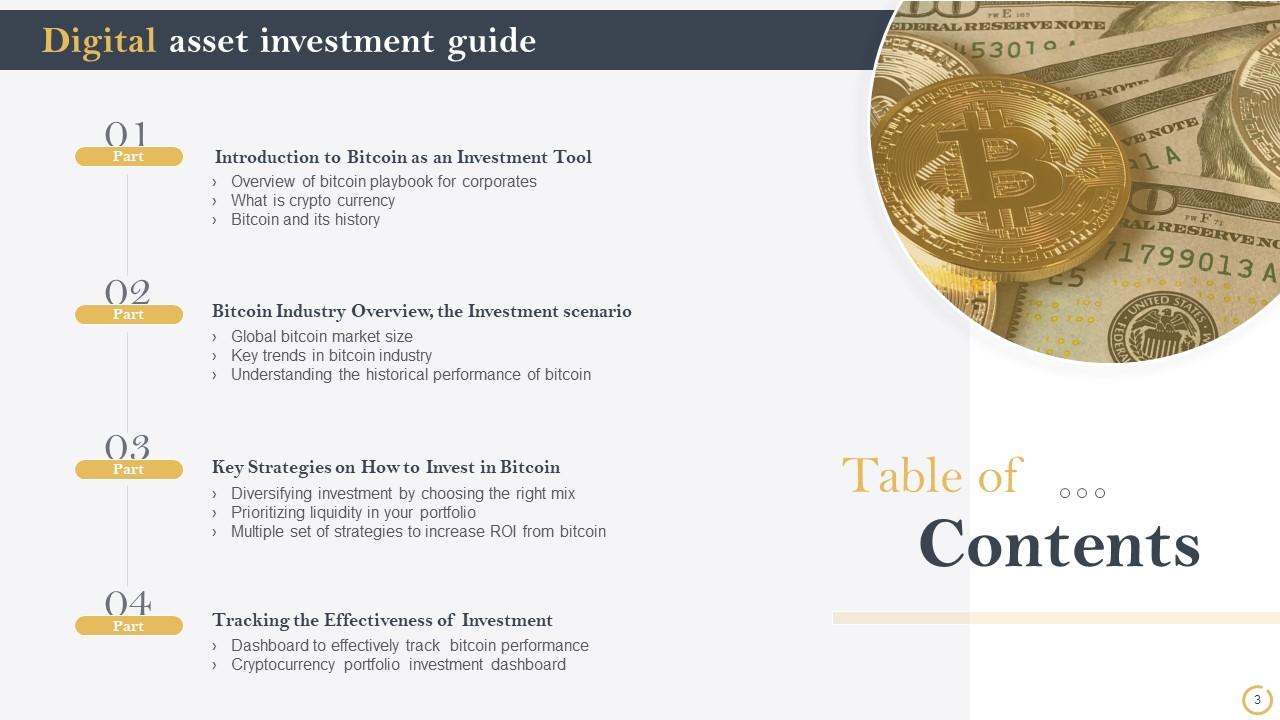
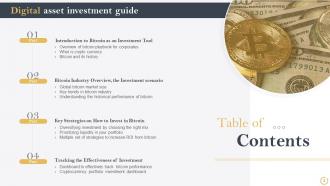
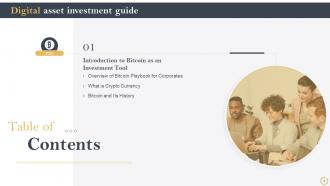
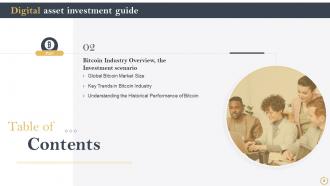
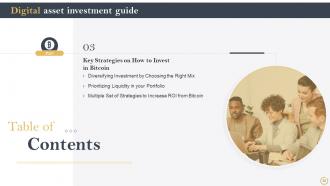
Slide 3: This slide exhibit table of content.
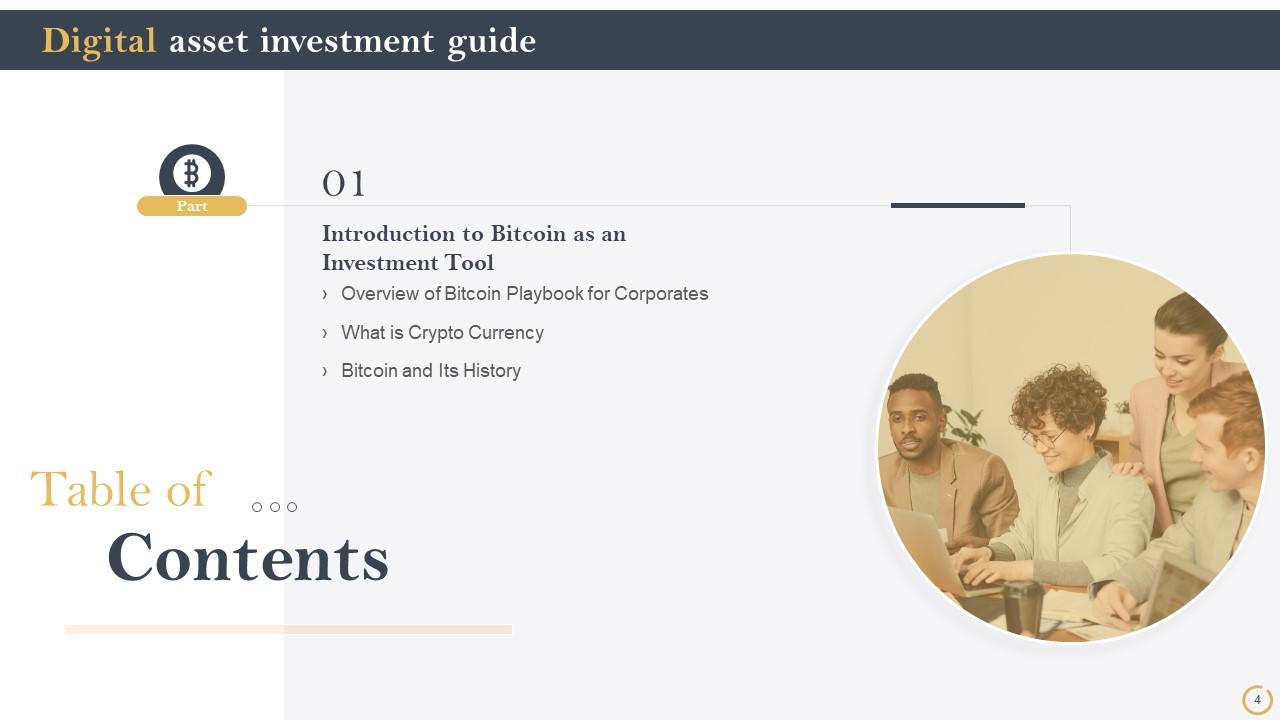
Slide 4: This slide exhibit table of content- Introduction to Bitcoin as an Investment Tool.
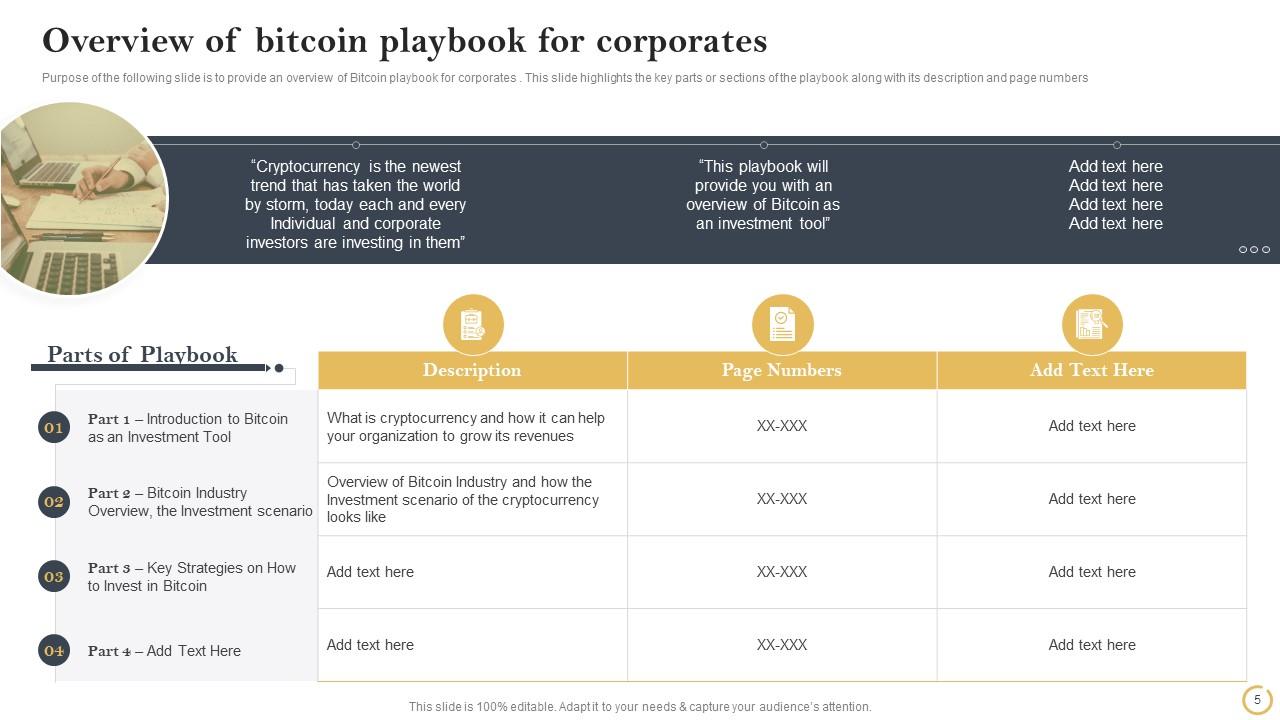
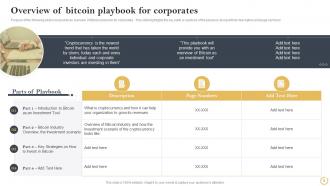
Slide 5: This slide is to provide an overview of Bitcoin playbook for corporates.
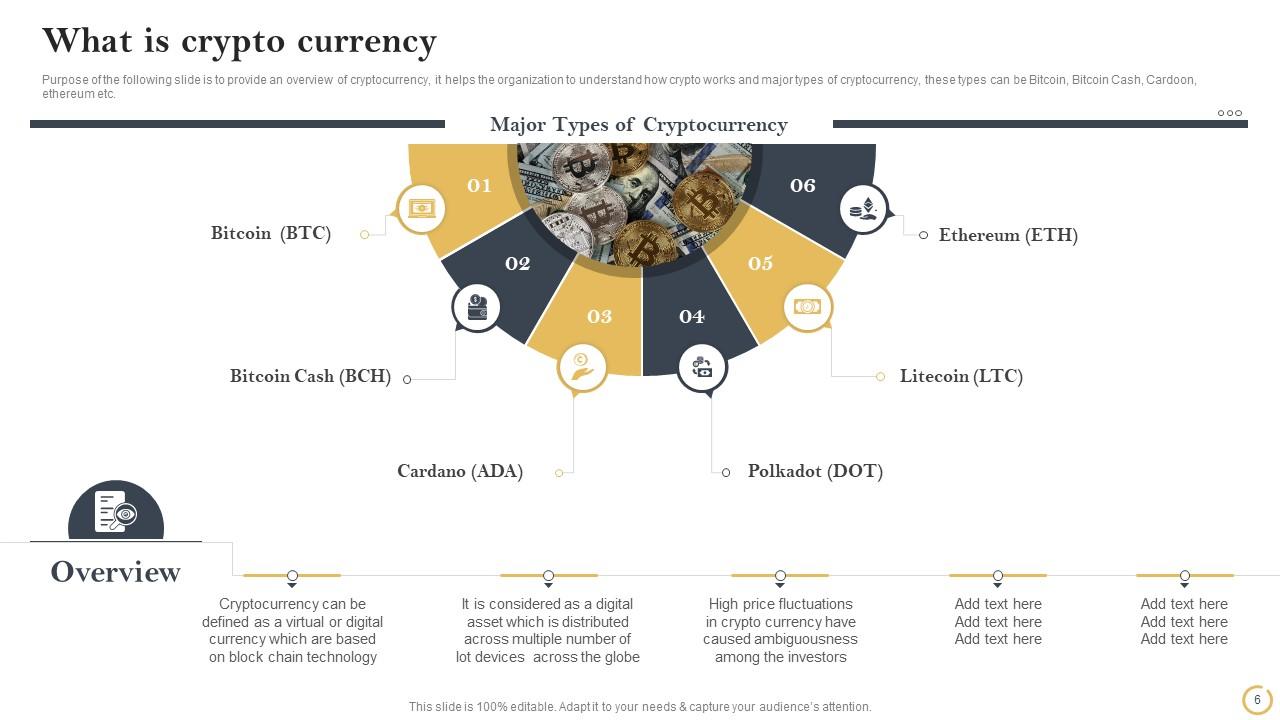
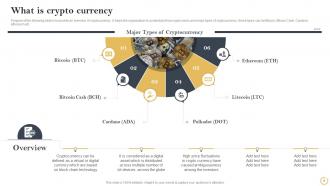
Slide 6: This slide tells about What is crypto currency.
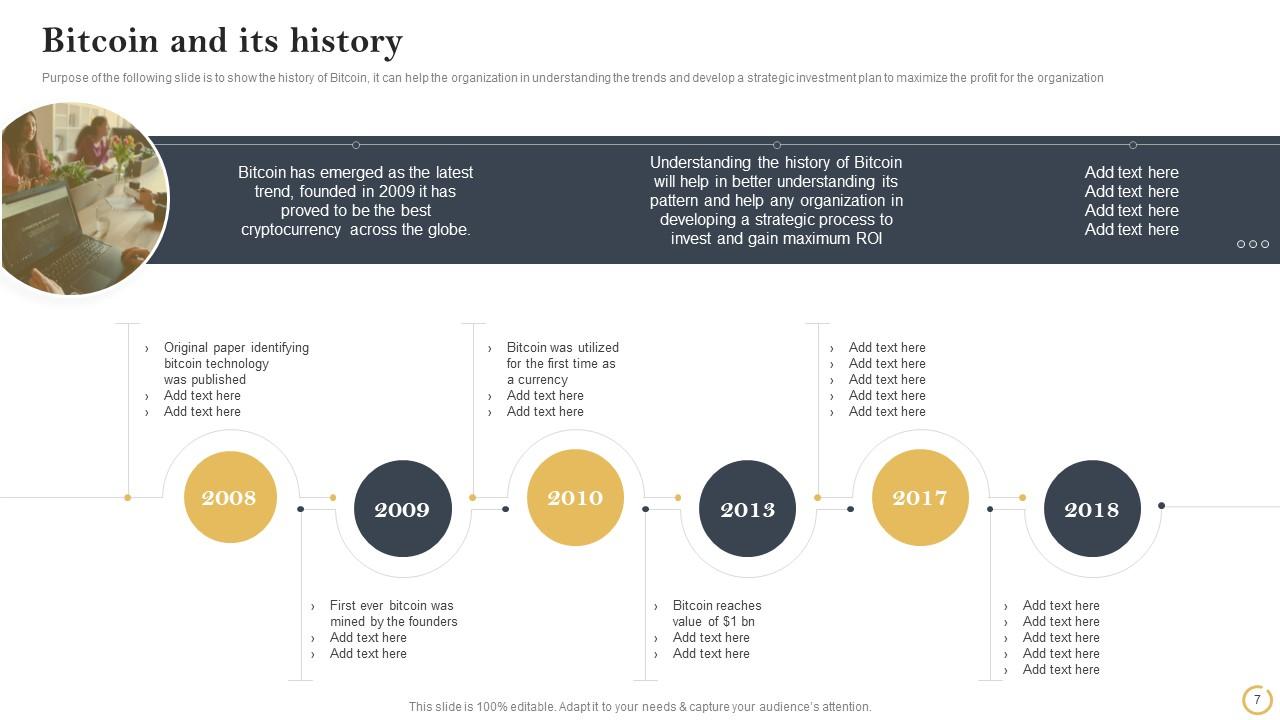
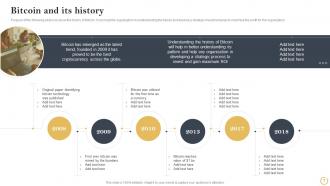
Slide 7: Purpose of the following slide is to show the history of Bitcoin.
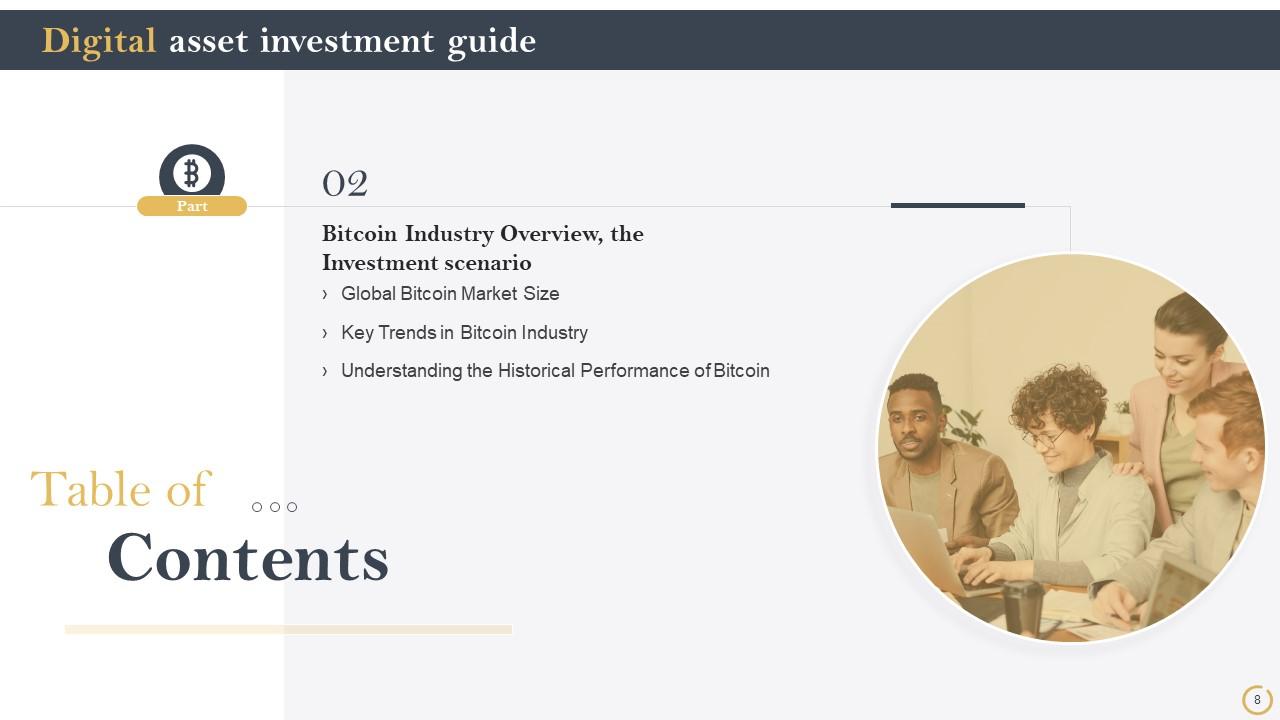
Slide 8: This slide exhibit table of content- Bitcoin Industry Overview, the Investment scenario.
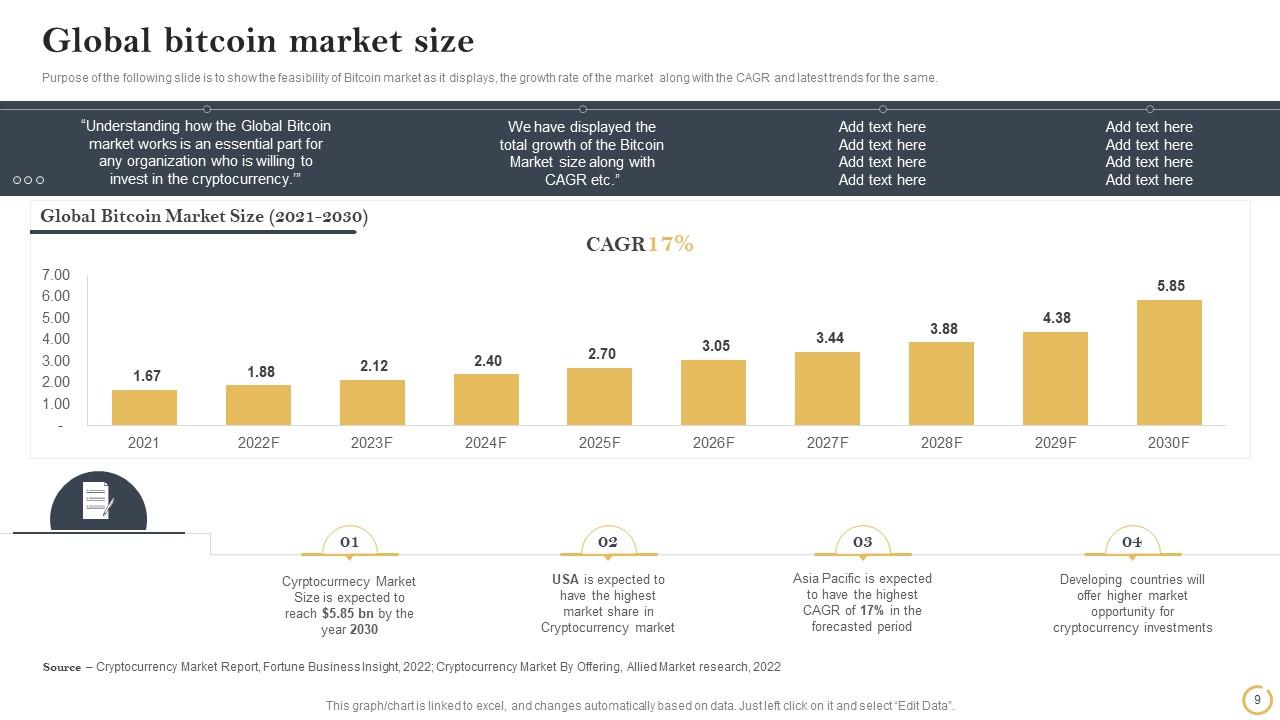
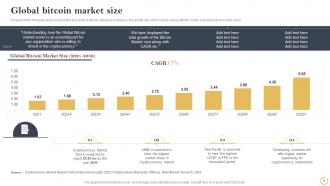
Slide 9: Purpose of the following slide is to show the feasibility of Bitcoin market as it displays.
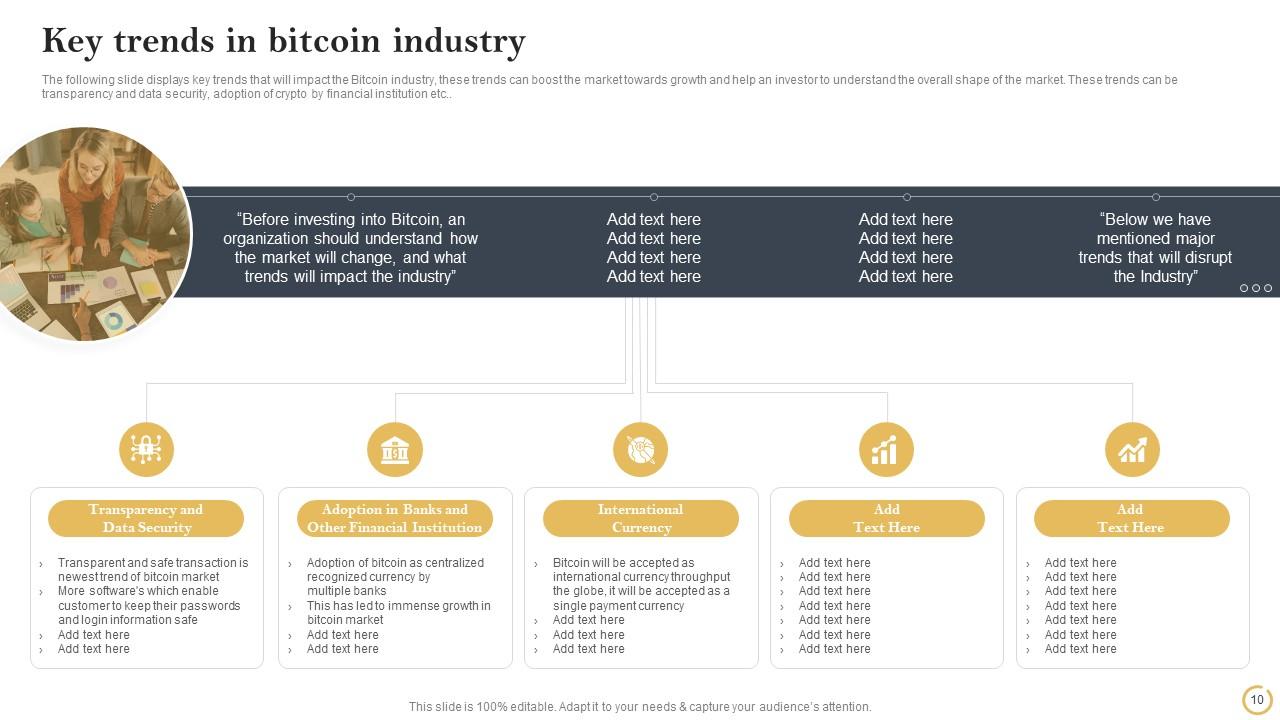
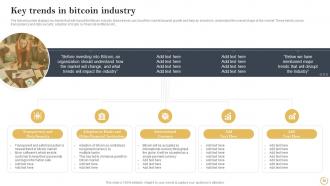
Slide 10: The following slide displays key trends that will impact the Bitcoin industry.
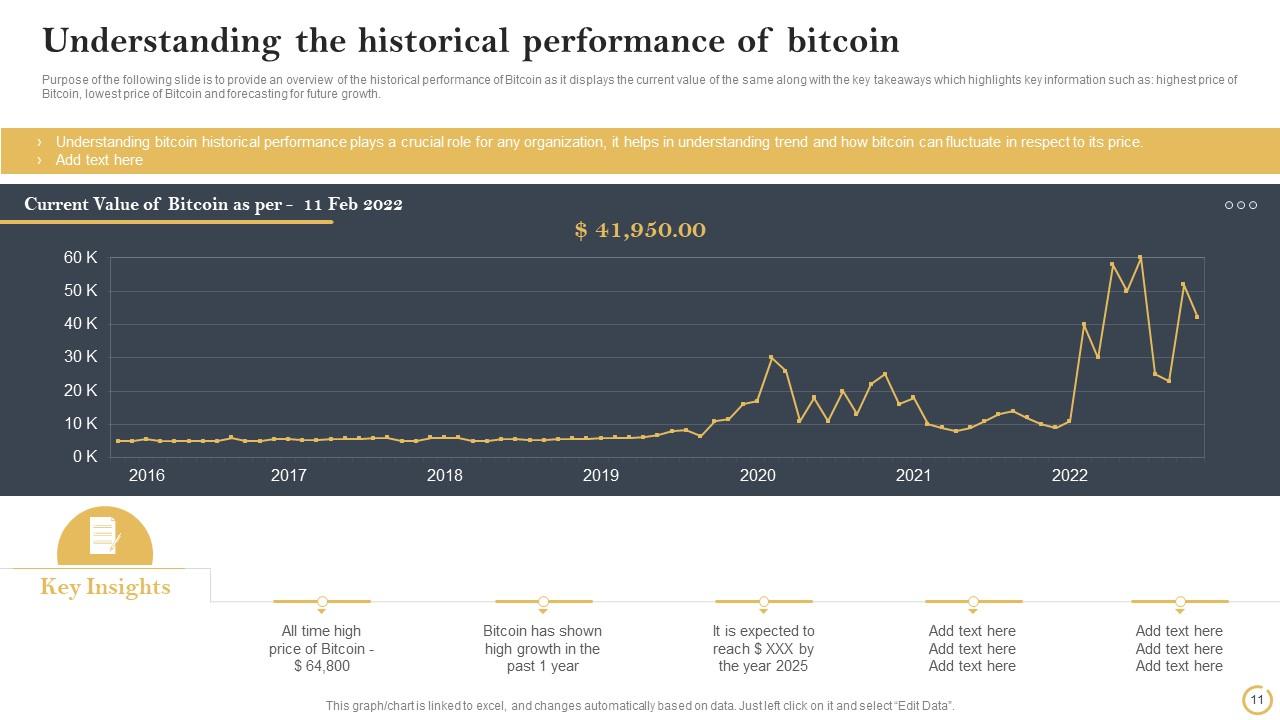
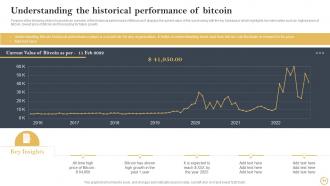
Slide 11: Purpose of the following slide is to provide an overview of the historical performance of Bitcoin as it displays.
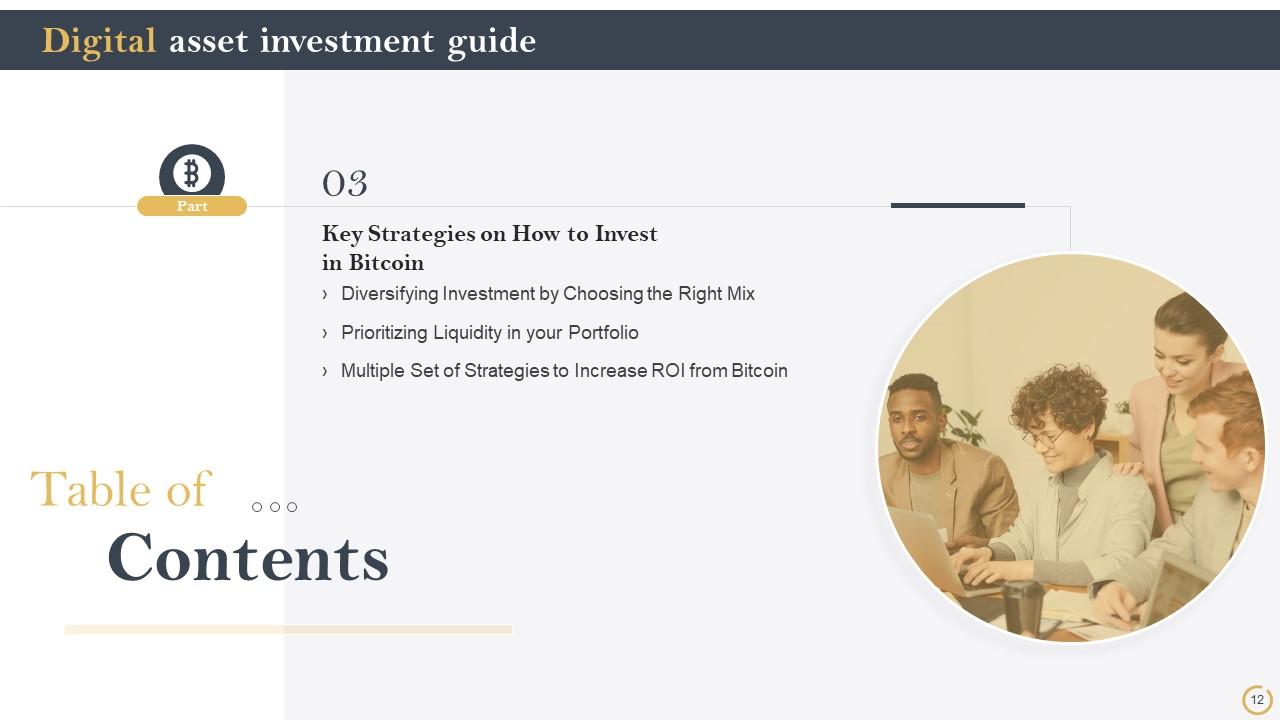
Slide 12: This slide exhibit table of content- Key Strategies on How to Invest in Bitcoin.
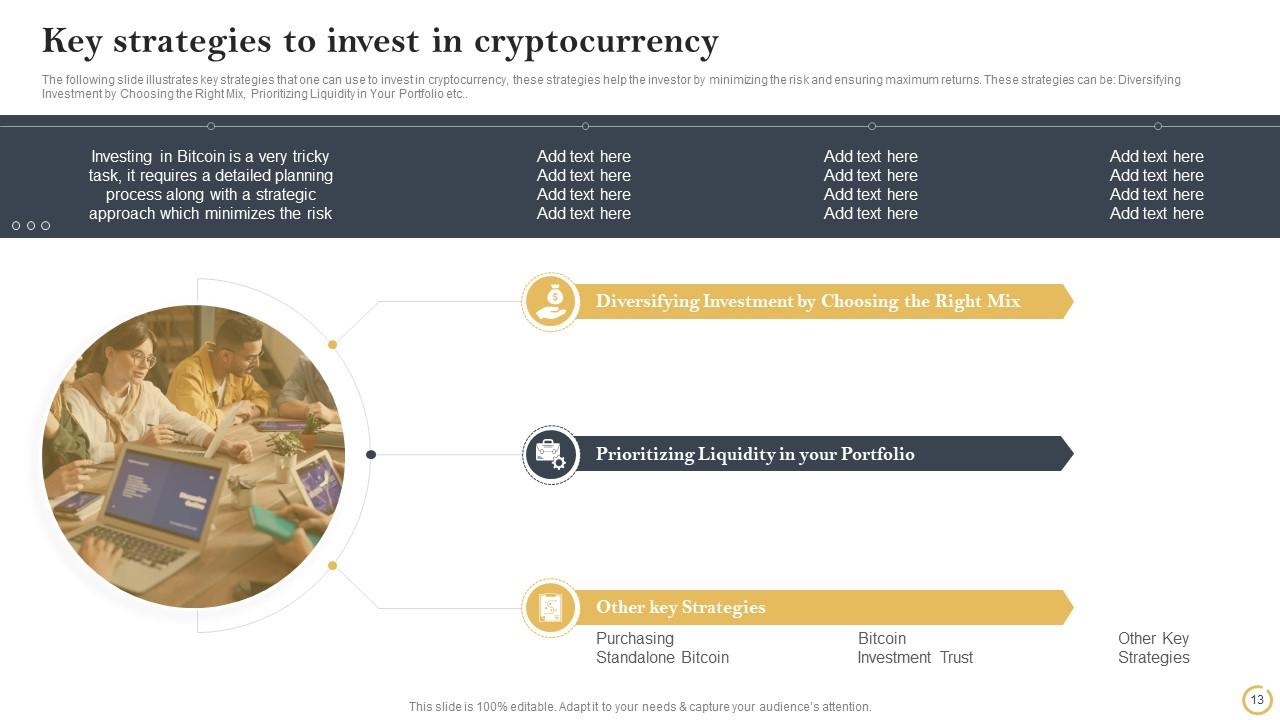
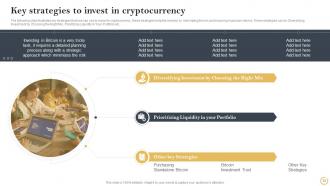
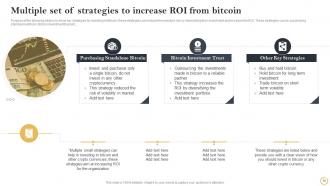
Slide 13: The following slide illustrates key strategies that one can use to invest in cryptocurrency.
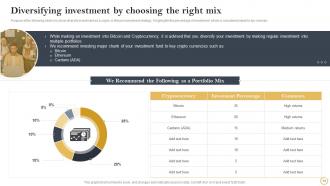
Slide 14: The following slide is to show Diversifying investment by choosing the right mix.
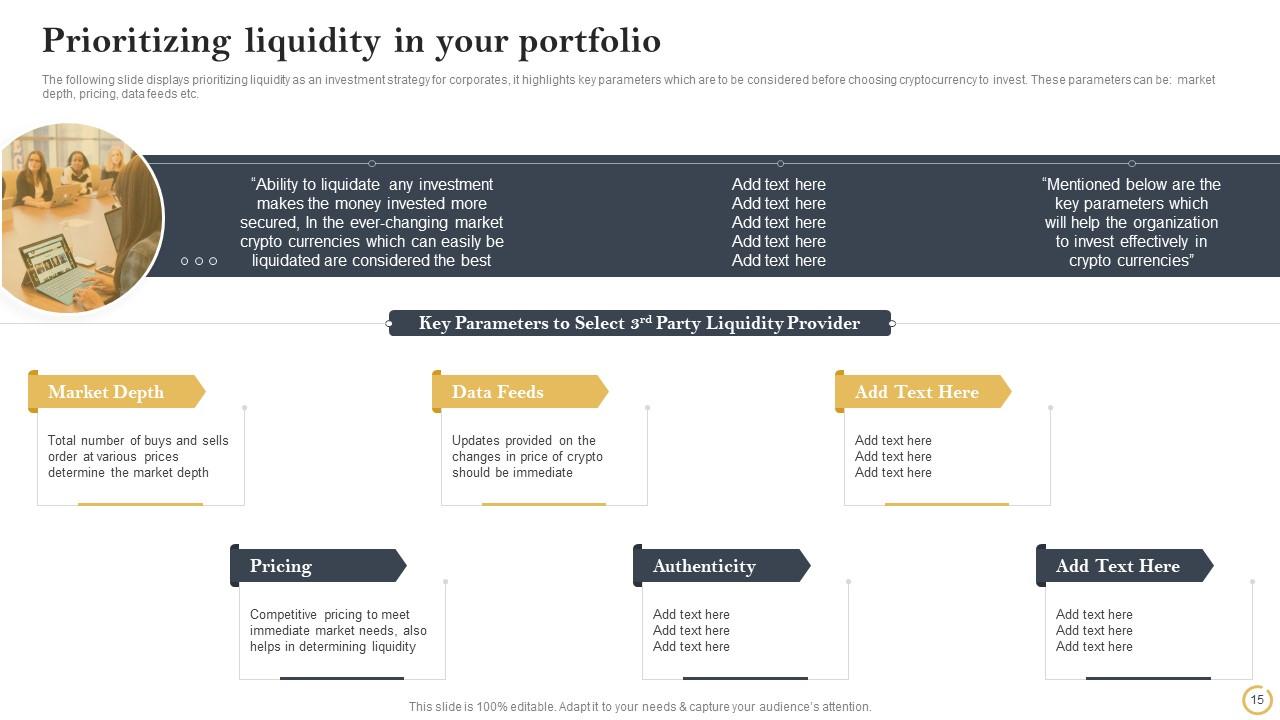
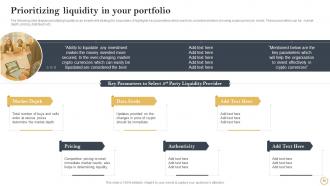
Slide 15: The following slide displays prioritizing liquidity as an investment strategy for corporates.
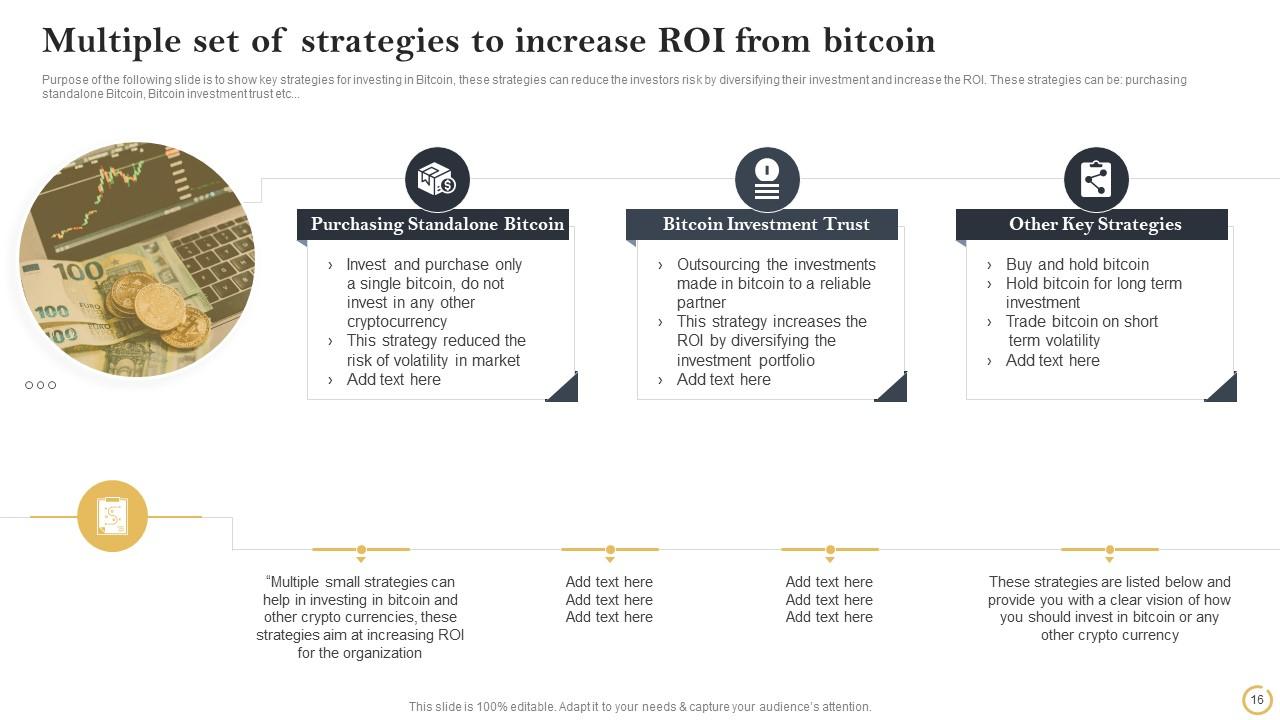
Slide 16: This slide shows key strategies for investing in Bitcoin, to diversify their investment and increase the ROI.
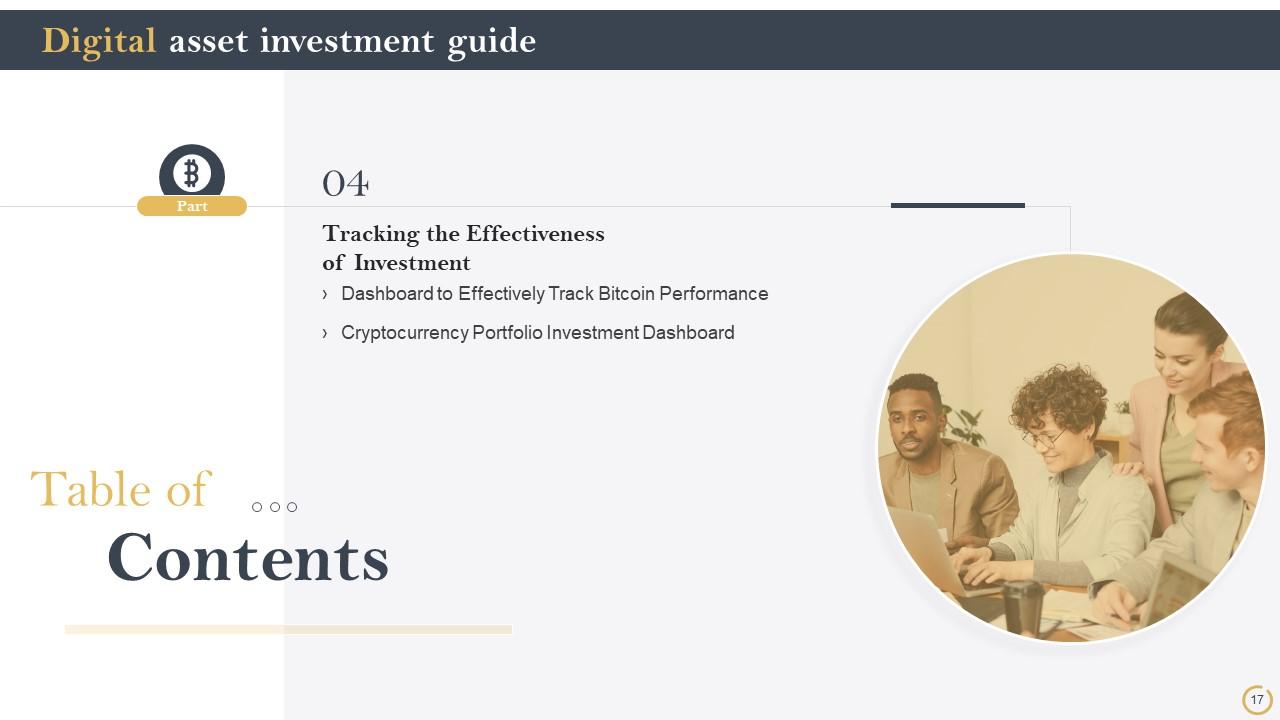
Slide 17: This slide exhibit table of content- Tracking the Effectiveness of Investment.
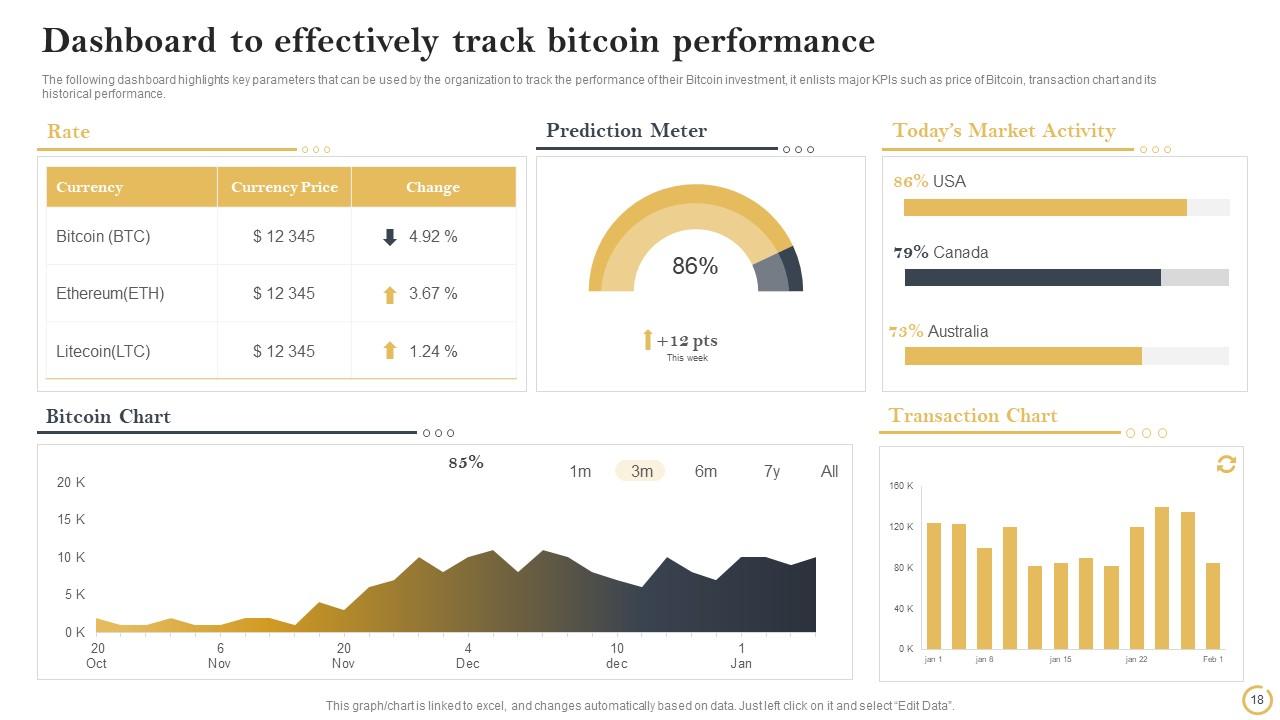
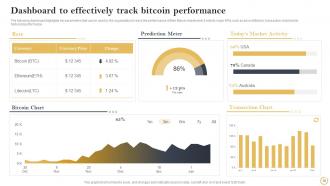
Slide 18: This slide highlight Dashboard to effectively track bitcoin performance.
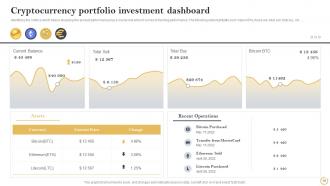
Slide 19: This slide highlight Cryptocurrency portfolio investment dashboard.
Slide 20: This is the icons slide.
Slide 21: This slide presents title for additional slides
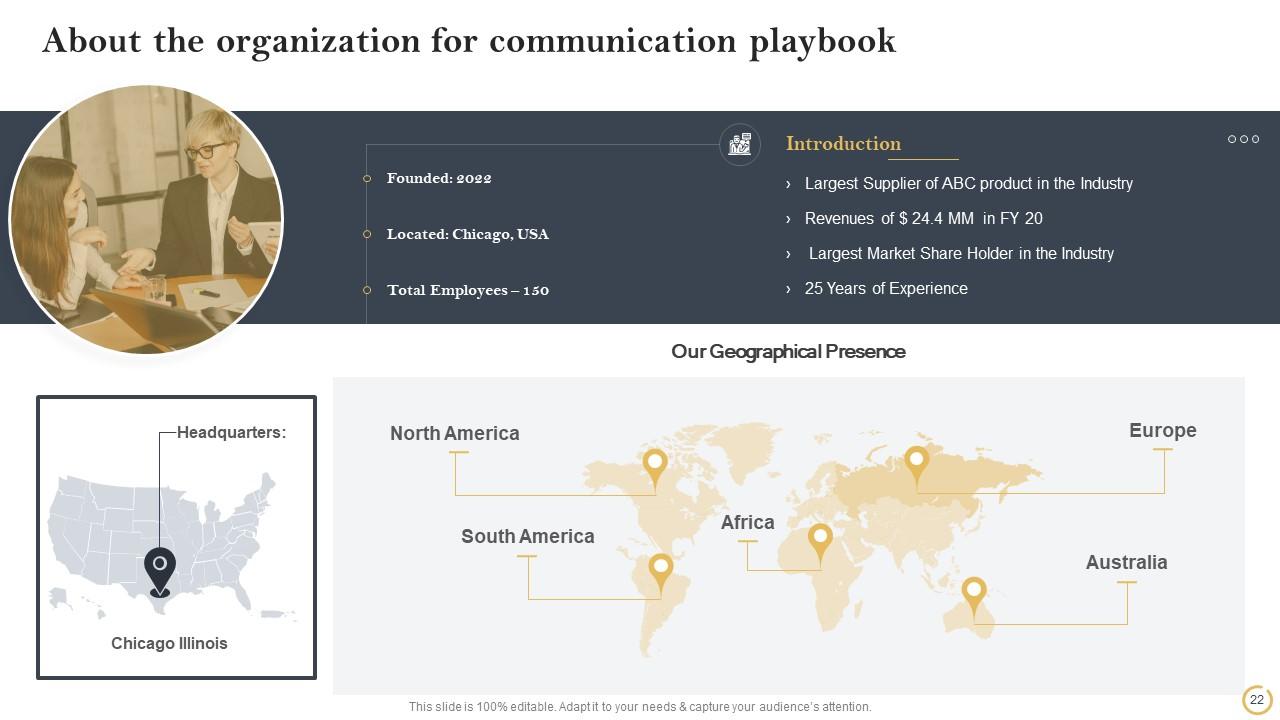
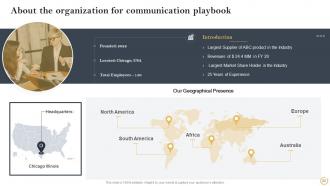
Slide 22: This slide highlight About the organization for communication playbook.
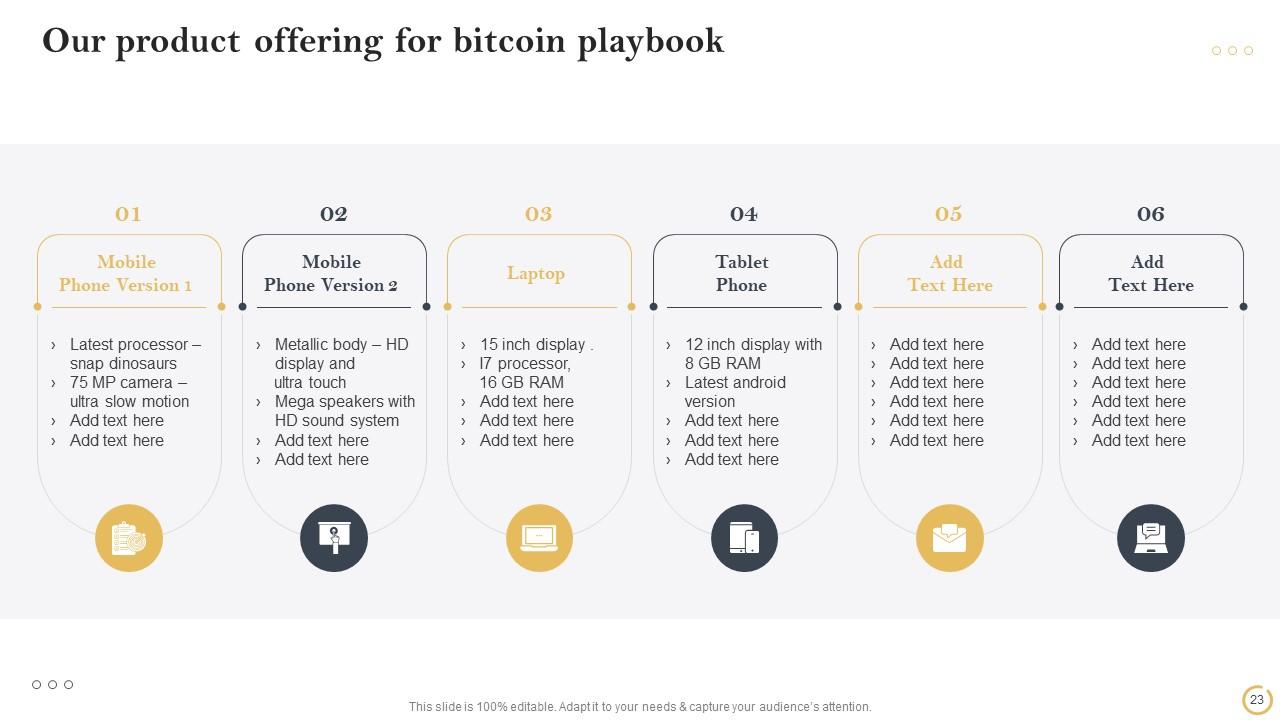
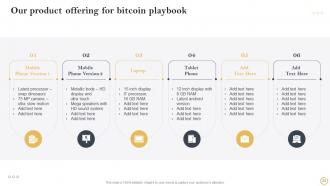
Slide 23: This slide highlight Our product offering for bitcoin playbook.
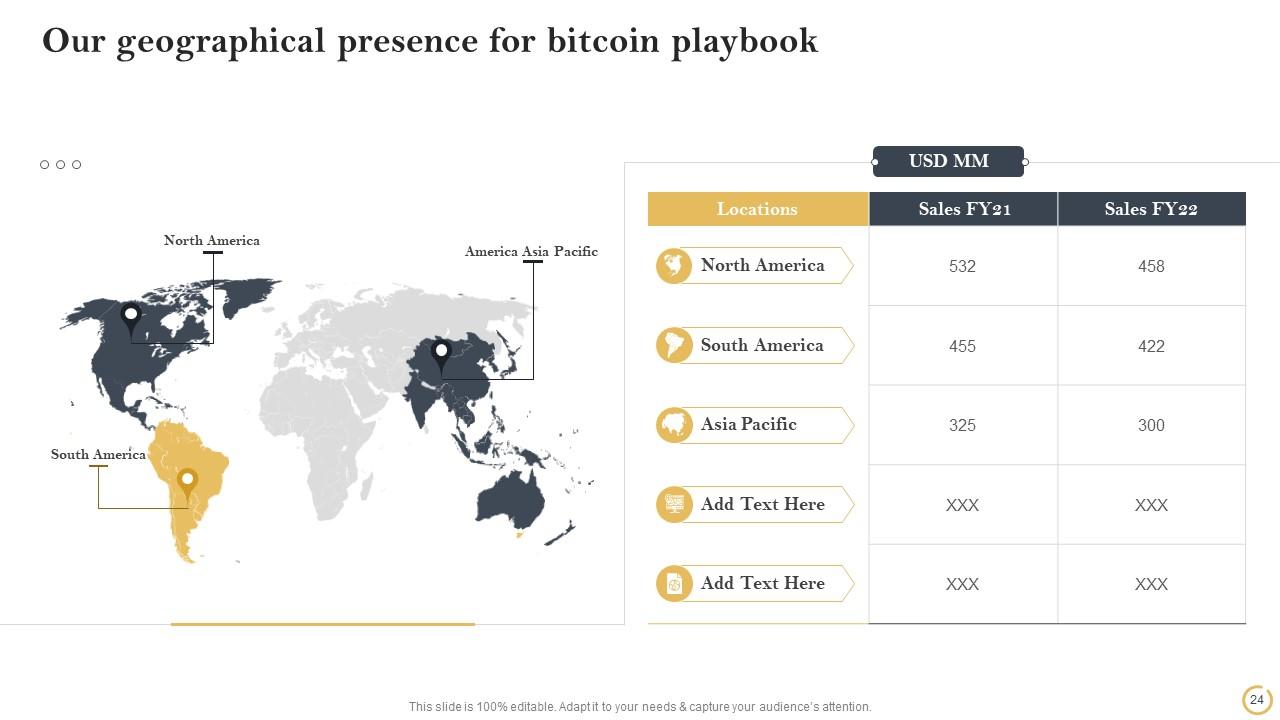
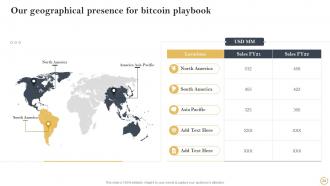
Slide 24: This slide highlight Our geographical presence for bitcoin playbook.
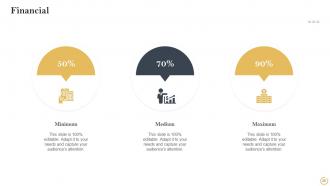
Slide 25: This slide highlight Financial.
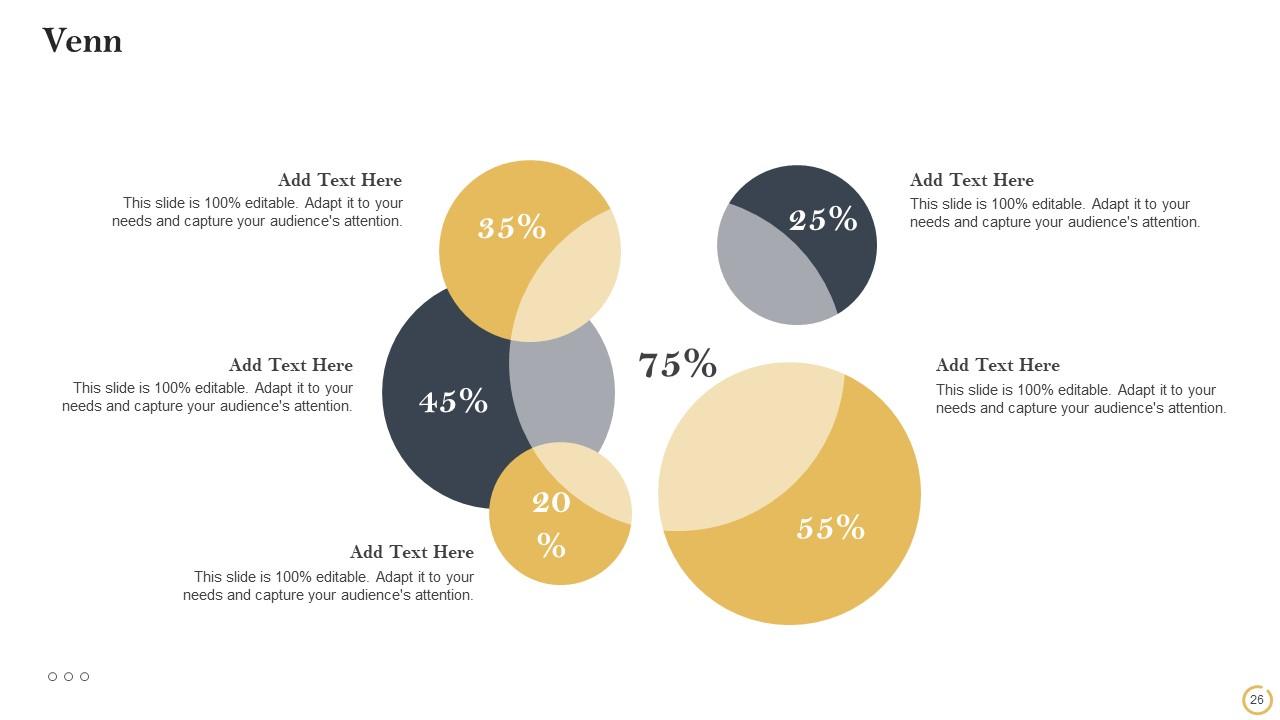
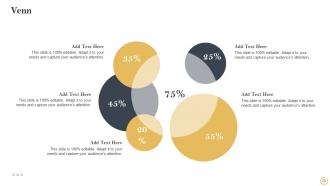
Slide 26: This slide display Venn.
Slide 27: This slide display Our Goal.
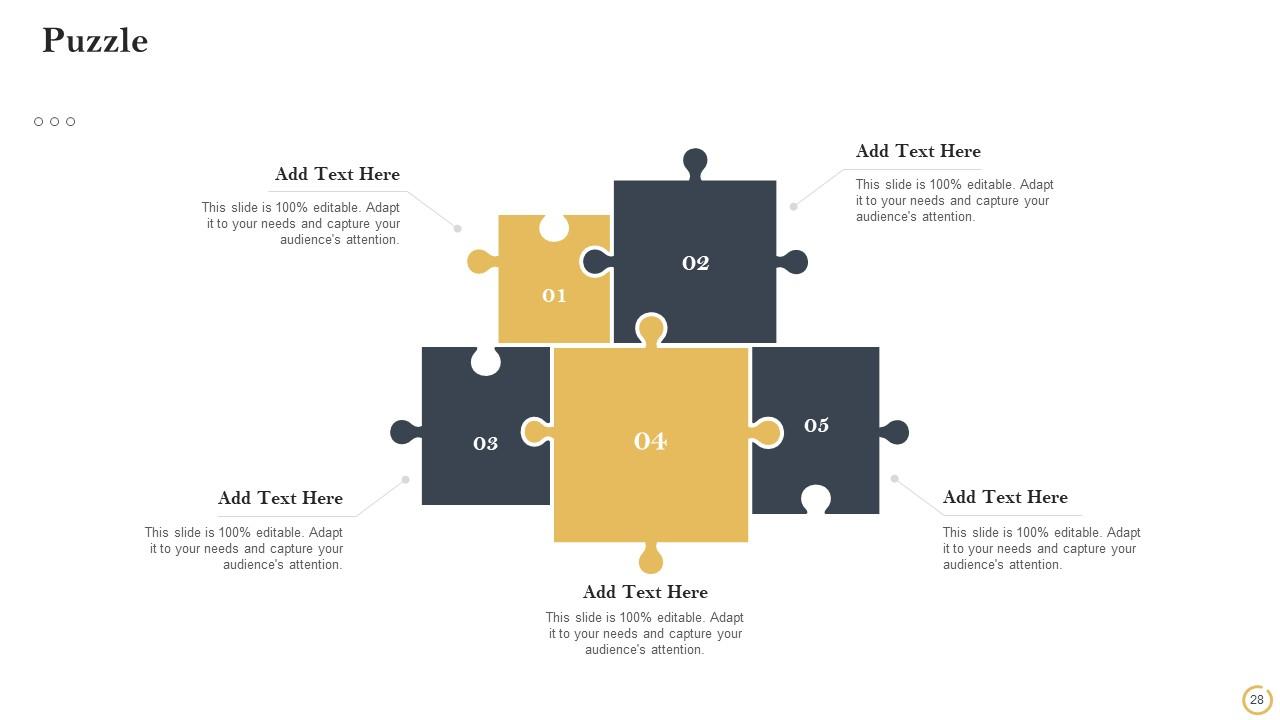
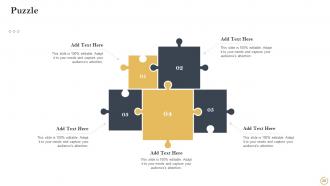
Slide 28: This slide shows puzzle for displaying elements of company.
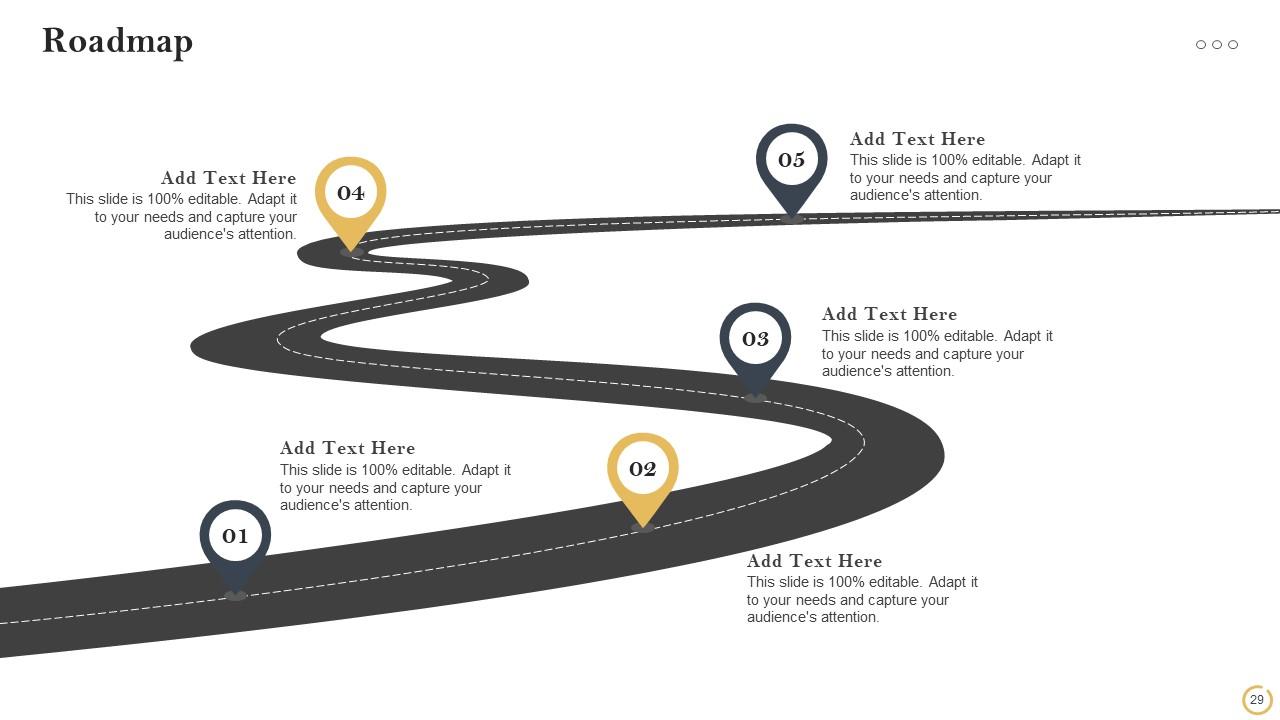
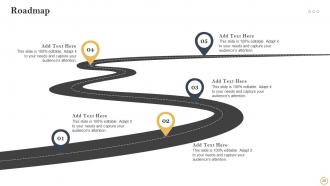
Slide 29: This slide shows roadmap of company.
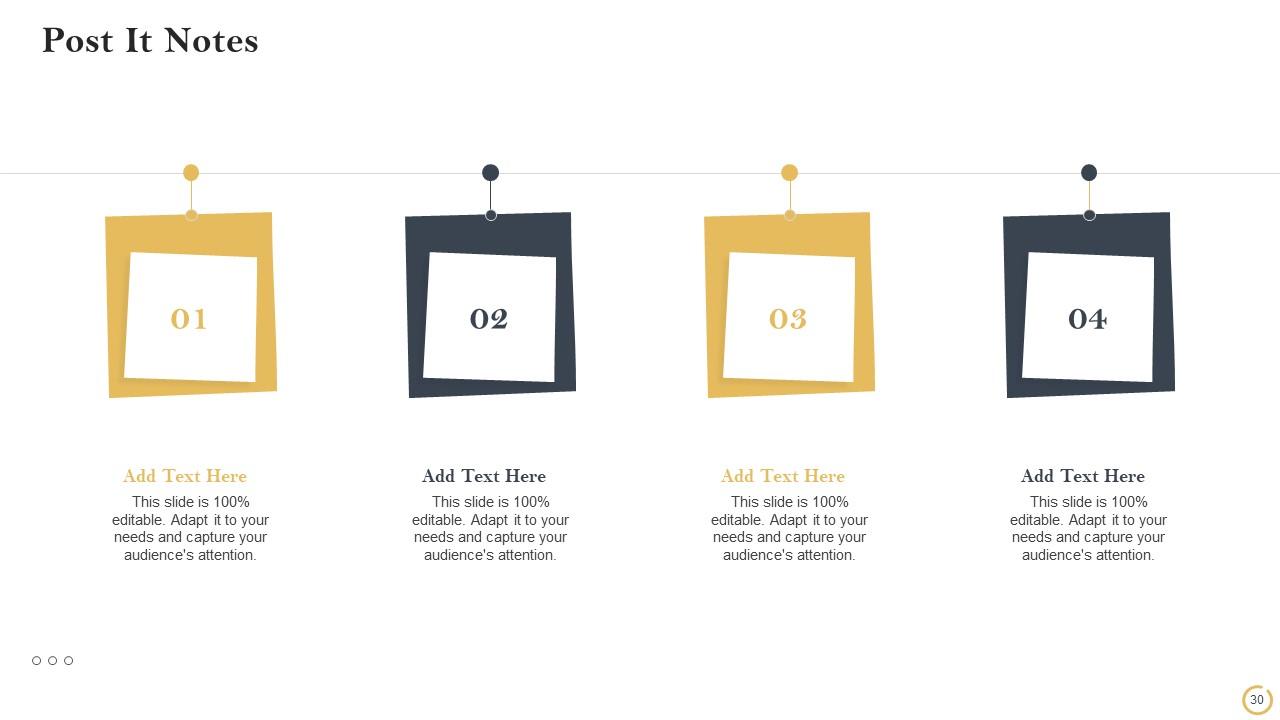
Slide 30: This slide depicts posts for past experiences of clients.
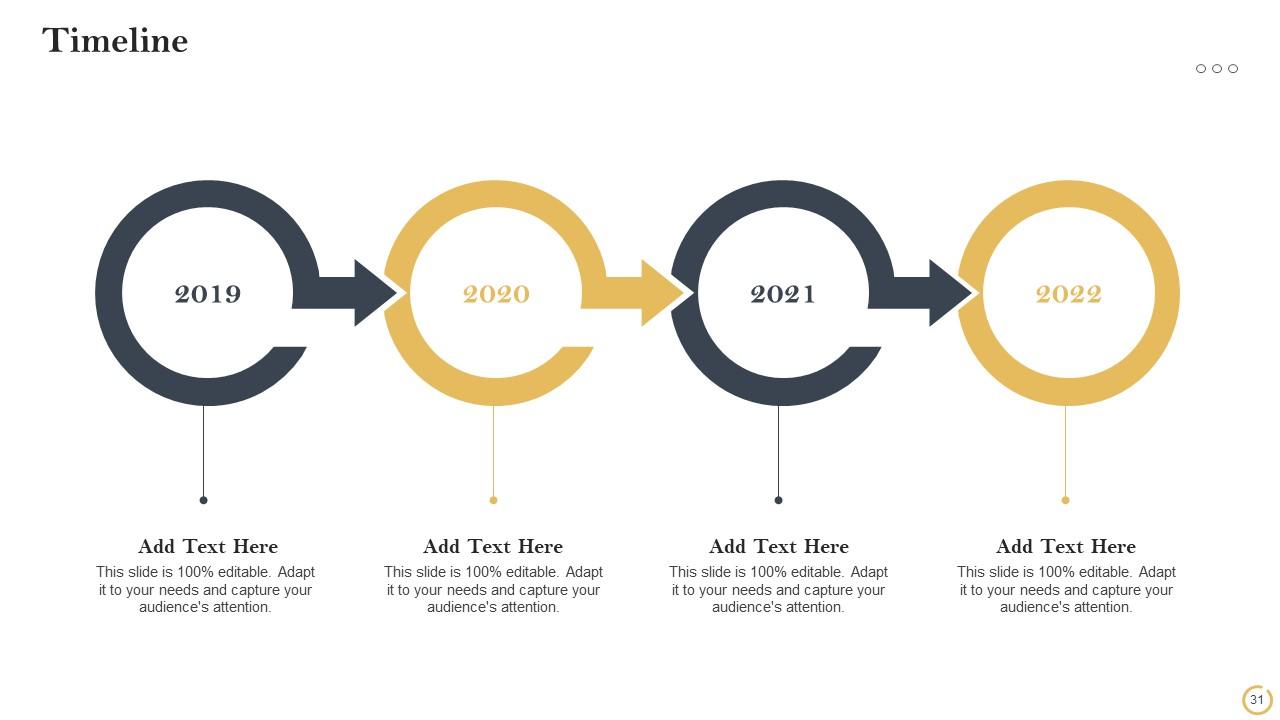
Slide 31: This slide exhibits yearly timeline of company.
Slide 32: This slide exhibits ideas generated.
Slide 33: This is thank you slide & contains contact details of company like office address, phone no., etc.
Digital Asset Investment Guide Powerpoint Presentation Slides with all 38 slides:
Use our Digital Asset Investment Guide Powerpoint Presentation Slides to effectively help you save your valuable time. They are readymade to fit into any presentation structure.
-
I had them make a presentation for an office retirement party. They were very helpful in understanding what we wanted and delivered the perfect presentation. Highly recommended!
-
Visually stunning presentation, love the content.
