

Digital Engagement Ppt Layouts Background Designs Customer Support





Try Before you Buy Download Free Sample Product
 Impress Your
 Audience
 100%
100% Editable
 Save Hours
 of Time


Educate them on diet and exercise with our Digital Engagement Ppt Layouts Background Designs Customer Support. Guide them to be hale and hearty.
People who downloaded this PowerPoint presentation also viewed the following :
Content of this Powerpoint Presentation
Slide 1: This slide introduces Digital Engagement. State Your Company Name and begin.
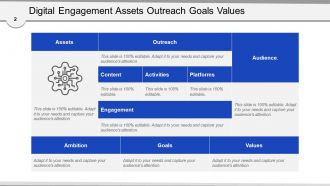
Slide 2: This slide shows Digital Engagement with Assets, Outreach, Goals, Values etc.
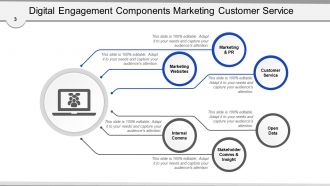
Slide 3: This slide presents Digital Engagement Components as- Marketing & PR, Marketing Websites, Open Data, Stakeholder Comms & Insight, Internal Comms, Customer Service.
Slide 4: This slide displays Digital Engagement Icons.
Slide 5: This slide represents Digital Engagement Shown by Data Nodes Hand Icon.
Slide 6: This slide showcases Digital Engagement Shown by Four Data Nodes.
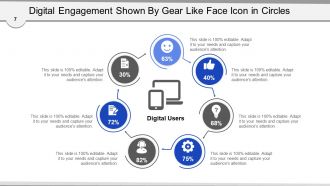
Slide 7: This slide shows Digital Engagement Shown By Gear Like Face Icon in Circles.
Slide 8: This slide presents Digital Engagement Shown by Mobile and Globe.
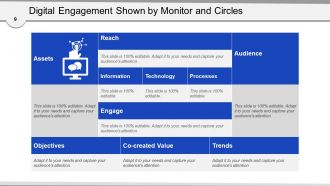
Slide 9: This slide displays Digital Engagement Shown by Monitor and Circles.
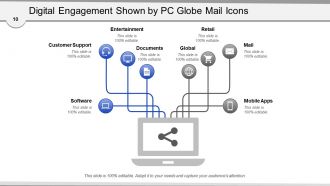
Slide 10: This slide represents Digital Engagement Shown by PC Globe Mail Icons.
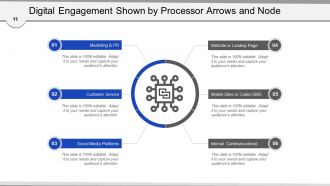
Slide 11: This slide showcases Digital Engagement Shown by Processor Arrows and Node.
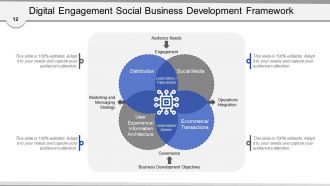
Slide 12: This slide shows Digital Engagement with Social Business Development Framework.
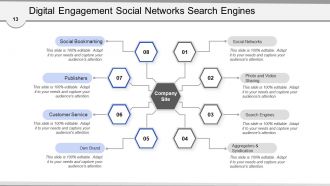
Slide 13: This slide presents Digital Engagement describing- Own Brand, Customer Service, Publishers, Social Bookmarking, Aggregators & Syndication, Search Engines, Photo and Video Sharing, Social Networks.
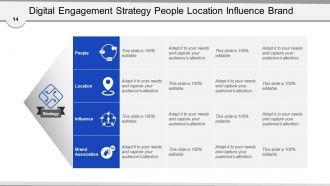
Slide 14: This slide displays Digital Engagement Strategy with People, Location, Influence and Brand association.
Slide 15: This is a Thank You slide with address, contact numbers and email address.
Digital Engagement Ppt Layouts Background Designs Customer Support with all 15 slides:
Our Digital Engagement Ppt Layouts Background Designs Customer Support blend aesthetics and functionality. Benefit from an excellent combination.


FAQs for Digital Engagement Ppt Layouts Background
Key elements of an effective digital engagement strategy include personalized content delivery, omnichannel communication platforms, data-driven audience insights, interactive touchpoints, and real-time response capabilities. These components work together by creating seamless customer journeys, enhancing brand loyalty, and driving measurable conversions, with many organizations finding that strategic integration ultimately delivers improved customer lifetime value and competitive market positioning.
Businesses can measure digital engagement success through metrics like click-through rates, time spent on digital platforms, social media interactions, conversion rates, and customer retention statistics. These analytics enable organizations to track user behavior, optimize content strategies, and enhance customer experiences, with many companies finding that comprehensive measurement ultimately delivers improved ROI and competitive advantage.
Social media enhances digital engagement by facilitating real-time interactions, building brand communities, enabling personalized content delivery, and providing valuable customer insights through analytics. Platforms like Instagram, LinkedIn, and Twitter allow businesses to connect authentically with audiences, respond instantly to inquiries, and create shareable experiences, ultimately driving customer loyalty and competitive advantage in increasingly crowded markets.
Companies personalize digital engagement through AI-powered recommendation engines, behavioral analytics, dynamic content customization, targeted messaging platforms, and real-time interaction tools. These technologies enhance customer experiences by delivering relevant product suggestions, tailored communications, and seamless omnichannel interactions, with many retailers and financial services finding that personalization significantly increases conversion rates and customer loyalty.
Common digital engagement challenges include fragmented customer data, inconsistent messaging across channels, lack of personalization capabilities, insufficient analytics infrastructure, and resistance to organizational change. These obstacles often result in disjointed customer experiences and reduced ROI, with many companies finding that strategic integration of technologies, comprehensive staff training, and data-driven approaches ultimately streamline operations and enhance competitive advantage.
AI and VR significantly enhance digital engagement by creating personalized experiences, enabling immersive interactions, and delivering real-time responsiveness that traditional platforms cannot match. These technologies revolutionize customer touchpoints across retail, healthcare, and financial services, with many organizations finding that AI-driven personalization and VR experiences increase user retention, reduce bounce rates, and ultimately deliver competitive advantages in increasingly crowded digital markets.
Organizations can boost online audience interaction through personalized content delivery, interactive polls and surveys, live streaming events, social media storytelling, and user-generated content campaigns. These strategies enhance engagement by creating two-way conversations, fostering community building, and delivering relevant experiences, with many companies finding that authentic, responsive interactions ultimately drive stronger customer loyalty and measurable business growth.
Feedback loops enhance digital engagement by enabling real-time content optimization, personalized user experiences, and data-driven strategy refinement based on audience responses and behaviors. Through continuous monitoring and adjustment, organizations streamline their digital touchpoints, improve customer satisfaction scores, and accelerate conversion rates, with many companies finding that systematic feedback integration ultimately delivers sustained competitive advantage.
Creating compelling content requires understanding your audience's preferences, crafting clear value propositions, maintaining consistent brand voice, optimizing for multiple platforms, and incorporating interactive elements like polls, videos, and user-generated content. These strategies enhance engagement by delivering personalized experiences, fostering community interaction, and building trust, with many organizations finding that authentic storytelling and data-driven content optimization ultimately drive higher conversion rates and sustained audience loyalty.
Demographic factors significantly influence digital engagement tactics through age-based platform preferences, income-driven technology adoption, cultural communication styles, and generational content consumption patterns. Organizations strategically tailor their approaches by leveraging social media for younger audiences, email for professionals, mobile-first designs for emerging markets, and personalized messaging that resonates with specific demographic segments, ultimately delivering higher engagement rates.
Brands can leverage influencers through authentic storytelling, targeted audience reach, interactive content creation, social proof generation, and cross-platform amplification of their messaging. These strategic partnerships enable companies to build trust, increase brand awareness, and drive meaningful conversations with specific demographics, while many organizations finding that influencer collaborations deliver higher engagement rates and more cost-effective customer acquisition than traditional advertising methods.
Data analytics is crucial for digital engagement strategies, enabling organizations to understand customer behavior, measure campaign effectiveness, personalize experiences, and optimize touchpoints across channels. Through advanced analytics, companies in retail, financial services, and healthcare can predict customer needs, reduce acquisition costs, and enhance satisfaction rates, ultimately delivering competitive advantage in an increasingly data-driven marketplace.
Digital engagement ethical considerations include data privacy protection, transparent communication practices, algorithmic fairness, consent management, and responsible AI usage. These principles enable businesses to build sustainable customer relationships while maintaining regulatory compliance, with many organizations finding that ethical digital practices ultimately deliver enhanced brand trust, reduced legal risks, and stronger competitive advantage in increasingly scrutinized markets.
Non-profits can effectively utilize digital engagement through social media storytelling, email campaigns, online fundraising platforms, virtual events, and influencer partnerships. These approaches enable organizations to reach broader audiences, reduce operational costs, and create meaningful connections with supporters, with many non-profits finding that strategic digital engagement significantly amplifies their mission impact and donor retention rates.
Future trends in digital engagement include AI-powered personalization, omnichannel customer experiences, voice and conversational interfaces, augmented reality interactions, and predictive analytics-driven touchpoints. These technologies enhance customer relationships by delivering seamless interactions, anticipating user needs, and creating immersive experiences across platforms, with many organizations finding that strategic digital engagement ultimately drives customer loyalty and competitive advantage.
No Reviews