


Digital health technology investor funding elevator pitch deck ppt template




Try Before you Buy Download Free Sample Product
 Impress Your
 Audience
 100%
100% Editable
 Save Hours
 of Time


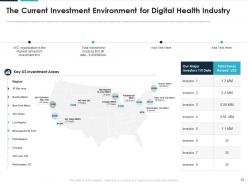
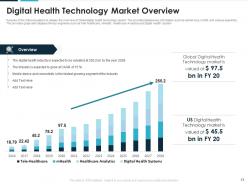
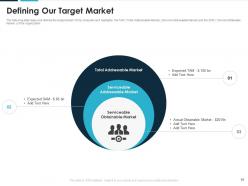
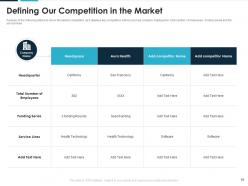
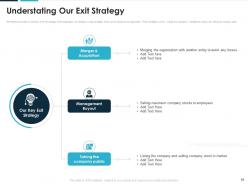
A pitch deck is a set of strategically designed slides that are used as a tool to generate funds from various investors. The following pitch deck caters to the digital health industry as it provides a key set of slides that are essential for any organization to raise funds. For any pitch deck, understanding the Industrys problem is a crucial factor so that appropriate solutions can be utilized. These problems in the digital health Industry can be a shortage of health tracking applications, high cost of healthcare, etc. Once these problems have been identified, appropriate solutions such as developing new applications and reducing healthcare costs through digital consulting are recommended. Displaying the organizations key competencies plays a vital role in a pitch deck thus, we have provided you with why to invest in our organization slide, highlighting the key industry verticals and critical business competencies. Understanding the organizations strength, the Industry cluster and team structure play a key role in raising funds for the organization. Once the organization has displayed its key stats, providing the investors information about the total funds generated through previous funding activities plays a vital role in providing an overview of the last funding activities. Our current investment environment analysis slide offers the user an insight into the critical details of multiple investors who are willing to invest in various startups. Understanding the market dynamics plays a vital role for any startup organization. Thus, you can use our digital health technology market overview slide to provide investors with an update of the current market scenario, the significant growth drivers, and the products TAM, SAM, and SOM. A good pitch deck carefully analyzes the market competition at a strategic and business level. You can use our defining the market competition slide to understand the critical details of multiple competitors in the market. In the end, having a great exit strategy always provides a sense of safety to the investors. Thus, we have provided you with our understanding of our exit strategy slide that highlights three major action plans. Merger and Acquisition, Management buyout, and taking the organization public. Download the pitch deck now and talk to our experts for all your queries. Book a free demo.
People who downloaded this PowerPoint presentation also viewed the following :
Content of this Powerpoint Presentation
Slide 1: This slide displays the title i.e. 'Digital Health Technology Investor Funding Elevator Pitch Deck' and your Company Name.
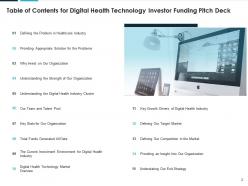
Slide 2: This slide showcases the tabke of contents for the project.
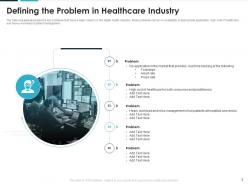
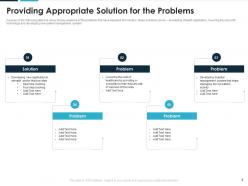
Slide 3: The slide illustrates the key problems that have a major impact on the digital health industry.
Slide 4: This slide shows the key solutions of the problems that have impacted the Industry.
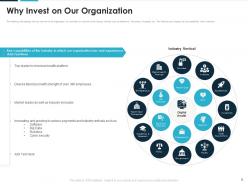
Slide 5: The slide displays the key overview of the organization as it provides an overview of the industry verticals like healthcare, life science, incubators, etc.
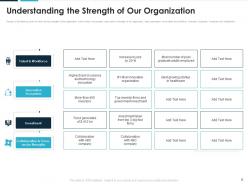
Slide 6: This slide is to show the key strengths of the organization to the investor as it presents major points of strength of the organization.
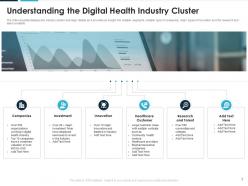
Slide 7: The slide displays the industry cluster and major details as it provides an insight into multiple segments.
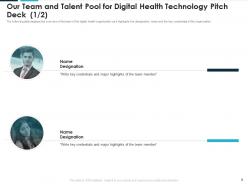
Slide 8: The slide displays the overview of the team of the digital health organization as it highlights the designation, name and the key credentials of the organization.
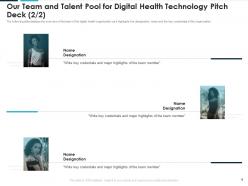
Slide 9: The slide displays the overview of the team of the digital health organization as it highlights the designation, name and the key credentials of the organization.
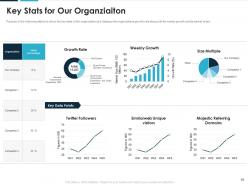
Slide 10: This slide is to show the key stats of the organization as it displays the organizations growth rate along with its weekly growth and its market share.
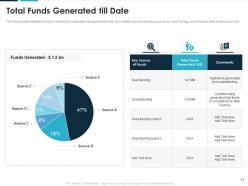
Slide 11: The slide highlights the total funds that the organization ahs generated till date form multiple sources.
Slide 12: This slide is to highlight the major investors who have invested into the organization.
Slide 13: This slide is to display the overview of Global digital health technology market.
Slide 14: The slide displays the key growth drivers of the Industry as it highlights the key aspect such as growth mHealth sector, etc.
Slide 15: The slide maps and defines the target market of the consumer as it highlights the TAM, (Service Addressable Market) and the SOM ( Service Obtainable Market ).
Slide 16: This slide is to show the market competition as it displays key competitive metrics such as company headquarter, total number of employees, etc.
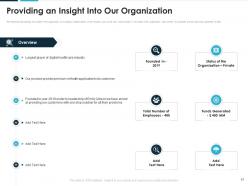
Slide 17: The slide displays key insight of the organization as it displays multiple details of the company such as the year it was founded in, etc.
Slide 18: The slide provides an overview of the exit strategy of the organization as it displays 3 major strategies which can be utilized by the organization.
Slide 19: This slide showcases the contact details of the company including phone number, office address, etc.
Slide 20: This is the icons slide for the project.
Slide 21: This slide displays the title for additional slides.
Slide 22: This slide presents about the company, target audience and its client's values.
Slide 23: This slide showcases the vision, mission, strategies and goals of your company.
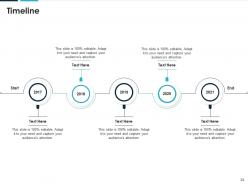
Slide 24: This slide exhibits the yearly timeline of the company.
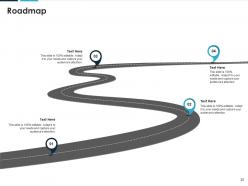
Slide 25: This slide exhibits the roadmap of the company.
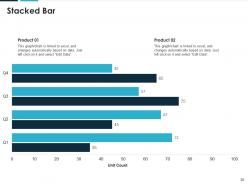
Slide 26: This slide showcases the stacked bar charts for different products. The charts are linked to Excel.
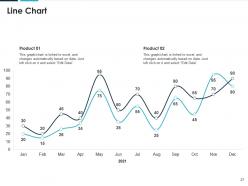
Slide 27: This slide showcases the line charts for different products. The charts are linked to Excel.
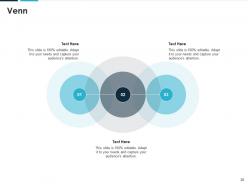
Slide 28: This slide exhibits the venn diagram for your company targets.
Slide 29: This slide showcases the posts related to past experiences of clients.
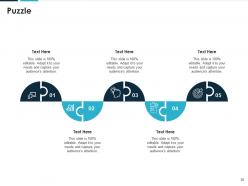
Slide 30: This slide explains the puzzle for your company.
Slide 31: This is the thank you slide and displays the contact details of the company i.e. office address, contact number, etc.
Digital health technology investor funding elevator pitch deck ppt template with all 31 slides:
Use our Digital Health Technology Investor Funding Elevator Pitch Deck Ppt Template to effectively help you save your valuable time. They are readymade to fit into any presentation structure.


FAQs for Digital health technology investor funding elevator pitch
Honestly, digital health tech is pretty solid - you get better access, outcomes, and it saves money. Telehealth lets patients get care from home, which is huge for rural folks or anyone who hates driving to appointments (me included). The monitoring stuff is wild - real-time data, automatic alerts when something's off, way more personalized treatments. Hospital readmissions drop. Less paperwork headaches too. Oh, and don't try to do everything at once - that's a recipe for chaos. Pick one tool first and actually get good at it before adding more.
Honestly, telemedicine just cuts through all the usual BS that keeps people from getting care. Rural patients don't have to drive 3 hours to see a specialist anymore. People without cars can do check-ups from their couch. Managing chronic conditions becomes way less of a headache too - no more missing appointments because you couldn't get time off work. Oh, and it's easier to connect patients with providers who speak their language since location doesn't matter as much. The only real catch is making sure people have decent internet and a device that actually works.
So AI takes tons of health data and finds patterns that can predict what'll happen next. Lab results, vitals, lifestyle stuff - you throw it all in and it spots patients who might have heart attacks or need readmission. Pretty crazy how good these models are getting, honestly. They learn from thousands of old cases to make predictions about your current patients. Clean data is everything though - crappy data gives you crappy results. Oh, and start simple. Pick one thing you want to predict first, then build from there. Way easier than trying to do everything at once.
Yeah, wearables totally work for getting patients more involved. The real-time feedback is huge - people love seeing their progress right away instead of waiting weeks between appointments. It's way less intimidating than traditional medical stuff too. Patients start noticing patterns they'd miss otherwise, which keeps them actually following their treatment plans. My cousin got way more serious about her diabetes management once she started using a continuous glucose monitor, honestly. The accountability factor helps too since doctors can check in remotely. Just don't go crazy with too many devices at once - pick something that plays nice with your current setup first.
Ugh, so many red flags with health apps honestly. Data breaches are huge - your fitness tracker and medical apps are basically goldmines for hackers. Companies can sell your info too, which is sketchy. Most people don't even read those privacy policies (guilty!). The encryption is usually pretty weak on these things. I'd definitely look for HIPAA-compliant apps if you can find them. Strong passwords are a must, and maybe don't share everything? Like, does your step counter really need to know your blood type? Just be picky about what data you're comfortable putting out there.
Honestly, just pick one department and test stuff there first - rolling out everything everywhere is a nightmare waiting to happen. Whatever you choose needs to play nice with your current EHR system because logging into 47 different platforms will make everyone hate you. Get your team involved in picking the tools (they're the ones actually using them), and don't skimp on training. I learned that the hard way at my last job. Choose something that fixes an actual headache you're dealing with, not just shiny new tech. Perfect one thing, then move on to the next.
Honestly, EHRs are kind of a love-hate thing. Documentation gets way faster since everything's in one place and searchable - no more trying to read Dr. Smith's terrible handwriting lol. Information sharing between departments is so much smoother too. But here's the annoying part: you'll probably spend more time clicking through screens and doing data entry than before. Most docs I know complain about that. The trick is really nailing down good training and setting up shortcuts that actually work for how you operate. Figure out what's eating up your time first, then look into templates or quick-entry options.
Honestly, digital health stuff has been a game changer for managing chronic conditions. Your phone can sync with glucose monitors now, blood pressure cuffs automatically save readings, and medication apps that don't suck. Instead of waiting months between doctor visits for updates, you get actual data trends. Spotting problems early becomes way easier. Your doctor can adjust treatments faster too. I mean, my aunt uses this setup for her diabetes and swears by it. Just pick tools that fit into what you're already doing - don't overcomplicate your life.
Dude, AI diagnostics are wild right now - they're catching diseases before doctors even think to look. Telehealth isn't just Zoom calls anymore, it's becoming these whole virtual care systems. Your Apple Watch? That's kid stuff compared to what's coming - wearables that'll literally tell you you're getting sick before you feel crappy. Mental health apps are blowing up too, which honestly makes sense given how expensive therapy is. Oh, and personalized medicine based on your DNA is getting real. Everything's shifting from "let's treat this" to "let's prevent this." Start tracking which companies are actually getting FDA approval though - that's where the money follows.
Honestly, these health apps are game-changers because you get instant access to all your data instead of relying on memory. Track your blood pressure, meds, symptoms - whatever you need. The reminders alone are worth it (I'm terrible at remembering pills). What's really nice is having actual records when you see your doctor, not just "um, I think my headaches were worse last Tuesday?" Plus you can message providers directly through some apps. I'd definitely go with ones that sync with your medical records first - gives you the full picture right away.
Okay so the big three are consent, privacy, and bias. Most patients have no clue what data gets collected - those consent forms are basically useless, let's be real. Privacy's huge too since health data is like gold to hackers. Bias is where things get really messy though - if your training data isn't diverse, the AI just amplifies existing inequalities. I actually saw this happen at my old company once. Anyway, you need transparency about data use and test your algorithms across different populations before launching anything.
Honestly, digital mental health stuff has been a total lifesaver for so many people I know. Apps let you do therapy sessions whenever, plus you can track mood patterns and get crisis help at like 3am if needed. Those AI chatbots aren't perfect but they're surprisingly good at suggesting coping techniques on the spot. Wearables can even catch stress signals before you realize you're spiraling - pretty wild tech. The data helps you and your therapist spot triggers you'd never notice otherwise. I'd start with something like Headspace or BetterHelp, see what clicks for you.
Ugh, digital health scaling is brutal. FDA approval processes are slow as hell, plus you've gotta convince insurance companies your tech is worth paying for - good luck with that. The worst part? Most hospitals still use systems from like 2003, so integration becomes this massive headache. Doctors hate learning new platforms and patients don't trust health apps anyway. Oh, and I forgot - proving ROI is everything. Honestly, just start with tiny pilot programs first. Don't even think about going big until you can show clear results that actually matter to people writing checks.
So basically these digital health apps can send personalized info straight to people's phones in ways they actually understand. Videos and interactive stuff work way better than boring pamphlets - trust me on that one. Most platforms automatically adjust for different reading levels and languages, which is pretty cool. Gaming features help too because let's face it, learning about blood pressure isn't exactly thrilling otherwise. The trick is making content that fits different cultures. You'll want to test everything with real users first though. They'll tell you what makes sense and what's total gibberish.
Okay so first thing - tackle the big stuff like cost barriers and digital literacy gaps. Build platforms that work on crappy old phones (because let's be real, not everyone's got an iPhone 15). Add multiple languages and make interfaces dead simple. Libraries and community groups are gold for partnering on training programs. Areas with sketchy internet need offline features too. I'd honestly start with an accessibility audit to see who you're accidentally leaving out. Oh and don't forget infrastructure issues in rural spots - that's huge.
-
Graphics are very appealing to eyes.
-
Excellent template with unique design.
-
Content of slide is easy to understand and edit.
-
Unique and attractive product design.
-
Great designs, really helpful.
-
Great product with effective design. Helped a lot in our corporate presentations. Easy to edit and stunning visuals.
-
Awesomely designed templates, Easy to understand.