


Digital Service Management Playbook Powerpoint Presentation Slides





Try Before you Buy Download Free Sample Product
 Impress Your
 Audience
 100%
100% Editable
 Save Hours
 of Time


Explore our expertly crafted Digital Service Management Playbook Template an all-inclusive roadmap designed to steer policymakers and businesses through the dynamic digital transformation landscape. This Modern technology stack deck underscores the significance of digital metamorphosis and its far-reaching advantages, spotlighting the pivotal domains that warrant attention. Further, our digital services presentation encapsulates foundational principles for triumphant digital evolution and prerequisite considerations crucial for project reengineering. Moreover, this Digital hosting environment PowerPoint entails sculpting services through agile and iterative methodologies, handpicking a contemporary technology stack, and orchestrating security and privacy via reusable protocols. Also, this public service platform PPT playbook culminates with a strategic discourse on managing IT services expenditure, facilitated by a meticulous tracking dashboard. Access this comprehensive guide today and confidently navigate the intricate contours of the digital landscape. Get access now.
People who downloaded this PowerPoint presentation also viewed the following :
Content of this Powerpoint Presentation
Slide 1: This slide introduces Digital service management playbook.
Slide 2: This slide depicts the Agenda of the presentation.
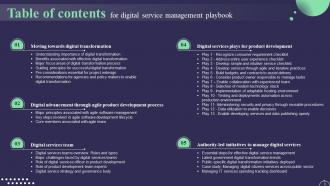
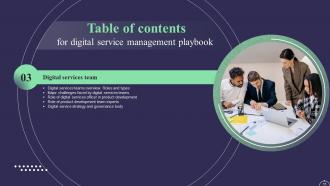
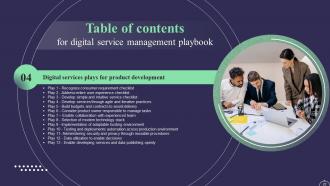
Slide 3: This slide incorporates the Table of contents.
Slide 4: This slide highlights the Title for the Topics to be covered next.
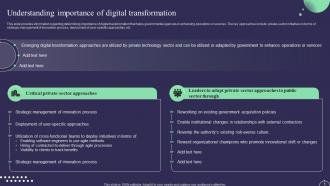
Slide 5: This slide focuses on Understanding importance of digital transformation.
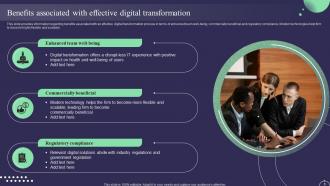
Slide 6: This slide exhibits the Benefits associated with effective digital transformation.
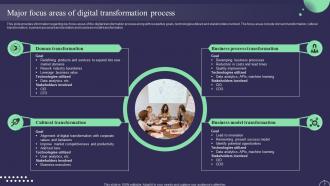
Slide 7: This slide showcases the Major focus areas of digital transformation process.
Slide 8: This slide deals with the Guiding principles for successful digital transformation.
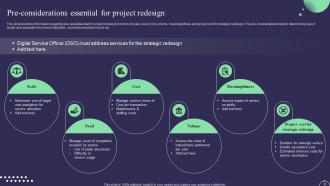
Slide 9: This slide highlights the Pre-considerations essential for project redesign.
Slide 10: This slide portrays the Recommendations for agencies and policy makers to enable digital transformation.
Slide 11: This slide indicates the Heading for the Contents to be discussed next.
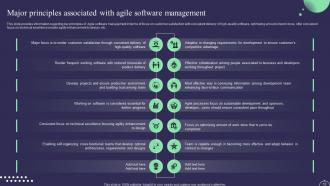
Slide 12: This slide provides information regarding key principles of Agile software management.
Slide 13: This slide provides information about the Key steps involved in agile software development lifecycle.
Slide 14: This slide shows the Core members associated with agile team.
Slide 15: This slide presents the Title for the Ideas to be covered in the next template.
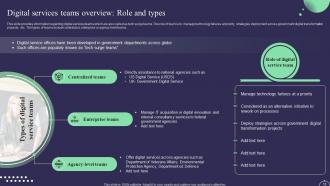
Slide 16: This slide provides information regarding digital services teams which are also called as tech surge teams.
Slide 17: This slide exhibits the Major challenges faced by digital services teams.
Slide 18: This slide continues the Major challenges faced by digital services teams.
Slide 19: This slide highlights the Role of digital services officer in product development.
Slide 20: This slide portrays the Role of product development team experts.
Slide 21: This slide talks about the Digital service strategy and governance body.
Slide 22: This slide includes the Heading for the Ideas to be discussed further.
Slide 23: This slide deals with addressing consumer requirement that will help in building products.
Slide 24: This slide focuses on addressing consumer experience.
Slide 25: This slide highlights developing simple and intuitive service checklist.
Slide 26: This slide presents building software services at incremental and fast-paced method to limit risk of failure.
Slide 27: This slide shows development of budgets and contracts to support product delivery.
Slide 28: This slide portrays digital services play to administer product owner responsible in assigning tasks and work elements.
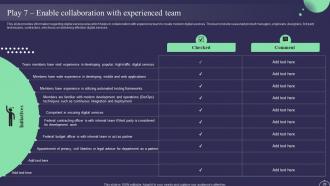
Slide 29: This slide reveals digital services play which helps in collaboration with experience team to create modern digital services.
Slide 30: This slide presents digital services play which helps digital service teams to select a modern technology stack.
Slide 31: This slide depicts Play 9-Implementation of adaptable hosting environment.
Slide 32: This slide represents Play 10-Testing and deployments.
Slide 33: This slide shows digital services play which helps in managing security and privacy through reusable processes.
Slide 34: This slide presents the digital services play which helps in tracking data.
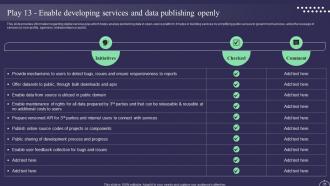
Slide 35: This slide focuses on Play 13-Enable developing services and data publishing openly.
Slide 36: This slide displays the Title for the Contents to be discussed next.
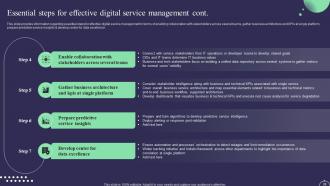
Slide 37: This slide states the Essential steps for effective digital service management.
Slide 38: This slide continues the essential steps for effective digital service management.
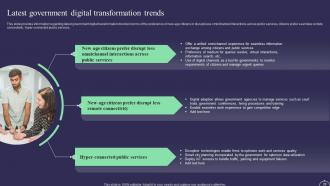
Slide 39: This slide talks about the Latest government digital transformation trends.
Slide 40: This slide provides information regarding customer-centric transformation initiatives.
Slide 41: This slide shows the case study in managing digital citizens service across public sector.
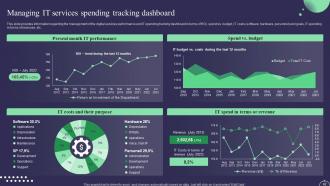
Slide 42: This slide focuses on Managing IT services spending tracking dashboard.
Slide 43: This is the Icons slide containing all the Icons used in the plan.
Slide 44: This slide is used for depicting some Additional information.
Slide 45: This is the 30-60-90 days plan slide for effective planning.
Slide 46: This is Our mission slide. State your company's Vision, Mission, and Goal here.
Slide 47: This slide contains the Post it notes for reminders and deadlines.
Slide 48: This is the Venn diagram slide.
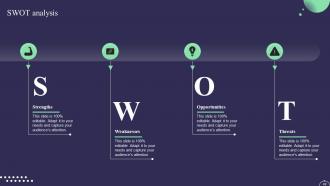
Slide 49: This slide presents the SWOT analysis.
Slide 50: This is Our team slide. State your team-related information here.
Slide 51: This is the Idea generation slide for encouraging fresh ideas.
Slide 52: This is the Puzzle slide with related imagery.
Slide 53: This is Our target slide for showcasing the organization's targets.
Slide 54: This is the Thank You slide for acknowledgement.
Digital Service Management Playbook Powerpoint Presentation Slides with all 59 slides:
Use our Digital Service Management Playbook Powerpoint Presentation Slides to effectively help you save your valuable time. They are readymade to fit into any presentation structure.


































FAQs for Digital Service Management Playbook
Key components include automated service delivery, real-time monitoring and analytics, integrated customer support platforms, cloud-based infrastructure management, and AI-powered incident resolution. These technologies streamline operations by reducing manual interventions, accelerating response times, and enhancing user experiences, with many organizations finding that strategic integration ultimately delivers improved operational efficiency and competitive advantage.
Digital service management platforms enhance customer experience by providing omnichannel support, real-time issue resolution, personalized interactions, and self-service capabilities across all touchpoints. Through automated workflows and integrated data analytics, organizations streamline response times, reduce service friction, and deliver proactive support, with many retail and financial services companies finding that these platforms significantly boost customer satisfaction and long-term engagement.
Automation streamlines digital service management by handling routine tasks, accelerating incident response, and enabling proactive monitoring across IT infrastructure. Through automated workflows, organizations can reduce manual intervention, minimize service disruptions, and deliver faster resolution times, while ultimately enhancing operational efficiency and improving customer experiences in increasingly complex digital environments.
Data analytics improves digital service management decision-making by identifying service bottlenecks, predicting customer behavior patterns, optimizing resource allocation, and measuring performance metrics in real-time. Through predictive analytics and automated insights, organizations streamline operations, enhance customer experiences, and reduce operational costs, with many service providers finding that data-driven approaches deliver significantly faster issue resolution and improved service quality.
Common challenges in implementing digital service management solutions include legacy system integration complexities, employee resistance to new workflows, data migration difficulties, inadequate training programs, and budget constraints during transition periods. While these obstacles require careful planning and change management strategies, organizations across sectors like healthcare, financial services, and retail find that phased implementation approaches, comprehensive staff training, and strong leadership support ultimately deliver improved operational efficiency and enhanced customer experiences.
Organizations measure digital service management success through key performance indicators like service availability, response times, customer satisfaction scores, resolution rates, and operational costs. These metrics enable businesses to track service quality improvements, resource efficiency, and user experience enhancements across departments like IT, customer support, and operations, ultimately delivering measurable ROI and competitive advantage.
Emerging trends in digital service management include AI-powered automation, hyper-personalized customer experiences, predictive analytics for proactive issue resolution, low-code/no-code development platforms, and integrated sustainability metrics. These technologies streamline operations by reducing manual workflows, enhancing response times, and delivering seamless omnichannel experiences, with many organizations finding that strategic automation ultimately drives competitive advantage while significantly lowering operational costs.
Industries approach digital service management through sector-specific strategies, with healthcare emphasizing patient portal integration and appointment scheduling, financial services focusing on mobile banking and fraud detection, retail prioritizing omnichannel customer experiences, and manufacturing streamlining supply chain visibility. While each sector faces unique regulatory and operational challenges, cross-industry learning reveals that successful organizations consistently prioritize automation, real-time analytics, and seamless customer touchpoints, ultimately delivering faster service resolution and enhanced competitive advantage.
Cloud computing revolutionizes digital service management by enabling scalable infrastructure, real-time resource allocation, automated deployment processes, and enhanced collaboration across distributed teams. Through cloud platforms, organizations streamline service delivery, reduce operational costs, and improve customer experiences while maintaining flexibility, with many financial services and healthcare institutions finding that cloud-based strategies ultimately deliver faster innovation cycles and competitive advantage.
Organizations ensure compliance and security in digital service management through automated governance frameworks, continuous monitoring systems, role-based access controls, and integrated compliance tracking. These technologies streamline regulatory adherence by implementing real-time audit trails, enforcing data protection protocols, and maintaining security standards across all touchpoints, ultimately delivering enhanced risk management and operational transparency.
Essential digital service management tools include cloud platforms, AI-powered analytics, automation software, ITSM solutions, and customer experience monitoring systems. These technologies streamline operations by enabling real-time visibility, predictive maintenance, and seamless integration across services, with many organizations finding that strategic combinations ultimately deliver faster resolution times and enhanced customer satisfaction.
Digital service management supports organizational agility by enabling rapid service deployment, real-time monitoring, and automated scaling capabilities that respond quickly to changing business demands. Through cloud-based platforms and API-driven architectures, organizations streamline operations, minimize downtime, and accelerate decision-making processes, ultimately delivering enhanced customer experiences while maintaining competitive advantage in increasingly dynamic markets.
Organizations should follow practices including establishing clear digital strategies, investing in scalable cloud infrastructure, prioritizing user experience design, implementing robust data analytics, and fostering cross-functional collaboration. Through strategic workforce upskilling and agile methodologies, companies across sectors like banking, healthcare, and retail streamline operations, enhance customer interactions, and accelerate service delivery, ultimately achieving competitive advantage in increasingly digital markets.
Feedback integration involves implementing user surveys, performance analytics, service desk insights, automated monitoring systems, and stakeholder reviews throughout the service lifecycle. These mechanisms enable organizations to identify pain points, optimize workflows, and enhance user experiences, with many enterprises finding that continuous feedback loops ultimately deliver improved service quality and operational efficiency.
Digital service management facilitates collaboration through centralized communication platforms, shared dashboards for real-time visibility, automated workflow coordination, and integrated knowledge bases that break down silos. These tools enable cross-functional teams to streamline incident response, accelerate problem resolution, and maintain consistent service delivery, with many organizations finding that unified platforms ultimately enhance operational efficiency and customer satisfaction.
-
The Designed Graphic are very professional and classic.
-
It's always a delight to see new templates from you! I am extremely pleased with the fact that they are easy to modify and fit any presentation layout in seconds!