


Digital Transformation Framework For Logistic And Supply Chain Sector




Try Before you Buy Download Free Sample Product
 Impress Your
 Audience
 100%
100% Editable
 Save Hours
 of Time


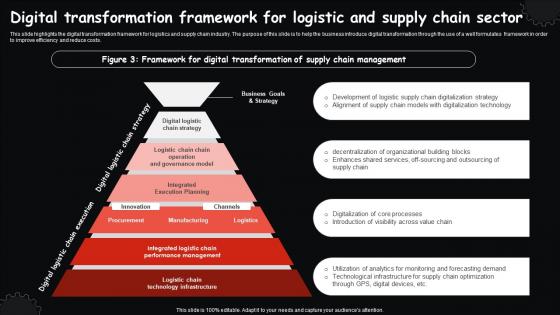
This slide highlights the digital transformation framework for logistics and supply chain industry. The purpose of this slide is to help the business introduce digital transformation through the use of a well formulates framework in order to improve efficiency and reduce costs.
People who downloaded this PowerPoint presentation also viewed the following :
Digital Transformation Framework For Logistic And Supply Chain Sector with all 9 slides:
Use our Digital Transformation Framework For Logistic And Supply Chain Sector to effectively help you save your valuable time. They are readymade to fit into any presentation structure.








FAQs for Digital Transformation Framework For Logistic And
Key components include cloud infrastructure, data analytics platforms, automation tools, cybersecurity frameworks, and change management processes. These technologies streamline operations by enhancing operational efficiency, accelerating decision-making, and improving customer experiences, with many organizations finding that strategic integration of these elements delivers competitive advantage and sustainable growth.
Companies measure digital transformation effectiveness through key performance indicators like revenue growth, operational efficiency metrics, customer satisfaction scores, employee productivity rates, and cost reduction percentages. These measurements enable organizations to track progress across departments, identify successful initiatives, and adjust strategies accordingly, with many enterprises finding that combining quantitative data with qualitative feedback delivers the most comprehensive assessment of their transformation success.
Leadership serves as the primary catalyst for digital transformation, establishing strategic vision, securing necessary resources, fostering cultural change, and ensuring organization-wide alignment with transformation goals. Through executive sponsorship and change management, leaders enable cross-functional collaboration, accelerate technology adoption, and drive employee engagement, with many organizations finding that strong leadership commitment ultimately delivers faster implementation timelines and sustainable competitive advantage.
Businesses ensure employee buy-in during digital transformation through comprehensive training programs, transparent communication about benefits and timelines, and involving staff in technology selection processes. By demonstrating how new systems streamline daily tasks, reduce manual workloads, and enhance career development opportunities, organizations create enthusiasm rather than resistance, ultimately accelerating adoption rates and maximizing transformation ROI.
Essential digital transformation technologies include cloud computing, artificial intelligence, machine learning, data analytics, IoT devices, and automation platforms. These technologies work together by streamlining operations, enhancing customer experiences, and enabling data-driven decision making, with many organizations finding that strategic integration ultimately delivers competitive advantage and operational efficiency.
Digital transformation enhances customer experience by implementing omnichannel platforms, AI-powered personalization, real-time analytics, mobile-first interfaces, and automated service solutions. Through these technologies, organizations streamline interactions, deliver personalized recommendations, and provide 24/7 support capabilities, with many retailers and financial services finding that customers enjoy faster resolutions and more intuitive experiences.
Common digital transformation pitfalls include inadequate change management, insufficient employee training, poor technology integration, unrealistic timelines, and lack of clear strategic vision. These challenges often result in project delays, budget overruns, and employee resistance, with many organizations finding that addressing cultural adaptation and stakeholder alignment early ultimately delivers smoother implementation and sustainable competitive advantage.
Data analytics drives decision-making by providing real-time insights, predictive modeling, and comprehensive performance metrics that replace intuition-based choices with evidence-driven strategies. Through advanced dashboards and AI-powered tools, organizations streamline operations, enhance customer experiences, and optimize resource allocation, with many financial services and retail companies finding that data-driven approaches deliver faster responses and competitive advantage.
Financial services, healthcare, retail, and manufacturing are currently leading digital transformation initiatives, with telecommunications and automotive sectors also making significant advances. These industries are leveraging cloud computing, AI, and automation to streamline operations, enhance customer experiences, and reduce costs, ultimately delivering competitive advantages in an increasingly digital marketplace.
Organizations maintain cybersecurity during digital transformation by implementing zero-trust architectures, conducting regular security assessments, encrypting data across all platforms, and establishing comprehensive employee training programs. Through strategic security integration, companies in banking, healthcare, and retail can accelerate their digital initiatives while minimizing vulnerabilities, ultimately delivering enhanced customer experiences without compromising data protection or regulatory compliance.
Digital transformation fundamentally reshapes traditional business models by introducing automation, data-driven decision-making, cloud-based operations, and enhanced customer touchpoints. This strategic shift enables organizations to streamline processes, reduce operational costs, and deliver faster, more personalized services, with many companies finding that digital integration ultimately provides significant competitive advantages in increasingly dynamic markets.
Smaller companies can compete through agile implementation, strategic technology partnerships, cloud-based solutions, and focused niche specialization that leverages their flexibility advantages. While larger enterprises often struggle with legacy system integration and bureaucratic processes, smaller organizations can rapidly deploy AI tools, automation platforms, and customer experience technologies, ultimately delivering faster innovation cycles and more personalized services that create competitive differentiation.
Digital transformation ethical considerations include data privacy protection, algorithmic bias prevention, job displacement management, cybersecurity responsibilities, and transparent decision-making processes. These challenges present opportunities for organizations to build consumer trust, enhance regulatory compliance, and create competitive advantages, with many companies finding that proactive ethical frameworks ultimately deliver stronger stakeholder relationships and sustainable growth.
Change management principles facilitate smoother digital transformation by establishing clear communication strategies, comprehensive training programs, stakeholder engagement frameworks, and phased implementation approaches. These methodologies streamline adoption by addressing employee concerns, building digital literacy, and creating organizational buy-in, with many companies finding that structured change processes reduce resistance while accelerating transformation timelines and operational efficiency.
Businesses should consider artificial intelligence integration, edge computing, automation platforms, cybersecurity enhancements, and cloud-native architectures for continued digital evolution. These technologies streamline operations by enabling real-time decision-making, reducing manual processes, and enhancing customer experiences, with many organizations finding that strategic adoption delivers competitive advantage and operational efficiency in an increasingly digital marketplace.
-
The service is fast, and I could access any presentation after buying the subscription. I don’t think I’ll ever have to worry about a presentation in my life.
-
Very unique, user-friendly presentation interface.