

Digital Transformation In Manufacturing Powerpoint Ppt Template Bundles




Try Before you Buy Download Free Sample Product
 Impress Your
 Audience
 100%
100% Editable
 Save Hours
 of Time


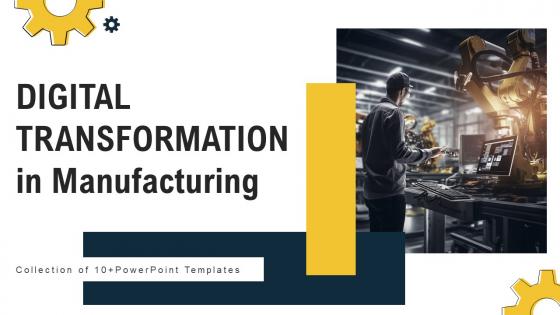
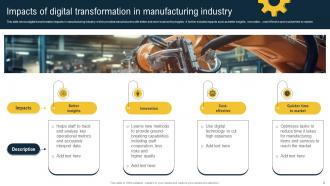
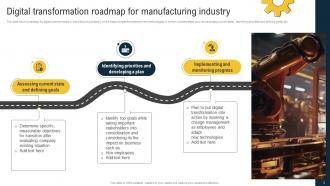
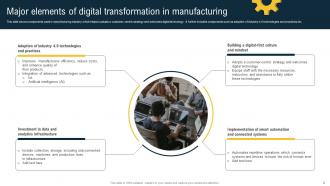
Introducing our comprehensive PowerPoint presentation on Digital Transformation in Manufacturing. This dynamic and informative deck is your ultimate guide to navigate the evolving landscape of manufacturing through digital transformation. Explore the key components of this transformation, including a Digital Transformation Roadmap tailored specifically for manufacturing industries. Witness the power of Digital Transformation KPI Dashboards, enabling you to track and measure your progress effectively. Discover the essential Elements of Digital Transformation in Manufacturing, such as IoT integration, AI-driven automation, and data-driven decision-making. With this PPT, you will gain insights, strategies, and actionable steps to modernize your manufacturing processes, improve efficiency, and stay competitive in the Industry 4.0 era. Elevate your manufacturing game with our expertly crafted presentation your gateway to a smarter, more efficient future.
People who downloaded this PowerPoint presentation also viewed the following :
Digital Transformation In Manufacturing Powerpoint Ppt Template Bundles with all 27 slides:
Use our Digital Transformation In Manufacturing Powerpoint Ppt Template Bundles to effectively help you save your valuable time. They are readymade to fit into any presentation structure.









FAQs for Digital Transformation In Manufacturing Powerpoint
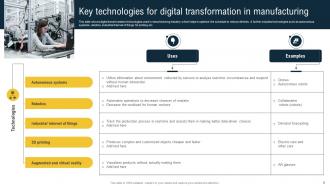
So you'll want IoT sensors collecting real-time data, plus cloud storage for all that info. AI and machine learning help with predictive maintenance - honestly, it's pretty cool watching it catch problems before they happen. Robotics handle the automation side. Don't forget cybersecurity though, manufacturers get targeted constantly. Digital twins are really taking off now too, basically you can test changes on a virtual copy first. My advice? Pick one process to start with, prove it works and pays for itself, then expand. Trust me, trying to do everything at once will just stress out your team and blow your budget.
Dude, IoT is honestly a game changer for factories. Sensors track everything - machine performance, inventory, equipment health - and dump it all into dashboards so you see problems before they bite you. No more finding out your line went down three hours ago, you know? Predictive maintenance becomes actually possible instead of just fixing stuff after it breaks. My buddy's plant started with just one production line to test it out first (smart move tbh). Once they proved it worked, they rolled it everywhere else. The real-time visibility thing is wild once you get used to it.
Honestly, data analytics is a game-changer for manufacturing - it takes all that machine noise and turns it into stuff you can actually use. Predictive maintenance catches breakdowns before they happen. Quality control spots defects early. Your supply chain runs way smoother too. The crazy thing is finding patterns that would fly right past human eyes. You'll optimize production schedules, cut waste, even predict when demand's about to spike. Oh, and definitely start small - pick one area where your data's already pretty clean and prove it works there first. No point overwhelming yourself right out the gate.
Zero-trust is your best bet - treat everything like it's out to get you until proven safe. Keep your operational tech separate from regular IT networks, and isolate those old legacy systems (they're always the weak link). Train your people constantly because let's be real, most hacks happen when Karen from accounting clicks a sketchy email. Do vulnerability scans regularly and stay on top of firmware updates. Build security into any digital upgrades from the start rather than trying to patch it in later. Oh, and have an incident response plan ready so you're not totally lost when things go sideways.
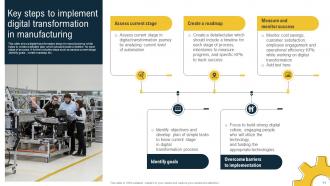
Honestly, the three big ones are gonna be your old equipment not playing nice with new tech, your workers freaking out about change, and security headaches. Think about it - your current machines were built like 10+ years ago, so connecting them to modern software is a total nightmare. People get scared they'll lose their jobs or just hate learning new systems. Plus once you connect everything online, hackers have way more ways to get in. Start with one small project first though. Don't go crazy trying to upgrade everything at once - that's how you end up with expensive disasters.
So basically predictive maintenance uses sensors to catch equipment problems before they actually break down. Way better than waiting for stuff to fail, you know? You can plan repairs during downtime instead of scrambling when machines suddenly die. Honestly, the cost savings are nuts - less emergency repairs, fewer production stops, plus your equipment lasts longer. My buddy's company started with just monitoring their most important machines and saw results pretty fast. Skip the old "fix when broken" approach or those expensive routine checkups that might not even be needed. The timing becomes way more precise.
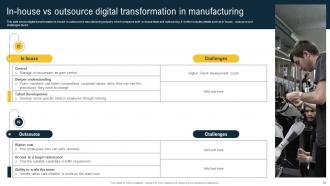
Look, automation isn't going to wipe out your workforce like everyone thinks. Jobs shift around - your machine operators become automation techs, that kind of thing. Yeah, some old-school manufacturing roles go away, but the new positions usually pay more anyway. The smart move? Retrain the people you already have instead of just tossing them out. Honestly, they know your processes better than anyone new you'd hire. Most companies I know do this gradually - no need to flip everything overnight. Just start planning those reskilling programs now because teaching technical skills is way easier than teaching someone your entire operation from scratch.
Honestly, cloud computing is perfect for breaking down those annoying data silos. Your Detroit design team can finally work seamlessly with production in Mexico - everything's shared and instant. When demand goes crazy (or tanks), your computing power adjusts automatically instead of you buying hardware that'll just collect dust. All your IoT sensors, quality data, and supply chain stuff lives in one spot where everyone can actually find it. Oh, and don't go all-in right away - test it with something simple like inventory management first. Way less risky that way.
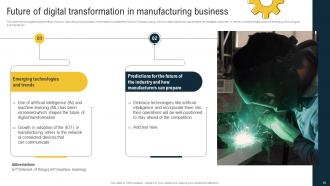
Honestly, smart factories are pretty game-changing. Your machines will literally predict when they're gonna break down - saves you from those nightmare emergency shutdowns. Real-time monitoring cuts operational costs big time, plus you get way more consistent products. The flexibility is huge too - you can pivot production lines super fast when market demands shift. Most companies see ROI in like 18-24 months, which isn't bad. My advice? Don't go all-in right away. Test it on one line first, see how it goes, then expand from there.
Dude, 3D printing is a total game-changer for prototyping. You can print iterations overnight instead of waiting weeks for parts - cuts your prototype costs by like 80% too. The coolest part? You can test crazy complex shapes that regular manufacturing just can't do. Mass customization becomes actually possible, and honestly, there's something satisfying about watching your design materialize layer by layer. Time-to-market drops from months to days, which is huge. My advice though - don't go crazy right away. Pick one product line first and mess around with prototyping before you overhaul everything.
VR training is seriously cool - workers can practice risky procedures in totally safe virtual environments without breaking expensive equipment. For maintenance, AR lets techs see digital instructions overlaid right on the actual machines through tablets or smart glasses. It's basically like having an expert whispering in your ear the whole time. New employees get trained way faster, and you'll see fewer costly mistakes. Oh, and maintenance downtime drops too since people know exactly what they're doing. I'd pick one specific area to test it out first rather than going all-in immediately.
Honestly? Track the obvious stuff first - uptime, production efficiency, defect rates. Those hit you right away. Then dig into cost savings and ROI, but give it time since that stuff takes months to show up. Employee adoption is probably the biggest thing though (seriously, half the companies I know ignore this and wonder why everything fails). Are people actually using the new systems? If not, you're screwed. Customer satisfaction matters too, obviously. Oh and set your baselines before you change anything - otherwise you're just guessing about impact. Monthly check-ins should do it.
Honestly, it's a game changer for supply chains. Real-time tracking shows you exactly where materials are, and predictive analytics help forecast demand way better than guessing. IoT sensors monitor warehouse temps, delivery trucks - basically everything. Your suppliers can plug directly into your systems too, which cuts out all those back-and-forth emails that slow things down. Automated reordering prevents you from running out of stock unexpectedly. Best part? You'll catch problems early instead of scrambling to fix disasters after they happen. Way better than the old Excel nightmare we all remember.
Oh man, digitizing is such a pain for compliance stuff. You're suddenly juggling data privacy laws and cybersecurity rules on top of all your normal manufacturing regs. The transition phase? Total chaos with old and new requirements overlapping everywhere. But here's the thing - once you actually get your digital systems running properly, compliance gets way easier. Automated reporting, real-time monitoring, all that good stuff. Just make sure you figure out which regulations hit your new digital processes first, and pick tech that can handle compliance reporting right from the start. Worth it eventually though.
Look, first thing - let your people actually experiment without getting their heads bitten off when something doesn't work. Give teams real time to mess around with new tech, and honestly? Listen when they pitch ideas instead of just nodding and ignoring them like most managers do. Celebrate the wins AND the smart failures - that's how people actually learn. Mix your tech geeks with the old-school operations folks on projects. Oh, and don't forget training. Nobody wants to feel like they're about to be replaced by some app they can't figure out.
-
Great work on designing the presentation. I just loved it!
-
Use of different colors is good. It's simple and attractive.