Disaster recovery plan it roadmap for implementing disaster recovery plan

Rating:
100%
Disaster recovery plan it roadmap for implementing disaster recovery plan
Slide 1 of 9

or

Favourites Favourites

Try Before you Buy Download Free Sample Product

Audience Impress Your
Audience
Editable 100%
Editable
Time Save Hours
of Time
The Biggest Sale is ending soon in
0
0
:
0
0
:
0
0
Rating:
100%
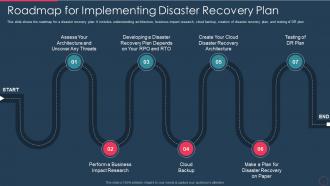
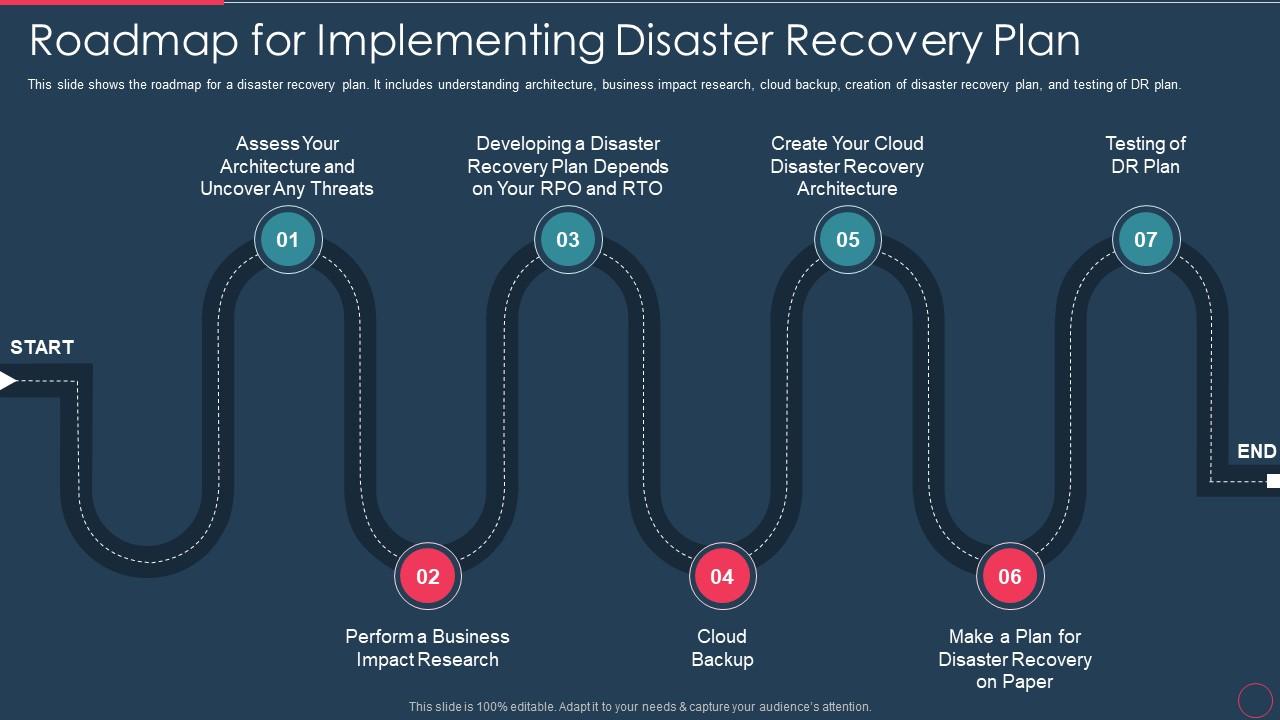
This slide shows the roadmap for a disaster recovery plan. It includes understanding architecture, business impact research, cloud backup, creation of disaster recovery plan, and testing of DR plan. Increase audience engagement and knowledge by dispensing information using Disaster Recovery Plan It Roadmap For Implementing Disaster Recovery Plan. This template helps you present information on seven stages. You can also present information on Roadmap, Implementing, Recovery Plan using this PPT design. This layout is completely editable so personaize it now to meet your audiences expectations.
FAQs for Disaster recovery plan it roadmap for implementing

Key components of an effective Disaster Recovery Plan include risk assessment and business impact analysis, data backup and recovery procedures, communication protocols, alternative site arrangements, and regular testing schedules. These elements work together by identifying critical vulnerabilities, ensuring data protection, maintaining stakeholder coordination, and providing operational continuity, with many organizations finding that comprehensive planning significantly reduces downtime and enhances business resilience.

Organizations can assess their current disaster recovery capabilities through comprehensive risk analysis, business impact assessments, recovery time objective evaluations, infrastructure audits, and testing simulations. These assessments enable companies to identify vulnerabilities, measure response readiness, and benchmark recovery speeds, with many financial institutions and healthcare organizations finding that regular capability reviews streamline emergency protocols and ultimately deliver faster recovery times.

Risk assessment serves as the foundation for developing effective Disaster Recovery Plans by identifying potential threats, evaluating business impact, prioritizing critical systems, and determining recovery time objectives. Through comprehensive risk analysis, organizations can allocate resources strategically, design targeted recovery procedures, and establish appropriate backup solutions, ultimately ensuring business continuity while minimizing operational disruptions and financial losses.

Businesses should prioritize critical systems by assessing operational impact, recovery time objectives, regulatory requirements, and revenue dependencies, focusing first on customer-facing applications and core data infrastructure. Financial institutions typically prioritize payment systems and customer databases, while healthcare organizations focus on patient records and diagnostic systems, ultimately enabling faster restoration of essential services and minimizing business disruption during recovery operations.

Best practices include regular testing through tabletop exercises and full simulations, annual comprehensive reviews, immediate updates after infrastructure changes, staff training programs, and maintaining current contact lists and vendor agreements. Organizations across industries, from financial services to healthcare, find that quarterly reviews combined with post-incident assessments ensure their plans remain effective and aligned with evolving business needs and technological changes.

Employee training significantly influences disaster recovery success by ensuring staff understand their roles, can execute procedures efficiently, and respond calmly under pressure. Well-trained teams in organizations like hospitals and financial institutions demonstrate faster system restoration, reduced downtime, and improved coordination during actual incidents, ultimately delivering better business continuity and minimizing operational losses.

Disaster recovery technologies include cloud backup solutions, virtualization platforms, data replication systems, automated failover mechanisms, and recovery orchestration tools. These technologies streamline business continuity by enabling rapid data restoration, minimizing downtime, and automating recovery processes, with many organizations finding that strategic implementation delivers faster recovery times and enhanced operational resilience.

Disaster recovery drills should be conducted quarterly or semi-annually, with tabletop exercises monthly and full-scale tests annually, encompassing data restoration, communication protocols, and system failover procedures. These comprehensive drills enable organizations to identify vulnerabilities, refine response times, and ensure staff readiness, with many companies finding that regular testing significantly reduces actual recovery time and enhances operational resilience.

Recovery Time Objective (RTO), Recovery Point Objective (RPO), system availability percentages, data integrity rates, and communication effectiveness scores are essential metrics for evaluating disaster recovery plans. These measurements enable organizations to assess operational resilience, minimize downtime costs, and ensure business continuity, with many enterprises finding that regular testing validates their recovery capabilities and competitive positioning.

Cloud solutions enhance disaster recovery by providing scalable backup infrastructure, automated failover capabilities, geographically distributed data centers, real-time data replication, and cost-effective storage options. These technologies enable organizations to minimize downtime, reduce recovery costs, and maintain business continuity during disruptions, with many financial institutions and healthcare providers finding that cloud-based disaster recovery delivers faster restoration times and significantly lower infrastructure investments.

Organizations should establish regulatory compliance frameworks, conduct regular compliance audits, maintain detailed documentation trails, implement data protection protocols, and ensure staff training on regulatory requirements. Financial services and healthcare institutions particularly benefit from automated compliance monitoring systems that track regulatory adherence during recovery processes, ultimately delivering reduced legal risks and faster regulatory approvals while maintaining operational continuity.

Businesses integrate their Disaster Recovery Plan with business continuity strategy by aligning recovery objectives with critical business functions, establishing unified communication protocols, and creating cross-departmental coordination frameworks. Through strategic integration, organizations streamline incident response, minimize operational disruptions, and ensure seamless recovery processes, with many financial services and healthcare institutions finding that comprehensive alignment delivers faster restoration times and enhanced resilience.

Organizations often face challenges including inadequate testing procedures, insufficient budget allocation, outdated backup systems, lack of employee training, and poor communication protocols during implementation. These obstacles frequently result in incomplete recovery capabilities, with many businesses discovering critical gaps only during actual emergencies, ultimately compromising operational continuity and customer service delivery.

Third-party vendors significantly impact disaster recovery execution through service dependencies, data accessibility, recovery time commitments, and communication protocols during outages. While vendors can enhance recovery capabilities through specialized expertise and backup infrastructure, organizations must carefully evaluate vendor reliability, establish clear SLAs, and develop contingency plans for vendor failures to ensure seamless disaster recovery operations.

Communication plans are crucial within Disaster Recovery Plans as they ensure coordinated response, maintain stakeholder awareness, and minimize confusion during critical incidents. These structured protocols enable organizations to deliver timely updates to employees, customers, and partners, while streamlining decision-making processes and reducing recovery time, ultimately preserving business continuity and maintaining stakeholder confidence.

Ratings and Reviews

100% of 100
Review Form
Write a review
Most Relevant Reviews
  1. 100%

    by William King

    Innovative and Colorful designs.
  2. 100%

    by David Wright

    Unique design & color.

2 Item(s)

per page: