

Distinguishing Business From Market Leaders With Branding Strategies Complete Deck





Try Before you Buy Download Free Sample Product
 Impress Your
Audience
 100%
Editable
 Save Hours
of Time


Enhance your enterprises competitiveness and foster sustainable growth with our Branding for Competitiveness and Sustainable Growth service. Gain a competitive edge and boost revenue with our Distinguishing Business from Market Leaders with Branding Strategies template. Moreover, this comprehensive Product Competitors PPT starts with an introduction to the competitive branding section and offers a Brand Competitor Analysis deck, helping you identify successful brands in your industry. Furthermore, the Brand Audit presentation also covers Competitive Marketing Strategy, Competitive Analysis, and SWOT Analysis, empowering you to make strategic decisions. Additionally, the Competitive Analysis Powerpoint measures the impact of marketing strategies on your website, revenue, and market share with a dedicated section. Lastly, our Industry Competition module presents illuminating case studies of top industry leaders, showcasing their competitive strategies for market share expansion. Access this invaluable resource now to gain a competitive edge in your industry.
People who downloaded this PowerPoint presentation also viewed the following :
Content of this Powerpoint Presentation
Slide 1: This slide displays the title Distinguishing Business from Market Leaders with Branding Strategies.
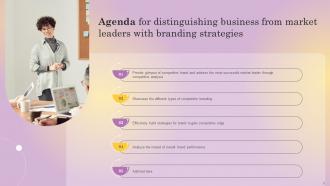
Slide 2: This slide displays the title Agenda for competitive branding strategies to increase sales and profit.
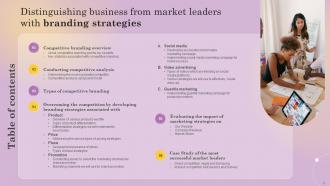
Slide 3: This slide exhibit table of content.
Slide 4: This slide exhibit table of content.
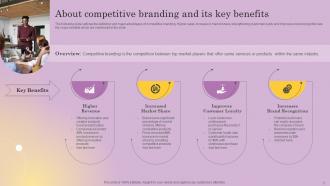
Slide 5: This slide outlines the definition and major advantages of competitive branding.
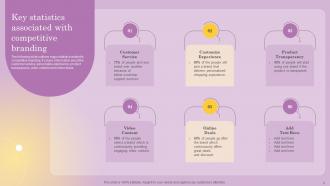
Slide 6: The following slide outlines major statistics related to competitive branding.
Slide 7: This slide exhibit table of content.
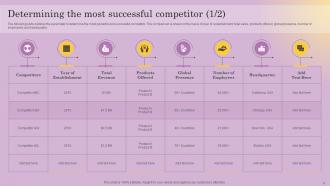
Slide 8: The following slide outlines the parameter to determine the most powerful and successful competitor.
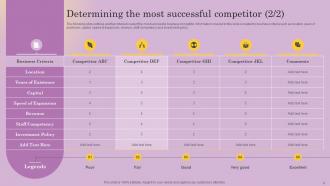
Slide 9: The following slide outlines another criteria to select the most successful business competitor.
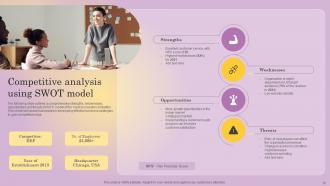
Slide 10: The following slide outlines a comprehensive strengths, weaknesses, opportunities and threats (SWOT) model of the most successful competitor.
Slide 11: This slide exhibit table of content that is to be discuss further.
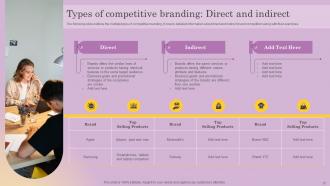
Slide 12: The following slide outlines the multiple types of competitive branding.
Slide 13: This slide exhibit table of content that is to be discuss further.
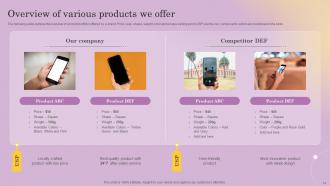
Slide 14: The following slide outlines the overview of product portfolio offered by a brand.
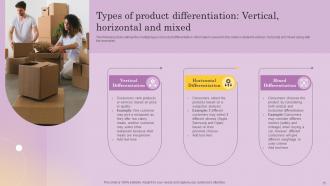
Slide 15: The following slide outlines the multiple types of product differentiation.
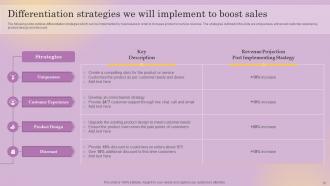
Slide 16: The following slide outlines differentiation strategies which can be implemented by businesses in order to increase product or service revenue.
Slide 17: This slide exhibit table of content that is to be discuss further.
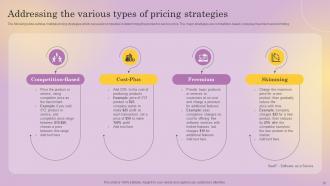
Slide 18: The following slide outlines multiple pricing strategies which can assist companies in determining the product or service price.
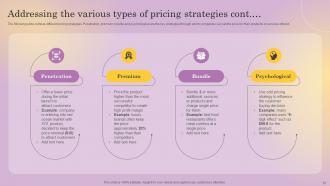
Slide 19: The following slide outlines different pricing strategies.
Slide 20: This slide exhibit table of content that is to be discuss further.
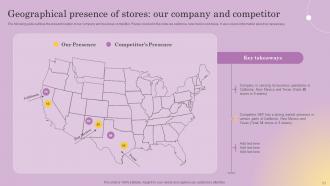
Slide 21: The following slide outlines the present location of our company and business competitor.
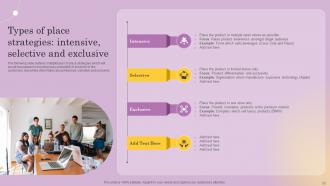
Slide 22: This slide outlines multiple types of place strategies which will assist businesses in ensuring easy availability of products to the customers.
Slide 23: This slide exhibit table of content that is to be discuss further.
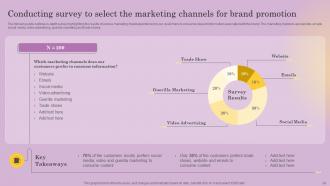
Slide 24: The following slide outlines in-depth survey highlighting the results of various marketing channels preferred by our customers.
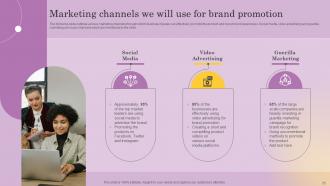
Slide 25: The following slide outlines various marketing channels through which business houses can effectively promote the product and boost brand awareness.
Slide 26: This slide exhibit table of content that is to be discuss further.
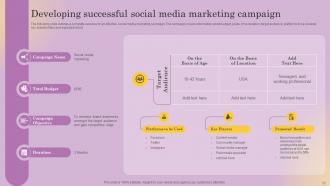
Slide 27: The following slide outlines a complete overview of an effective social media marketing campaign.
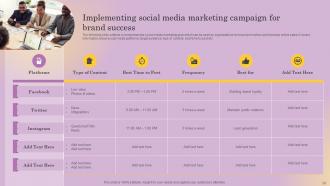
Slide 28: This slide outlines a comprehensive social media marketing plan which can be used by organizations for brand promotion and increase online sales.
Slide 29: This slide exhibit table of content that is to be discuss further.
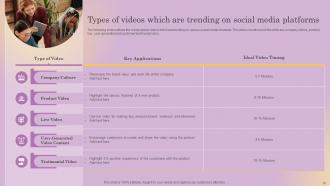
Slide 30: The following slide outlines the most popular videos which are trending on various social media channels.
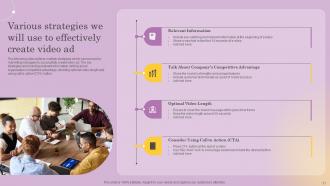
Slide 31: The following slide outlines multiple strategies which can be used by marketing managers to successfully create video ad.
Slide 32: This slide exhibit table of content that is to be discuss further.
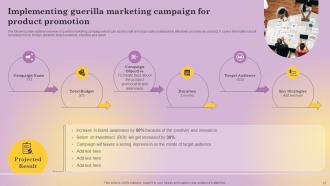
Slide 33: This slide outlines overview of guerilla marketing campaign which can assist small and large scale businesses to effectively promote any product.
Slide 34: This slide exhibit table of content that is to be discuss further.
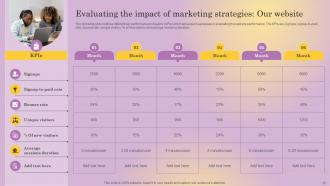
Slide 35: The following slide outlines different key performance indicators (KPIs) which will assist businesses in evaluating the website performance.
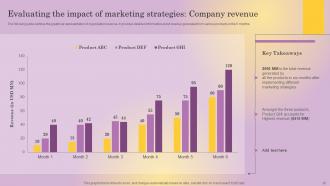
Slide 36: The following slide outlines the graphical representation of organization revenue.
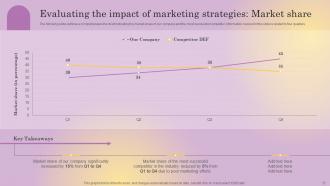
Slide 37: The following slide outlines a comprehensive line chart indicating the market share of our company and the most successful competitor.
Slide 38: This slide exhibit table of content that is to be discuss further.
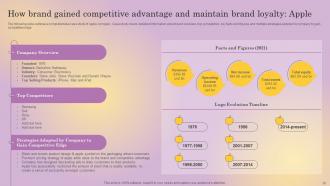
Slide 39: The following slide outlines a comprehensive case study of Apple company.
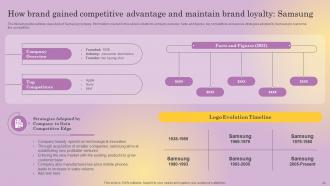
Slide 40: The following slide outlines case study of Samsung company.
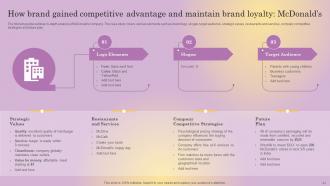
Slide 41: The following slide outlines in-depth analysis of McDonald's company.
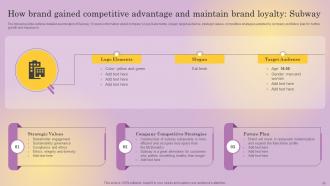
Slide 42: This slide outlines detailed examination of Subway.
Slide 43: This is the icons slide.
Slide 44: This slide presents title for additional slides.
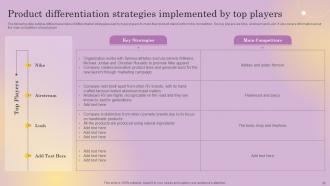
Slide 45: This slide outlines different examples of differentiation strategies used by major players to make their product stand out from the competition.
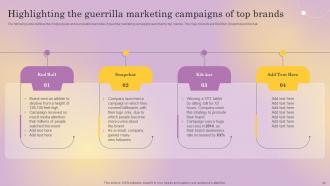
Slide 46: The following slide outlines the most popular and successful examples of guerrilla marketing campaigns launched by top brands.
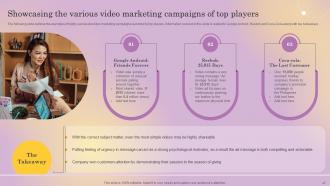
Slide 47: The following slide outlines the examples of highly successful video marketing campaigns launched by top players.
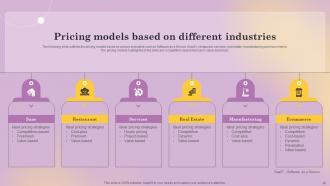
Slide 48: This slide outlines the pricing models based on various industries like Software as a Service, restaurant, services, real estate, manufacturing.
Slide 49: This slide display Clustered column for different products.
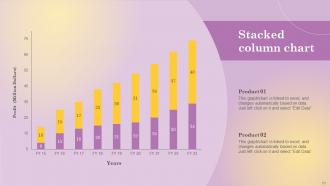
Slide 50: This slide exhibits yearly profits stacked line charts for different products.
Slide 51: This slide display SWOT analysis.
Slide 52: This slide shows about your company, target audience and its client's values.
Slide 53: This slide display Venn diagram.
Slide 54: This slide depicts posts for past experiences of clients.
Slide 55: This slide shows details of team members like name, designation, etc.
Slide 56: This slide display Financial.
Slide 57: This slide presents your company's vision, mission and goals.
Slide 58: This slide shows puzzle for displaying elements of company.
Slide 59: This slide exhibit Roadmap.
Slide 60: This is thank you slide & contains contact details of company like office address, phone no., etc.
Distinguishing Business From Market Leaders With Branding Strategies Complete Deck with all 60 slides:
Use our Distinguishing Business From Market Leaders With Branding Strategies Complete Deck to effectively help you save your valuable time. They are readymade to fit into any presentation structure.










FAQs for Distinguishing Business From Market Leaders With Branding
Key components of an effective branding strategy include brand positioning, visual identity, messaging framework, target audience definition, and competitive differentiation. These elements work together by establishing market presence, creating emotional connections, and building customer loyalty, with many organizations finding that consistent implementation across touchpoints ultimately delivers enhanced recognition and sustainable competitive advantage.
Businesses leverage storytelling in branding by creating emotional connections with audiences, communicating company values authentically, and differentiating themselves from competitors through unique narratives. Through compelling brand stories, companies like Nike and Patagonia build customer loyalty, enhance brand recall, and drive purchasing decisions, with many organizations finding that storytelling increases engagement rates and ultimately delivers stronger market positioning.
Visual identity serves as the foundation of brand recognition, encompassing logos, color palettes, typography, imagery, and design elements that create immediate consumer connection. This strategic combination enhances brand recall, builds customer trust, and differentiates companies in competitive markets, with businesses like Apple and Coca-Cola demonstrating how consistent visual identity ultimately drives customer loyalty and premium positioning.
Brand consistency across marketing channels is crucial for building recognition, trust, and credibility with audiences, ensuring cohesive messaging, visual identity, and customer experience throughout touchpoints. This strategic alignment enhances brand recall, reduces customer confusion, and strengthens market positioning, with many companies finding that consistent branding increases revenue by up to 20% while delivering competitive advantage.
Social media influences brand perception through direct customer engagement, real-time feedback, viral content amplification, community building, and targeted messaging capabilities. These platforms enable brands to showcase authenticity, respond to concerns immediately, and build loyal communities, with companies like Nike and Starbucks finding that consistent social engagement ultimately delivers enhanced brand loyalty and competitive market positioning.
Small businesses can build brand presence through consistent visual identity, targeted social media engagement, authentic storytelling, strategic partnerships, and community involvement. These approaches streamline brand recognition by establishing memorable touchpoints, fostering customer relationships, and leveraging local connections, with many small retailers and service providers finding that consistent branding across platforms ultimately delivers increased customer loyalty and competitive differentiation.
Customer feedback shapes brand strategy by revealing perception gaps, identifying improvement opportunities, and highlighting competitive advantages through surveys, reviews, and social media monitoring. This strategic intelligence enables brands to refine messaging, enhance product development, and strengthen customer relationships, with many organizations finding that responsive feedback integration ultimately delivers improved market positioning and increased customer loyalty.
Emotional branding significantly strengthens customer loyalty by creating deep personal connections, fostering trust, and encouraging repeat purchases through shared values and memorable experiences. Companies like Apple, Nike, and Coca-Cola leverage emotional storytelling to build communities around their brands, with many organizations finding that emotionally-engaged customers demonstrate 23% higher lifetime value and advocacy.
Brands differentiate effectively through authentic storytelling, targeted customer experiences, strategic partnerships, innovative product features, and consistent value propositions that address specific pain points. Companies like Tesla in automotive and Warby Parker in eyewear demonstrate how brands achieve competitive advantage by combining unique positioning with exceptional service delivery, ultimately building loyal communities and sustainable market share.
Competitive analysis in branding enables organizations to identify market gaps, differentiate their positioning, and understand industry benchmarks for messaging, visual identity, and customer engagement strategies. Through systematic competitor evaluation, businesses can avoid brand similarities, capitalize on unmet consumer needs, and develop distinctive value propositions that resonate with target audiences, ultimately delivering stronger market presence and competitive advantage.
Brands can utilize influencer partnerships by selecting authentic voices that align with their values, creating co-branded content, leveraging micro-influencers for niche audiences, and measuring engagement metrics. These collaborations enhance brand credibility, expand reach to targeted demographics, and generate user-generated content, with retail and beauty companies finding that strategic influencer relationships drive higher conversion rates and brand loyalty.
Rebranding best practices include conducting thorough market research, defining clear strategic objectives, maintaining brand equity elements, developing comprehensive communication plans, and implementing phased rollouts across all touchpoints. These approaches streamline transitions by preserving customer loyalty, minimizing confusion, and reinforcing new positioning, with many established companies finding that strategic rebranding ultimately delivers enhanced market differentiation and competitive advantage.
Companies can measure branding effectiveness through brand awareness surveys, customer sentiment analysis, market share tracking, brand equity studies, and social media engagement metrics. These measurements help organizations assess recognition levels, emotional connections, and competitive positioning across different demographics, with many businesses finding that consistent monitoring enables strategic adjustments and ultimately delivers stronger customer loyalty and revenue growth.
Employee advocacy strengthens brand credibility by transforming staff into authentic brand ambassadors who share genuine experiences, insights, and company values across their personal networks. Through social media engagement, word-of-mouth recommendations, and community involvement, organizations enhance brand trust and reach, with many companies finding that employee-driven content delivers significantly higher engagement rates and customer conversion than traditional marketing channels.
Brands adapt by embracing sustainability initiatives, personalizing customer experiences through data analytics, leveraging social media for authentic engagement, and prioritizing transparency in communications and operations. Through these strategic shifts, companies like Patagonia and Nike successfully connect with conscious consumers, ultimately delivering stronger brand loyalty, increased market share, and competitive advantage in an increasingly values-driven marketplace.
-
Based on my personal experience, I would recommend other people to subscribe to SlideTeam. No one can be disappointed here!
-
The quality of the templates is as fine as it could get. It was a purchase well made!