

Distressed Debt Restructuring Powerpoint Presentation Slides





Try Before you Buy Download Free Sample Product
 Impress Your
 Audience
 100%
100% Editable
 Save Hours
 of Time


Introducing Distressed Debt Restructuring PowerPoint Presentation Slides. The agenda of this presentation is to analyze multiple methods to repay credits and to understand and implement the debt reconstructing strategy and process. The presentation provides an overview of the organization, its services, and its financial performance. These financial parameters can be revenues, gross profit, net profit, and earnings per share. Perform an in-depth analysis of its current financial performance with the help of corporate debt reconstructing PPT layouts. Also, showcase the key aspects of the performance that are covered such as the Income Statement, balance sheet, cash flow statement, and other key ratios, etc. Analyze multiple options that can help the organization recover from its debts by using this debt reconstructing PPT slide deck. Evaluate the impact of debt restructuring and decide multiple KPIs Key performance indicators to study the overall effect of debt restructuring by incorporating CDR PPT layouts.
People who downloaded this PowerPoint presentation also viewed the following :
Content of this Powerpoint Presentation
Slide 1: This slide introduces Distressed Debt Restructuring. State your Company name.
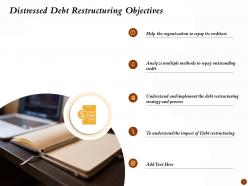
Slide 2: This slide shows Corporate Debt Restructuring Objectives.
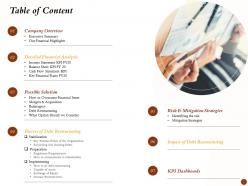
Slide 3: This slide shows Table of Content
Slide 4: This slide displays Table of Content
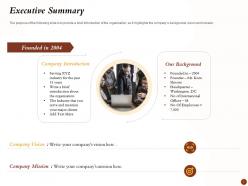
Slide 5: The purpose of the following slide is to provide a brief introduction of the organization, as it highlights the company’s background, vision and mission.
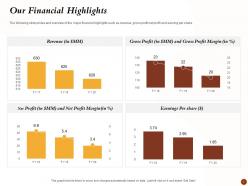
Slide 6: The following slide prides and overview of the major financial highlights such as revenue, gross profit net profit and earning per share.
Slide 7: This slide displays Detailed Financial Analysis
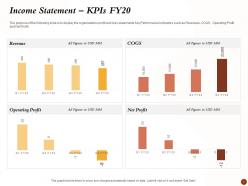
Slide 8: The purpose of the following slide is to display the organizations profit and loss statements Key Performance Indicators such as Revenues, COGS , Operating Profit and Net Profit
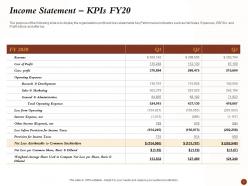
Slide 9: The purpose of the following slide is to display the organizations profit and loss statements Key Performance Indicators such as Net Sales, Expenses , EBITDA and Profit before and after tax.
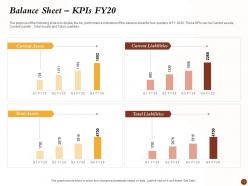
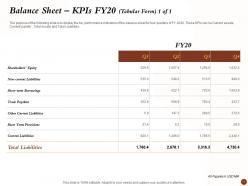
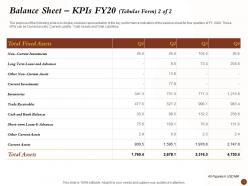
Slide 10: The purpose of the following slide is to display the key performance indicators of the balance sheet for four quarters of FY 2020. These KPIs can be Current assets, Current Liability , Total Assets and Total Liabilities.
Slide 11: The purpose of the following slide is to display the key performance indicators of the balance sheet for four quarters of FY 2020. These KPIs can be Current assets, Current Liability , Total Assets and Total Liabilities.
Slide 12: The purpose of the following slide is to display a tabular representation of the key performance indicators of the balance sheet for four quarters of FY 2020. These KPIs can be Current assets, Current Liability , Total Assets and Total Liabilities.
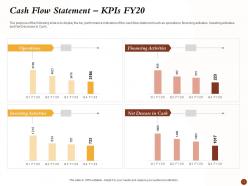
Slide 13: The purpose of the following slide is to display the key performance indicators of the cash flow statement such as operations, financing activates, investing activates and Net Decrease in Cash .
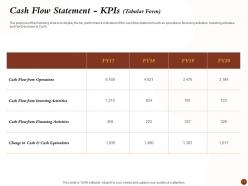
Slide 14: The purpose of the following slide is to show a tabular representation of the major KPIs of the cash flow statement of the previous 4 years.
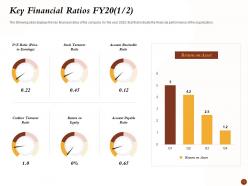
Slide 15: The following slide displays the key financial ratios of the company for the year 2020, that that indicate the financial performance of the organization.
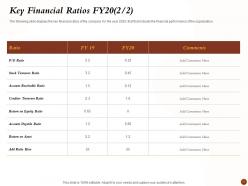
Slide 16: The following slide displays the key financial ratios of the company for the year 2020, that that indicate the financial performance of the organization.
Slide 17: This slide shows Table of Content
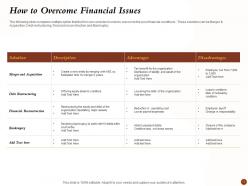
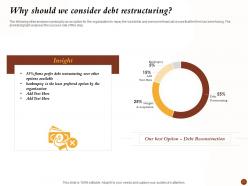
Slide 18: The following slide compares multiple option that the firm can consider in order to overcome the poor financial conditions . These solutions can be Merger & Acquisition, Debt restructuring, Financial reconstruction and Bankruptcy.
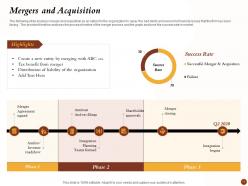
Slide 19: This slide analyzes merger and acquisition as an option for the organization to repay the bad debts and overcome financial issues that the firm has been facing . The provided timeline analyses the process timeline of the merger process and the graph analyses the success rate in market.
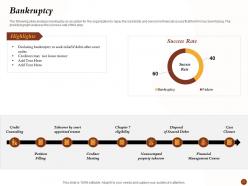
Slide 20: This slide analyzes bankruptcy as an option for the organization to repay the bad debts and overcome financial issues that the firm has been facing .The provided graph analyses the success rate of this step.
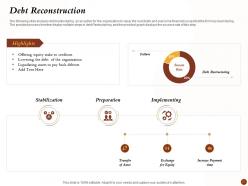
Slide 21: The following slide analyzes debt restructuring as an option for the organization to repay the bad debts and overcome financial issues that the firm has been facing . The provided process timeline display multiple steps in debt Restructuring and the provided graph displays the success rate of this step
Slide 22: The following slide analyzes debt restructuring as an option for the organization to repay the bad debts and overcome financial issues that the firm has been facing . The provided process timeline display multiple steps in debt Restructuring and the provided graph displays the success rate of this step
Slide 23: This slide provides Table of Content
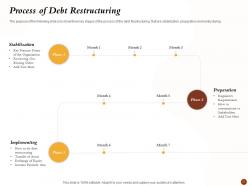
Slide 24: The purpose of the following slide is to show three key stages of the process of the debt Restructuring that are stabilization ,preparation and restructuring
Slide 25: This slide shows Table of Content
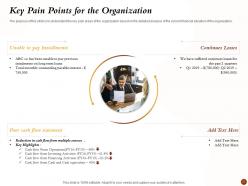
Slide 26: The purpose of this slide is to understand the key pain areas of the organization based on the detailed analysis of the current financial situation of the organization
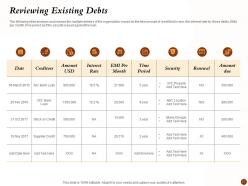
Slide 27: The following slide analyzes and reviews the multiple debtors of the organization-based on the total amount of credit that is due, the interest rate for these debts, EMIs per month, time period and the security issued against the loan.
Slide 28: This slide displays Table of Content
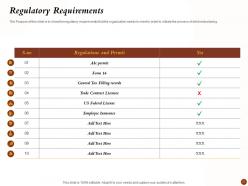
Slide 29: The Purpose of this slide is to show the regulatory requirements that the organization needs to meet in order to initiate the process of debt restructuring.
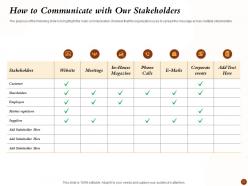
Slide 30: The purpose of the following slide is to highlight the main communication channels that the organization uses to spread the message across multiple stakeholders.
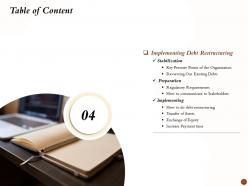
Slide 31: This slide displays Table of Content
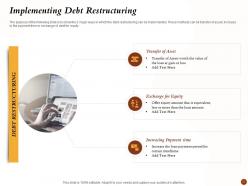
Slide 32: The purpose of the following slide is to show the 3 major ways in which the debt restructuring can be implemented. These methods can be transfer of asset, increase in the payment time or exchange of debt for equity
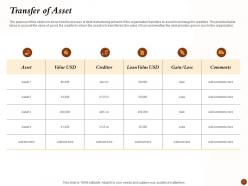
Slide 33: The purpose of this slide is to show how the process of debt restructuring will work if the organization transfers its asset in exchange for creditors. The provided table takes in account the value of asset, the creditor to whom the asset is to transferred, the value of loan and weather the deal provides gain or loss to the organization.
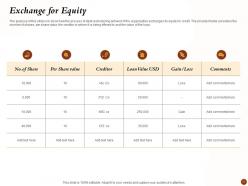
Slide 34: The purpose of this slide is to show how the process of debt restructuring will work if the organization exchanges its equity for credit. The provided table considers the number of shares, per share value, the creditor to whom it is being offered to and the value of the loan.
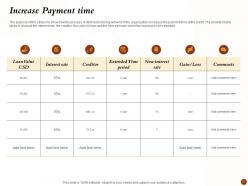
Slide 35: The purpose of this slide is to show how the process of debt restructuring will work if the organization increases the payment time of the credit. The provided table takes in account the interest rate, the creditor, the value of loan & the time period to which the loan has to be extended
Slide 36: This slide shows Table of Content.
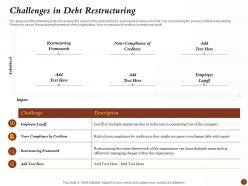
Slide 37: The purpose of the following slide is to analyze the impact of the and likelihood and impact of various risk that may occur during the process of debt restructuring. These risk can be Restructuring framework of the organization, Non-compliance of creditors or employee layoff.
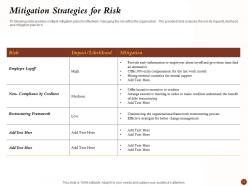
Slide 38: This slide provides multiple mitigation plans for effectively managing the risk within the organization . The provided table analyzes the risk its Impact/Likelihood and mitigation plan for it.
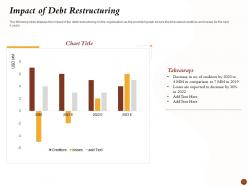
Slide 39: This slide displays the impact of the debt restructuring on the organization as the provided graph shows the forecasted creditors and losses for the next 4 years
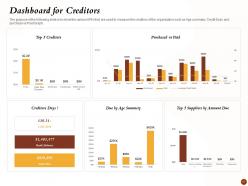
Slide 40: The purpose of the following slide is to show the various KPIs that are used to measure the creditors of the organization such as Age summary, Credit Dyas and purchase vs Paid Graph.
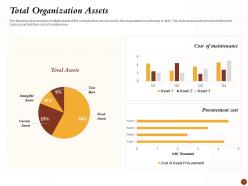
Slide 41: This slide analyzes multiple assets of the company that can be used by the organization in exchange of debt. This slide analyses the procurement cost of major asset and their cost of maintenance.
Slide 42: This is Destressed Debt Restructuring Icons Slide.
Slide 43: This slide is titled as Additional Slides for moving forward.
Slide 44: This slide displays Stacked Bar chart for comparison of products.
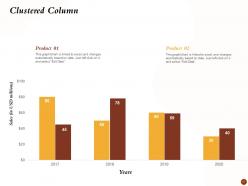
Slide 45: This slide shows Clustered Column chart for product comparison.
Slide 46: This slide displays Goals.
Slide 47: This slide shows Mission, Vision and Goals.
Slide 48: This slide depicts Location.
Slide 49: This slide shows Magnifying Glass for highlighting important content.
Slide 50: This is Lego slide.
Slide 51: This slide displays Puzzle process.
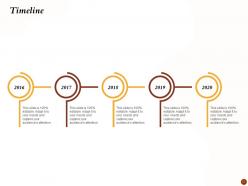
Slide 52: This slide shows Timeline process.
Slide 53: This is Thank You slide with Contact details.
Distressed Debt Restructuring Powerpoint Presentation Slides with all 53 slides:
Use our Distressed Debt Restructuring Powerpoint Presentation Slides to effectively help you save your valuable time. They are readymade to fit into any presentation structure.
















FAQs for Distressed Debt Restructuring
Primary causes of distressed debt include overleveraging during expansion, declining market conditions, operational inefficiencies, cash flow disruptions, and unexpected economic downturns. These factors often compound simultaneously, with companies in retail, energy, and hospitality sectors finding that rapid market shifts, combined with high fixed costs and debt service obligations, ultimately create liquidity crises requiring immediate restructuring intervention.
Financial institutions assess distressed debt viability through comprehensive financial analysis, cash flow projections, asset valuations, market position evaluation, and management capability reviews. Through rigorous due diligence, banks and investment firms can determine recovery potential, restructuring feasibility, and optimal workout strategies, while evaluating collateral values and operational turnaround prospects, ultimately enabling informed decisions about debt modifications, liquidation scenarios, or strategic restructuring partnerships.
Creditors play pivotal roles as negotiators, decision-makers, and strategic partners, participating in workout agreements, debt modifications, payment deferrals, asset liquidations, and recovery planning. Through creditor committees and individual negotiations, banks, bondholders, and institutional lenders collaborate to maximize recovery rates while enabling business continuity, ultimately delivering structured solutions that balance debt relief with creditor interests in an increasingly complex financial landscape.
Companies can navigate distressed debt through strategic communication with creditors, comprehensive cash flow analysis, asset optimization, debt refinancing negotiations, and operational restructuring initiatives. These approaches enable organizations to maintain stakeholder relationships while preserving business continuity, with many finding that proactive engagement and transparent financial reporting ultimately deliver improved terms and sustainable recovery paths.
The legal framework significantly shapes distressed debt outcomes by establishing creditor priorities, defining recovery timelines, and determining negotiation leverage through bankruptcy codes and restructuring procedures. Different jurisdictions offer varying protections and processes, with many institutional investors finding that countries with well-developed insolvency laws, like the U.S. Chapter 11 or UK schemes of arrangement, typically deliver higher recovery rates and more predictable restructuring outcomes.
In-court restructuring involves formal bankruptcy proceedings with judicial oversight, legal protection from creditors, and binding court-approved plans, while out-of-court restructuring relies on voluntary negotiations, consensual agreements, and faster implementation timelines. These approaches serve different strategic needs, with many distressed companies finding that out-of-court processes enable quicker turnarounds and preserve stakeholder relationships, though in-court proceedings deliver stronger legal protections and comprehensive debt resolution capabilities.
Management teams can improve negotiation outcomes by preparing comprehensive financial projections, engaging early with creditors before default, assembling experienced restructuring advisors, and presenting realistic turnaround plans with clear milestones. Through transparent communication and strategic timing, companies in sectors like retail and manufacturing often secure more favorable terms, extended payment schedules, and covenant modifications, ultimately preserving stakeholder relationships while maintaining operational flexibility during recovery.
Key metrics for evaluating debt restructuring success include debt-to-equity ratios, interest coverage ratios, cash flow generation, covenant compliance rates, and return on invested capital. These financial indicators enable creditors and companies to track operational recovery, liquidity improvements, and long-term viability, with many financial institutions finding that combined metrics provide clearer insights into restructuring effectiveness than isolated measurements.
Distressed debt significantly dilutes equity holders' ownership through debt-to-equity conversions, priority payments to creditors, and potential bankruptcy proceedings that can eliminate shareholder value entirely. While some shareholders may retain minimal stakes in restructured companies, particularly in out-of-court negotiations, many institutional investors increasingly view distressed situations as opportunities for strategic repositioning rather than total losses.
Investors identify distressed debt opportunities through comprehensive credit analysis, sector monitoring, covenant tracking, and relationship building with bankruptcy professionals. These strategies enable access to undervalued securities, stressed loan portfolios, and restructuring situations across industries like retail, energy, and hospitality, ultimately delivering enhanced returns and portfolio diversification.
Distressed debt trading allows investors to purchase undervalued debt securities from struggling companies, creating liquidity for original lenders while enabling specialized investors to influence restructuring negotiations. This market enhances capital allocation efficiency by connecting distressed assets with investors who have expertise in workouts and turnarounds, ultimately facilitating faster restructuring processes and potentially better recovery outcomes for all stakeholders involved.
Companies can leverage alternative financing through asset-based lending, revenue-based financing, convertible instruments, bridge loans, and strategic partnerships with private equity or specialty lenders. These options provide crucial liquidity while traditional credit remains constrained, with many distressed organizations finding that diversified financing approaches accelerate operational turnarounds and strengthen negotiating positions with existing creditors.
Companies should adopt transparent, frequent communication through regular updates, dedicated stakeholder portals, clear timelines, and proactive disclosure of financial positions and restructuring plans. These practices enhance stakeholder confidence by maintaining trust, minimizing uncertainty, and demonstrating management competency, with many distressed organizations finding that consistent, honest communication ultimately preserves business relationships and facilitates smoother restructuring outcomes.
Macroeconomic factors significantly influence distressed debt scenarios by affecting interest rates, credit availability, market liquidity, and sector-specific demand patterns. During economic downturns, companies across industries like retail, hospitality, and energy face increased financial stress, while rising rates complicate refinancing options, ultimately requiring more aggressive restructuring strategies that prioritize operational efficiency and strategic asset repositioning to maintain competitive advantage.
Advisors and investment banks serve as crucial intermediaries in distressed debt restructuring, providing valuation expertise, negotiation facilitation, strategic restructuring advice, and market access to potential investors. These financial professionals streamline complex negotiations between creditors and debtors by structuring viable repayment terms, identifying refinancing opportunities, and coordinating multi-party agreements, ultimately delivering faster resolution timelines and more favorable outcomes for all stakeholders involved.
-
Excellent template with unique design.
-
Designs have enough space to add content.
-
Innovative and attractive designs.
-
Attractive design and informative presentation.
-
Enough space for editing and adding your own content.
-
Colors used are bright and distinctive.