

Door to door marketing powerpoint presentation slides





Try Before you Buy Download Free Sample Product
 Impress Your
Audience
 100%
Editable
 Save Hours
of Time


Expand long-lasting customer connections with Door to Door Marketing PowerPoint Presentation Slides. Our direct sales PPT slide deck touches the central areas of canvassing for sales and marketing. This direct sales training presentation outlines basic issues such as determining client needs based on geographic, demographic, psychographic, and behavioral factors. Then, door to door selling PowerPoint slides assists in strategizing the recruitment and training process of a capable marketing team. Direct contact of sellers with the customer establishes a business image; hence this sales strategy PowerPoint presentation addresses dress code and greeting etiquette. Our direct marketing PPT template deck represents your product roadmap, so you get aware of the potential market focus and opportunities. The d2d sales PowerPoint slideshow is also useful for ventures with low startup capital. D2D direct marketing presentation also helps you set daily, weekly, and monthly goals for sales leads, client visits, etc. Download direct selling PowerPoint slides deck to showcase your marketing plan.
People who downloaded this PowerPoint presentation also viewed the following :
Content of this Powerpoint Presentation
Slide 1: This slide introduces Door to Door Marketing. State Your Company Name and begin.
Slide 2: This slide presents Door to Door Sales Outline in a tabular form. This table consists of two coumns title and slide number which you can add as per your business needs.
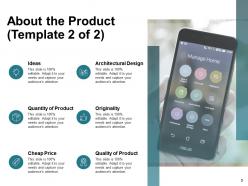
Slide 3: This slide provides a brief introduction About the Product. It also shows the following points- Business, Renew, Portfolio, Help, Creativity, Maps, Creative, Tools with icon imagery. You can also add your logo in the empty space provided.
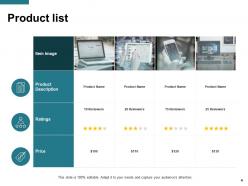
Slide 4: This slide displays a Product List consisting of Item Image, Product Description, Ratings and Price. You can also add images of your products here if you desire to.
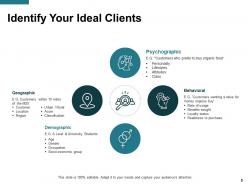
Slide 5: This slide helps to Identify Your Ideal Clients by dividing them into the following four categories- Behavioral, Psychographic, Demographic, Geographic.
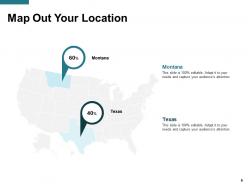
Slide 6: This is Map Out Your Location slide showing US map imagery which you can use as per your business requirement.
Slide 7: This slide explains Hire & Train Marketing Team step of door to door selling. You can add the names and designations of your team members in the given tet boxes.
Slide 8: This slide explains the four major steps involved in the Training Process- Training Need Analysis: What are the training needs for this person and/or job? Training Objective: Objective should be measurable & observable Training Delivery: Techniques include on- the-job- training, action, learning, etc. Training Evaluation: Measure reaction, learning, behaviour, and results.
Slide 9: This slide shows a Training Timeline in which you can add training aspects like milestones, journey etc. You can also edit and alter the text as per your requirement.
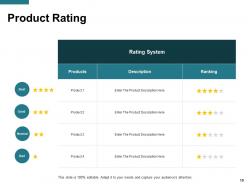
Slide 10: This slide shows Product Rating along with description and ranking.
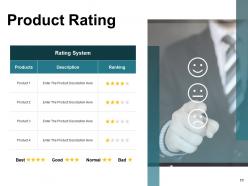
Slide 11: This is an optional slide for Product Rating.
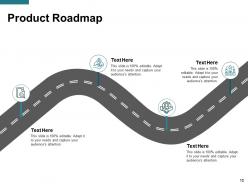
Slide 12: This slide displays a Product Roadmap. Add growth prospects, milestones, journey etc. with reference to the product here.
Slide 13: This slide shows Product Comparison on the basis of Moderate Feature, Good Feature and Bad Feature. Also on the basis of this comparison, you can draw product conclusion as being acceptable, considerable and rejected.
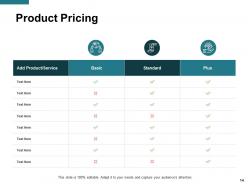
Slide 14: This slide shows Product Pricing with three parameters- Basic, Standard, Plus.
Slide 15: This slide shows Sales By Region by making use of a world map image. You can mark your respective sales locations on this map and use it.
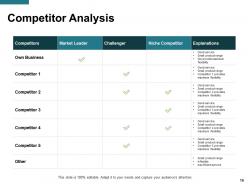
Slide 16: This slide shows Competitor Analysis with the following sub headings- Competitors, Market Leader, Challenger, Niche Competitor, Explanations.
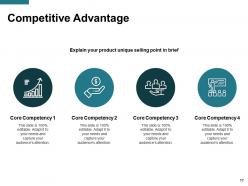
Slide 17: This is a Competitive Advantage slide to explain your product's unique selling point in brief. It also shows core competencies which you can add.
Slide 18: This is a Training Evaluation slide showing its four levels- Results, Reaction, Behavior, Learning. It also explains Did it impact business? Did the participants change behaviour on the job? What Skills, Knowledge or Attitude changed? Did the participants like the training?
Slide 19: This slide is titled Quick Tips on Door-to door Selling with background imagery.
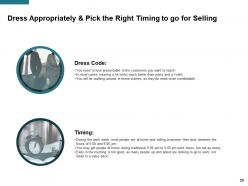
Slide 20: This is Dress Appropriately and Pick The Right Timing Go For Selling slide showing Dress Code and Timings with relevant imagery.
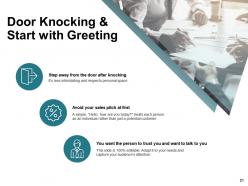
Slide 21: This is Door Knocking & Start with Greeting slide showing the following three points- Step away from the door after knocking, Avoid your sales pitch at first, A simple, "Hello, how are you today?" treats each person as an individual rather than just a potential customer You want the person to trust you and want to talk to you This slide is 100% editable. Adapt it to your needs and capture your audience's attention.
Slide 22: This slide explains Be Friendly, Persistent & Confident by listing the following three reasons- Most doors you knock on will not want to talk to you You aren't just selling a product,.. You aren't looking for everyone to buy your products.
Slide 23: This slide is titled Set and Evaluate Goals with background imagery.
Slide 24: This slide presents a table showing daily, monthly and weekly Activity Goals.
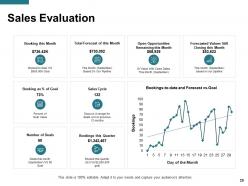
Slide 25: This slide presents Sales Evaluation in charts and graphs.
Slide 26: This slide displays Door-to-Door Sales Icons.
Slide 27: This slide reminds about a 15 minutes coffee break.
Slide 28: This slide is titled as Additional Slides for moving forward.
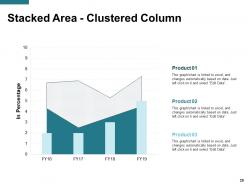
Slide 29: This slide shows Stacked Area - Clustered Column chart with three products comparison.
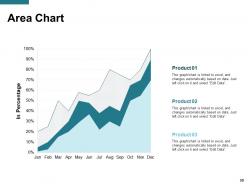
Slide 30: This slide displays Area Chart with three products comparison.
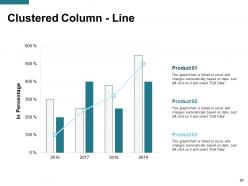
Slide 31: This slide represents Clustered Column - Line chart.
Slide 32: This is Our Mission slide with related imagery and text.
Slide 33: This is Meet Our Team slide with names and designation.
Slide 34: This is About Us slide to show company specifications etc.
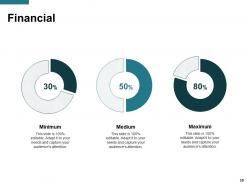
Slide 35: This is a Financial slide. Show your finance related stuff here.
Slide 36: This is a Timeline slide to show information related with time period.
Slide 37: This is another slide continuing Timeline.
Slide 38: This slide is titled as Post it Notes. Post your important notes here.
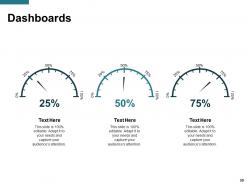
Slide 39: This is a Dashboards slide with additional text boxes.
Slide 40: This is a Swot Analysis slide. Show your firm's strengths, weaknesses, opportunity and threats.
Slide 41: This is a Puzzle slide with text boxes to show information.
Slide 42: This is a Target slide. State your targets here.
Slide 43: This is a Venn slide with text boxes.
Slide 44: This is a Lego slide with additional text boxes.
Slide 45: This slide shows Mind Map for representing entities.
Slide 46: This is an Idea Generation slide to state a new idea or highlight information, specifications etc.
Slide 47: This is a Thank You slide with address, contact numbers and email address.
Door to door marketing powerpoint presentation slides with all 47 slides:
Use our Door To Door Marketing Powerpoint Presentation Slides to effectively help you save your valuable time. They are readymade to fit into any presentation structure.















FAQs for Door to door marketing
Honestly, there's something about being face-to-face that digital just can't replicate. You can actually read their body language and handle objections right there on the spot. While they're scrolling through fifty other ads online, you've got their full attention at the door. Older customers especially seem to appreciate the personal touch - they're not huge fans of being bombarded with emails anyway. Your conversion rates will probably be way higher since you can pivot your pitch based on how they're reacting. I'd track your close rates against your digital stuff... the difference might shock you.
Honestly, confidence and handling rejection well are make-or-break here. Have them research neighborhoods first, then drill that 30-second pitch until it doesn't sound robotic. Lead with value, not pushy sales stuff. Role-playing scenarios is clutch - trust me, weird conversations will definitely happen. Body language matters too; they need to read when someone's actually interested vs just being nice. Give scripts as starting points but let them make it their own. Oh, and set realistic goals! Celebrating small wins keeps everyone from getting discouraged when doors slam shut.
Honestly, older folks (55+) and homeowners are your best bet for door-to-door stuff. They're actually home during the day and don't mind chatting face-to-face. Suburban areas work way better than cities where everyone's suspicious of strangers. Stay-at-home parents and retirees have time to talk too. Oh, and stick to single-family homes - apartment buildings are basically a waste of time. The whole thing's gotten tougher though since people are so crazy busy these days. But if you hit the right neighborhoods, you'll still get decent responses.
Dude, you'll need permits first - most states make you register as a solicitor. Respect those "No Soliciting" signs or you're asking for trouble. Time limits are usually 9 AM to 8 PM on weekdays, and some places won't let you bug people on Sundays at all. Don't be that annoying person who won't take no for an answer either. Your city/county rules might be totally different though, so definitely check those first. Always keep your permits handy when someone asks. Honestly, it's way more regulated than most people think.
Dude, definitely track your conversion rates first - like how many doors you knock vs actual sales. Cost per customer matters too since you're literally wearing out your shoes lol. I'd also pay attention to which neighborhoods are goldmines and which are total duds. Your team's feedback is huge - they'll know when people are actually interested vs just being polite. Oh, and track what times work best! The real test though? Compare lifetime customer value to what it costs to get them. That's honestly the only number that'll tell you if door-knocking is worth it or if you should try something else.
Dude, feedback is everything in door-to-door. Track your conversion rates and common objections, obviously. But also pay attention to body language - like when someone's actually listening vs. just being polite. Those "almost yes" conversations? Gold mine. People who were interested but didn't buy will tell you exactly what's missing from your pitch. Keep a quick log after each house - I know it sounds tedious, but patterns show up fast. Then you can adjust your approach, timing, maybe even switch neighborhoods. The real-time tweaks make a huge difference.
Dude, first 10 seconds are everything. Say something specific about their house or street - proves you're not just copy-pasting your pitch to everyone. I learned this the hard way lol. Keep it conversational and pick ONE benefit they'd actually want, not some giant list of features. Most people are literally counting down until you leave, so being real helps. Get them talking early instead of you doing all the talking. Your opening needs to sound natural - practice it until it doesn't feel rehearsed. Always know what you want them to do next.
Oh man, rejection fatigue is brutal - doors slamming gets old fast. Safety's huge too, so definitely work with someone or at least share your route. People really hate being bothered at home, which honestly makes sense. Your first 10 seconds are everything though. If you sound helpful instead of salesy, you'll do way better. Skip dinner time and weekends when you can. I always set small daily goals so there's something to celebrate. Those little wins help when it's been a rough day of "not interested" responses.
Here's what I'd do - have your door knockers casually drop your social handles or website when they're chatting with people. Then hit those same neighborhoods with targeted Facebook ads afterward. Trust me, people are way more receptive to your online stuff once they've actually met your team face-to-face. Keep your messaging consistent everywhere so it doesn't feel weird or disconnected. Oh, and make sure you're tracking which houses you've visited in your CRM. That way you won't accidentally mail those same people later and come across as totally clueless about who you've already talked to.
Honestly, anything where people need to actually see it working does well door-to-door. Security systems, solar panels, water filters - stuff that's hard to explain over the phone, you know? High-ticket things like roofing work too since nobody's gonna drop $15k without meeting you first. But man, it's gotten so much harder lately with everyone being paranoid about strangers. Your best shot is finding problems they can literally see - like their driveway's all cracked up or their lawn looks like garbage. People don't buy solutions to problems they can't visualize.
Do some homework on the neighborhoods first - check out who lives there, what they make, general vibe. Walk around before you start knocking. Are you seeing mostly families with kids, young professionals, or older folks? That'll tell you how to pitch and when to show up. Honestly, the tech-bro approach that kills it in downtown will bomb hard in the suburbs. Also double-check if there's any weird local rules about door-to-door stuff - some places are picky. I'd test it out on just one block first to see what actually works before you commit to the whole area.
Dude, get yourself some mapping software first - Google Maps works fine for planning routes so you're not zigzagging around like an idiot. For tracking who you've talked to, HubSpot or Salesforce are solid, but honestly? A basic spreadsheet does the job when you're starting out. Square's great if people want to buy something right away. Oh, and there are tools that help you figure out which neighborhoods to hit based on demographics - super helpful. My advice though: just pick one mapping thing and one way to track your visits. Don't overcomplicate it from day one.
Honestly, just don't be that person everyone hides from. Start by introducing yourself and asking if they've got a minute - then actually listen when they say no. I can't stress this enough: pushing past rejection just pisses people off. Focus on solving their actual problem instead of listing every feature you offer. Oh, and timing matters way more than people think. Skip early mornings and weekends unless you know they're cool with it. Your team needs to pick up on body language too. When someone's checking their phone constantly, wrap it up. Treat it like you're knocking on your friend's door.
Dude, Kirby vacuums absolutely nailed this - they'd show up and literally vacuum your carpet to reveal all the disgusting dirt you couldn't see. Solar companies like SolarCity got smart about it too, bringing tablets to show exactly how much you'd save plus satellite pics of your actual roof. Avon basically built their whole thing on relationships and door-to-door demos. The common thread? They all showed instead of just talking. Honestly, that approach works way better than any sales pitch. Whatever you're selling, find a way to demonstrate it right there on the spot.
Dude, the whole industry's shifting hard toward tech right now. Tablets for presentations, QR codes for quick follow-ups, better CRM tracking - all that stuff. Privacy laws are getting way stricter too, so you'll need to know the rules around data collection. Honestly, people are getting really annoyed with constant door-knocking. More companies are switching to appointment-based visits instead of just showing up randomly. Oh, and sustainability messaging is absolutely everywhere now - can't escape it. My take? Start testing some digital tools ASAP and definitely learn your local privacy laws before you get burned.
-
Awesomely designed templates, Easy to understand.