

Drug discovery and development clinical research execution market monitoring





Try Before you Buy Download Free Sample Product
 Impress Your
Audience
 100%
Editable
 Save Hours
of Time


Our Drug Discovery And Development Clinical Research Execution Market Monitoring are topically designed to provide an attractive backdrop to any subject. Use them to look like a presentation pro.
People who downloaded this PowerPoint presentation also viewed the following :
Drug discovery and development clinical research execution market monitoring with all 12 slides:
Use our Drug Discovery And Development Clinical Research Execution Market Monitoring to effectively help you save your valuable time. They are readymade to fit into any presentation structure.






FAQs for Drug discovery and development clinical research
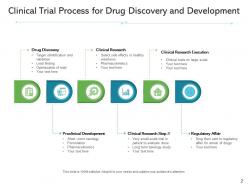
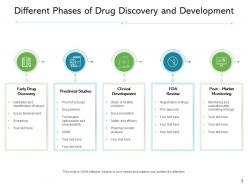
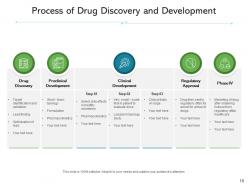
Pharmaceutical R&D includes discovery and target identification, preclinical testing, clinical trials (phases I-III), regulatory approval, and post-market surveillance. These stages streamline drug development by ensuring safety through rigorous testing, efficacy validation, and regulatory compliance, with pharmaceutical companies finding that this systematic approach ultimately delivers safer medications and competitive market advantage.
Regulatory approval significantly extends pharmaceutical research timelines by requiring extensive clinical trials, safety documentation, and compliance reviews that can span 10-15 years from discovery to market. These rigorous processes, while adding years to development cycles, ultimately enhance drug safety and efficacy standards, with many pharmaceutical companies finding that early regulatory engagement and strategic trial design help streamline approvals and accelerate market entry.
Clinical trials play a critical role in validating new drugs by testing safety, efficacy, and optimal dosing through rigorous multi-phase studies involving thousands of participants. These controlled studies enable pharmaceutical companies to demonstrate therapeutic benefits, identify side effects, and secure regulatory approval, with many organizations finding that well-designed trials ultimately streamline market entry and enhance patient outcomes.
Artificial intelligence enhances drug discovery by accelerating molecular analysis, predicting compound interactions, and identifying promising therapeutic targets through advanced pattern recognition. AI algorithms streamline clinical trial design, optimize dosing protocols, and reduce development timelines from decades to years, with pharmaceutical companies like Pfizer and Roche finding that machine learning delivers faster candidate identification and significantly lower research costs.
Pharmaceutical research must address informed consent, patient safety, data integrity, equitable participant selection, and transparent conflict-of-interest disclosure. These ethical frameworks ensure responsible drug development while protecting vulnerable populations, with regulatory bodies and institutional review boards increasingly requiring comprehensive ethical protocols that balance scientific advancement with patient welfare, ultimately delivering safer medications and maintaining public trust.
The COVID-19 pandemic has significantly shifted pharmaceutical research priorities toward infectious disease preparedness, mRNA vaccine technologies, antiviral drug development, and rapid clinical trial methodologies. This strategic realignment has accelerated digital research platforms, enhanced global collaboration frameworks, and streamlined regulatory processes, with many pharmaceutical companies finding that pandemic-driven innovations ultimately deliver faster drug discovery timelines and improved therapeutic outcomes.
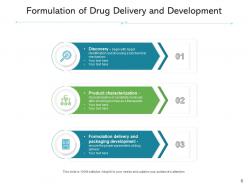
Drug formulation challenges include solubility limitations, bioavailability optimization, stability maintenance, targeted delivery mechanisms, and regulatory compliance requirements. These obstacles significantly impact development timelines and costs, with pharmaceutical companies increasingly leveraging advanced technologies like nanotechnology, lipid-based delivery systems, and computational modeling to streamline formulation processes, ultimately delivering more effective therapies while reducing time-to-market.
Patent laws create a balanced framework for pharmaceutical innovation by providing temporary exclusivity periods that incentivize research investment while eventually enabling generic competition. These protections encourage companies to invest billions in drug development, knowing they can recoup costs, while patent expiration ultimately delivers affordable alternatives to patients, with many pharmaceutical organizations finding that strategic patent portfolios drive both innovation funding and long-term market sustainability.
Pharmaceutical quality and safety strategies include Good Laboratory Practices (GLP), rigorous clinical trial protocols, comprehensive toxicology studies, regulatory compliance frameworks, and systematic risk assessment procedures. These approaches streamline drug development by establishing standardized testing protocols, ensuring patient safety throughout trials, and maintaining regulatory alignment, with pharmaceutical companies finding that robust quality systems ultimately accelerate approvals while minimizing development risks.
Patient involvement in clinical trial design is critically important for ensuring trials are relevant, feasible, and ethically sound, enhancing recruitment strategies, outcome measurements, and protocol adherence. Through patient advisory boards and co-design approaches, pharmaceutical companies streamline trial processes, reduce dropout rates, and ultimately deliver more meaningful therapeutic outcomes, with many research organizations finding that patient-centered designs significantly accelerate regulatory approval timelines.
Gene editing technologies like CRISPR, personalized medicine platforms, artificial intelligence for drug discovery, biomarker identification systems, and advanced cell therapies are revolutionizing pharmaceutical research. These innovations streamline drug development by accelerating clinical trials, reducing research costs, and enabling targeted treatments, with pharmaceutical companies increasingly finding that personalized approaches deliver better patient outcomes and competitive advantage.
Pharmaceutical companies collaborate with academic institutions through joint research projects, licensing agreements, funding partnerships, shared laboratory facilities, and co-development programs. These strategic alliances enable companies to access cutting-edge research, specialized expertise, and innovative drug discovery platforms, while universities gain commercial funding and real-world application opportunities, ultimately accelerating breakthrough treatments to market.
Data transparency and open science significantly accelerate pharmaceutical research by enabling broader collaboration, reducing duplicate studies, and facilitating faster validation of results across institutions. These approaches streamline drug discovery timelines, enhance research quality through peer scrutiny, and ultimately deliver cost efficiencies, with many pharmaceutical companies finding that shared datasets and open protocols accelerate breakthrough discoveries while maintaining competitive advantage.
Pharmacogenomics revolutionizes personalized medicine by analyzing individual genetic variations to predict drug responses, optimize dosing, and minimize adverse reactions. Through genetic testing and AI-driven analysis, pharmaceutical companies develop targeted therapies for specific patient populations, while healthcare providers deliver more precise treatments with improved efficacy, ultimately reducing development costs and enhancing patient outcomes across diverse therapeutic areas.
Improving clinical trial diversity requires targeted recruitment strategies, community partnerships with underrepresented populations, multilingual materials, and removing geographic and financial barriers to participation. These approaches enhance research validity by ensuring broader demographic representation across age, ethnicity, and socioeconomic groups, with pharmaceutical companies increasingly finding that diverse trials deliver more accurate efficacy data and regulatory approval advantages.
-
Great quality product.
-
Enough space for editing and adding your own content.
-
Unique and attractive product design.
-
Unique research projects to present in meeting.
-
Informative design.