


E Business Customer Experience Enhancement Strategy Playbook Powerpoint Presentation Slides




Try Before you Buy Download Free Sample Product
 Impress Your
 Audience
 100%
100% Editable
 Save Hours
 of Time


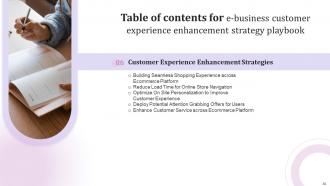
The E Business strategy playbook caters to a step by step framework for scaling up business across eCommerce platforms. It serves as a guideline for generating sales, revenues, conversion, and enhancing customer interaction across digital touchpoints. Here is a professionally designed E Business Customer Experience Enhancement Strategy Playbook template that covers details about e commerce consumer journey steps to develop an effective eCommerce strategy. The playbook covers B2B strategies for creating an eCommerce platform. Various steps for eCommerce website development caters development of homepage as a first touchpoint, development of standard website pages, tracking key activities across eCommerce site infrastructure, building product detail page, build blogs and media pages for value addition, organizing customer checkout and shopping cart section and automated promotional email marketing. Moreover, it caters to eCommerce to advertising strategies to nurture site traffic and optimum customer outreach. The cost management initiatives for eCommerce platform development are covered. Customer experience enhancement strategies are captured by building a seamless shopping experience across the platform, reducing load time for online store navigation, optimizing on site personalization, deploying potential attention grabbing offers for users, and enhancing customer service. The eCommerce platform performance is tracked through dashboards. Get access now.
People who downloaded this PowerPoint presentation also viewed the following :
Content of this Powerpoint Presentation
Slide 1: This slide introduces E-Business Customer Experience Enhancement Strategy Playbook. State your company name and begin.
Slide 2: This slide states Agenda of the presentation.
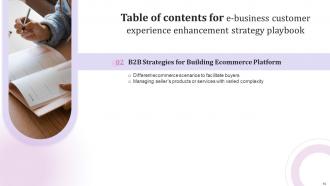
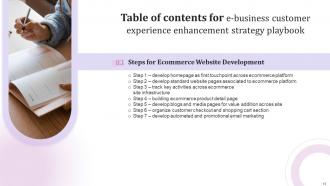
Slide 3: This slide presents Table of Content for the presentation.
Slide 4: This is another slide continuing Table of Content for the presentation.
Slide 5: This slide shows title for topics that are to be covered next in the template.
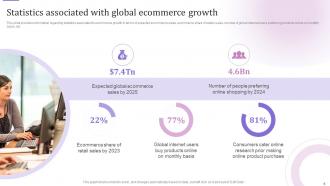
Slide 6: This slide provides information regarding statistics associated to growth in terms of expected ecommerce sales.
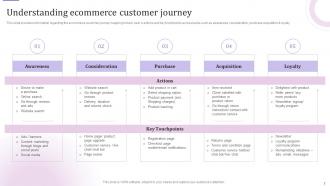
Slide 7: This slide displays information regarding the ecommerce customer journey mapping.
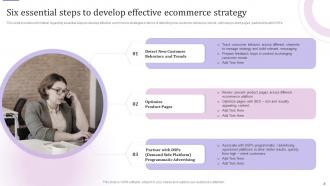
Slide 8: This slide provides information regarding essential steps to develop effective ecommerce strategies.
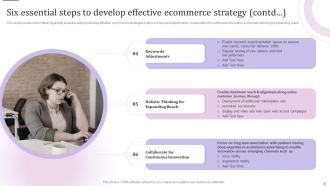
Slide 9: This slide represents essential steps to develop effective ecommerce strategies in terms of keyword adjustments.
Slide 10: This slide shows title for topics that are to be covered next in the template.
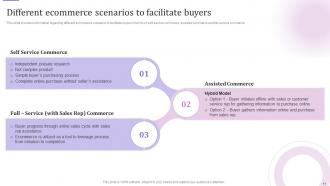
Slide 11: This slide showcases Different Ecommerce Scenarios to Facilitate Buyers.
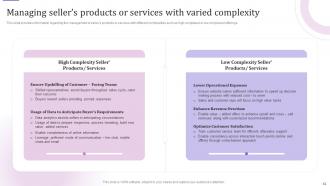
Slide 12: This slide presents Managing Seller’s Products or Services with Varied Complexity.
Slide 13: This slide shows title for topics that are to be covered next in the template.
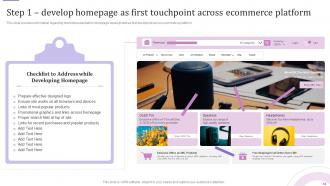
Slide 14: This slide displays checklist essential for homepage development as first touchpoint across ecommerce platform.
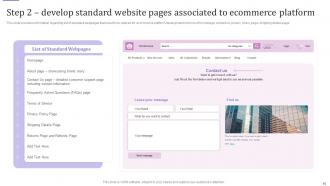
Slide 15: This slide represents list of standard webpages that need to be catered for ecommerce platform.
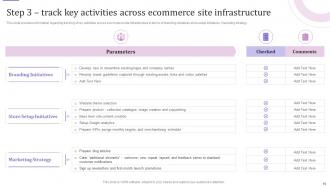
Slide 16: This slide showcases tracking of key activities across ecommerce site infrastructure in terms of branding initiatives.
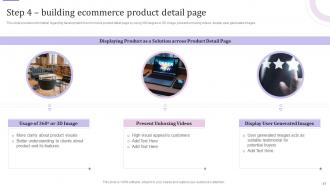
Slide 17: This slide presents development of ecommerce product detail page by using 360 degree or 3D image.
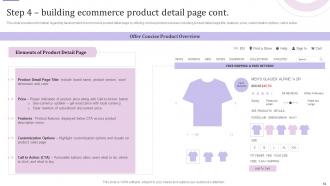
Slide 18: This slide displays development of ecommerce product detail page by offering concise product overview.
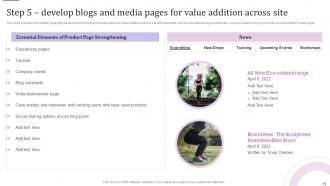
Slide 19: This slide represents development of blog and media pages for value addition across site.
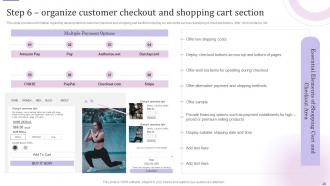
Slide 20: This slide showcases development of customer checkout and shopping cart section.
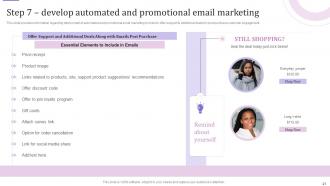
Slide 21: This slide presents deployment of automated and promotional email marketing in order to offer support.
Slide 22: This slide shows title for topics that are to be covered next in the template.
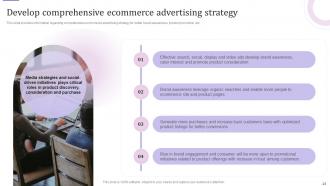
Slide 23: This slide presents Develop Comprehensive Ecommerce Advertising Strategy.
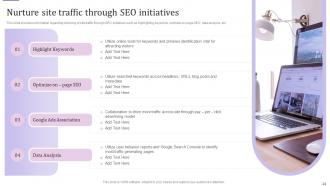
Slide 24: This slide displays nurturing of site traffic through SEO initiatives such as highlighting keywords, optimize on-page SEO, data analysis, etc.
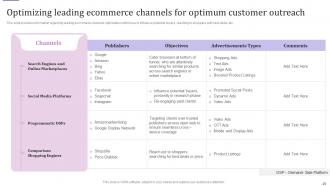
Slide 25: This slide represents Optimizing Leading Ecommerce Channels for Optimum Customer Outreach.
Slide 26: This slide shows title for topics that are to be covered next in the template.
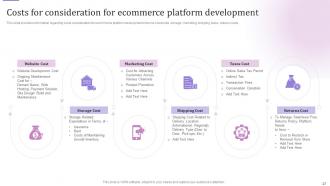
Slide 27: This slide presents Costs for Consideration for Ecommerce Platform Development.
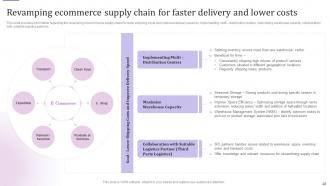
Slide 28: This slide displays Revamping Ecommerce Supply Chain for Faster Delivery and Lower Costs.
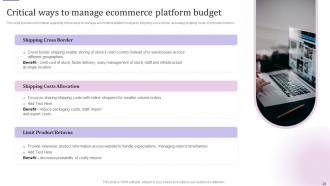
Slide 29: This slide represents Critical Ways to Manage Ecommerce Platform Budget.
Slide 30: This slide shows title for topics that are to be covered next in the template.
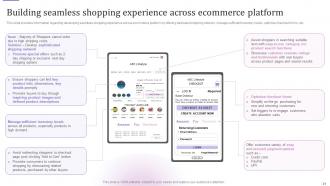
Slide 31: This slide displays Building Seamless Shopping Experience Across Ecommerce Platform.
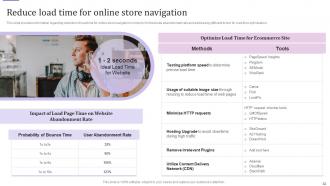
Slide 32: This slide represents reduction of load time for online store navigation in order to limit website abandonment rate.
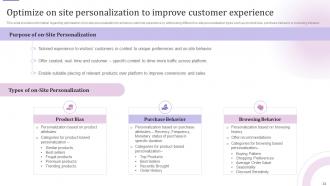
Slide 33: This slide showcases Optimize on Site Personalization to Improve Customer Experience.
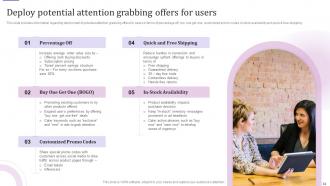
Slide 34: This slide shows Deploy Potential Attention Grabbing Offers for Users.
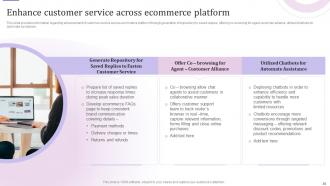
Slide 35: This slide presents Enhance Customer Service Across Ecommerce Platform.
Slide 36: This slide shows title for topics that are to be covered next in the template.
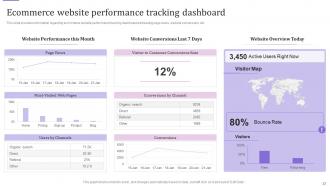
Slide 37: This slide presents ecommerce website performance tracking dashboard addressing page views, website conversions, etc.
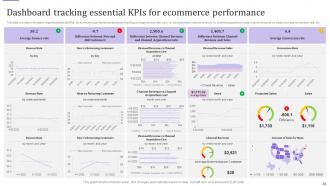
Slide 38: This slide displays Dashboard Tracking Essential KPIs for Ecommerce Performance.
Slide 39: This slide contains all the icons used in this presentation.
Slide 40: This slide is titled as Additional Slides for moving forward.
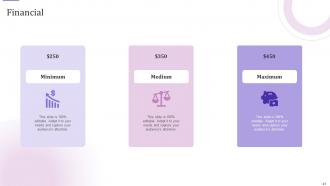
Slide 41: This is a Financial slide. Show your finance related stuff here.
Slide 42: This is About Us slide to show company specifications etc.
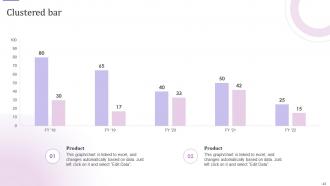
Slide 43: This slide provides Clustered Bar chart with two products comparison.
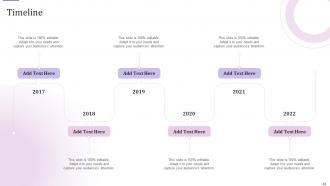
Slide 44: This is a Timeline slide. Show data related to time intervals here.
Slide 45: This slide contains Puzzle with related icons and text.
Slide 46: This slide shows Post It Notes. Post your important notes here.
Slide 47: This slide depicts Venn diagram with text boxes.
Slide 48: This is a Thank You slide with address, contact numbers and email address.
E Business Customer Experience Enhancement Strategy Playbook Powerpoint Presentation Slides with all 53 slides:
Use our E Business Customer Experience Enhancement Strategy Playbook Powerpoint Presentation Slides to effectively help you save your valuable time. They are readymade to fit into any presentation structure.







FAQs for E Business Customer Experience Enhancement Strategy Playbook
Exceptional e-business customer experiences include intuitive website navigation, personalized product recommendations, seamless checkout processes, responsive customer support, and consistent omnichannel interactions. These elements work together by reducing friction points, anticipating customer needs, and delivering faster service resolution, with many retailers finding that strategic personalization and streamlined processes significantly boost customer satisfaction and retention rates.
Personalization can be effectively integrated through dynamic content customization, behavioral tracking, AI-driven recommendations, targeted email campaigns, and adaptive website interfaces. These strategies enable e-commerce platforms to deliver tailored product suggestions, customized pricing, and relevant marketing messages, with many retail organizations finding that personalized experiences increase conversion rates and customer loyalty significantly.
Chatbots enhance online shopping experiences by providing instant customer support, personalized product recommendations, order tracking assistance, and 24/7 availability across multiple channels. These AI-powered tools streamline customer interactions by reducing wait times, automating routine inquiries, and guiding purchase decisions, with many e-commerce retailers finding that chatbots significantly improve customer satisfaction while reducing operational costs.
Companies leverage data analytics to improve e-business customer experience by implementing personalization engines, predictive analytics, behavioral tracking, real-time recommendation systems, and customer journey mapping. Through these technologies, retailers streamline product recommendations, banks enhance loan approval processes, and healthcare providers personalize patient interactions, ultimately delivering faster service responses, reduced cart abandonment rates, and increased customer satisfaction scores across digital touchpoints.
Best practices include responsive mobile design, intuitive navigation structures, fast loading speeds, clear call-to-action buttons, and comprehensive accessibility features like screen reader compatibility. These optimization strategies enhance user engagement by reducing bounce rates, improving conversion rates, and ensuring compliance with accessibility standards, with many e-commerce platforms finding that streamlined usability ultimately delivers higher customer satisfaction and competitive advantage.
Mobile responsiveness significantly enhances customer satisfaction by ensuring seamless navigation, faster loading times, and intuitive user interfaces across all devices. Through responsive design, e-businesses deliver consistent shopping experiences, reduced bounce rates, and streamlined checkout processes, with many retailers finding that mobile-optimized sites increase conversion rates and customer loyalty, ultimately providing competitive advantage in increasingly mobile-first markets. **Word count: 58 words**
Seamless omnichannel strategies include unified customer data platforms, consistent branding across touchpoints, integrated inventory management, cross-channel communication tools, and synchronized customer service systems. These approaches streamline interactions by eliminating data silos, enabling real-time inventory visibility, and providing consistent experiences, with many retailers finding that customers spend significantly more when seamlessly transitioning between online and offline channels.
E-business feedback loops can be established through real-time chat analytics, post-purchase surveys, social media monitoring, customer journey mapping, and automated review collection systems. These mechanisms enable organizations to identify pain points, streamline service delivery, and personalize interactions, with many retail and financial services companies finding that continuous feedback integration ultimately delivers faster issue resolution and significantly enhanced customer satisfaction.
Customer service fundamentally shapes e-business customer experience by providing immediate support, resolving issues efficiently, and building long-term trust and loyalty. Through responsive chat systems, personalized assistance, and seamless problem resolution, organizations enhance customer satisfaction, reduce abandonment rates, and increase retention, with many e-commerce platforms finding that superior service quality directly drives competitive advantage and revenue growth.
User-generated content enhances e-business trust and engagement by providing authentic customer testimonials, detailed product reviews, social media endorsements, and real-world usage demonstrations that potential buyers find more credible than brand messaging. Through strategic UGC integration, e-commerce platforms streamline decision-making processes, reduce purchase hesitation, and build community-driven marketing ecosystems, ultimately delivering higher conversion rates and stronger customer loyalty.
**INPUT**: What innovative technologies are shaping the future of customer experience in e-business? **OUTPUT**: Innovative technologies transforming e-business customer experience include artificial intelligence, augmented reality, voice commerce, predictive analytics, and conversational AI chatbots. These technologies streamline interactions by personalizing recommendations, enabling virtual product trials, and automating customer support, with many retail and financial services organizations finding that strategic implementation ultimately delivers faster response times and significantly enhanced customer satisfaction. [Word count: 60 words]
Businesses can balance automation with personal touch by implementing hybrid models that combine AI-powered chatbots for routine inquiries, human agents for complex issues, personalized automated responses using customer data, and seamless handoff protocols between systems and staff. This strategic combination enables organizations to deliver faster response times, reduce operational costs, and maintain meaningful customer relationships, with many companies finding that automated initial screening followed by human expertise ultimately enhances both efficiency and satisfaction.
Global e-business operations face challenges including cultural differences, language barriers, varying regulatory requirements, inconsistent technology infrastructure, and diverse payment preferences across markets. These complexities require strategic coordination between local teams, standardized processes, and flexible platforms, with many multinational companies finding that centralized oversight combined with regional customization delivers seamless experiences while maintaining operational efficiency.
Social media engagement enhances e-business customer experience by enabling real-time customer support, personalized interactions, and community building around brand values. Through strategic social platforms, businesses streamline customer service responses, gather valuable feedback for product improvements, and create authentic connections that drive loyalty, with many retailers finding that active social engagement significantly increases customer satisfaction and repeat purchases.
Key metrics include customer satisfaction scores, Net Promoter Score, customer lifetime value, conversion rates, cart abandonment rates, and customer retention rates. These indicators enable businesses to evaluate engagement effectiveness, identify pain points across digital touchpoints, and optimize user journeys, with many e-commerce organizations finding that comprehensive metric tracking delivers improved customer loyalty and increased revenue growth.
-
Huge collection of high-quality templates. Worth each penny.
-
The best part about SlideTeam is their meticulously prepared presentations (complete-decks and single-slides both), infused with high-quality graphics and easy to edit. All-in-all worthy products.