

Ecological Footprints Powerpoint Ppt Template Bundles




Try Before you Buy Download Free Sample Product
 Impress Your
 Audience
 100%
100% Editable
 Save Hours
 of Time


Our Ecological Footprints Powerpoint Ppt Template Bundles are topically designed to provide an attractive backdrop to any subject. Use them to look like a presentation pro.
People who downloaded this PowerPoint presentation also viewed the following :
Ecological Footprints Powerpoint Ppt Template Bundles with all 19 slides:
Use our Ecological Footprints Powerpoint Ppt Template Bundles to effectively help you save your valuable time. They are readymade to fit into any presentation structure.






FAQs for Ecological Footprints Powerpoint
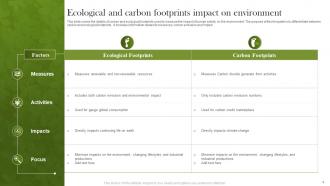
So an ecological footprint basically tracks how much of Earth's stuff you're using versus what the planet can actually replace. It converts everything - your carbon emissions, food, housing, transport, all the random things you buy - into "global hectares" of land needed to support how you live. Honestly, the results can be pretty brutal when you see the numbers. Online calculators will ask about your diet, travel, energy use at home, shopping habits, that kind of thing. I tried one last month and wow, apparently I need like 3 Earths or something ridiculous. But it shows you exactly where you're burning through the most resources and gives solid tips for cutting back.
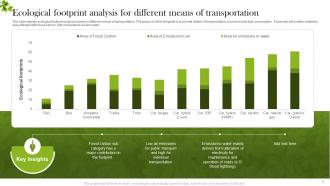
Honestly, it's wild how much our everyday stuff adds up environmentally. Transportation's the big one - like choosing to drive everywhere vs. walking when you can, or taking tons of flights. Food's another massive factor since meat production is just ridiculously resource-heavy compared to plants. Then you've got home energy use and all the random stuff we buy and toss. But here's what's actually encouraging - you have way more control than it feels like! Pick one thing to track for a week. Maybe it's how you get around or how much food you waste. You'll probably spot some easy wins pretty quick.
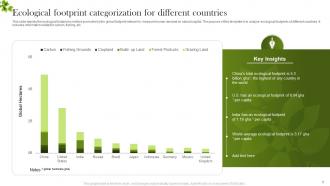
Dude, the differences are insane - like 10x between the biggest and smallest resource users. Qatar, Luxembourg, and the US are absolutely crushing it in the worst way possible with their massive energy use and meat consumption. Meanwhile, most African countries and parts of Asia barely register on the scale. Carbon emissions from burning fossil fuels are usually the main culprit, plus all the land we need for food production. I actually got lost looking at the Global Footprint Network's website for like an hour last week - their data will blow your mind. You should definitely check where your country ranks.
Honestly, it's mostly about burning fossil fuels for energy - that's the big one. Transportation, electricity, all that stuff. Food production is huge too, and meat's especially bad since cows need tons of land and water. Then there's agriculture taking over natural areas, cities expanding, all our water and material consumption. Oh, and waste obviously. Countries that consume a lot per person are the worst offenders. If you want to actually make a difference, start with your energy use and what you eat. Those two things will give you the most impact for your effort.
Dude, smart urban planning is actually a game-changer for cutting environmental impact. Mixed-use neighborhoods are key - when people can walk to work and grab coffee without driving, that's huge. Good public transit (like actually good, not the crappy bus system we had growing up) makes such a difference. Green roofs and urban forests aren't just pretty - they handle stormwater and clean the air. Building up instead of sprawling out saves natural areas around the city. Oh, and compact development means everyone uses way less resources per person. Honestly, any decent development plan should make cars optional, not mandatory.
Honestly, switching to renewables is probably the biggest thing you can do for your carbon footprint. Solar and wind replace all that messy fossil fuel extraction and burning - no more ongoing emissions from your energy use. Yeah, making the panels takes some resources upfront, but over 20+ years it's way less impact. Your utility might already have green programs you can join, which is super easy. Or check out solar for your roof if you're feeling ambitious. Even doing part of your energy this way makes a real difference. Perfect shouldn't be the enemy of good here.
Start by tracking your energy use, waste, water, and transportation stuff - the EPA has this Portfolio Manager tool that's pretty decent. Honestly, the numbers will probably shock you at first, but that's normal. Focus on whatever's hitting hardest first. Renewable energy's usually the big win, then maybe packaging or supply chain tweaks. Remote work helps too if that works for your business. Don't try fixing everything at once though - pick one thing, see how it goes, then add more. Better to actually track a few things consistently than spread yourself too thin.
So basically when we use way too much stuff, other species get totally screwed over. We're destroying their homes through farming expansion, cities sprawling everywhere, mining - you name it. Animals literally have nowhere to go. The pollution from all our overconsumption is making climate change worse too, which stresses ecosystems even more. Honestly, most species just can't evolve fast enough to deal with how quickly we're messing things up. But you can actually help - buy less random stuff, choose sustainable brands when possible, support conservation groups. Even small changes give wildlife some much-needed space to survive.
Honestly, it all comes down to what we're buying and how we use it. Every purchase you make creates demand - more fast fashion means more factories churning out cheap clothes. But here's what I've noticed: how long you actually keep something matters way more than people realize. Use a jacket for five years instead of one? That's a huge difference per wear. My advice is pretty simple - just buy way less stuff in general. When you do need something, go for quality that'll last. I know it sounds obvious, but most people toss things that still work perfectly fine.
Honestly, just tackle the big stuff first - transport, energy, and what you buy. I walk or bike way more now, and when I do drive I bunch all my errands together. LED bulbs are a no-brainer since they slash your electric bill anyway. The meat thing is probably the hardest but even cutting back helps since cows are basically climate disasters on legs lol. Energy-efficient appliances when yours die, buy less random stuff, go for things that'll actually last. Don't stress about being perfect - pick whatever feels doable and go from there.
Look, education campaigns actually work because they make people realize their daily stuff matters. Like, most of us don't think about our carbon footprint when we're brushing our teeth, you know? But good campaigns connect the dots - they'll tell you "take shorter showers" instead of just lecturing about climate change. Recycling programs are a perfect example. Same with energy conservation and people switching to more plant-based meals. The trick is making it personal and giving concrete steps people can do right now. Nobody wants to just feel guilty about the planet - we want to know what actually helps.
Honestly, carbon pricing works best - like cap-and-trade or carbon taxes that actually make it expensive to pollute. Companies hate it but it changes behavior super quick. Renewable energy mandates are solid too, plus those circular economy rules where businesses can't just dump responsibility after they sell something. Urban planning stuff helps a lot - better transit, green building codes - but takes forever to see results. Oh and you want policies that hit both sides, like what companies make AND what we buy. Market incentives plus regulations seems to be the sweet spot most places are figuring out.
So basically, sustainable farming cuts way down on all the heavy stuff - synthetic fertilizers, pesticides, tons of water. The soil actually gets healthier and traps more carbon. Plus you're supporting local food systems which is huge for cutting transport emissions (I never really thought about that part before tbh). They use things like crop rotation and composting - working with nature instead of fighting it. Short version: it grows food while making the land better, not worse. You should definitely look into local farms doing this stuff if you can.
Dude, there's actually some cool stuff happening that can help you go greener without much effort. Smart home systems basically do the work for you - they'll optimize your energy use automatically. Battery tech is getting insane now, so solar storage actually works at scale. Lab-grown meat is cutting down agricultural emissions big time (still tastes kinda weird though, not gonna lie). Carbon capture is finally real and not just sci-fi anymore. Oh, and precision farming is slashing water waste like crazy. Even small tweaks add up fast if you get on this stuff early.
So basically, high carbon footprints pump more greenhouse gases out there, which makes everything heat up faster. Then we're stuck using even more resources - like cranking AC during those brutal heat waves or rebuilding after crazy storms. Honestly, it's pretty messed up how trapped we get in this cycle. Weather patterns going haywire also screws with farming and water supplies, so we need even more stuff. But here's the thing - if you cut back on your ecological footprint now, you're actually helping break that whole mess before it spirals completely out of control.
-
I didn’t expect such a good service for the money I am paying. But, they exceed my expectations. Great work SlideTeam.
-
Awesome use of colors and designs in product templates.