


Effective B2B Demand Generation Plan Powerpoint Presentation Slides





Try Before you Buy Download Free Sample Product
 Impress Your
 Audience
 100%
100% Editable
 Save Hours
 of Time


B2B demand generation creates interest in a service or product and also overcomes the pain points of customers experience. Grab our professionally designed Effective B2B Demand Generation Plan template. The purpose is to optimize the B2B demand journey for better prospects engagement. The template details the present B2B demand attributes that focus on identifying and diagnosing their concerns, being skeptical before buying decisions, and having higher expectations as B2C customers. The template caters to B2B demand journey optimization by capturing business demand information through multiple departments and gathering essential information from the demand persona. It caters to slides about the role of content in B2B sales enablement by determining the vitality of content experience for B2B demand engagement, characteristics of sales content, the role of sales content in managing selling systems, and ways to optimize return on sales content. The template caters to B2B demand sales enablement initiatives, managing different demand enablement tools. It covers slides about various industries for B2B demand engagement and nurturing through content planning worksheet, B2B demand enabling content program, B2B purchase decision-maker assessment, etc. Download it now.
People who downloaded this PowerPoint presentation also viewed the following :
Content of this Powerpoint Presentation
Slide 1: This slide introduces Effective B2B Demand Generation Plan. State Your Company Name and begin.
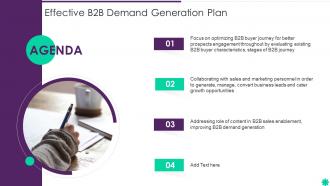
Slide 2: This is an Agenda slide. State your agendas here.
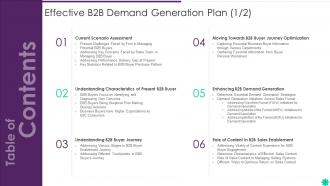
Slide 3: This slide presents Table of Content for the presentation.
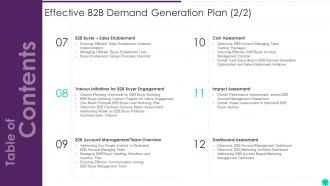
Slide 4: This is another slide continuing Table of Content for the presentation.
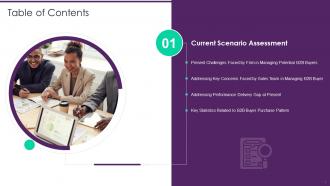
Slide 5: This slide displays four topics under 'Current Scenario Assessment' to be covered in the template.
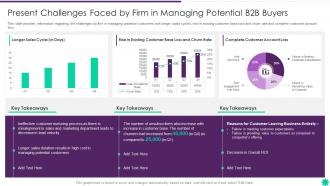
Slide 6: This slide provides information regarding the challenges by firm in managing potential customers with longer sales cycles etc.
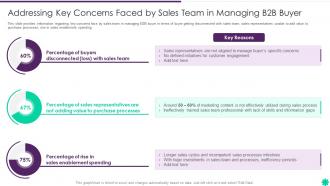
Slide 7: This slide provides information regarding key concerns faced by sales team in managing B2B buyer.
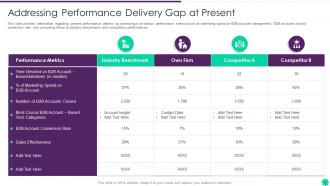
Slide 8: This slide provides information regarding present performance delivery by assessing it on various performance metrics.
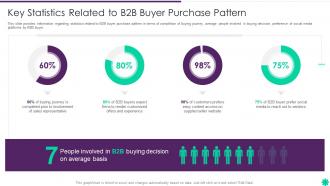
Slide 9: This slide provides information regarding statistics related to B2B buyer purchase pattern.
Slide 10: This slide displays three topics under 'Understanding Characteristics of Present B2B Buyer' to be covered in the template.
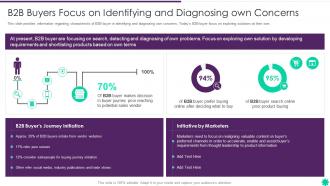
Slide 11: This slide provides information regarding characteristic of B2B buyer in identifying and diagnosing own concerns.
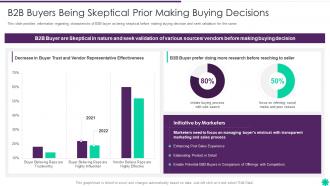
Slide 12: This slide provides information regarding characteristic of B2B buyer as being skeptical before making buying decision and seek validation for the same.
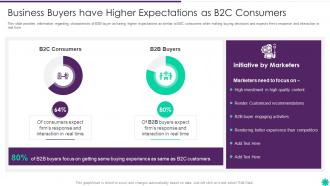
Slide 13: This slide provides information regarding characteristic of B2B buyer.
Slide 14: This slide displays two topics under 'Understanding B2B Buyer Journey' to be covered in the template.
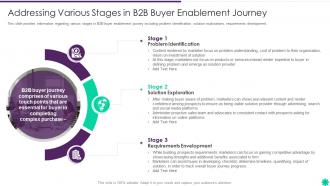
Slide 15: This slide provides information regarding various stages in B2B buyer enablement journey.
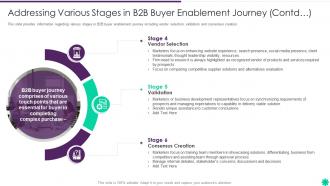
Slide 16: This slide provides information regarding various stages in B2B buyer enablement journey.
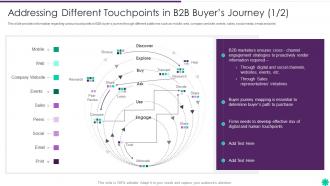
Slide 17: This slide provides information regarding various touchpoints in B2B buyer’s journey through different platforms.
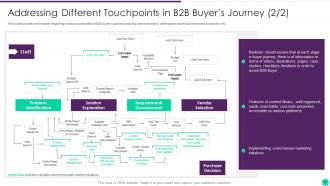
Slide 18: This slide provides information regarding various touchpoints in B2B buyer’s journey including online research etc.
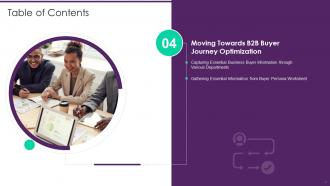
Slide 19: This slide displays two topics under 'Moving Towards B2B Buyer Journey Optimization' to be covered in the template.
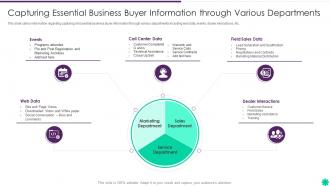
Slide 20: This slide provides Capturing Essential Business Buyer Information through Various Departments.
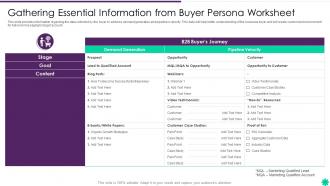
Slide 21: This slide provides information regarding the data collected by the buyer to address demand generation and pipeline’s velocity.
Slide 22: This slide displays two topics under 'Enhancing B2B Demand Generation' to be covered in the template.
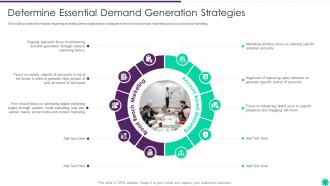
Slide 23: This slide provides information regarding essential demand generation strategies.
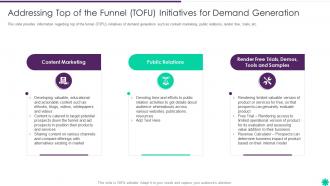
Slide 24: This slide provides information regarding top of the funnel (TOFU) initiatives of demand generation.
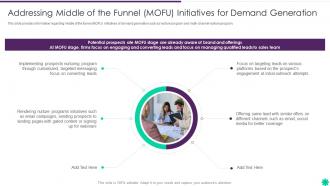
Slide 25: This slide provides information regarding middle of the funnel (MOFU) initiatives of demand generation.
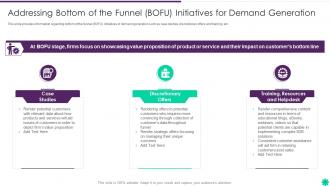
Slide 26: This slide provides information regarding bottom of the funnel (BOFU) initiatives of demand generation.
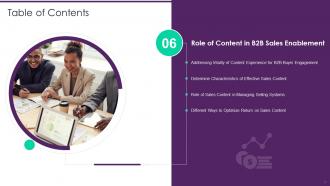
Slide 27: This slide displays four topics under 'Role of Content in B2B Sales Enablement' to be covered in the template.
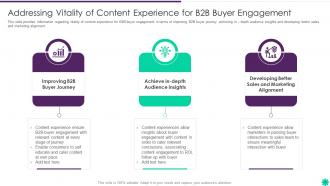
Slide 28: This slide provides information regarding vitality of content experience for B2B buyer engagement.
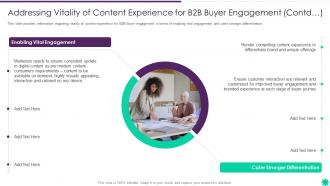
Slide 29: This slide provides information regarding vitality of content experience for B2B buyer engagement.
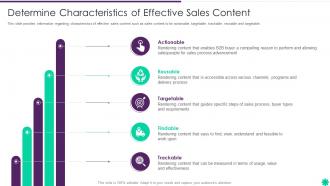
Slide 30: This slide provides information regarding characteristics of effective sales content.
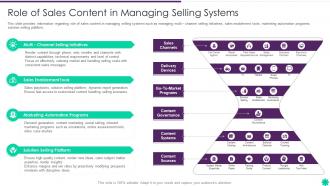
Slide 31: This slide provides information regarding role of sales content in managing selling systems.
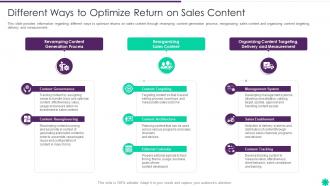
Slide 32: This slide provides information regarding different ways to optimize returns on sales content.
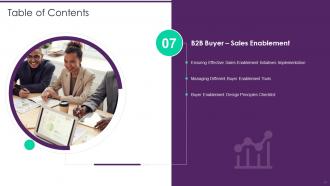
Slide 33: This slide displays three topics under 'B2B Buyer – Sales Enablement' to be covered in the template.
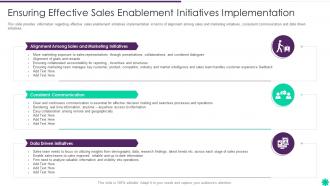
Slide 34: This slide provides information regarding effective sales enablement initiatives implementation.
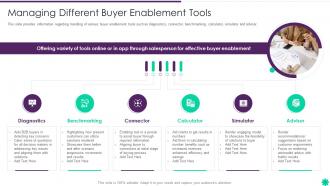
Slide 35: This slide provides information regarding handling of various buyer enablement tools such as diagnostics, connector etc.
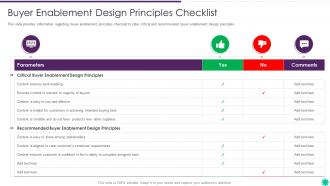
Slide 36: This slide provides information regarding buyer enablement principles checklist.
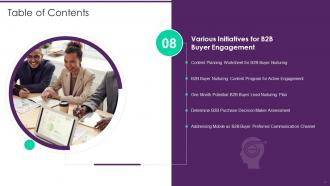
Slide 37: This slide displays five topics under 'Various Initiatives for B2B Buyer Engagement' to be covered in the template.
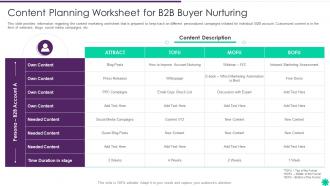
Slide 38: This slide provides information regarding the content marketing worksheet.
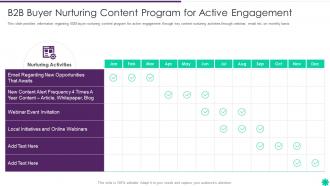
Slide 39: This slide provides information regarding B2B buyer nurturing content program for active engagement through key content nurturing activities.
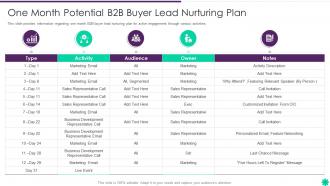
Slide 40: This slide provides information regarding one month B2B buyer lead nurturing plan for active engagement through various activities.
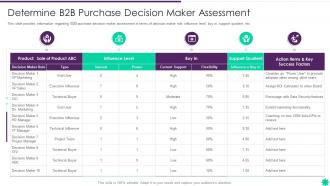
Slide 41: This slide provides information regarding B2B purchase decision maker assessment.
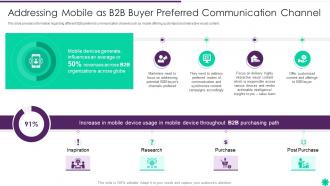
Slide 42: This slide provides information regarding different B2B preferred communication channel.
Slide 43: This slide displays three topics under 'B2B Account Management Team Overview' to be covered in the template.
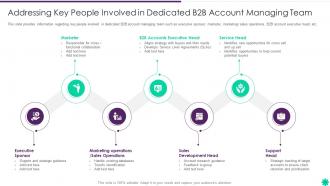
Slide 44: This slide provides information regarding key people involved in dedicated B2B account managing team.
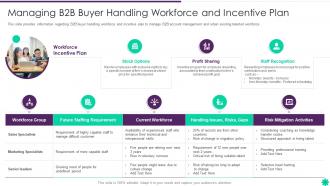
Slide 45: This slide provides information regarding B2B buyer handling workforce and incentive plan.
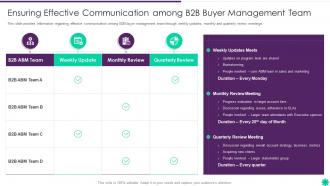
Slide 46: This slide provides information regarding effective communication among B2B buyer management team.
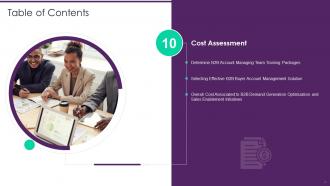
Slide 47: This slide displays three topics under 'Cost Assessment' to be covered in the template.
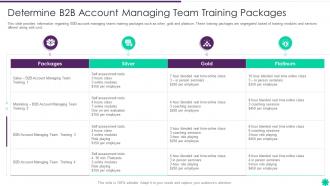
Slide 48: This slide provides information regarding B2B account managing teams training packages.
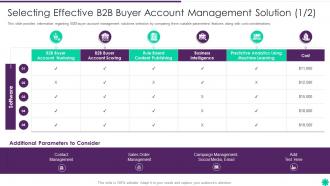
Slide 49: This slide provides information regarding B2B buyer account management solutions selection.
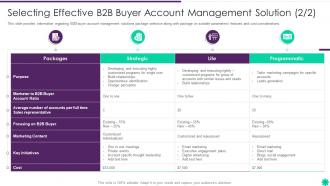
Slide 50: This slide provides information regarding B2B buyer account management solutions package selection.
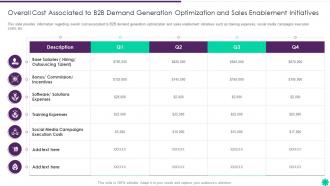
Slide 51: This slide provides information regarding overall cost associated to B2B demand generation optimization and sales enablement initiatives.
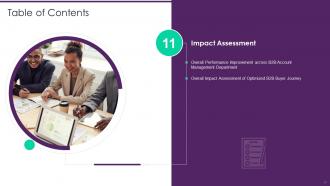
Slide 52: This slide displays two topics under 'Impact Assessment' to be covered in the template.
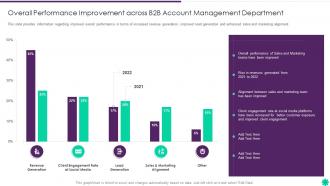
Slide 53: This slide provides information regarding improved overall performance.This graph is linked to excel.
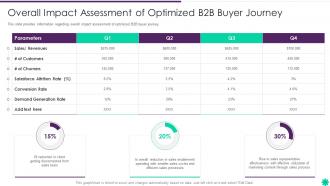
Slide 54: This slide provides information regarding overall impact assessment of optimized B2B buyer journey.
Slide 55: This slide displays three topics under 'Dashboard Assessment' to be covered in the template.
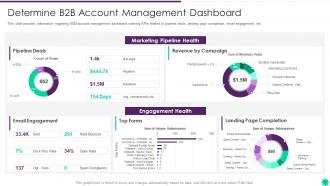
Slide 56: This slide provides information regarding B2B account management dashboard.
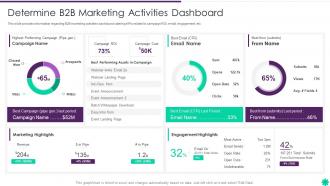
Slide 57: This slide provides information regarding B2B marketing activities dashboard catering KPIs related to campaign ROI etc.
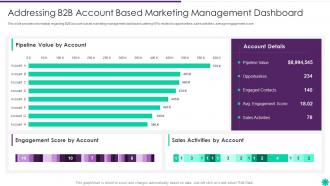
Slide 58: This slide provides information regarding B2B account-based marketing management dashboard.
Slide 59: This slide displays Icons for Effective B2B Demand Generation Plan.
Slide 60: This slide is titled as Additional Slides for moving forward.
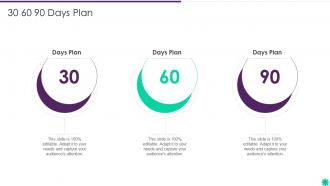
Slide 61: This slide provides 30 60 90 Days Plan with text boxes.
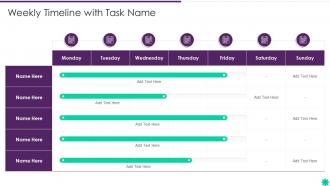
Slide 62: This slide shows Weekly Timeline with Task Name.
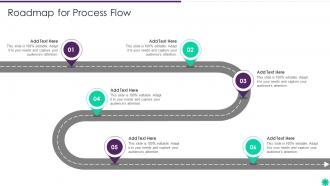
Slide 63: This slide presents Roadmap for Process Flow.
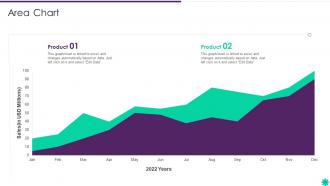
Slide 64: This slide depicts Area chart with two products comparison.
Slide 65: This slide contains Puzzle with related icons and text.
Slide 66: This slide shows Post It Notes. Post your important notes here.
Slide 67: This slide depicts Venn diagram with text boxes.
Slide 68: This is Our Goal slide. State your firm's goals here.
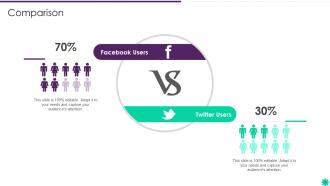
Slide 69: This is a Comparison slide to state comparison between commodities, entities etc.
Slide 70: This is a Thank You slide with address, contact numbers and email address.
Effective B2B Demand Generation Plan Powerpoint Presentation Slides with all 75 slides:
Use our Effective B2B Demand Generation Plan Powerpoint Presentation Slides to effectively help you save your valuable time. They are readymade to fit into any presentation structure.






FAQs for Effective B2B Demand Generation Plan
Look, you'll want to nail down four main things: solid content marketing, lead scoring that actually works, campaigns across multiple channels, and getting sales and marketing on the same page. Create content that hits real problems people face throughout their buying process. Set up lead scoring so you're not chasing every random website visitor - honestly, this saves so much time. Your email sequences, social posts, webinars, and ads don't all need to be perfect, but they should feel connected. And make sure your sales team actually understands what a "marketing qualified lead" means before they start calling. I'd start by looking at what's already working and finding the obvious holes.
So content marketing is basically about teaching people stuff before they're even thinking about buying from you. Create resources that actually help - whitepapers, case studies, webinars, whatever works for your audience. Builds trust over time. When they finally need what you're selling, guess who they'll remember? Gated content works really well for lead capture, but honestly it has to provide real value or people will bounce. Map your content to where buyers are in their journey. Oh, and start by figuring out what's missing in your current funnel first - way easier than starting from scratch.
Look, analytics is like having a map for your demand gen instead of wandering around lost. Track which channels actually bring quality leads - not just any leads. You'll see exactly where people bail out of your funnel and what content pushes them to buy. Without data, you're basically guessing and probably wasting money. I learned this the hard way when I kept dumping budget into LinkedIn ads that weren't converting. Set up attribution tracking first so you know which touchpoints matter. Then double down on what works and ditch what doesn't.
Okay so basically you want to match your content to where people are in the buying process. Early stage people get educational stuff like blog posts, while someone ready to buy gets case studies and demos. Email sequences are perfect for this - though honestly most people just set them up and never touch them again which is dumb. Lead scoring helps too so your sales team knows when to actually reach out. The trick is being helpful without being annoying, you know? Oh and definitely check your nurture flows regularly to see where you're losing people.
Track your pipeline stuff first - MQLs, SQLs, conversion rates, pipeline value. That's what actually moves the needle. Then add engagement metrics like email opens and content downloads to see what's working. Social media impressions are honestly pretty useless unless you're trying to impress your boss lol. The real win is connecting your top-funnel activities to actual closed deals, so get your attribution tracking right. Stick to maybe 5-7 metrics tops. More than that and you'll just get overwhelmed trying to make sense of everything.
Social media's huge for warming up prospects before they're ready to buy. LinkedIn's your best bet - drop some industry insights, jump into conversations on posts, engage with your target accounts' stuff. Twitter can work too but honestly it's kind of a mess these days. Don't be that pushy sales guy though. Share case studies, maybe do some LinkedIn Lives, hang out in groups where your ideal customers are. I'd pick like 10-20 key accounts and just consistently engage with their content for a month. Being genuinely helpful beats pitching every time.
Honestly, most B2B landing pages I see are cluttered messes. Strip out all the nav links - you want people focused on ONE thing. Your headline needs to be dead clear about what they're getting. Way too many companies write novels on these pages when bullet points work way better for highlighting benefits. Keep your form super simple - just name, email, company usually does it. Make that CTA button pop with contrasting colors. Oh and definitely test on mobile since like half your traffic's probably coming from phones anyway. Try different headlines and see what actually works with your audience. The whole page should load fast too - nothing kills conversions like waiting around.
So ABM is basically the opposite of regular demand gen. Instead of trying to get tons of leads, you pick maybe 10-20 companies you really want and go all-in on them. It's like... you know how most marketing casts this huge net? ABM is more like hunting specific whales. You create personalized everything - ads, content, outreach - just for those target accounts. Honestly, it's way more work upfront but the results hit different. Success isn't measured by how many leads you get, it's about how engaged those specific companies are and what pipeline comes from them. Way more strategic than spray-and-pray.
HubSpot or Marketo are solid starting points for email sequences and lead scoring - I'd personally lean HubSpot if you're not massive yet. Pair that with a CRM like Salesforce (though honestly it's overkill for most people). For social stuff, Buffer or Hootsuite work great for scheduling posts. Google Analytics is obvious for tracking, maybe throw in Mixpanel too. Oh, and tools like ZoomInfo help automate prospecting if that's your thing. But seriously, pick one platform first and actually master it before adding more. I've seen too many companies with like 10 half-configured tools that barely talk to each other.
Honestly, gated content like whitepapers works great for capturing leads - just don't make my mistake of sending everyone the same boring emails. Segmentation is everything. Start with educational stuff, then slowly work in your actual product. Oh, and set up behavioral triggers! Someone downloads your pricing sheet? Hit them with a case study or demo invite right after. Way better than being salesy from day one. Your open rates will actually be decent if you're relevant. I'd map out maybe 3-5 emails for your main buyer type first, then expand from there.
Honestly, the whole B2B space is kinda wild right now. Intent data is everywhere - companies are obsessed with catching buyers before they even know they're buying. AI personalization too, obviously. Account-based marketing got way more sophisticated, which is cool but also overwhelming? Dark social is the thing nobody talks about enough though. So much happens in private Slack channels you'll never see. Interactive content like calculators actually work if you make them useful upfront. My take? Pick literally one thing and nail it first. Don't try to do everything because you'll just burn out your team.
Webinars are honestly perfect for demand gen. They let you show off what you know while getting people who actually want to hear from you. Registration forms = easy lead capture. The trick is being helpful first, then pitching at the end (which people expect anyway, so it's not weird). Make sure you're tackling problems your ideal customers are dealing with right now. After it's over, follow up personally with attendees - none of that generic blast email stuff. Oh, and definitely record it! You can slice that content up for blogs, social posts, whatever. Just don't make it a sales pitch from minute one or people will bounce.
Honestly, the biggest issue is usually that sales and marketing are speaking totally different languages about what makes a "qualified" lead. Start there - literally sit down and hash out shared definitions. Weekly 30-minute syncs work great for building that habit of actually talking to each other. Marketing needs to see what happens after they hand leads over, and sales should give real feedback on quality (not just "these suck"). Oh, and stop measuring them on different stuff - tie both teams to actual revenue instead of just MQLs or how many calls got made. Pipeline reviews together are clutch too.
Dude, storytelling is a game-changer for B2B stuff. Your prospects don't want another boring feature list - they want to hear how companies like theirs actually solved problems. It feels way less pushy, more like you're just sharing helpful examples. Stories stick in people's heads too, which is huge during those painfully long B2B sales cycles. I mean, nobody remembers bullet points six months later. Start collecting your best customer wins and work them into emails, social posts, whatever. Real examples beat generic pitches every single time.
Honestly, B2B marketing is tough - those sales cycles drag on forever and you're dealing with like 5 different decision-makers who all want something different. Proving ROI is a nightmare too. Your CRM data is probably a mess (trust me, everyone's is), which makes everything harder. Start with account-based marketing to go after your best prospects. Create content for each buying stage, then use automation to keep nurturing leads. Oh, and make sure sales and marketing actually talk to each other - I've seen so many deals die because of poor handoffs. Fix your lead scoring first though.
-
Colors used are bright and distinctive.
-
Awesomely designed templates, Easy to understand.