

Effective Sales Management Techniques Powerpoint Presentation Slides






Try Before you Buy Download Free Sample Product
 Impress Your
 Audience
 100%
100% Editable
 Save Hours
 of Time


To create a presentation on sales techniques that is not only effective but looks professional and crisp is not a child’s play. To help you with this major task, we have come up with 63 slides content-ready Effective Sales Management Techniques Powerpoint Presentation Slides. This PPT sample presentation will help you in showcasing a brief overview of your company sales and figures. These sales management PPT templates include slides on company overview, compassion, financials, solution to problem, the pitch, our product, value proposition, our advantages, our location, product traction, key products and services offerings, and many more. You can make use of this PowerPoint presentation file to showcase about related topics as well, including SLA, project delivery timeline, action plan, goals dashboards, mind map, matrix etc. Download our Effective Sales Management Techniques Powerpoint Presentation Slides visuals right now. It will prove to be a vital tool for your company, employees and sales teams. Display sales facts and the techniques required to hit the target goal with our Effective Sales Management Techniques PPT file. Arguments carry conviction with our Effective Sales Management Techniques Powerpoint Presentation Slides. Folks will abide by your decision.
People who downloaded this PowerPoint presentation also viewed the following :
Content of this Powerpoint Presentation
Slide 1: This slide introduce Effective Sales Management Techniques. State Your Company Name and get started.
Slide 2: This slide showcases Agenda. Add the agenda and use it.
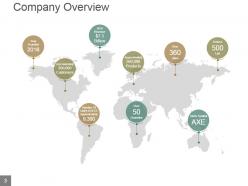
Slide 3: This slide presents Company Overview.
Slide 4: This slide showcases Company Overview. Add the data and use it.
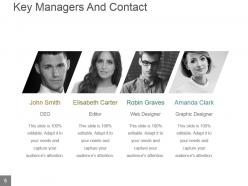
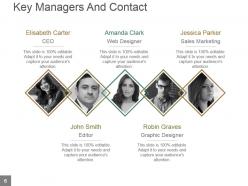
Slide 5: This slide presents Key Managers And Contact.
Slide 6: This slide shows Key Managers And Contact. Add the data and use it.
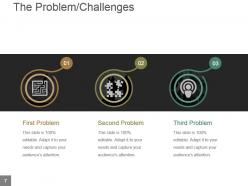
Slide 7: This slide presents The Problem/Challenges.
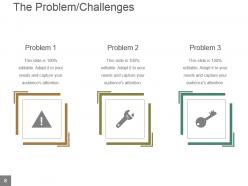
Slide 8: This slide showcases The Problem/Challenges. Add the challenges of the companies and use it.
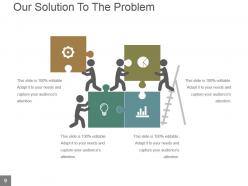
Slide 9: This slide shows Our Solution To The Problem.
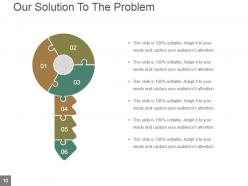
Slide 10: This slide presents Our solution to the problem.
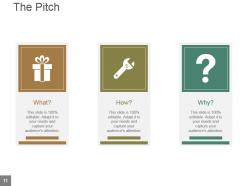
Slide 11: This slide showcases The Pitch.
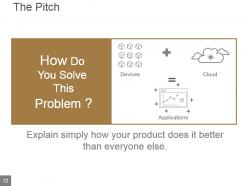
Slide 12: This slide shows The Pitch. Add the data and use it.
Slide 13: This slide displays Our Product. Use this imagery and add your data.
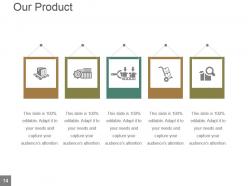
Slide 14: This slide showcases Our Product. Add the description and use it.
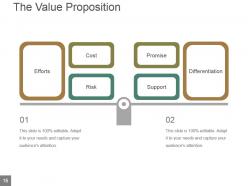
Slide 15: This slide shows The Value Proposition.
Slide 16: This slide showscases The Value Proposition. Add the data and use it.
Slide 17: This slide presents Our Advantages. Add the information and use it.
Slide 18: This slide displays Our Advantages.
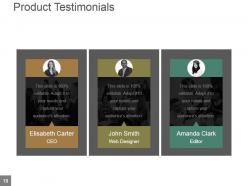
Slide 19: This slide showcases Products Testimonials. Add the data and use it.
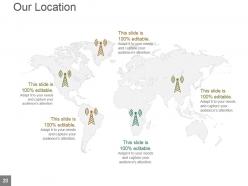
Slide 20: This slide presents Our Location.
Slide 21: This slide shows Our Location and add the data as per your requirement.
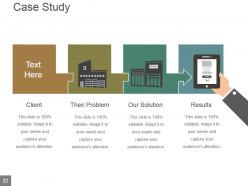
Slide 22: This slide presents Case Study. Add the information about client, their problem and other information in this.
Slide 23: This slide showcases Case Study.
Slide 24: This slide presents Case Study and use it for adding data.
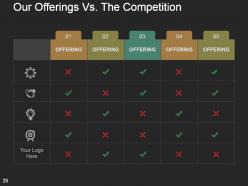
Slide 25: This slide showcases Our Offerings Vs. The Competition.
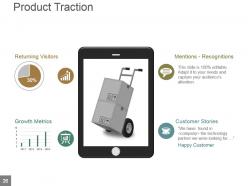
Slide 26: This slide shows Product Traction.
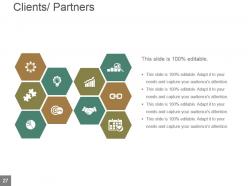
Slide 27: This slide presents Clients/ Partners.
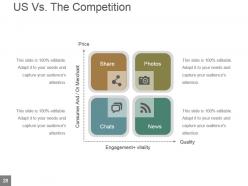
Slide 28: This slide showcases US Vs. The Competition. Add the customer and engagement information with comaprison.
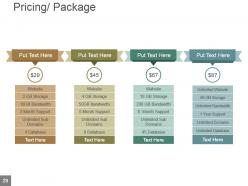
Slide 29: This slide shows Pricing/ Package.
Slide 30: This slide presents Key Products/ Services Offerings.
Slide 31: This slide showcases Key Product/ Service Offerings. Add the product offering and use it.
Slide 32: This slide shows Service Level Agreement.
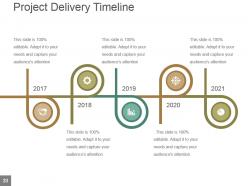
Slide 33: This slide presents Project Delivery Timeline.
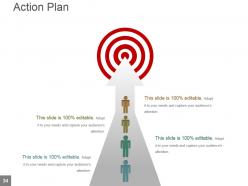
Slide 34: This slide shows Action Plan.
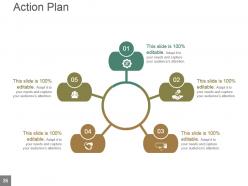
Slide 35: This slide presents Action Plan. You can use it as per your requirement.
Slide 36: This slide showcases Contact Details. You can add the contact and use it.
Slide 37: This slide is titled Additional slides to proceed forward.
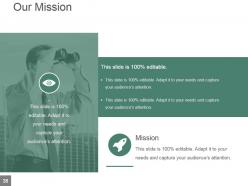
Slide 38: This is Our mission slide with imagery and text boxes to go with.
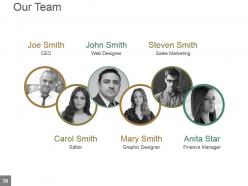
Slide 39: This is Our team slide with names and designation.
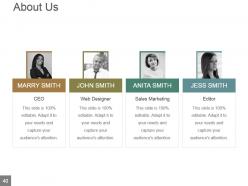
Slide 40: This is an About us slide to state company specifications etc.
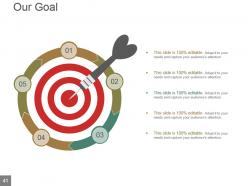
Slide 41: This is an Our Goal slide. State your important goals here.
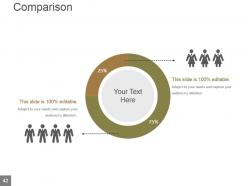
Slide 42: This slide shows Comparison of Positive Factors v/s Negative Factors with thumbsup and thumb down imagery.
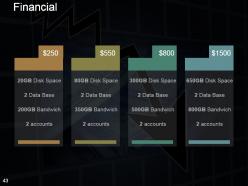
Slide 43: This is a Financial Score slide to show financial aspects here.
Slide 44: This is a Quotes slide to convey message, beliefs etc.
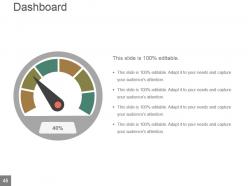
Slide 45: This is a Dashboard slide to show- Strategic System, Success, Goal Process, Sales Review, Communication Study.
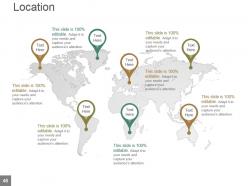
Slide 46: This is a Location slide to show global growth, presence etc. on world map.
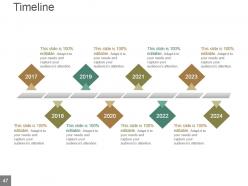
Slide 47: This is a Timelines slide to show- Plan, Budget, Schedule, Review.
Slide 48: This slide shows an image with text boxes titled Business Person with Post It notes.
Slide 49: This slide presents a Newspaper image with text boxes to flash company news, position etc.
Slide 50: This is a Puzzle image slide to show information, specification etc.
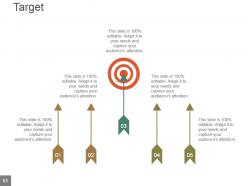
Slide 51: This slide displays Our Target with a background image.
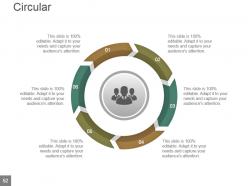
Slide 52: This is a Circular image slide to show information, specifications etc.
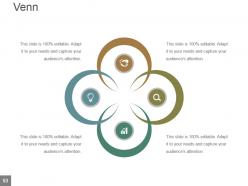
Slide 53: This is a Venn diagram image slide to show information, specifications etc.
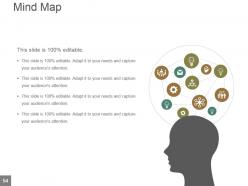
Slide 54: This slide shows a Mind map for representing entities.
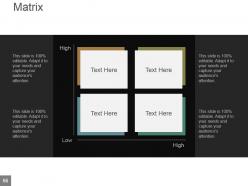
Slide 55: This slide shows a Matrix in terms of High and Low.
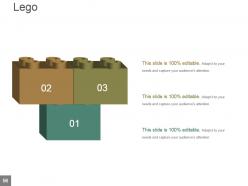
Slide 56: This is a lego slide with text boxes to show information
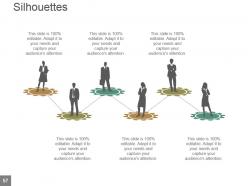
Slide 57: This is a People's silhouettes slide. Use it the way you want to show solutions etc.
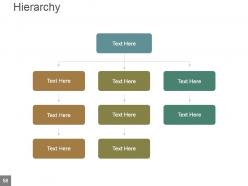
Slide 58: This is a Hierarchy slide showing team hierarchy.
Slide 59: This is a Bulb Or Idea image slide to show information, innovative aspects etc.
Slide 60: This is a Magnifying glass image slide to show information, scoping aspects etc
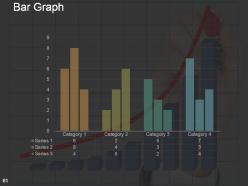
Slide 61: This is a Bar Graph image slide to show product comparison, growth etc.
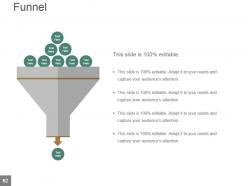
Slide 62: This is a Funnel image slide showing: Calls-to-action, Reachability, User Experience, Color Schemes, Engagement, Simplicity.
Slide 63: This is a Thank You image slide with Address, Email and Contact number.
Effective Sales Management Techniques Powerpoint Presentation Slides with all 63 slides:
Align their brains in the desired direction with our Effective Sales Management Techniques Powerpoint Presentation Slides. It helps fix their focus.







FAQs for Effective Sales Management Techniques
Honestly, it all comes down to four main things: setting clear goals, managing your pipeline, coaching your people, and tracking everything. You've gotta have measurable targets - none of that wishy-washy stuff. Pipeline management keeps deals flowing smoothly. But here's what really matters: those one-on-one sessions with your reps. That's where the magic happens, way more than group meetings. Track your conversion rates and deal velocity like crazy because you can't fix what you don't measure. I swear, once you get these basics right, your team practically runs itself. Pick whatever you're worst at and start there.
Honestly, sales forecasting is like having a roadmap instead of driving blind. Track your close rates and how long deals typically take - then you'll actually know which prospects are real vs just blowing smoke. My old manager used to say "hope isn't a strategy" and he wasn't wrong. You can catch issues before they torpedo your quarter, like if certain reps keep overpromising or specific products aren't moving. Resource planning gets way easier too. Start basic with timeline patterns for each team member, then expand from there once you've got the hang of it.
Honestly, data analytics is like having a crystal ball for sales - way better than just winging it. You'll spot patterns in lead conversion and rep performance that you'd totally miss otherwise. Plus it helps predict which deals will actually close (hint: probably not the "sure thing" your team keeps talking about). Coaching gets so much easier when you have real numbers to work with. Resource allocation becomes less of a guessing game too. My advice? Pick one specific metric you want to boost and focus your tracking there first. Don't go crazy trying to measure everything - that's just overwhelming and you won't use half of it anyway.
Honestly, recognition is huge - way more than people realize. Ask each person what actually motivates them first, because everyone's different. Some want career advancement, others just need flexibility or to be left alone to do their work. Set clear, specific targets for each individual and celebrate when they hit milestones, even small ones. Public shoutouts work great. Money's obviously important, but feeling valued matters just as much. Regular one-on-ones help you figure out what makes each person tick. Oh, and team competitions can build some solid camaraderie if you do them right.
Don't just go off gut feelings - pull their actual CRM data beforehand. Seriously, this saves me like 20 minutes every time. Look at real numbers: sales figures, pipeline stuff, what actually moved the needle. During the meeting, let them talk too. What's blocking them? Where are they crushing it? I've found people respond way better when you ask what help they need instead of just dumping feedback on them. Oh, and definitely write down the goals you agree on with actual deadlines. Trust me, you'll both forget half of it otherwise. Make it feel more like a conversation than a performance review.
Your CRM tracks all those prospect conversations and automates the follow-up stuff so you don't have to remember everything. The analytics show you where deals usually get stuck - super helpful for spotting patterns. Automated email sequences are honestly amazing for keeping lukewarm leads warm without the mental load. Oh, and you can set alerts when people engage with your content or hit milestones. I'd start with cleaning up your contact list first (it's probably messier than you think), then build out those automated workflows. Game changer for figuring out which leads are actually worth pursuing.
Dude, start by figuring out where people are bailing in your current funnel - that'll tell you everything. BANT or MEDDIC frameworks are clutch for qualifying leads early, saves you from wasting time on tire-kickers later. Content marketing pulls in decent prospects, and honestly cold emails are pretty much dead unless you're super targeted about it. Discovery calls are where the magic happens though. Ask open-ended stuff, actually listen to what's bugging them. I swear half the salespeople I know just wait for their turn to talk. Follow up regularly but don't be that person who emails every day. Building real relationships beats feature dumping every single time.
Your sales methodology basically dictates everything else you do. SPIN Selling means tons of discovery training and questioning workshops. With Challenger, you're coaching reps to be more disruptive and insight-driven. Solution selling? Get ready for endless needs analysis practice sessions. Each approach needs totally different people too - consultative selling requires patient relationship-builders, while transactional works better with quick closers. Your KPIs change, hiring changes, even your comp plans shift. Honestly, most teams don't realize how deep this goes. Just pick whatever matches how your customers actually buy, then build everything around that framework.
Dude, sales training is honestly a game-changer. Your close rates go up, cycles get shorter, and everyone stays on message instead of winging it. New people don't feel completely lost their first month, which is huge for keeping them around. Even your experienced reps learn stuff they can use right away - I've seen it happen. The money side usually works out pretty well since trained salespeople just sell more. Oh, and don't try to fix everything at once. Figure out where your team's struggling most and tackle those gaps first.
Honestly, role-playing is a game changer for sales training. Your team gets to screw up on practice scenarios instead of real deals - which saves everyone's sanity. I always throw in those "customer from hell" situations because they're weirdly fun and teach people how to handle the worst-case stuff. Make sure people switch roles too - being the difficult customer helps them understand what prospects are actually thinking. Don't just do this once though. We run quick 15-minute sessions in our weekly meetings and it's amazing how much confidence builds up over time.
Track conversion rates at each pipeline stage, average deal size, and how long your sales cycles run. Activity stuff matters too - calls and emails per rep. Revenue's obvious but shows up late, so these catch problems early. Your pipeline should be 3-4x whatever you're targeting (honestly this one trips up so many teams). Quota attainment tells you who needs help vs who's killing it. Sales cycle length changes fast when things go sideways. Weekly pipeline reviews with these numbers will save your quarter before it goes to hell.
Honestly, good communication is a game-changer for sales management. Your reps will perform way better when you're clear about what you expect and give them regular feedback. I've seen teams completely turn around just from managers actually listening to their concerns - weird how rare that is, right? Teaching active listening helps your people understand what customers really need, which makes closing deals easier. Oh, and consistency matters too. You don't want mixed messages confusing everyone. Weekly one-on-ones are probably your best starting point. Creates that environment where people aren't scared to ask questions.
Ugh, the worst part is you can't just pop by someone's desk anymore. Reading the room during calls? Forget about it. I swear half of good sales coaching happens through body language you just can't see on Zoom. Your best bet is getting obsessive about your CRM data - like actually using it to track what people are doing. Schedule way more one-on-ones than you think you need. We started doing these quick daily check-ins, maybe 10 minutes tops. Oh and create some kind of weekly ritual - pipeline reviews work great. You've got to be way more deliberate about staying connected since it won't happen naturally.
Dude, cross-functional collaboration is a game changer for sales teams. You get marketing, product, and customer success all talking to each other regularly. Marketing finally hears real customer objections from the field. Product discovers which features people actually care about (not just what they think is cool). Sales gets way better materials and backup. It's basically like having extra brains on every deal - which sounds cheesy but it's true. Set up weekly standups or maybe shared Slack channels. Oh, and make sure people actually use them consistently.
Dude, feedback from customers is like having cheat codes for sales. When someone tells you why they didn't buy, that's pure gold - way better than us sitting around guessing what went wrong. Use what they say to tweak your pitch, fix timing issues, or figure out which features actually matter to them. Here's the thing though - you gotta ask for feedback on wins too, not just the deals that crashed and burned. Most people only do exit interviews when things go bad, but honestly? The successful customers have just as much to teach you about what's working.
-
Content of slide is easy to understand and edit.
-
Very unique and reliable designs.