


Eisenhower Matrix A Prioritization Technique Training Ppt




Try Before you Buy Download Free Sample Product
 Impress Your
 Audience
 100%
100% Editable
 Save Hours
 of Time


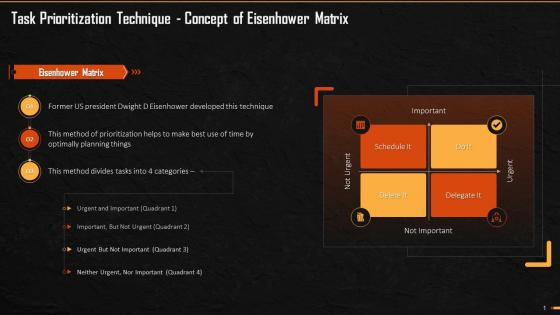
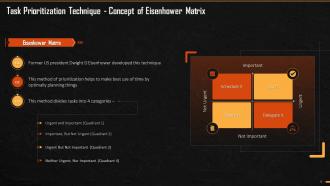
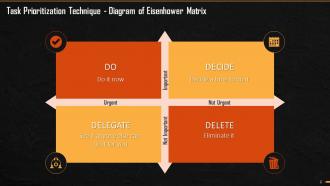
This set of slides covers the Eisenhower Matrix of Prioritization in which tasks are divided into four main quadrants Urgent and Important, Important but not Urgent, Urgent but not Important, and Neither Urgent Nor Important to optimally manage time.
People who downloaded this PowerPoint presentation also viewed the following :
Eisenhower Matrix A Prioritization Technique Training Ppt with all 18 slides:
Use our Eisenhower Matrix A Prioritization Technique Training Ppt to effectively help you save your valuable time. They are readymade to fit into any presentation structure.









FAQs for Eisenhower Matrix A Prioritization
So the Eisenhower Matrix basically helps you stop mixing up "urgent" with "important" - which honestly, we all do. You split tasks into four boxes: urgent + important (do now), important but not urgent (plan for later), urgent but not important (give to someone else), and neither (just ditch it). Most people live in urgent mode because it feels busy and productive. But the real game-changer? That "important but not urgent" box where you're actually getting ahead of problems instead of just reacting. Quick tip: before you start your day, just toss your main tasks into these categories. You'll spot time-wasters immediately.
Regular to-do lists just dump everything in one pile, which is honestly kinda useless. The Eisenhower Matrix makes you actually think about what matters by sorting tasks into four boxes: urgent/important, important/not urgent, etc. Most people spend all day on urgent crap that doesn't really move the needle. The magic happens in that "important but not urgent" quadrant - that's where your big goals live. I used to ignore those completely until everything became a crisis. Try taking your current list and sorting it this way. You'll probably realize half your "urgent" stuff can wait.
Honestly, the worst thing you can do is get obsessed with putting everything in the "right" box - like you'll literally waste hours just categorizing stuff instead of actually getting things done. Plus everyone dumps everything into "urgent and important" which kinda defeats the whole point, right? The sneaky trap though is ignoring that "important but not urgent" section because it doesn't feel like it matters right now. That's actually where all the good stuff lives. Oh and don't set it up once then abandon it - your life changes constantly. Just keep it simple, maybe check it weekly, and if something doesn't fit perfectly? Whatever, close enough works.
Oh totally! I use Todoist with color-coded labels for each quadrant - works amazing. Notion's great too if you're into that whole workspace vibe. You can set up filters in most task managers to auto-sort by urgency/importance. Even basic stuff like Trello or Google Sheets works fine with custom columns. Honestly, I went overboard setting up this elaborate system in Asana once and barely used it lol. The trick is picking something you'll actually open every day, then just tag everything into your four quadrants. Don't overthink it - consistency beats fancy features.
Yeah, just make it work for your actual job! Like if you're a developer, production bugs = urgent, but code reviews might be important without the crazy time pressure. Sales people probably flip that around with client calls being the fire drill stuff. Most people screw this up because they stick with the boring textbook definitions. Just write down your main 10 work things and figure out what urgent vs important actually means in your world. Oh and maybe check back every few months - priorities change and you don't want to be using outdated categories. Your industry's deadlines are what matter, not some generic business school example.
So basically, the whole thing works by splitting tasks into urgent vs important - that's how you get the four boxes. Most people (myself included, honestly) spend way too much time on urgent stuff that doesn't actually matter long-term. You end up running around putting out fires all day. The sweet spot is focusing on important tasks before they become urgent - like planning ahead instead of scrambling. I've started doing this thing where I spend like 30 minutes each morning figuring out which box my tasks really belong in. Game changer.
So during your planning meetings, get everyone to vote on where tasks actually belong in those four boxes - urgent/important stuff gets done first, important but not urgent gets scheduled, urgent but not important gets delegated, and the rest? Just ditch it. Honestly, half the battle is getting your whole team to agree on what "urgent" even means for your project. Otherwise you're just constantly putting out fires. I'd totally try this for your next sprint planning - it's wild how much clearer everything becomes when you're not treating every single thing like it's life or death.
Honestly, just track what you're doing for a week first. Have everyone sort their actual tasks into the four boxes, then compare notes - you'll be surprised how differently people see things! Most folks throw everything into "urgent" initially because it ALL feels crazy important. But there's a difference between actual urgency and just being swamped, you know? Once people practice that distinction, they get it. Use whatever works - templates, apps, sticky notes on a wall. The magic happens when you do your weekly planning this way consistently. Don't worry about getting it perfect right away.
Honestly, the Eisenhower Matrix is a game-changer because it stops you from lying to yourself about priorities. You know how we always say "everything's urgent"? Yeah, this forces you to actually pick what matters. I sort tasks into four boxes - important/urgent gets done first, obviously. But here's the thing - you realize most "urgent" stuff is just noise. Decision paralysis disappears when you can clearly see what's actually worth your time versus random busy work. Try spending five minutes each morning categorizing your tasks. Sounds boring but it works. You'll stop wasting energy on things that feel productive but don't actually move anything forward.
Yeah, the Eisenhower Matrix totally works for big picture stuff too! Here's the thing - most people only use it for daily tasks, but it's actually clutch for long-term planning. Map out your bigger goals by figuring out what's urgent AND important for your future. Those "important but not urgent" goals? That's where the magic happens. Think learning new skills or building relationships - they don't feel pressing but they're the ones that actually change your life. I'd say review your long-term goals monthly with the matrix. Otherwise you'll just be putting out fires forever, which honestly gets exhausting.
Yeah, culture totally changes how people use that matrix! Like in Japan or Korea, they'll prioritize relationship stuff that looks "non-urgent" but is actually huge long-term. Hierarchical cultures? They hate delegating because it feels rude. Some cultures are naturally long-term thinkers while others live in the moment. I've watched this mess up so many international teams tbh. The trick is figuring out what "important" actually means in your context - don't just copy some Western business thing. Makes way more sense once you adjust it.
Oh totally! That matrix thing actually works pretty well for stress. When you sort your tasks into those four boxes, it's like finally organizing a messy closet - suddenly everything makes sense. The overwhelming feeling starts to fade because you're not just reacting to whatever screams loudest anymore. Plus you end up doing work that actually matters instead of random busywork. Honestly, the best part is probably when you get to cross stuff off or dump it entirely. I was skeptical at first but tried it for like a week and my brain felt way less scattered.
Look, you won't find fancy Harvard case studies on this since it's basically just a personal productivity hack. But Stephen Covey made it huge in business circles, and supposedly tons of Fortune 500 CEOs use it daily. They're not exactly writing blog posts about their to-do lists though, lol. What's genius about it is how it makes you separate "feels urgent" from "actually matters long-term." Honestly? Just try it for a week with whatever's on your plate right now. You'll be shocked how much time those "urgent but pointless" tasks were stealing from you.
So you know that Eisenhower Matrix thing? It's a game changer for protecting your free time. Basically you sort tasks into four boxes - urgent/important, important/not urgent, urgent/not important, and neither. Most stuff we think is "urgent" at work really isn't - we just panic about everything. The magic happens when you spend more time on important-but-not-urgent tasks. Prevents those last-minute crises that eat up your evenings. I started doing this a few months ago and honestly? You'll actually have mental bandwidth left for your own life instead of constantly putting out fires.
Oh yeah, tons of Agile teams use the Eisenhower Matrix! They'll take those four quadrants and apply them to user stories or backlog items. Product Owners love using it during backlog refinement - they split features by business impact (important) vs deadlines (urgent). Sprint planning gets interesting when urgent bugs pop up and interrupt your current work. Some teams get creative and mix it with other methods like MoSCoW prioritization. It's basically personal productivity principles but for whatever work units you're dealing with - epics, stories, tasks, whatever. Works pretty well once you get the hang of it.
-
The way SlideTeam professionals work is exceptional. Thanks for being so helpful!
-
Great quality product.