


Electric Vehicle Investor Pitch Ppt Template





Try Before you Buy Download Free Sample Product
 Impress Your
 Audience
 100%
100% Editable
 Save Hours
 of Time


This Electric Vehicle Investor Pitch Deck includes a comprehensive analysis of market dynamics, highlighting the vast opportunities in the electric vehicle sector. This Electric Vehicle Funding Proposal template also provides an overview of competitors and plans, showcasing its competitive advantage through a detailed competitor analysis. Moreover, Electric Vehicle Financing Deck includes customer reviews, reflecting the satisfaction and positive experiences of valued customers. Additionally, Technology Innovation presentation testimonials validate XYZ Motors Ltd. commitment to quality and a customer-centric approach. Lastly, the Electric Vehicle Capital Raise Deck presents future milestones and performance statistics, illustrating the companys dedication to continuous improvement and growth. Download our 100 percent editable and customizable template, which is also compatible with Google Slides.
People who downloaded this PowerPoint presentation also viewed the following :
Content of this Powerpoint Presentation
Slide 1: The slide introduces Electric Vehicle Investor Pitch.
Slide 2: This is an Agenda slide. State your agendas here.
Slide 3: This slide illustrates the information about the major problems faced by the owners of electric vehicle.
Slide 4: This slide provides the solution to the major problems that were faced by the customers.
Slide 5: This slide aims to communicate the long-term goals and aspirations of the company, as well as its core purpose and values.
Slide 6: This slide lists the information about the individuals members of the compony who are currently engaged with the project.
Slide 7: This slide provides the overview of the company.
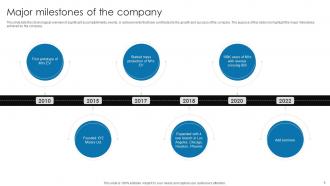
Slide 8: This slide lists the chronological overview of significant accomplishments, events, or achievements.
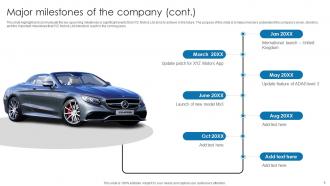
Slide 9: This slide highlight and communicate the key upcoming milestones or significant events that XYZ Motors Ltd aims.
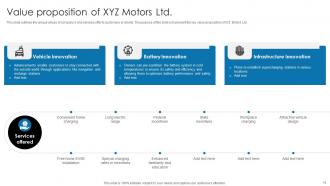
Slide 10: This slide outlines the unique values of company’s and services offer to customers or clients.
Slide 11: This slide presents statistics on global electric vehicle market.
Slide 12: This slide presents the market share of different companies in the electric vehicle (EV) market.
Slide 13: This slide outlines the key aspects of the company's value proposition, customer segments,etc.
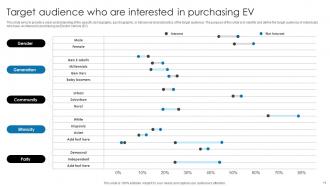
Slide 14: This slide aims to provide a clear understanding of the specific demographic, psychographic, or behavioral characteristics of the target audience.
Slide 15: The slide presents a competitor analysis that focuses on comparing various features offered by different competitors in the market.
Slide 16: This slide illustrates strategic approach and tactics that XYZ Motors will employ to introduce and promote its products or services.
Slide 17: This is a slide with address, contact numbers and email address.
Slide 18: This slide shows all the icons included in the presentation.
Slide 19: This slide is titled as Additional Slides for moving forward.
Slide 20: This slide provide an overview and analysis of the key performance indicators or metrics that showcase the company's performance.
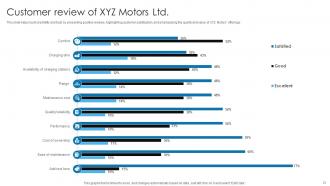
Slide 21: This slide helps build credibility and trust by presenting positive reviews.
Slide 22: This slide provides an overview of the key factors driving and restraining the growth of the electric vehicle market.
Slide 23: This slide highlight the various initiatives and programs that are implemented to better serve customers and meet their needs.
Slide 24: This slide provides data and projections on the expected number of electric vehicles.
Slide 25: This slide gives significant considerations that potential buyers take into account when choosing between these types of electric vehicles.
Slide 26: This is Our Target slide. State your targets here.
Slide 27: This slide shows SWOT describing- Strength, Weakness, Opportunity, and Threat.
Slide 28: This slide provides 30 60 90 Days Plan with text boxes.
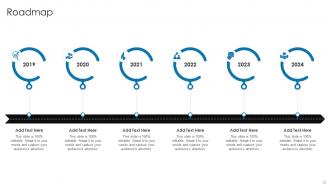
Slide 29: This slide presents Roadmap with additional textboxes.
Slide 30: This is a Thank You slide with address, contact numbers and email address.
Electric Vehicle Investor Pitch Ppt Template with all 38 slides:
Use our Electric Vehicle Investor Pitch Ppt Template to effectively help you save your valuable time. They are readymade to fit into any presentation structure.





















FAQs for Electric Vehicle Investor
Key market trends driving EV growth include government emissions regulations, declining battery costs, expanding charging infrastructure, corporate sustainability commitments, and advancing autonomous driving technologies. These trends accelerate adoption by making EVs more affordable and accessible, with automotive manufacturers, fleet operators, and consumers increasingly finding that electric vehicles deliver lower operational costs, enhanced performance capabilities, and competitive advantages in an increasingly sustainability-focused marketplace.
Government policies and incentives significantly enhance EV project financial viability through tax credits, subsidies, grants, regulatory support, and infrastructure investments. These measures enable companies to reduce development costs, accelerate market adoption, and attract investor confidence, with many automotive and energy firms finding that policy alignment ultimately delivers competitive advantage and sustainable growth opportunities.
Key USPs include scalable battery technology, strategic charging infrastructure partnerships, competitive manufacturing costs, regulatory compliance advantages, and differentiated market positioning. These elements attract investors by demonstrating operational efficiency, market penetration potential, and sustainable competitive advantage, with many EV companies finding that combining technological innovation with strategic partnerships ultimately delivers faster market adoption and stronger returns.
Primary challenges include battery supply shortages, semiconductor scarcity, raw material price volatility, manufacturing scalability issues, and complex global logistics networks. These obstacles significantly impact production timelines and cost structures, with many automotive manufacturers finding that strategic partnerships with battery suppliers and diversified sourcing strategies help mitigate risks while accelerating market entry timelines.
Current charging infrastructure significantly impacts EV adoption rates by creating range anxiety, limiting long-distance travel options, and affecting consumer confidence in electric vehicle reliability. While dense urban charging networks in cities like Los Angeles and Amsterdam accelerate adoption, rural infrastructure gaps slow uptake, with many automakers and governments increasingly investing in fast-charging corridors to enhance consumer trust and market penetration.
Key technological advancements poised to disrupt the electric vehicle market include solid-state batteries, wireless charging infrastructure, autonomous driving integration, advanced thermal management systems, and ultra-fast charging capabilities. These innovations streamline manufacturing costs, enhance vehicle performance, and minimize charging downtime, with automotive manufacturers and energy companies finding that strategic adoption ultimately delivers competitive advantage and accelerated market penetration.
Companies effectively communicate sustainability efforts by presenting quantifiable metrics, clear environmental impact data, regulatory compliance records, and long-term cost reduction projections alongside their financial performance. Through comprehensive ESG reporting, carbon footprint analysis, and strategic partnerships with green technology providers, organizations demonstrate measurable progress while showcasing competitive advantages, ultimately delivering investor confidence and market positioning in an increasingly sustainability-focused investment landscape.
Key financial metrics include revenue growth trajectory, gross margins per vehicle, cash burn rate, customer acquisition costs, and path to profitability timelines. These indicators help investors evaluate scalability by assessing production efficiency, market penetration potential, and capital requirements, with many finding that sustainable unit economics and clear milestone-based funding needs ultimately determine long-term viability.
Consumer preferences shift significantly across demographics, with younger buyers prioritizing advanced technology features, connectivity, and sustainability credentials, while older consumers focus on reliability, comfort, and traditional luxury amenities. Millennials and Gen Z emphasize fast charging capabilities and autonomous features, whereas Gen X and Baby Boomers value proven performance metrics and comprehensive warranty coverage, ultimately creating diverse market segments that enable manufacturers to develop targeted product lines and capture broader market share.
Partnerships with battery manufacturers demonstrate secured supply chains, cost predictability, and technological credibility, significantly enhancing investor confidence in electric vehicle projects. These strategic alliances enable startups to showcase proven battery technology, negotiate favorable pricing terms, and reduce manufacturing risks, with many investors finding that established supplier relationships indicate operational viability and scalability potential.
Battery recycling and second-life applications create significant revenue diversification opportunities, reduce raw material dependencies, strengthen supply chain resilience, and enhance environmental sustainability credentials for EV investments. These circular economy approaches enable manufacturers to capture additional value streams through repurposed batteries in energy storage, while recycling operations recover critical lithium and cobalt, ultimately delivering cost advantages and competitive positioning in an increasingly resource-constrained market.
Data analytics and AI enhance EV operational efficiency by optimizing battery performance, predicting maintenance needs, streamlining manufacturing processes, and improving supply chain management through real-time insights. These technologies enable manufacturers like Tesla and BYD to reduce production costs, accelerate vehicle development cycles, and scale operations globally, while ultimately delivering faster time-to-market and competitive advantages.
Risk mitigation strategies for EV startup investments include diversified portfolio allocation, thorough due diligence on technology and management teams, staged funding approaches, strategic partnerships with established automakers, and comprehensive market analysis. These approaches help investors minimize exposure by spreading risk across multiple ventures, validating technical capabilities, and leveraging industry expertise, with many institutional investors finding that combining early-stage innovation with established manufacturing partnerships delivers optimal risk-adjusted returns.
Competition and market saturation create mixed investor sentiment in the electric vehicle industry, with intense rivalry driving innovation while also pressuring margins and market share potential. While established automakers and new entrants compete for positioning, this dynamic ultimately accelerates technological advancement and infrastructure development, with many investors finding that companies demonstrating clear differentiation and strategic partnerships maintain strong investment appeal despite crowded market conditions.
China, India, Southeast Asia, and Latin America present the most promising opportunities due to rapid urbanization, government incentives, and growing environmental awareness. These markets offer significant scaling potential through supportive policies, expanding charging infrastructure, and increasing consumer adoption, with many investors finding that early entry delivers competitive advantage in increasingly electrified transportation landscapes.
-
Presentation Design is very nice, good work with the content as well.
-
I was really impressed with the presentation I created with their templates. I’ll be using their services moving forward.