


Elements Of An Effective Product Strategy Powerpoint Presentation Slides Strategy CD V





Try Before you Buy Download Free Sample Product
 Impress Your
 Audience
 100%
100% Editable
 Save Hours
 of Time


Product strategy refers to a companys overall approach and plans to develop, market, and sell its products. Grab our Elements of an Effective Product Strategy template. It involves making decisions about what products to build, how to position them in the market, and how to differentiate them from competitors. Our Product Differentiation Strategy deck covers a brief overview of product strategy and its significant benefits. Additionally, it covers creating an effective product strategy, such as defining a product vision statement, researching customer needs and trends, setting up key product differentiators, setting measurable business goals and metrics, developing a high level strategic product roadmap, and outlining the companys go to market approach. Lastly, our After sales strategy module highlights various product strategies, such as Product differentiation, pricing, product quality, focus, after sales, market driven, and time based strategies. Learn more by downloading our 100 percentage editable and customizable product strategy template, also compatible with Google Slides. Get instant access.
People who downloaded this PowerPoint presentation also viewed the following :
Content of this Powerpoint Presentation
Slide 1: This slide introduces Elements of an Effective Product Strategy. Commence by stating Your Company Name.
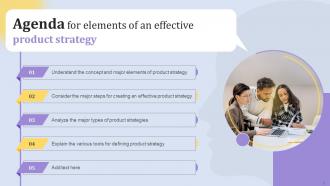
Slide 2: This slide depicts the Agenda of the presentation.
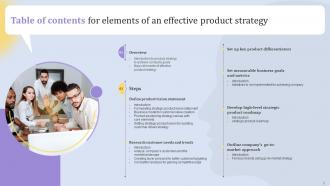
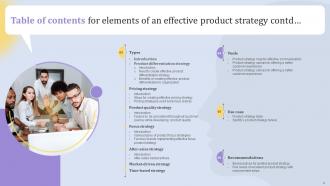
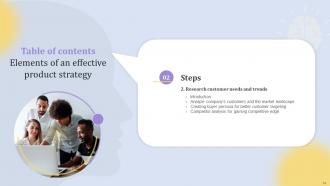
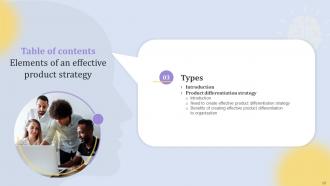
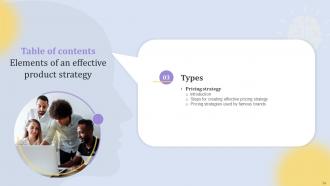
Slide 3: This slide includes the Table of contents.
Slide 4: This slide highlights the Title for the Topics to be covered further.
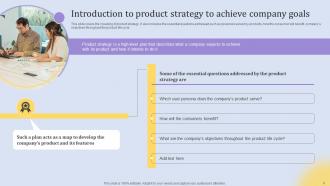
Slide 5: This slide reveals the Introduction to product strategy to achieve company goals.
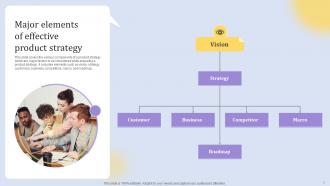
Slide 6: This slide depicts the Major elements of effective product strategy.
Slide 7: This slide highlights the Title for the Topics to be covered further.
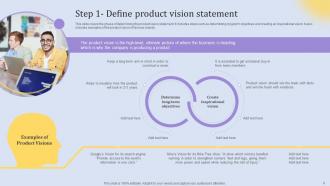
Slide 8: This slide covers the phase of determining the product vision statement.
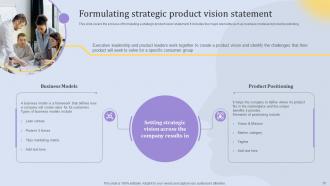
Slide 9: This slide talks about Formulating strategic product vision statement.
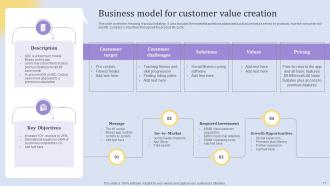
Slide 10: This slide reveals the Business model for customer value creation.
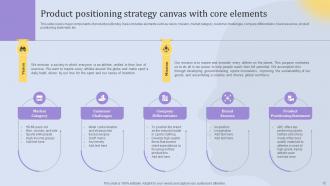
Slide 11: This slide includes the Product positioning strategy canvas with core elements.
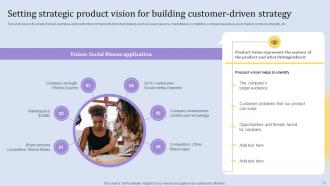
Slide 12: This slide deals with Setting strategic product vision for building customer-driven strategy.
Slide 13: This slide presents the Heading for the Contents to be discussed next.
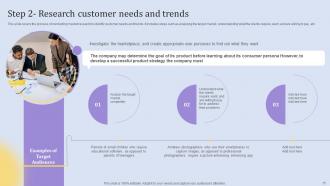
Slide 14: This slide shows the process of conducting market research to identify customer needs and trends.
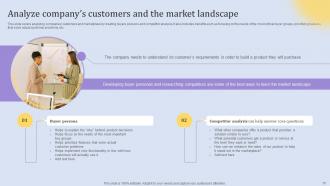
Slide 15: This slide covers analyzing companies’ customers and marketplace by creating buyers persons and competitor analysis.
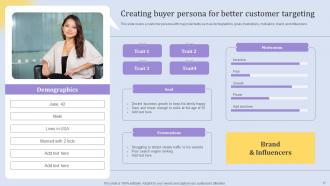
Slide 16: This slide focuses on Creating buyer persona for better customer targeting.
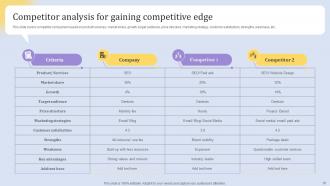
Slide 17: This slide talks about Competitor analysis for gaining competitive edge.
Slide 18: This slide indicates the Title for the Ideas to be covered in the upcoming template.
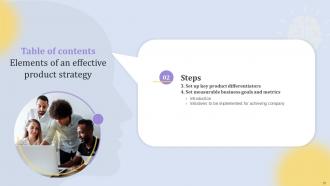
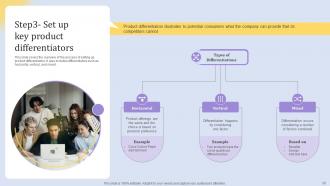
Slide 19: This slide highlights the overview of the process of setting up product differentiators.
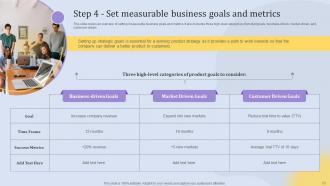
Slide 20: This slide portrays an overview of setting measurable business goals and metrics.
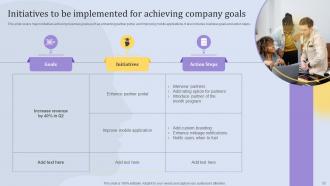
Slide 21: This slide talks about the Initiatives to be implemented for achieving company goals.
Slide 22: This slide mentions the Heading for the Ideas to be discussed further.
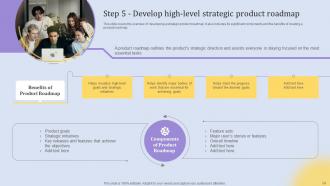
Slide 23: This slide covers the overview of developing a strategic product roadmap.
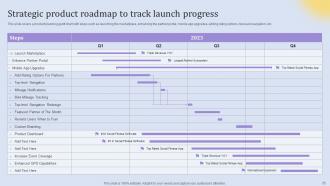
Slide 24: This slide displays the Strategic product roadmap to track launch progress.
Slide 25: This slide contains the Title for the Contents to be covered in the next template.
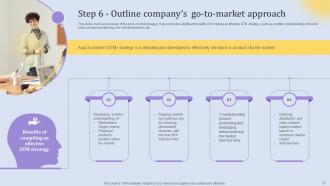
Slide 26: This slide exhibits the overview of the go-to-market strategy.
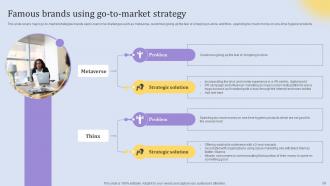
Slide 27: This slide indicates the Famous brands using go-to-market strategy.
Slide 28: This slide reveals the Heading for the Topics to be covered further.
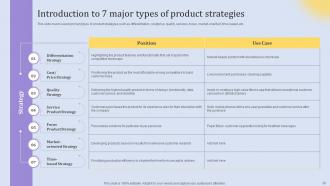
Slide 29: This slide states the Introduction to 7 major types of product strategies.
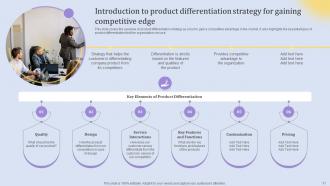
Slide 30: This slide depicts the Introduction to product differentiation strategy for gaining competitive edge.
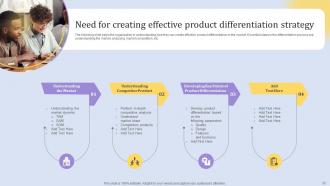
Slide 31: This slide exhibits the Need for creating effective product differentiation strategy.
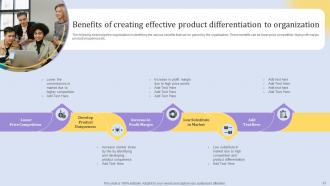
Slide 32: This slide lists the Benefits of creating effective product differentiation to organisation.
Slide 33: This slide represents the Title for the Topics to be discussed in the upcoming template.
Slide 34: This slide covers a brief overview of the product pricing strategy.
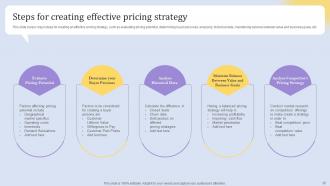
Slide 35: This slide highlights the Steps for creating effective pricing strategy.
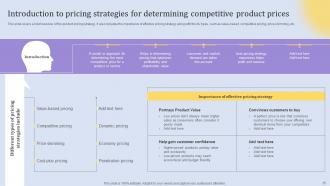
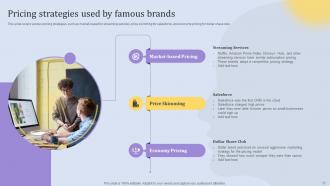
Slide 36: This slide presents various pricing strategies.
Slide 37: This slide includes the Heading for the Contents to be covered in the next template.
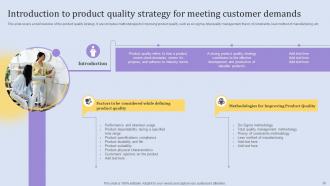
Slide 38: This slide depicts the Introduction to product quality strategy for meeting customer demands.
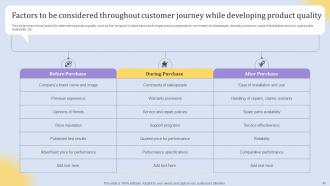
Slide 39: This slide states the Factors to be considered throughout customer journey while developing product quality.
Slide 40: This slide mentions the Title for the Ideas to be discussed further.
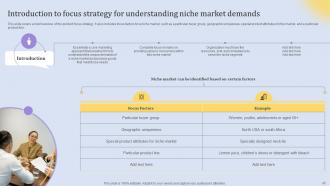
Slide 41: This slide covers a brief overview of the product focus strategy.
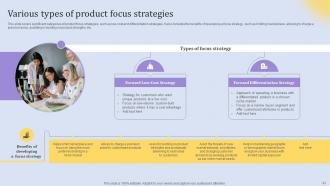
Slide 42: This slide includes the Various types of product focus strategies.
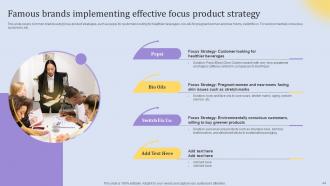
Slide 43: This slide reveals the Famous brands implementing effective focus product strategy.
Slide 44: This slide indicates the Heading for the Ideas to be covered in the following template.
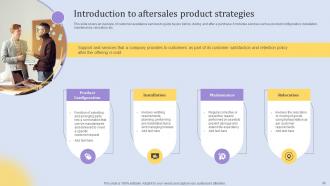
Slide 45: This slide mentions the Introduction to aftersales product strategies.
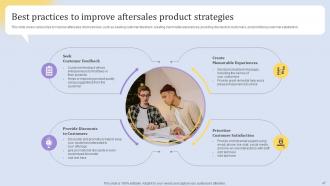
Slide 46: This slide exhibits the Best practices to improve aftersales product strategies.
Slide 47: This slide portrays the Title for the Contents to be covered next.
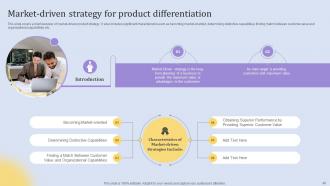
Slide 48: This slide talks about Market-driven strategy for product differentiation.
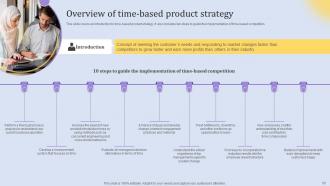
Slide 49: This slide presents the Overview of time-based product strategy.
Slide 50: This slide highlights the Heading for the Topics to be discussed in the following template.
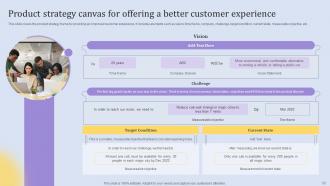
Slide 51: This slide illustrates the Product strategy canvas for offering a better customer experience.
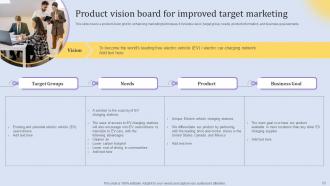
Slide 52: This slide displays the Product vision board for improved target marketing.
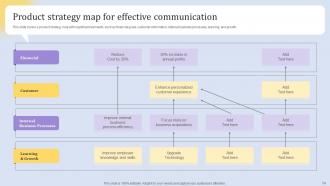
Slide 53: This slide shows the Product strategy map for effective communication.
Slide 54: This slide includes the Title for the Topics to be covered further.
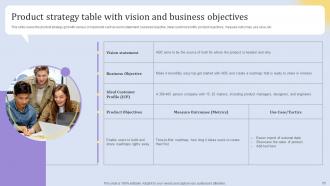
Slide 55: This slide reveals the Product strategy table with vision and business objectives.
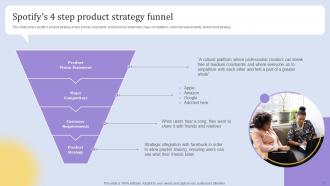
Slide 56: This slide covers Spotify’s product strategy in four primary segments.
Slide 57: This slide exhibits the Heading for the Contents to be discussed next.
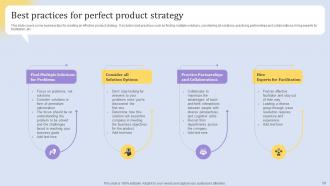
Slide 58: This slide shows the Best practices for perfect product strategy.
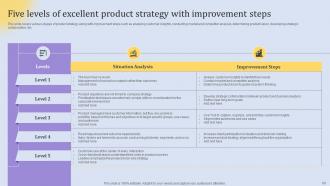
Slide 59: This slide covers various stages of product strategy along with improvement steps.
Slide 60: This is the Icons slide containing all the Icons used in the plan.
Slide 61: This slide is used for depicting some Additional information.
Slide 62: This is Meet our team slide. State your team-related information here.
Slide 63: This is the About us slide for portraying the organization-related information.
Slide 64: This slide incorporates the firm's vision, mission and goal.
Slide 65: This is the Quotes slide for motivation.
Slide 66: This is the 30-60-90 days plan slide for effective planning.
Slide 67: This is the Idea Generation slide for encouraging fresh ideas.
Slide 68: This slide reveals the Venn diagram.
Slide 69: This slide contains the Post It Notes for reminders and deadlines.
Slide 70: This is the Thank you slide for acknowledgement.
Elements Of An Effective Product Strategy Powerpoint Presentation Slides Strategy CD V with all 73 slides:
Use our Elements Of An Effective Product Strategy Powerpoint Presentation Slides Strategy CD V to effectively help you save your valuable time. They are readymade to fit into any presentation structure.









FAQs for Elements Of An Effective Product Strategy Powerpoint Presentation Slides
Key components of a successful product strategy include clear value proposition, target market definition, competitive positioning, roadmap planning, and success metrics. These elements work together by aligning development priorities, guiding resource allocation, and ensuring market fit, with many organizations finding that this strategic combination delivers faster time-to-market and sustainable competitive advantage.
Market research influences product strategy development by identifying customer needs, analyzing competitor positioning, validating market opportunities, and uncovering pricing insights that guide strategic decisions. Through comprehensive market analysis, companies can align their product features with actual demand, minimize development risks, and strategically position offerings, with many organizations finding that research-driven strategies deliver higher success rates and stronger competitive advantage.
Customer feedback plays a pivotal role in shaping product strategy by providing direct insights into user needs, pain points, feature preferences, and market gaps that guide development priorities. Through surveys, user testing, and analytics, companies can validate assumptions, refine product roadmaps, and enhance user experiences, with many organizations finding that systematic feedback integration ultimately delivers stronger market fit and sustainable competitive advantage.
Companies ensure alignment by establishing clear communication channels between product and executive teams, regularly reviewing strategic metrics, and integrating product roadmaps with business objectives. Through cross-functional planning sessions, quarterly business reviews, and shared KPIs, organizations streamline decision-making processes, enhance resource allocation, and maintain strategic focus, ultimately delivering products that drive revenue growth and competitive advantage.
Product strategy success metrics include customer acquisition cost, lifetime value, market share growth, revenue per user, and retention rates. These measurements enable organizations to track strategic performance by monitoring user engagement, competitive positioning, and financial outcomes, with many companies finding that combining leading indicators like feature adoption with lagging indicators ultimately delivers comprehensive insights into product-market fit and long-term viability.
Competitive analysis integrates into product strategy through market positioning assessment, feature gap identification, pricing strategy development, and differentiation opportunity mapping. Companies like Netflix and Spotify leverage competitor insights to refine their value propositions, prioritize product features, and identify unmet customer needs, ultimately delivering enhanced market positioning and sustainable competitive advantages in crowded markets.
Defining a target audience enables companies to align product development, marketing efforts, and resource allocation with specific customer needs, preferences, and pain points. This strategic focus streamlines decision-making across teams, reduces development costs, and accelerates time-to-market, with many organizations finding that targeted approaches deliver higher conversion rates and stronger customer loyalty.
A product vision statement enhances strategy effectiveness by providing clear direction, aligning cross-functional teams, guiding prioritization decisions, and establishing measurable success criteria that stakeholders can rally behind. Through compelling vision frameworks, organizations streamline product development cycles, enhance market positioning, and accelerate time-to-market, with many companies finding that well-crafted vision statements ultimately deliver stronger customer adoption and sustainable competitive advantage.
**INPUT**: What strategies can be employed to prioritize features in a product roadmap? **OUTPUT**: Feature prioritization strategies include value-based scoring, customer impact assessment, resource requirement analysis, competitive positioning evaluation, and technical feasibility review. These frameworks enable product teams to balance user needs with business objectives through systematic scoring models, ultimately delivering maximum market value while optimizing development resources and maintaining strategic competitive advantage. [Word count: 50 words]
Emerging technologies revolutionize product strategies by enabling data-driven decision making, automating development processes, and creating personalized customer experiences through AI, IoT, and machine learning capabilities. These innovations streamline market research, accelerate prototyping, and enhance user engagement, with companies across retail, healthcare, and financial services finding that technology integration ultimately delivers competitive advantage and faster time-to-market.
Common pitfalls include lacking clear customer insights, ignoring competitive analysis, setting unrealistic timelines, failing to align with business objectives, and neglecting resource constraints. These strategic missteps often derail product launches across industries, with many organizations finding that thorough market research, stakeholder alignment, and iterative planning ultimately deliver more successful outcomes and sustainable competitive advantage.
Agile methodologies enhance product strategy responsiveness by enabling iterative development, continuous customer feedback integration, and rapid adaptation to market changes. Through short sprint cycles and regular stakeholder reviews, organizations can pivot strategies quickly, minimize development risks, and deliver customer-centric solutions faster than traditional waterfall approaches, ultimately maintaining competitive advantage in dynamic markets.
Pricing strategy integrates into product strategy through value-based positioning, competitive differentiation, market penetration approaches, and customer segmentation alignment. These strategic combinations enable businesses to maximize revenue while supporting product goals, with companies in sectors like software and retail finding that coordinated pricing enhances market positioning and accelerates customer adoption.
A strong brand identity supports product strategy by creating emotional connections with customers, differentiating offerings from competitors, and establishing clear market positioning that guides development decisions. This strategic alignment enables companies to command premium pricing, build customer loyalty, and streamline marketing efforts, with brands like Apple and Nike demonstrating how consistent identity ultimately drives sustained competitive advantage.
Storytelling transforms product strategy communication by creating emotional connections, simplifying complex concepts, and making strategic vision memorable for stakeholders across different departments. Through compelling narratives that highlight customer journeys, market opportunities, and competitive positioning, organizations enhance stakeholder buy-in, align cross-functional teams, and accelerate decision-making processes, ultimately delivering clearer strategic understanding and stronger execution commitment.
-
Eye-catching PPT designs, outstanding team, and best customer service. I’m a super satisfied customer here!
-
Graphics are very appealing to eyes.