


Emergency situation management deck powerpoint presentation slides
Develop ways to anticipate the risks of the firm by using this Emergency Situation Management Deck PowerPoint Presentation Slides. This presentation covers topics such as organizational crisis, financial crisis, crisis leadership and team, technological crisis, natural crisis, and dashboard. Utilize this crisis management planning PPT slide deck, and discuss the kinds of crises that a firm can face. You can showcase the types of workplace crises with the help of this crisis management PPT slide deck. Describe a crisis communication plan with this thoroughly researched business continuity planning PPT visual. Showcase different types of financial crisis and evaluate financial practices in the firm with the help of risk management strategy PowerPoint visuals. The slide deck also gives an overview of the crisis team with structure and team schedule. Take the assistance of disaster risk reduction PPT layouts and depict various technological crisis, personnel crisis, and natural crisis. Also, the presentation shows a dashboard that will help the firm in tracking fiscal performance.








-

- Google Slides is a new FREE Presentation software from Google.
- All our content is 100% compatible with Google Slides.
- Just download our designs, and upload them to Google Slides and they will work automatically.
- Amaze your audience with SlideTeam and Google Slides.
-

Want Changes to This PPT Slide? Check out our Presentation Design Services
-

- WideScreen Aspect ratio is becoming a very popular format. When you download this product, the downloaded ZIP will contain this product in both standard and widescreen format.
-

- Some older products that we have may only be in standard format, but they can easily be converted to widescreen.
- To do this, please open the SlideTeam product in Powerpoint, and go to
- Design ( On the top bar) -> Page Setup -> and select "On-screen Show (16:9)” in the drop down for "Slides Sized for".
- The slide or theme will change to widescreen, and all graphics will adjust automatically. You can similarly convert our content to any other desired screen aspect ratio.
Compatible With Google Slides

Get This In WideScreen
You must be logged in to download this presentation.


Do you want to remove this product from your favourites?
PowerPoint presentation slides
Presenting Emergency Situation Management Deck Powerpoint Presentation Slides. The PPT can be easily edited in MS PowerPoint and is compatible with Google Slides. Add your company name, symbol, or logo within seconds. The slide also supports both the standard screen(4:3) and widescreen(16:9) aspect ratios. High-quality graphics ensure that pixelation or distortion doesn’t occur.

People who downloaded this PowerPoint presentation also viewed the following :
Content of this Powerpoint Presentation
Slide 1: This slide introduces Emergency Situation Management Deck. State Your Company Name and begin.
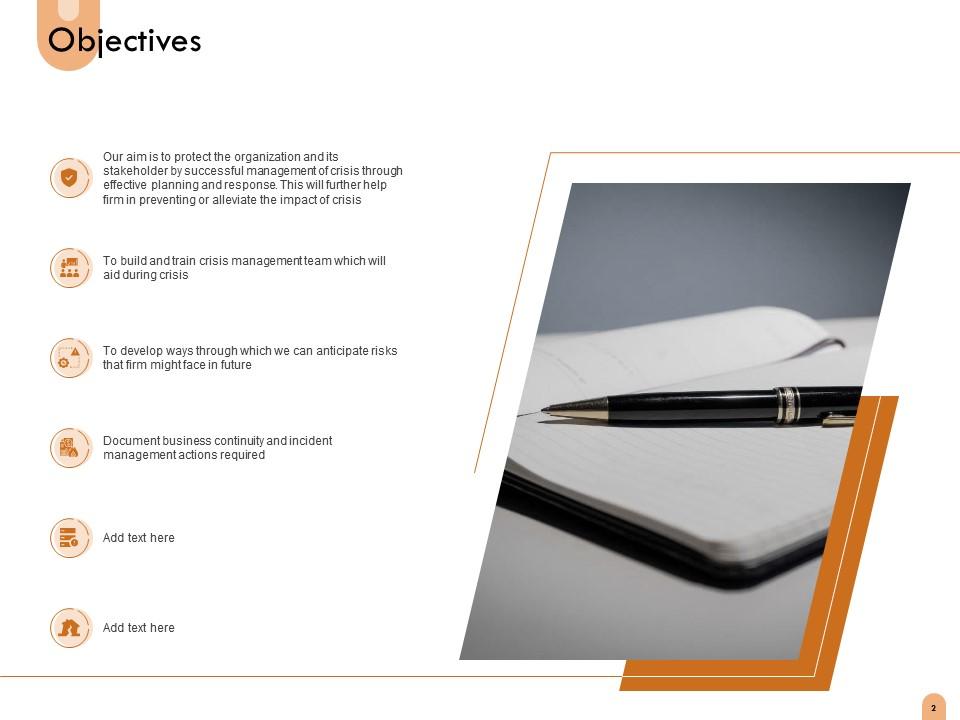
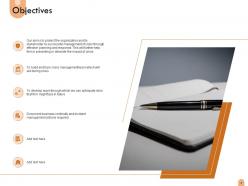
Slide 2: This slide shows Objectives to protect the organization and its stakeholder by successful management of crisis.
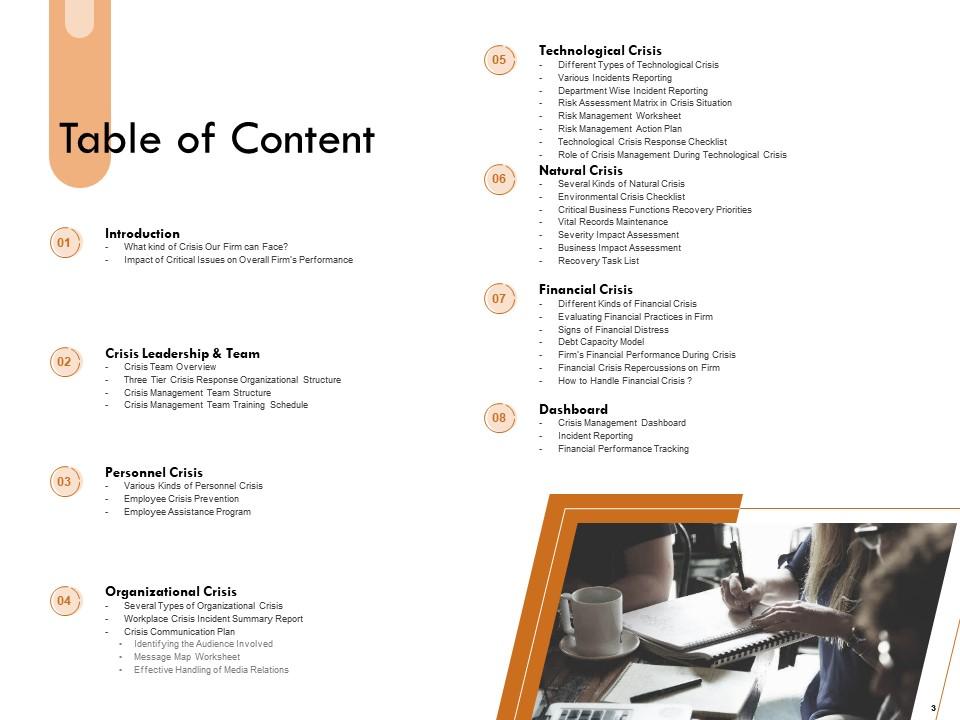
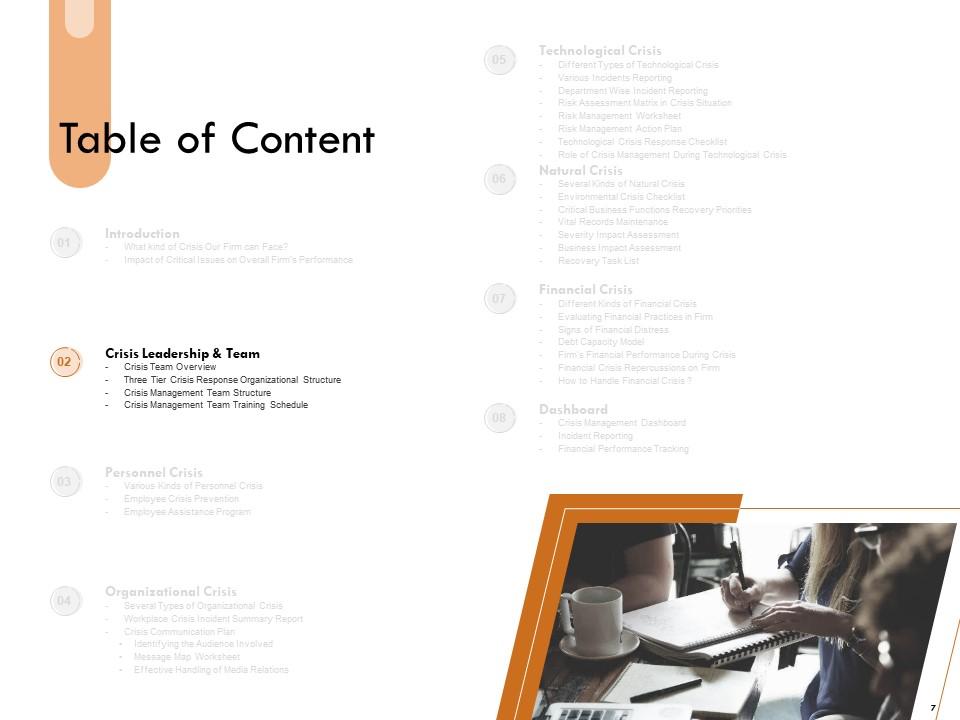
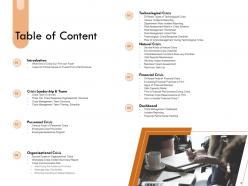
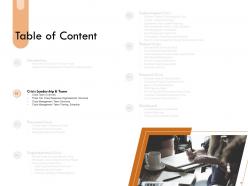
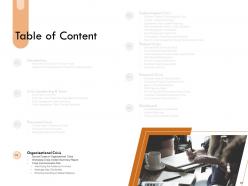
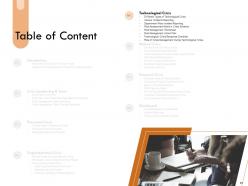
Slide 3: This slide presents Table of content describing- Introduction, Crisis Leadership & Team, Organizational Crisis, etc.
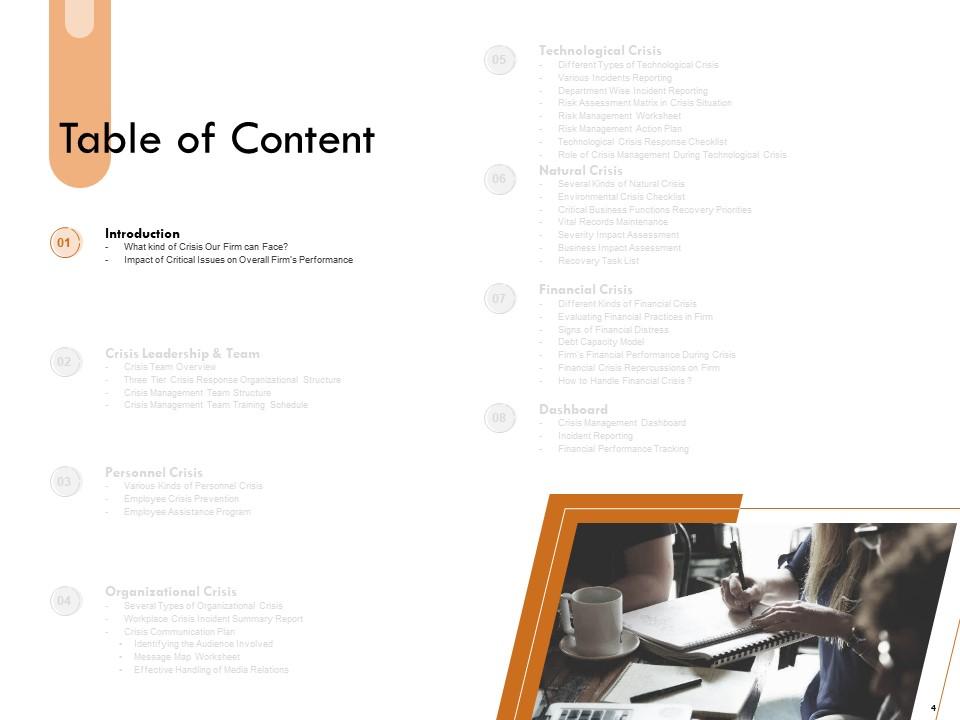
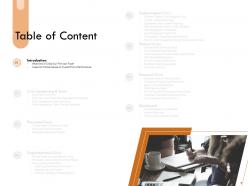
Slide 4: This slide shows Table of Content highlighting Introduction.
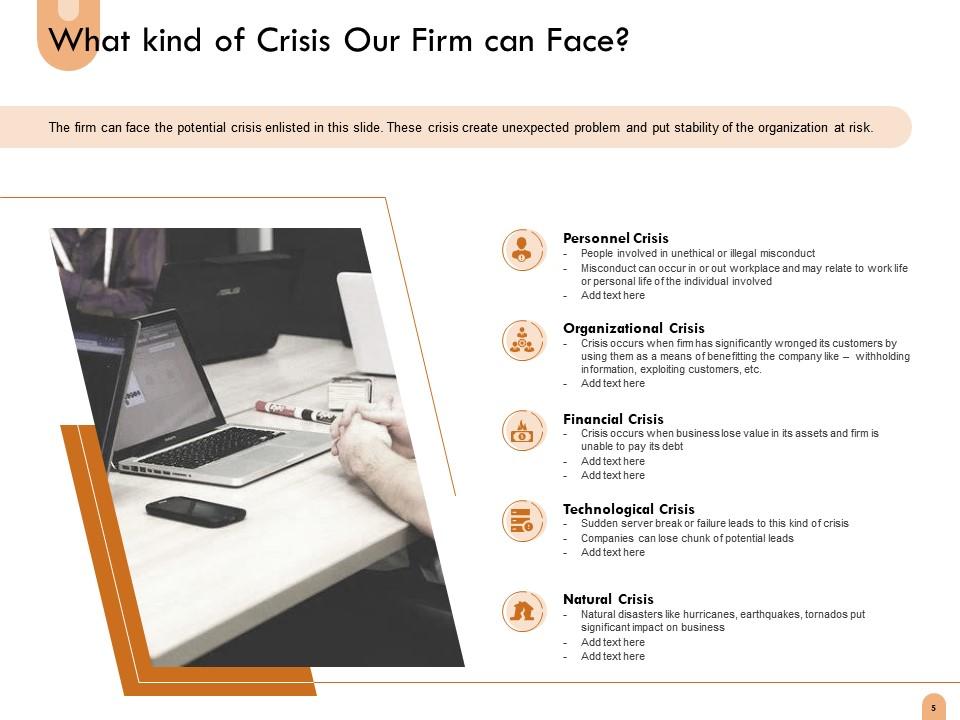
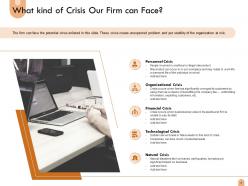
Slide 5: This slide highlights What kind of Crisis Our Firm can Face? describing- Natural Crisis, Technological Crisis, Financial Crisis, etc.
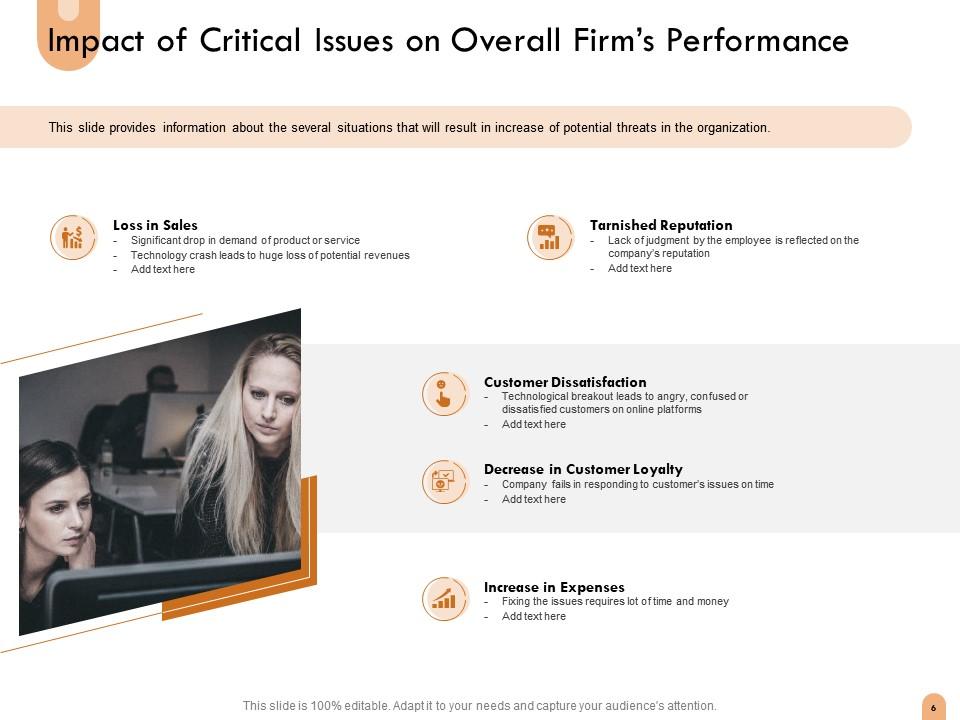
Slide 6: This slide presents Impact of Critical Issues on Overall Firm’s Performance.
Slide 7: This slide displays Table of Content highlighting Crisis Leadership & Team.
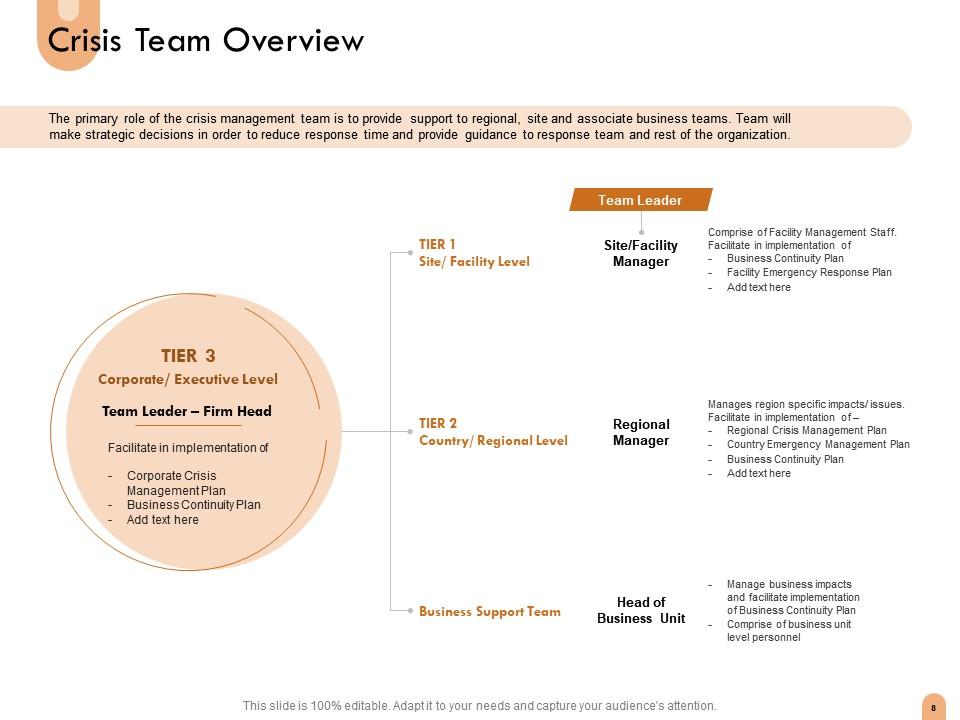
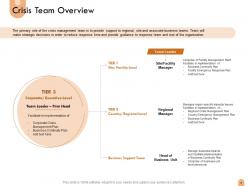
Slide 8: This slide represents Crisis Team Overview describing- Site/ Facility Level, Country/ Regional Level, Business Support Team, etc.
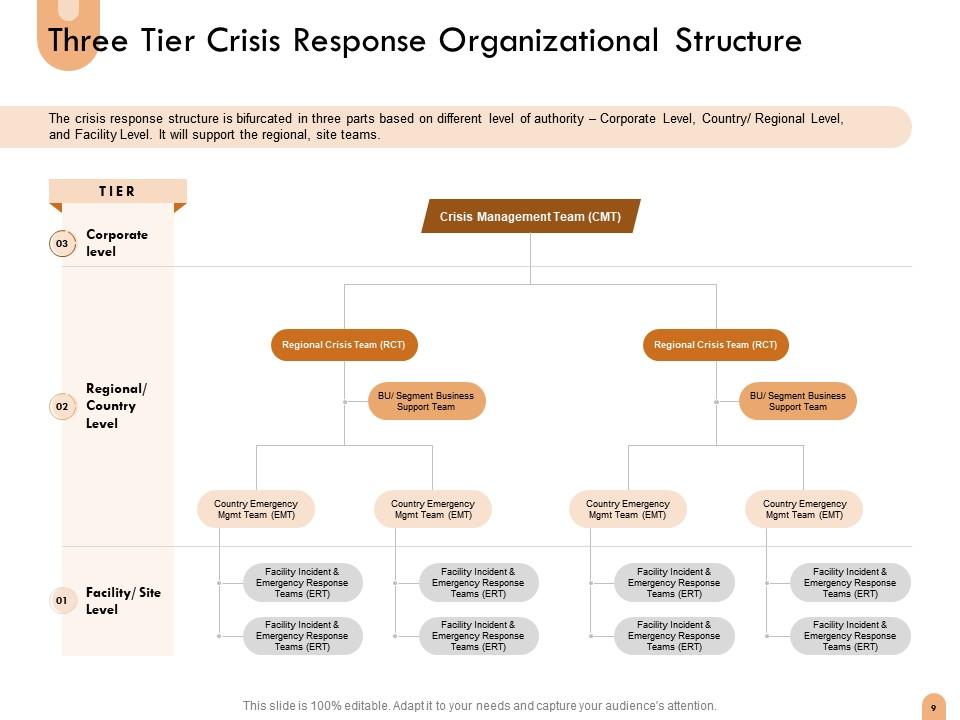
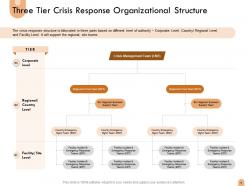
Slide 9: This slide showcases Three Tier Crisis Response Organizational Structure.
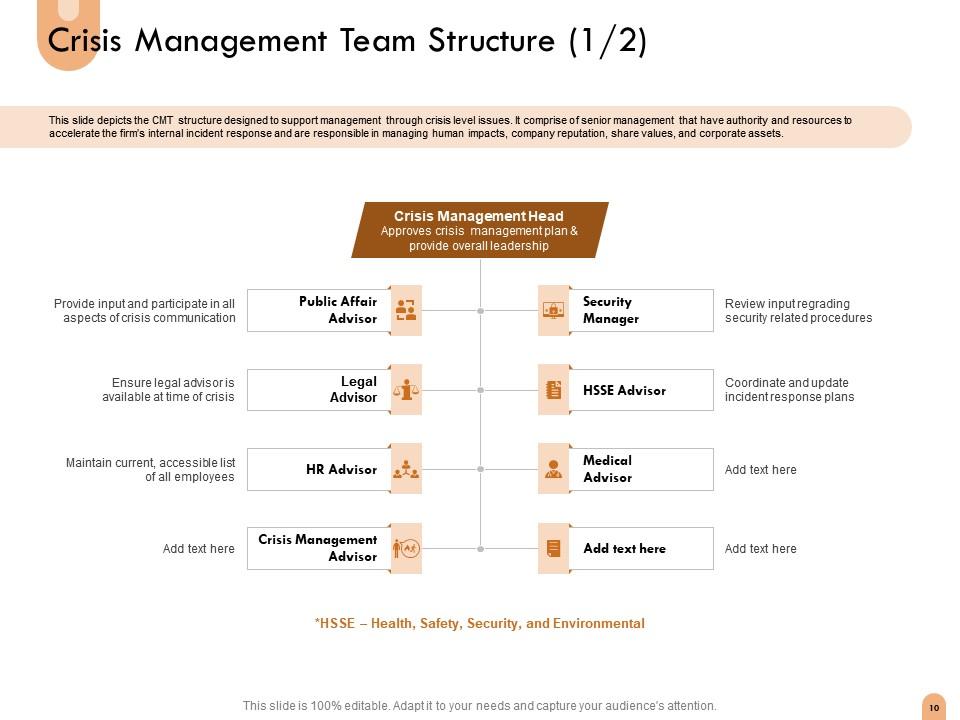
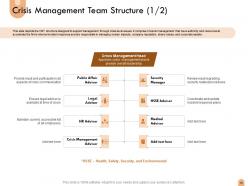
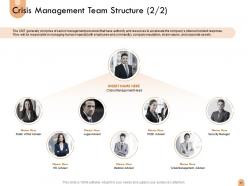
Slide 10: This slide shows Crisis Management Team Structure describing- Crisis Management Head, Public Affair Advisor, Legal Advisor, etc.
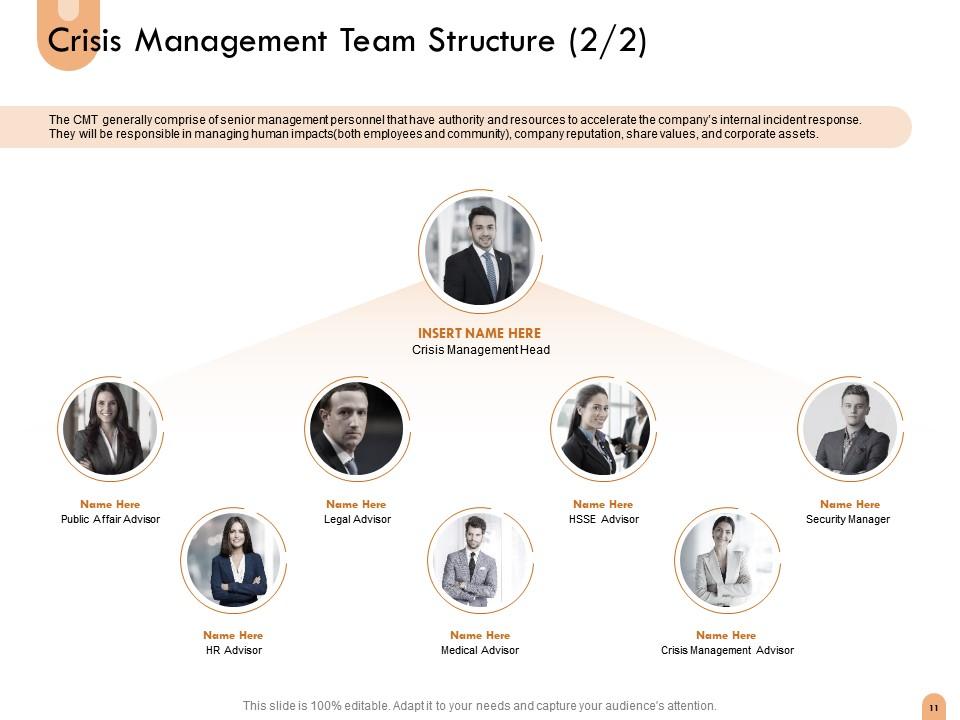
Slide 11: This is another slide showing Crisis Management Team Structure with names and designation.
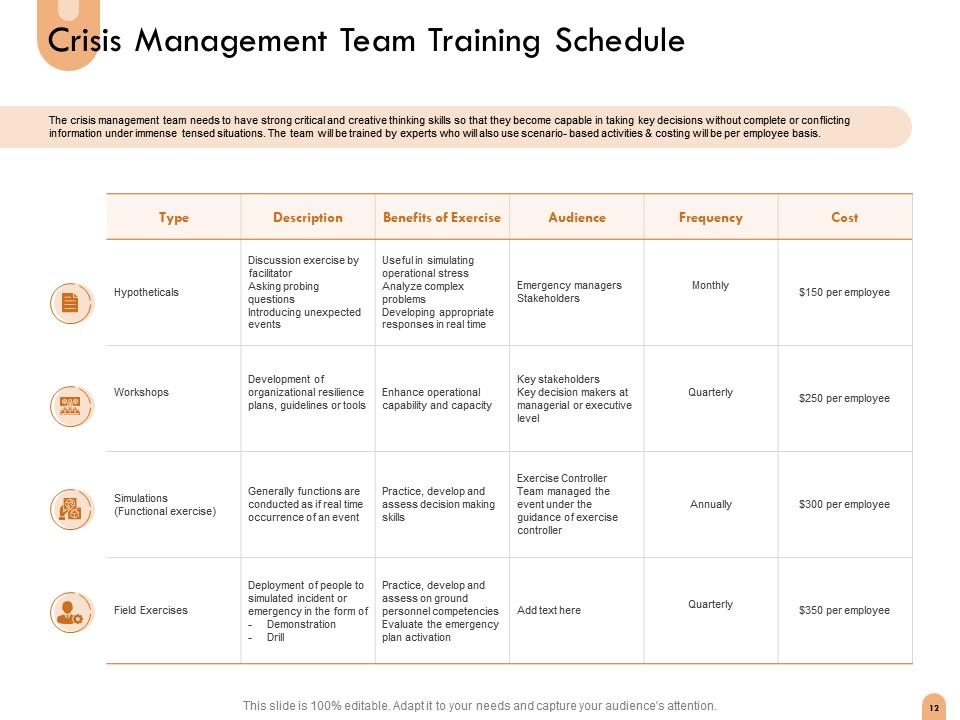
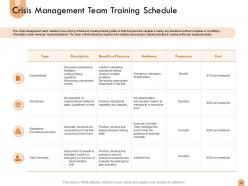
Slide 12: This slide shows Crisis Management Team Training Schedule to have strong critical and creative thinking skills.
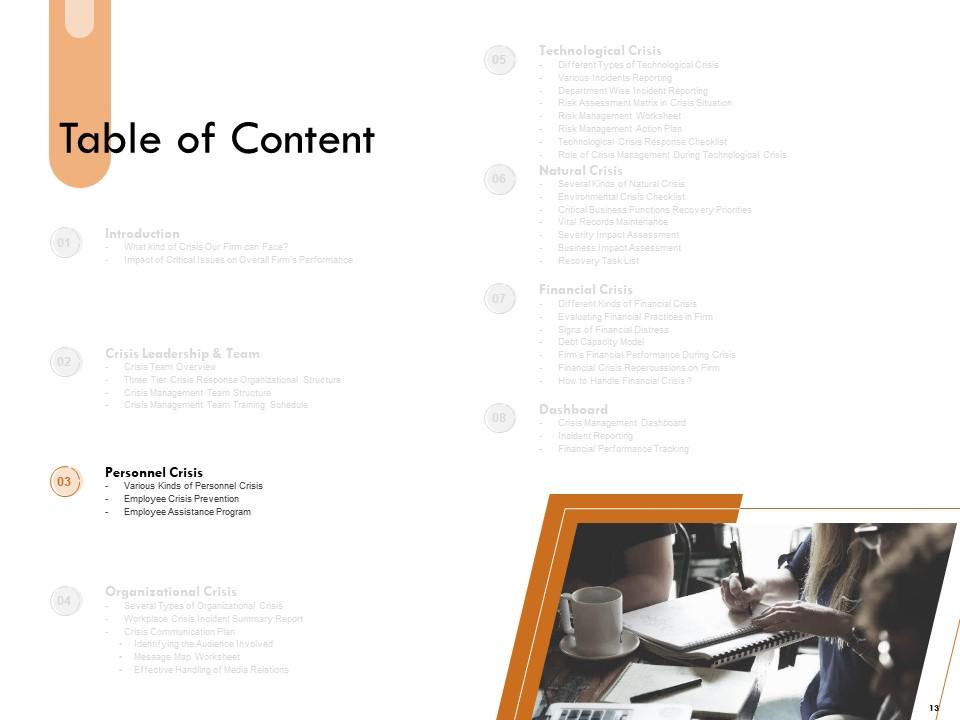
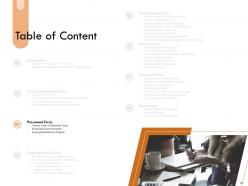
Slide 13: This slide displays Table of Content highlighting Personnel Crisis.
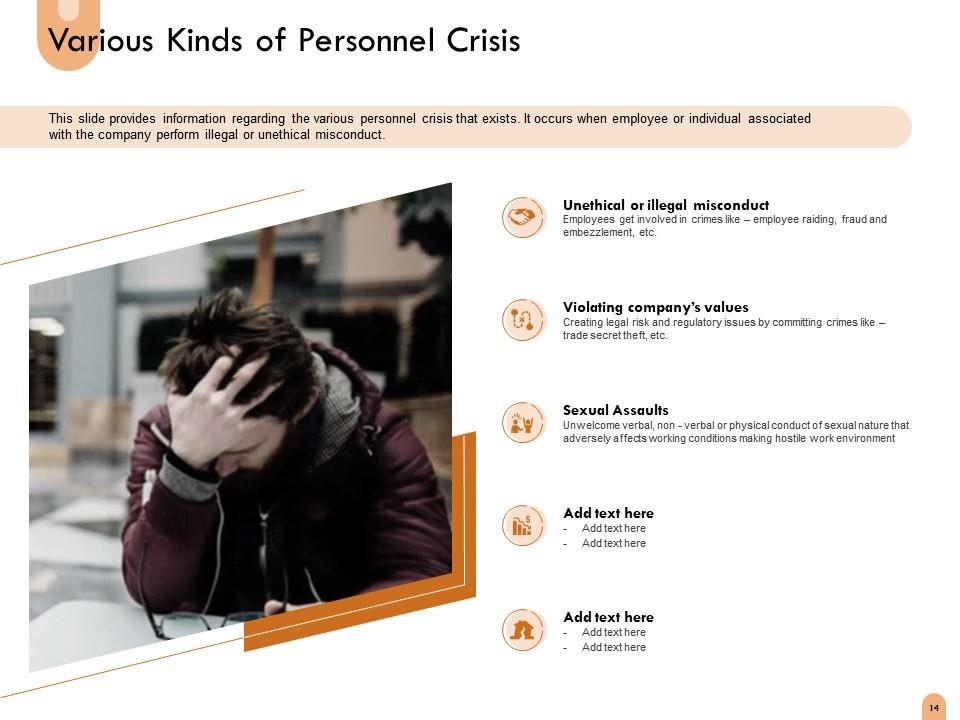
Slide 14: This slide provides information regarding the various personnel crisis that exists.
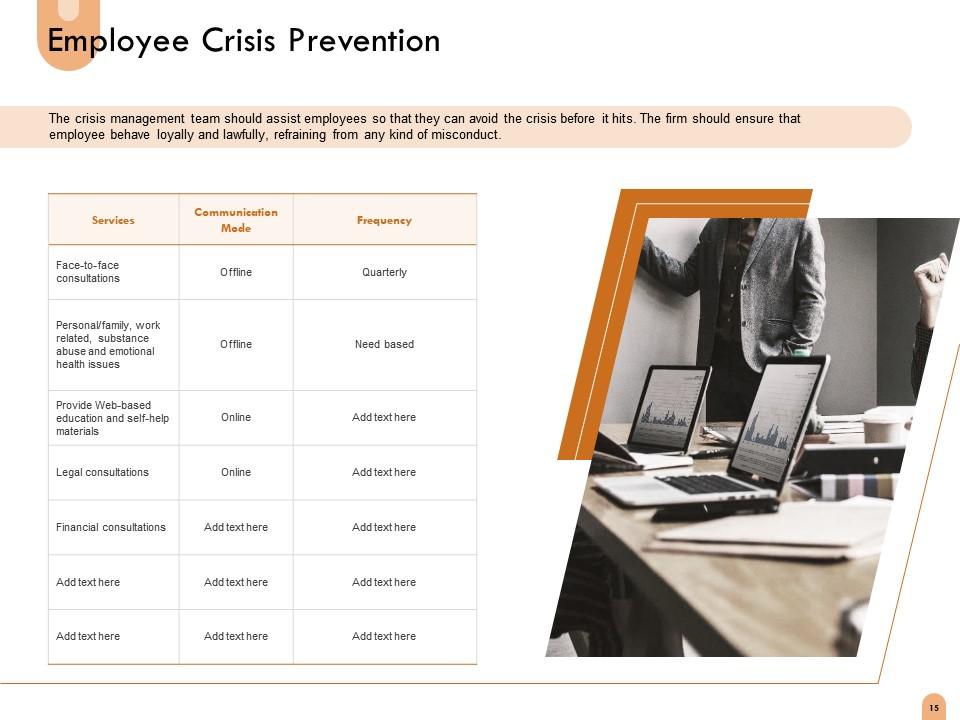
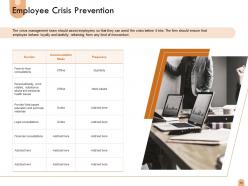
Slide 15: This slide represents Employee Crisis Prevention to assist employees so that they can avoid the crisis before it hits.
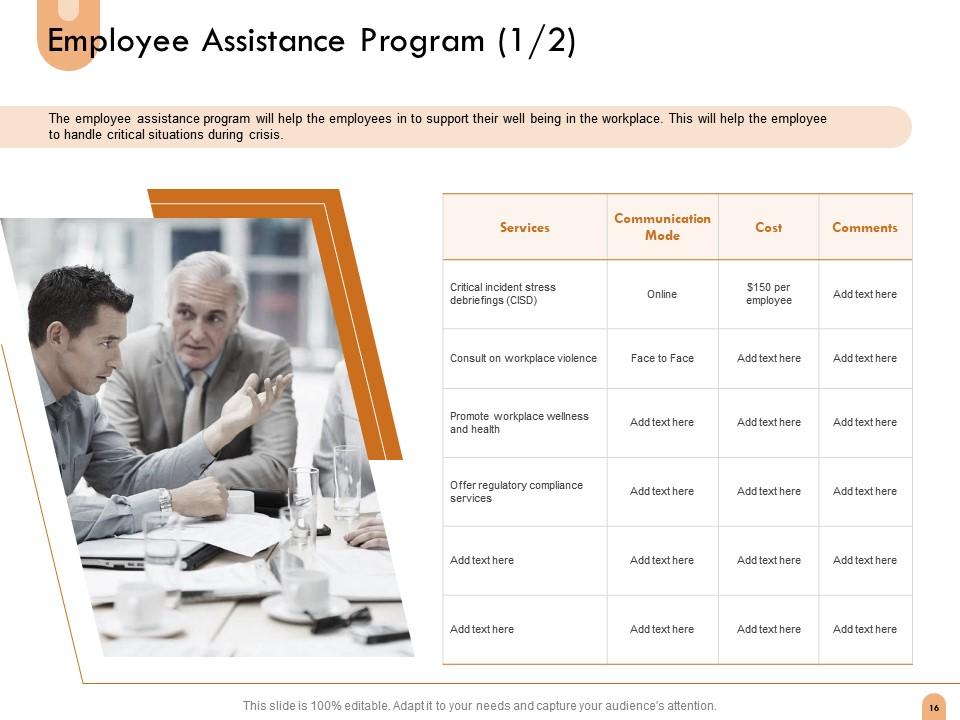
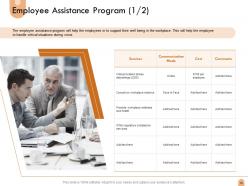
Slide 16: This slide displays Employee Assistance Program to help the employees in to support their well being in the workplace.
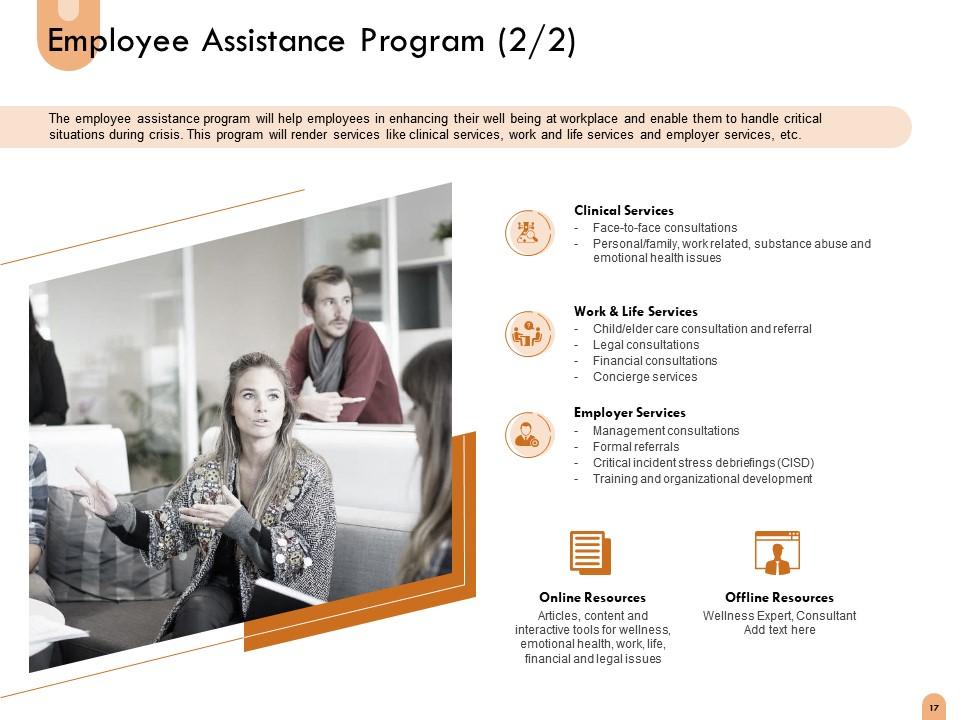
Slide 17: This is another slide showing employee assistance program to help employees in enhancing their well being at workplace.
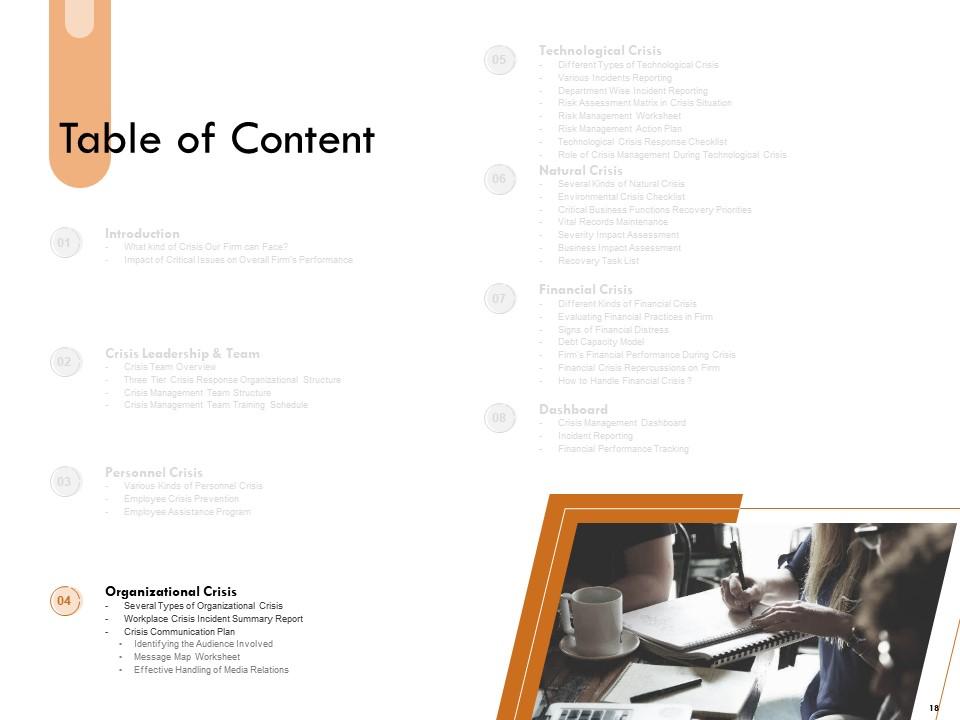
Slide 18: This slide shows Table of Content highlighting- Organizational Crisis.
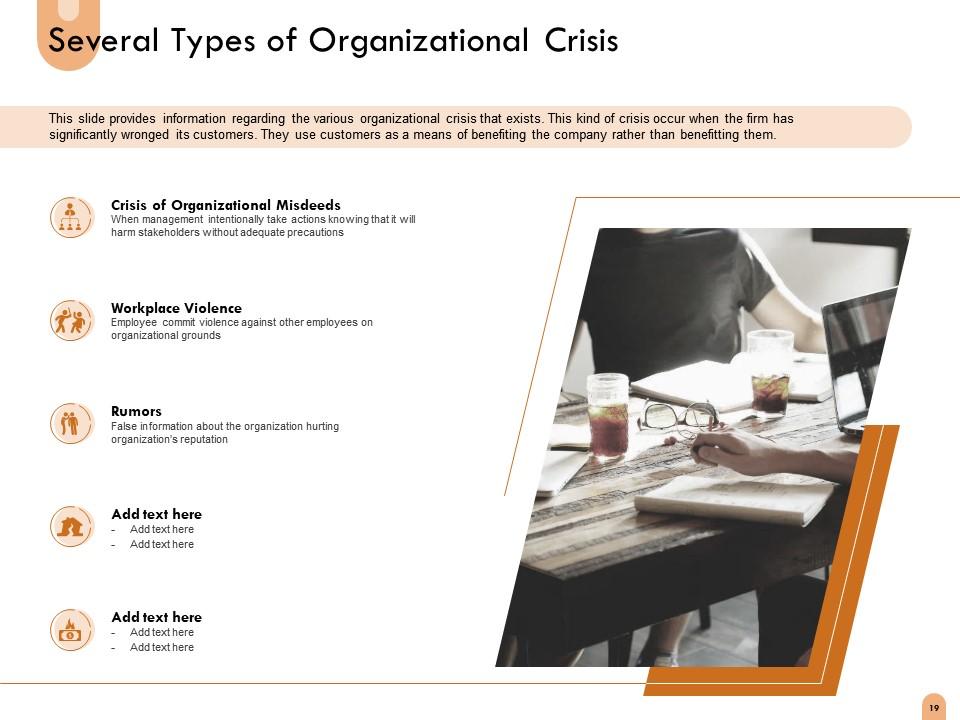
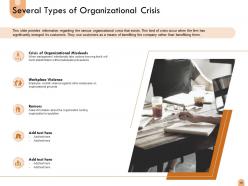
Slide 19: This slide provides information regarding the various organizational crisis that exists.
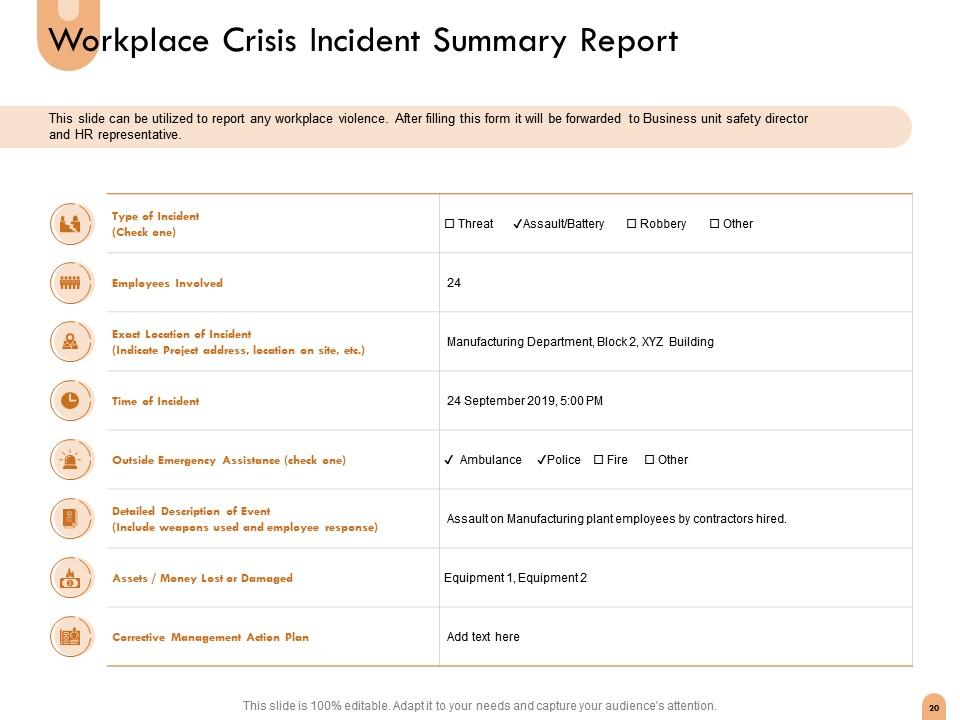
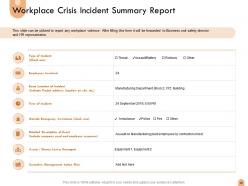
Slide 20: This slide displays Workplace Crisis Incident Summary Report.
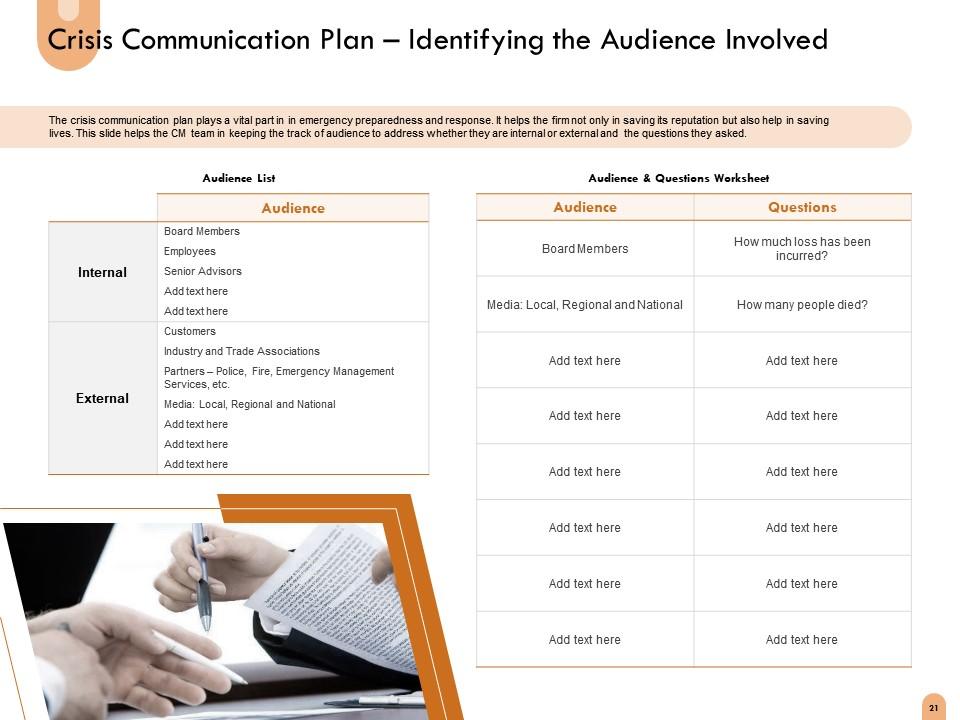
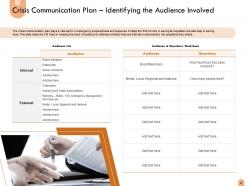
Slide 21: This slide represents Crisis Communication Plan – Identifying the Audience Involved.
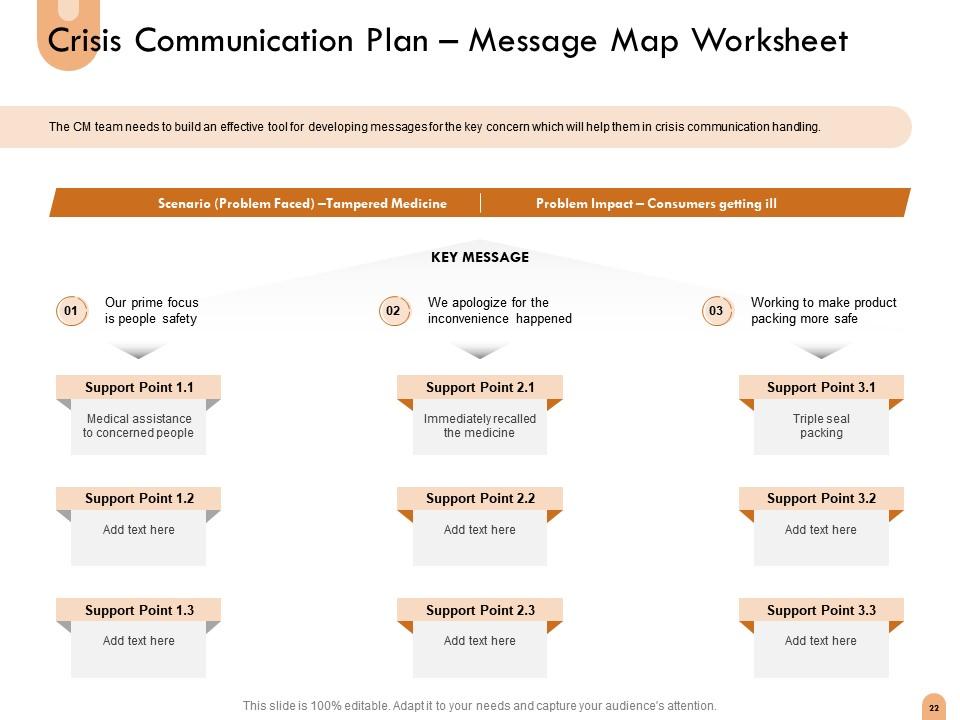
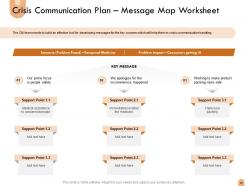
Slide 22: This slide showcases Crisis Communication Plan – Message Map Worksheet.
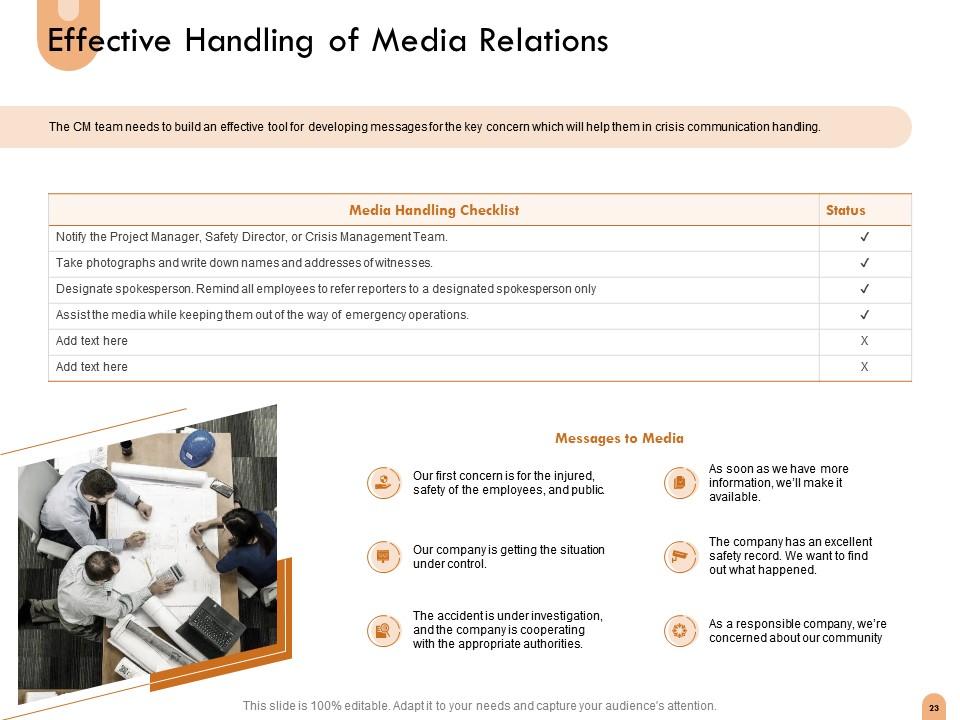
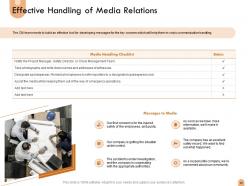
Slide 23: This slide shows Effective Handling of Media Relations with related icons.
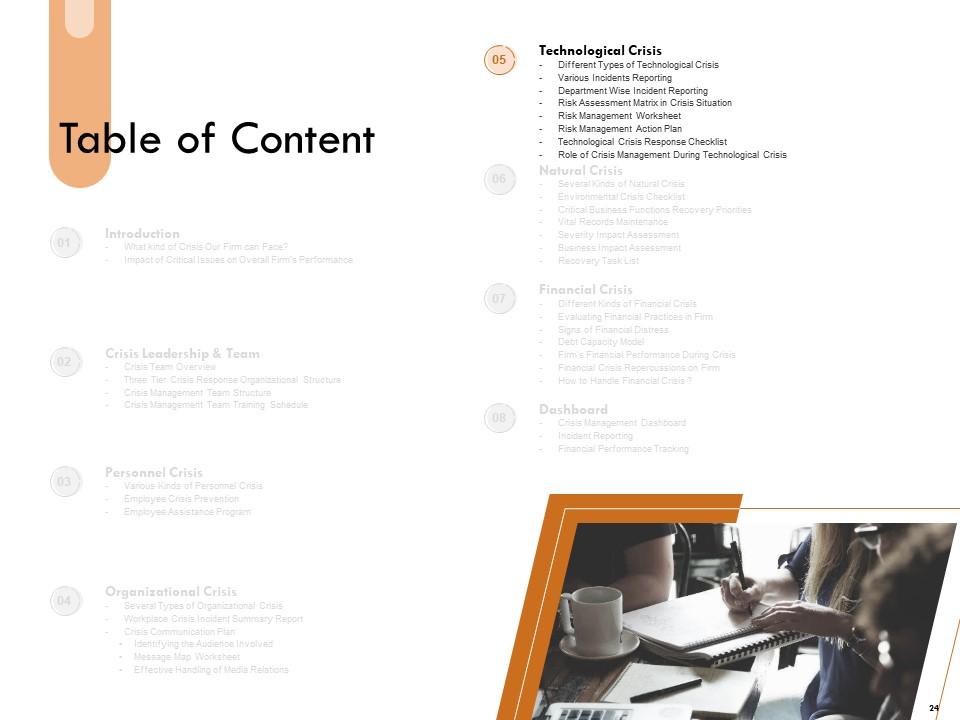
Slide 24: This slide presents Table of Content highlighting Technological Crisis.
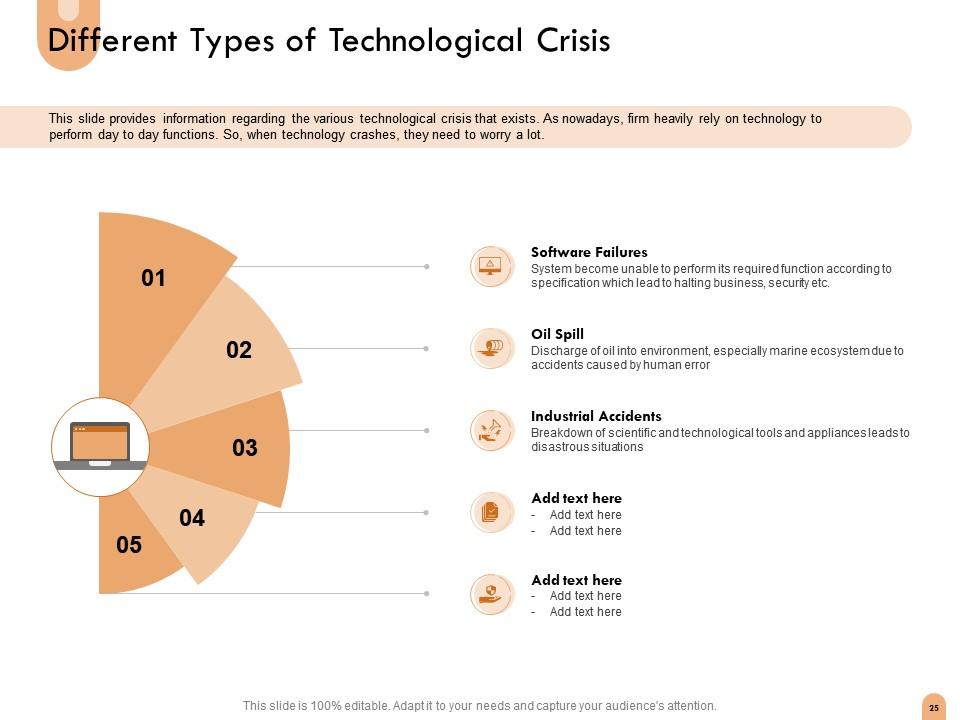
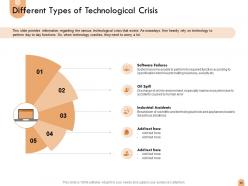
Slide 25: This slide displays Different Types of Technological Crisis like Software Failures, Oil Spill, Industrial Accidents, etc.
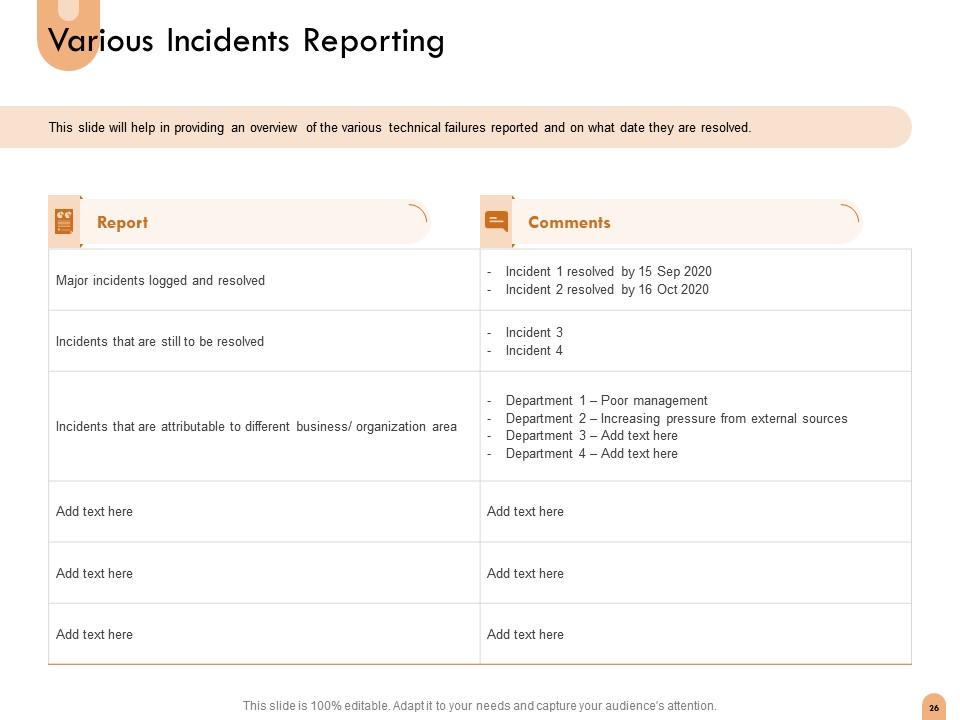
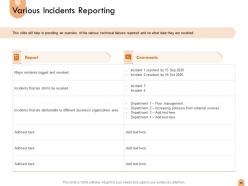
Slide 26: This slide represents Various Incidents Reporting describing various technical failures reported.
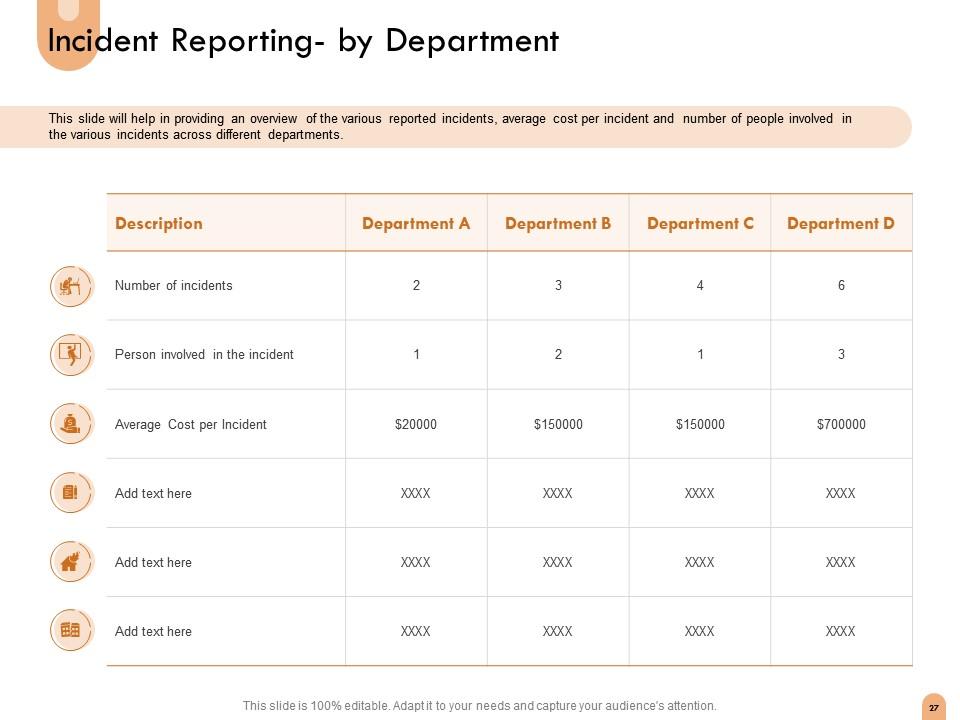
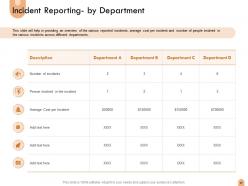
Slide 27: This slide will help in providing an overview of the various reported incidents, average cost per incident and number of people involved in the various incidents across different departments.
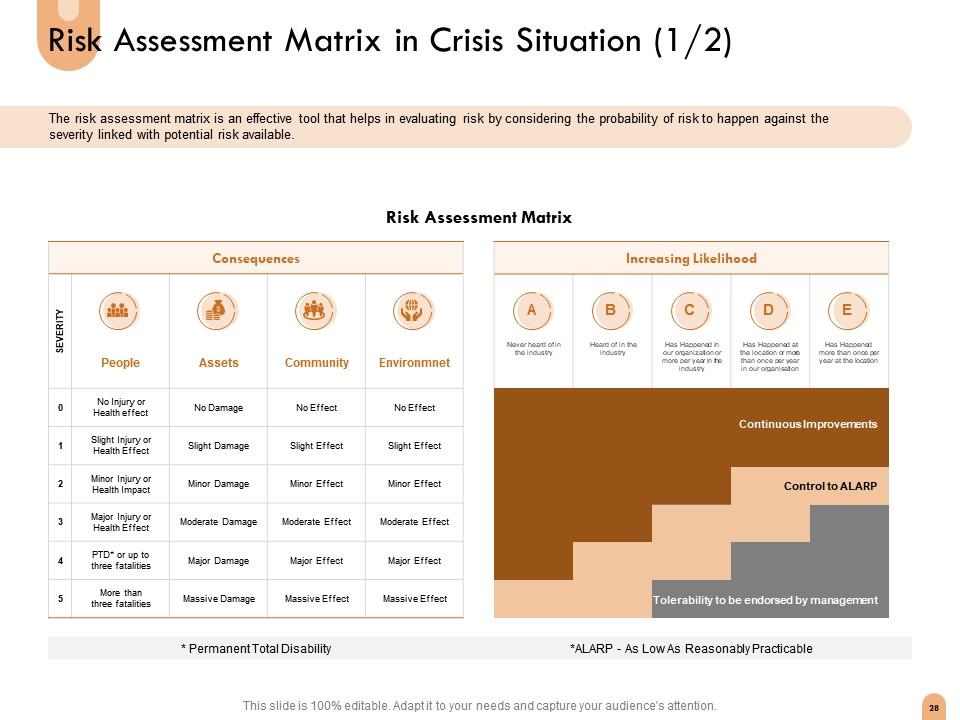
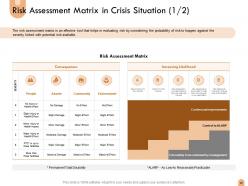
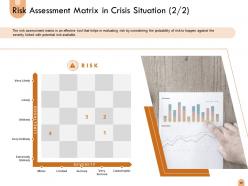
Slide 28: This slide showcases Risk Assessment Matrix in Crisis Situation that helps in evaluating risk by considering the probability of risk to happen.
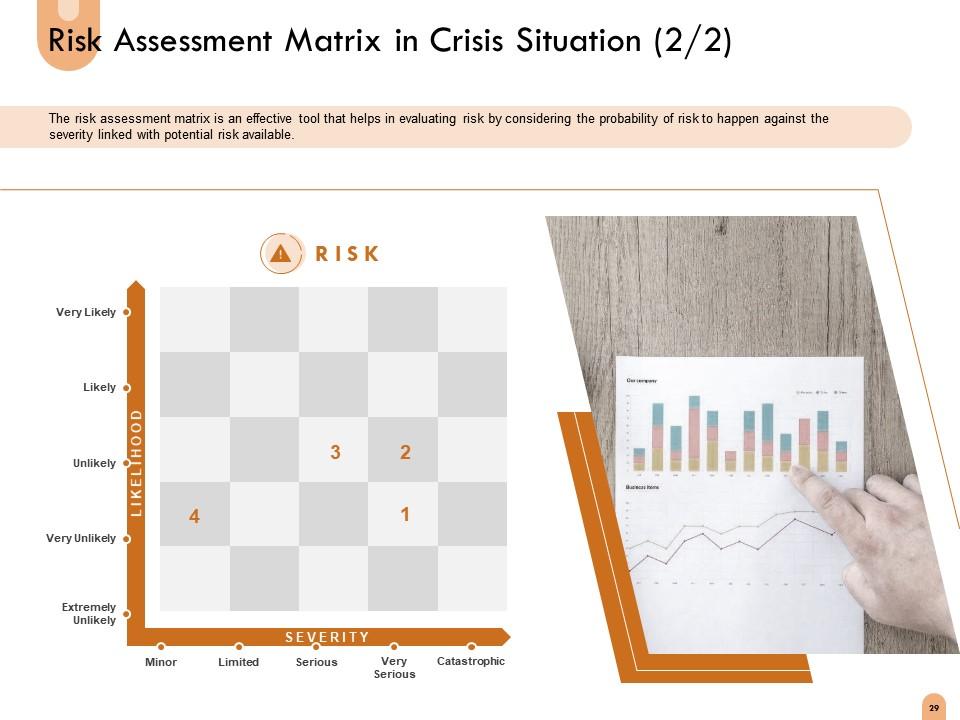
Slide 29: This slide shows risk assessment matrix as an effective tool that helps in evaluating risk by considering the probability of risk to happen against the severity linked with potential risk available.
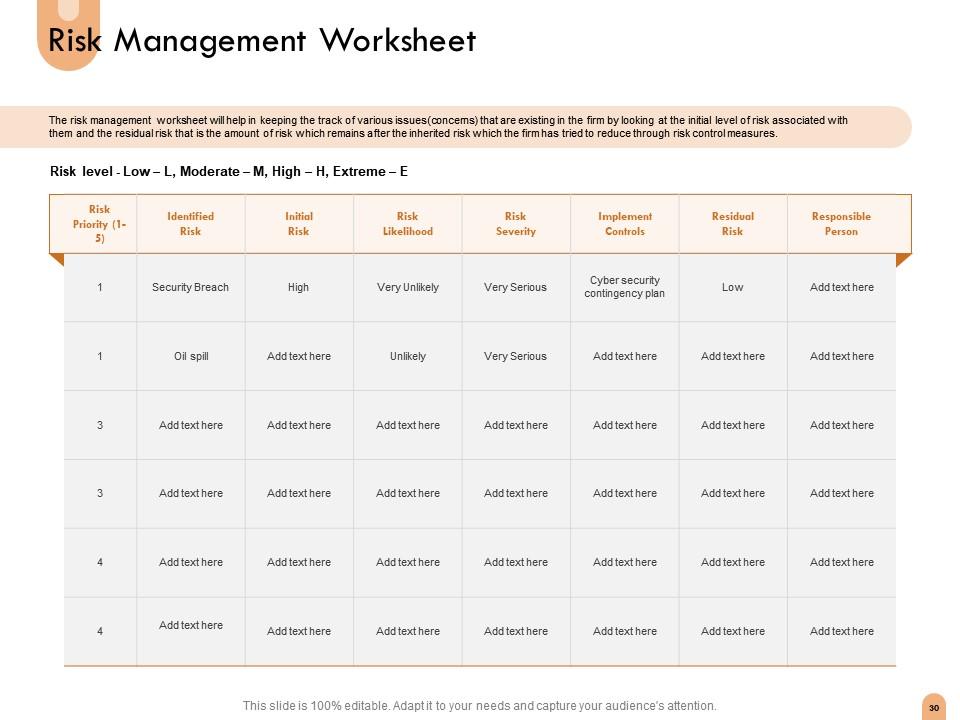
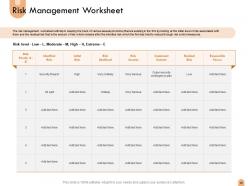
Slide 30: This slide represents Risk Management Worksheet to keep the track of various issues (concerns) that are existing in the firm.
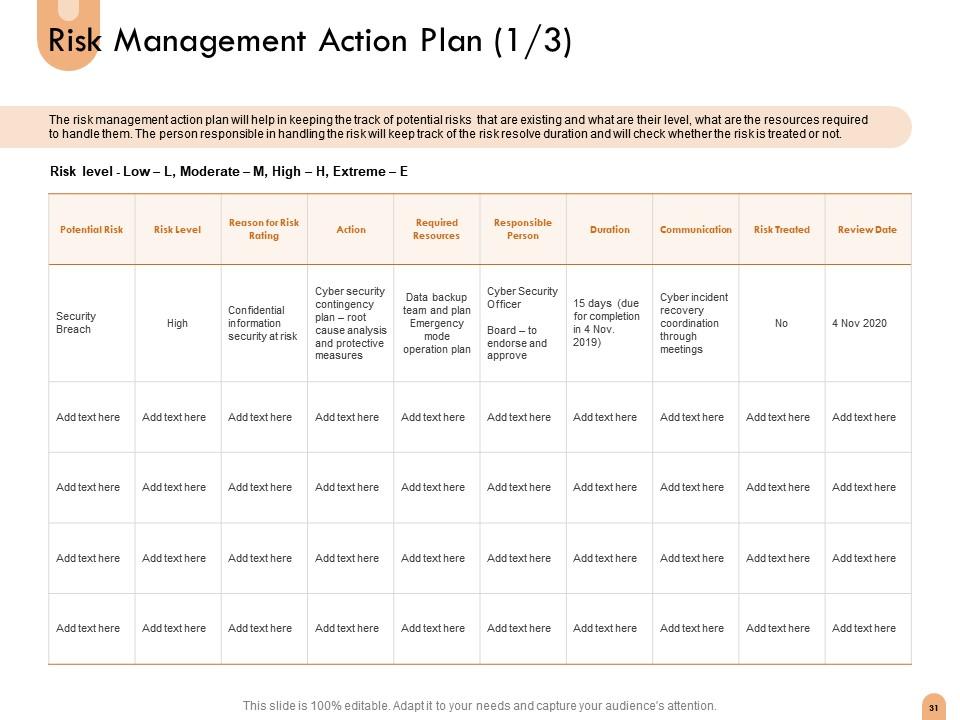
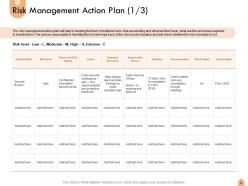
Slide 31: This slide showcases Risk Management Action Plan to keep the track of potential risks.
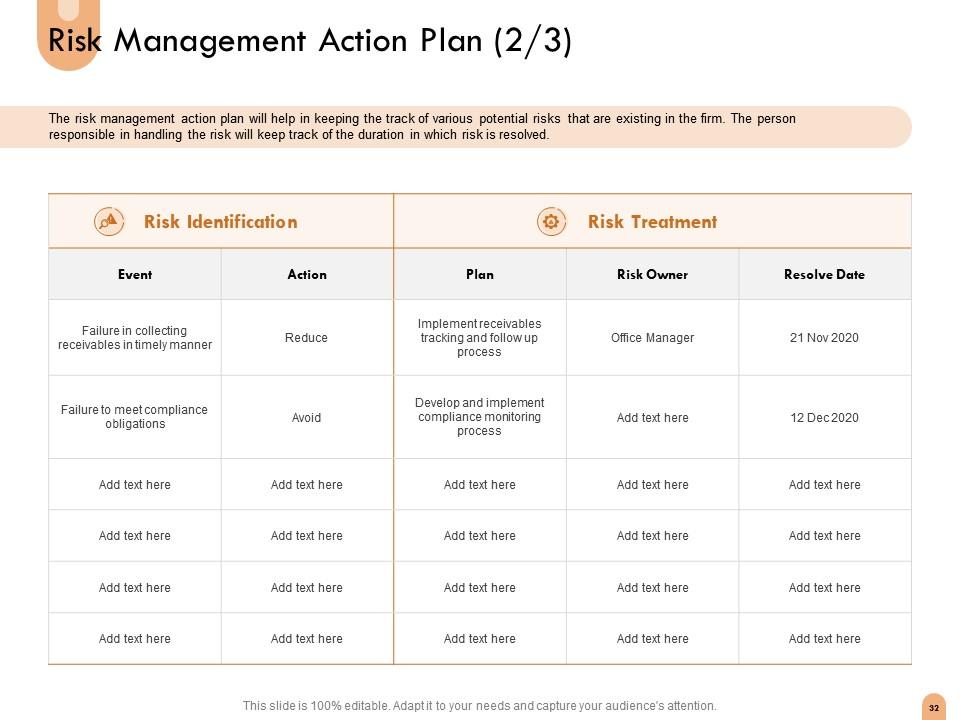
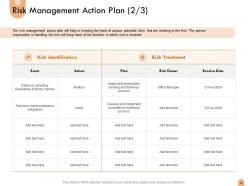
Slide 32: This is another slide showing Risk Management Action Plan to keep the track of potential risks.
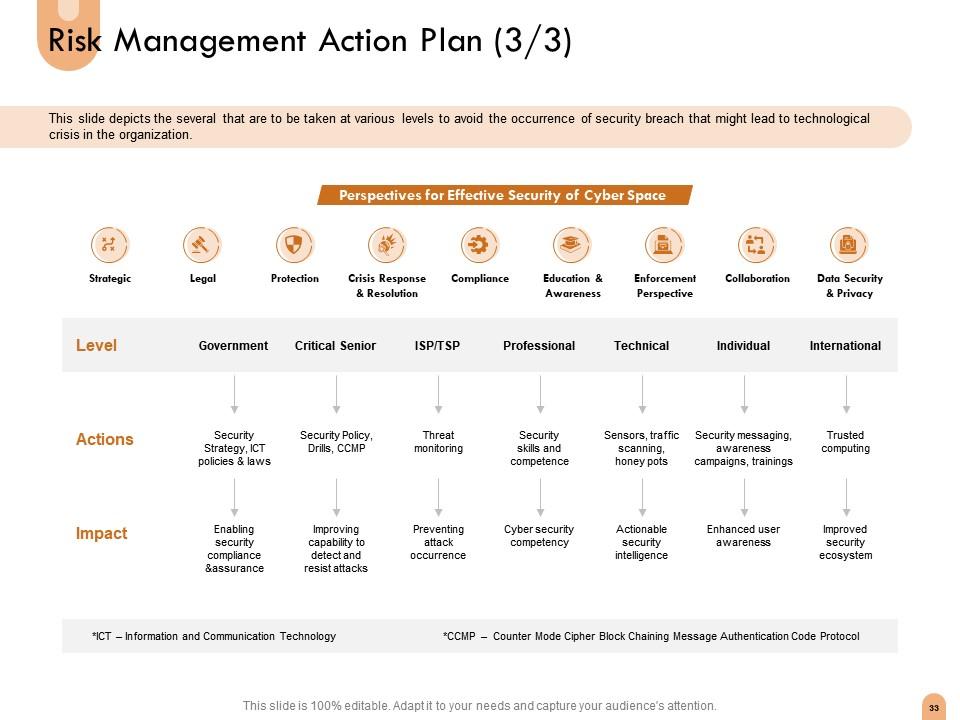
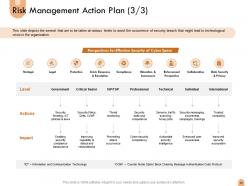
Slide 33: This slide represents Risk Management Action Plan depicting several steps that are to be taken at various levels to avoid the occurrence of security breach.
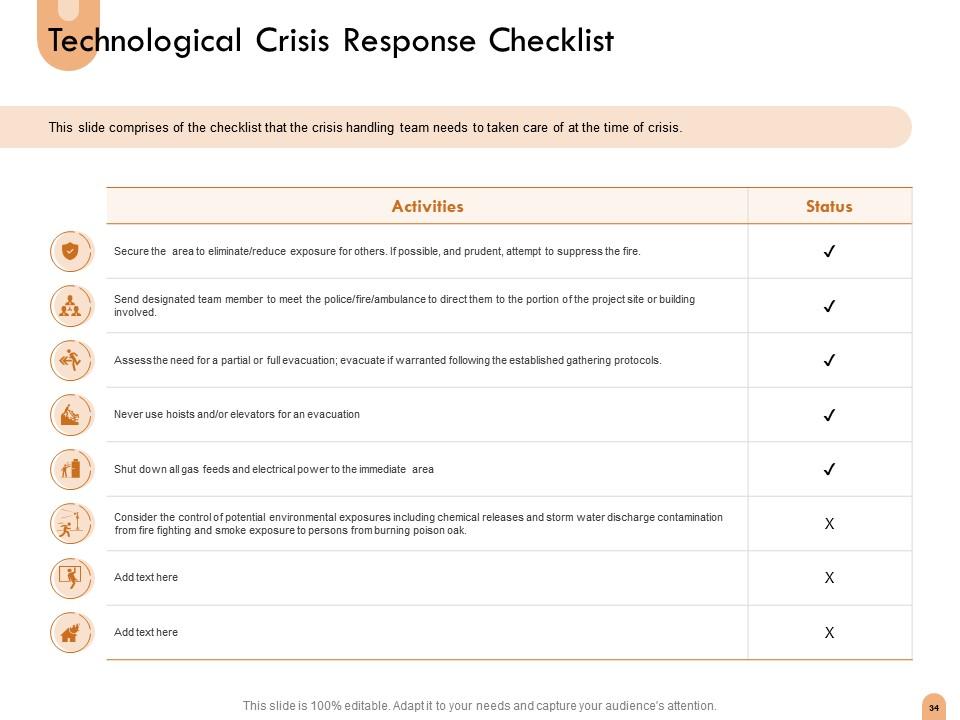
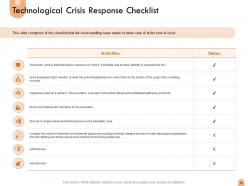
Slide 34: This slide showcases Technological Crisis Response Checklist.
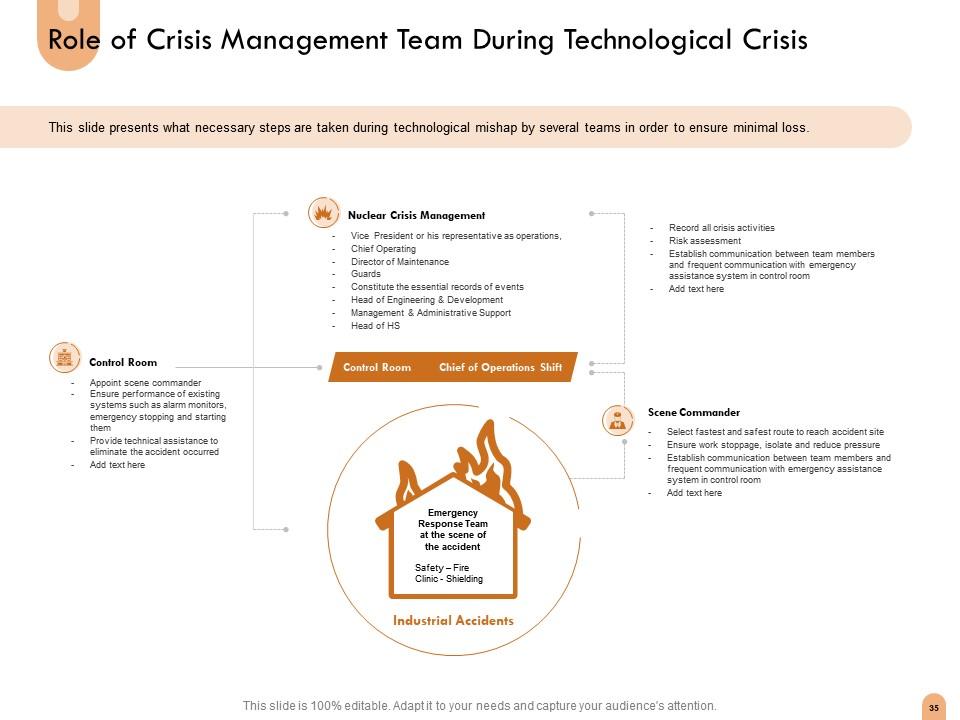
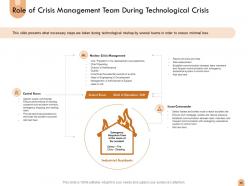
Slide 35: This slide shows Role of Crisis Management Team During Technological Crisis.
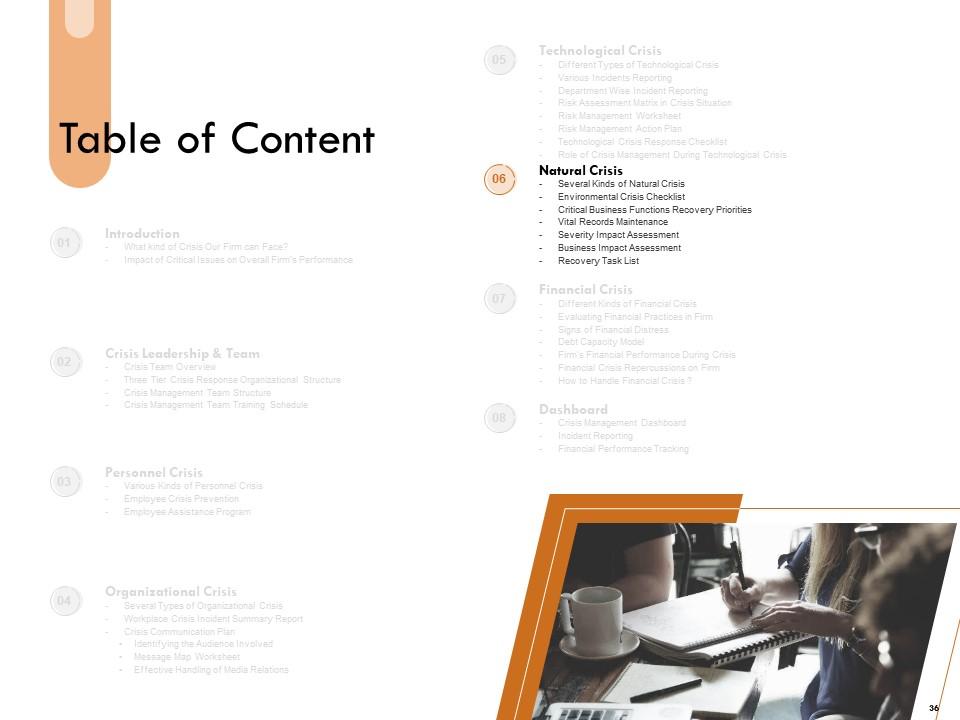
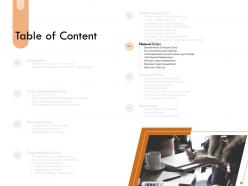
Slide 36: This slide presents Table of Content highlighting Natural Crisis.
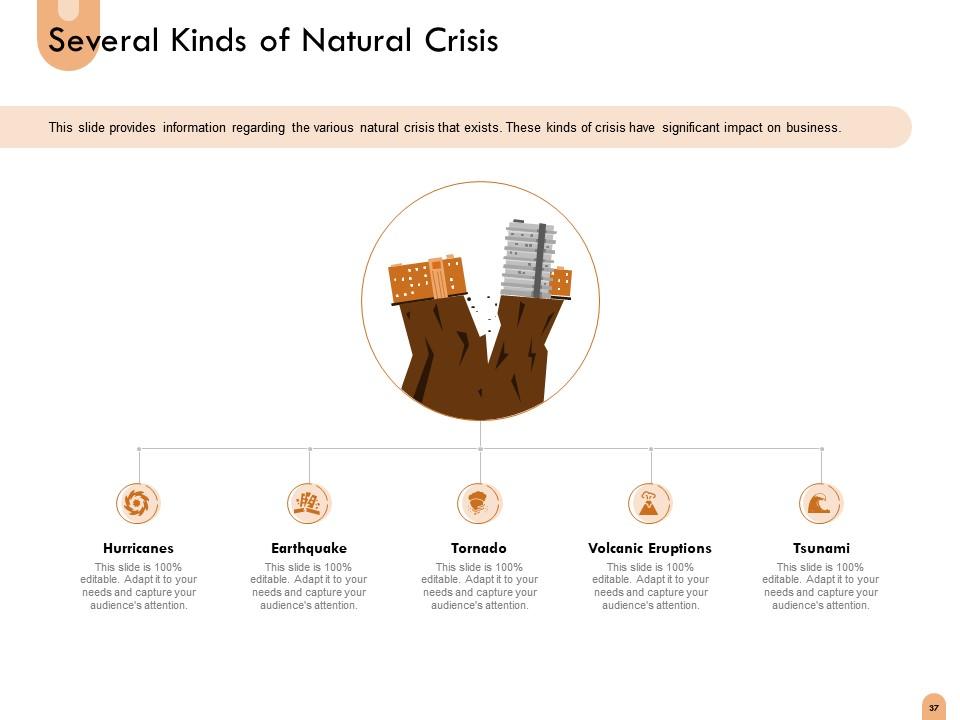
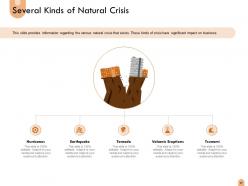
Slide 37: This slide displays Several Kinds of Natural Crisis like Hurricanes, Earthquake, Tsunami, etc.
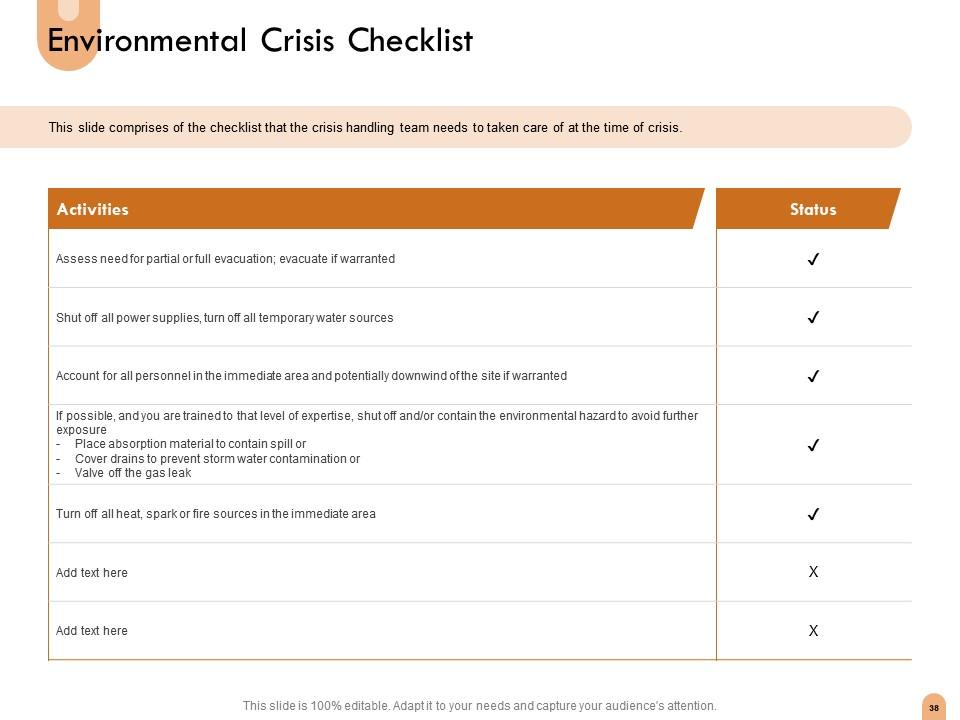
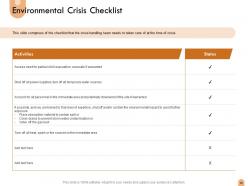
Slide 38: This slide represents Environmental Crisis Checklist that the crisis handling team needs to take care of at the time of crisis.
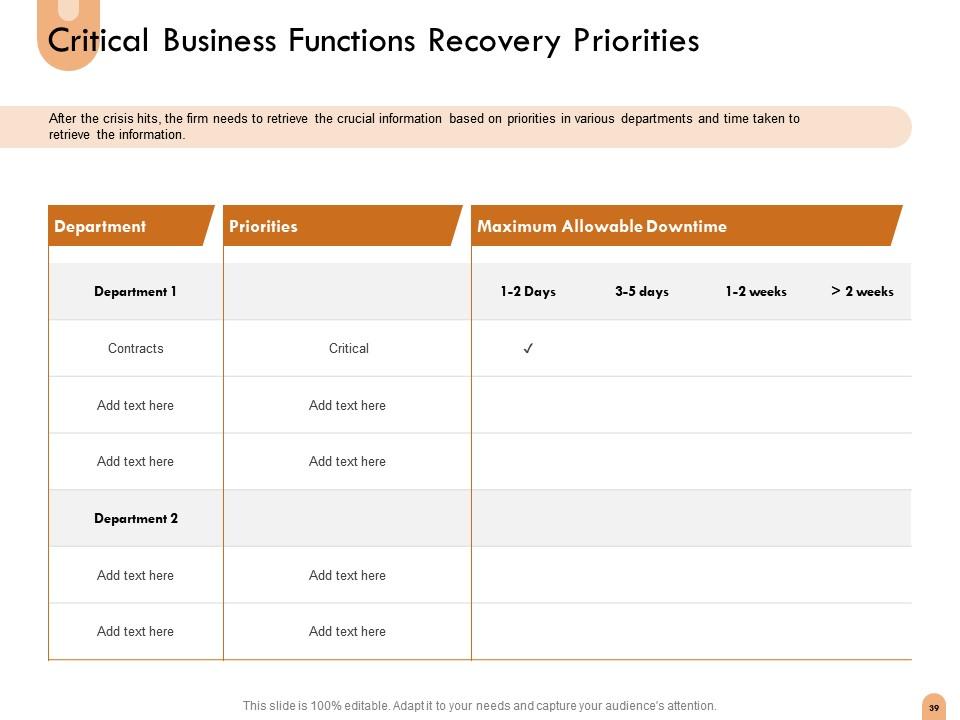
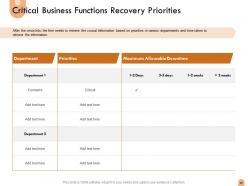
Slide 39: This slide shows Critical Business Functions Recovery Priorities.
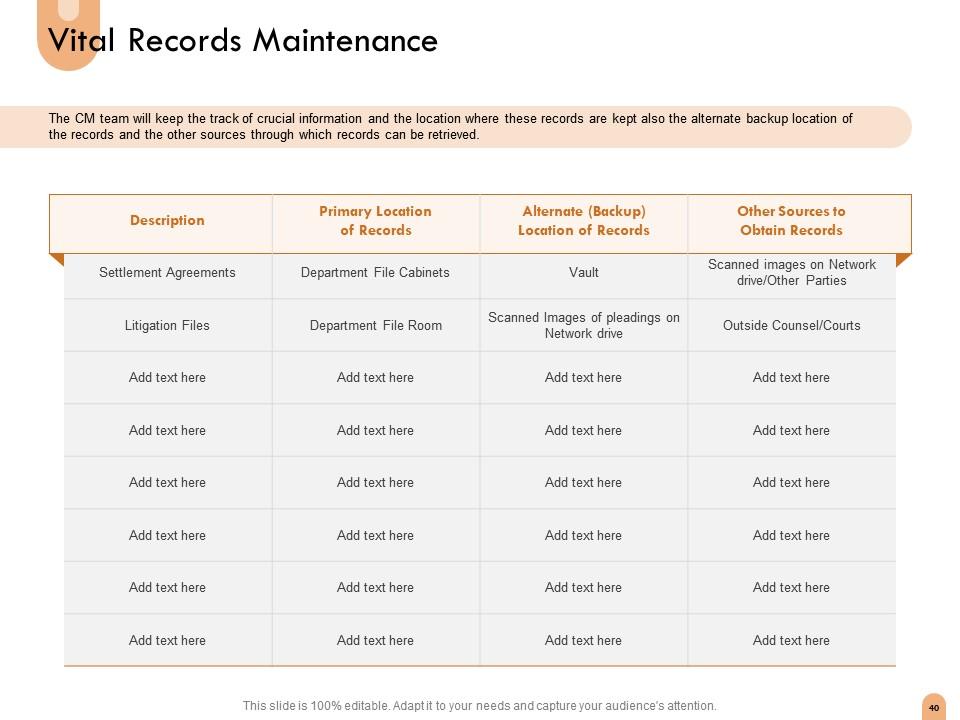
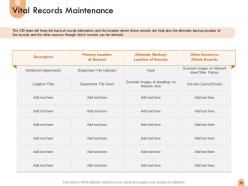
Slide 40: This slide presents Vital Records Maintenance to keep the track of crucial information and the location where these records.
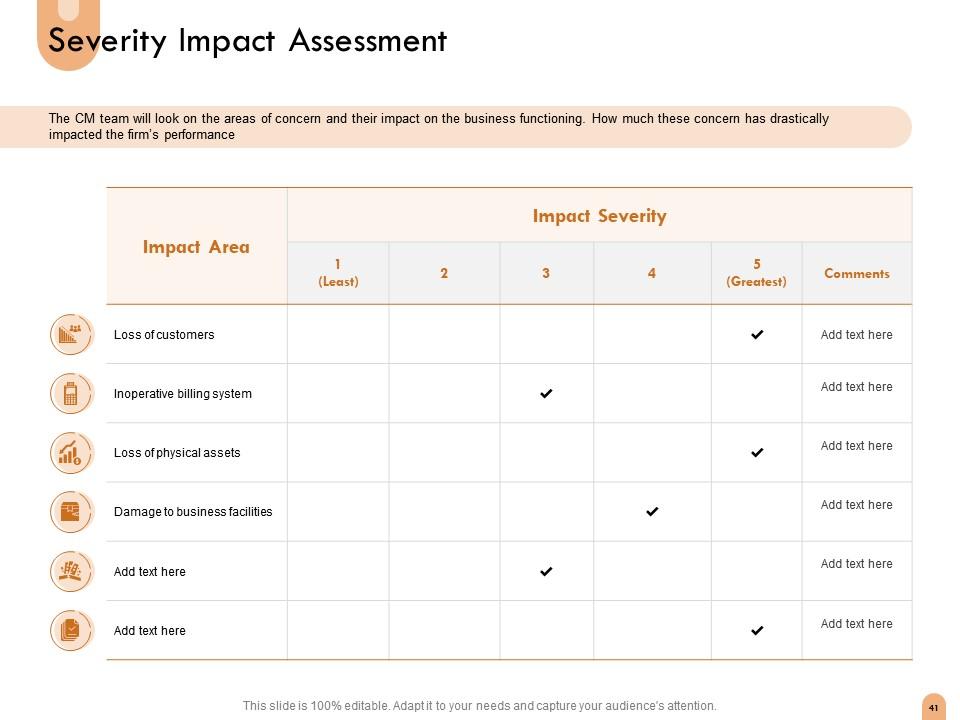
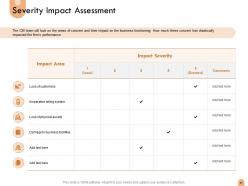
Slide 41: This slide displays Severity Impact Assessment to look on the areas of concern and their impact on the business functioning.
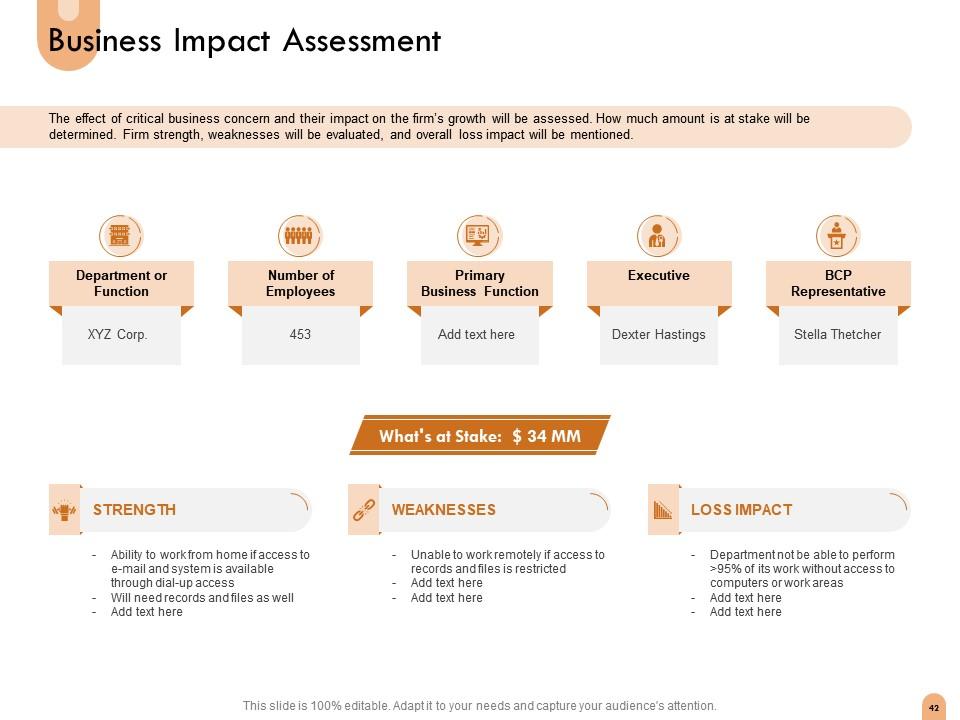
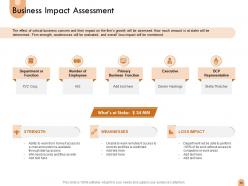
Slide 42: This slide represents Business Impact Assessment describing Number of Employees, Primary Business Function, Executive, etc.
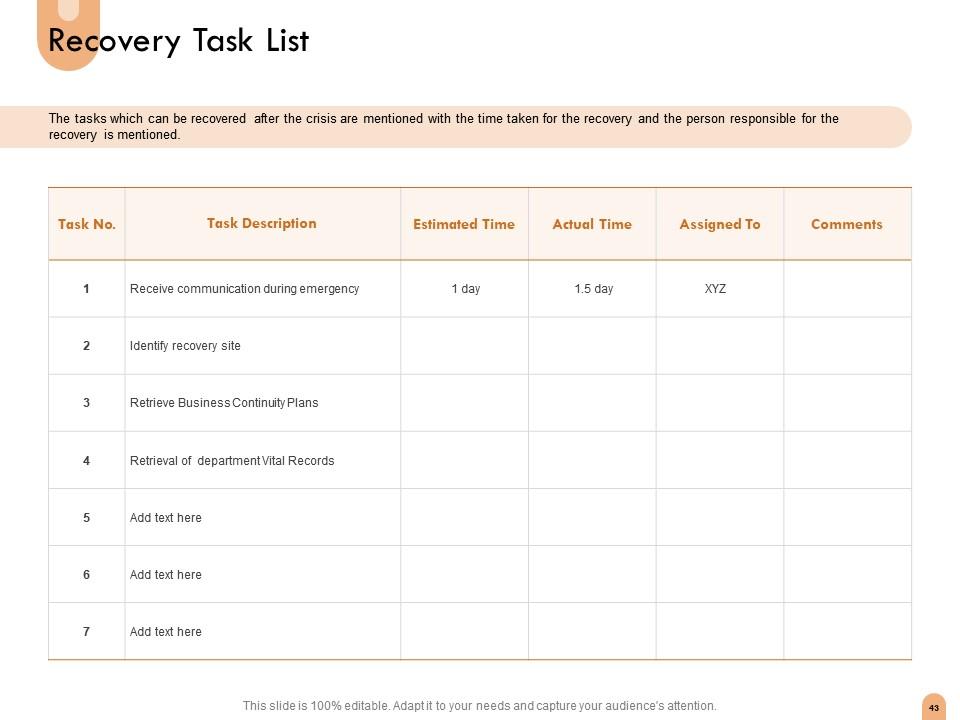
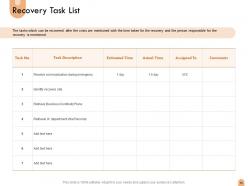
Slide 43: This slide showcases Recovery Task List which can be recovered after the crisis are mentioned with the time taken.
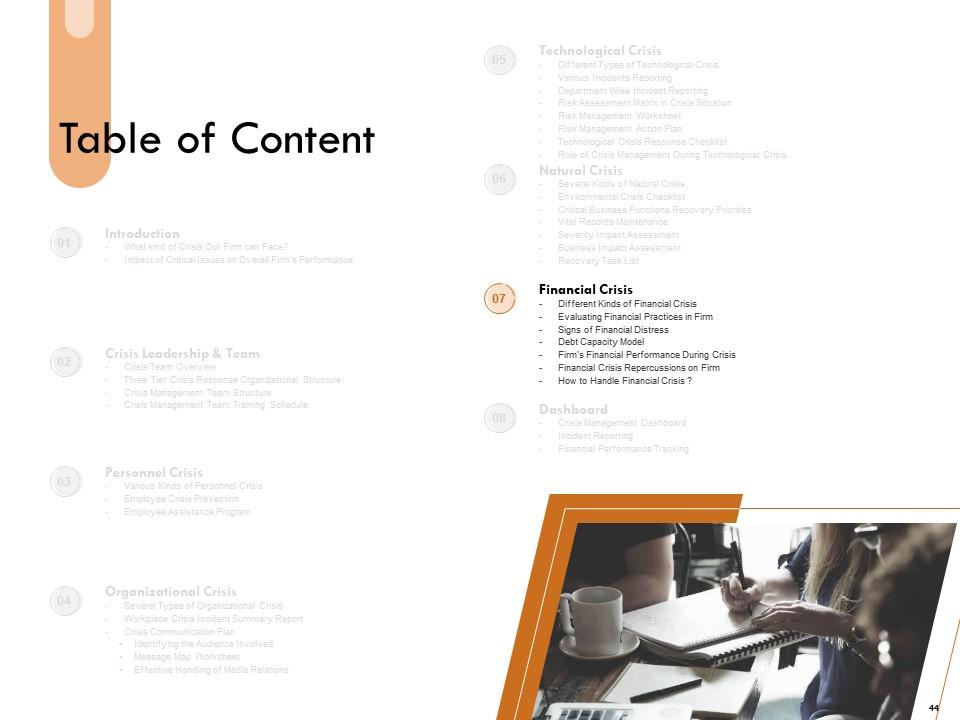
Slide 44: This slide shows Table of Content highlighting Financial Crisis.
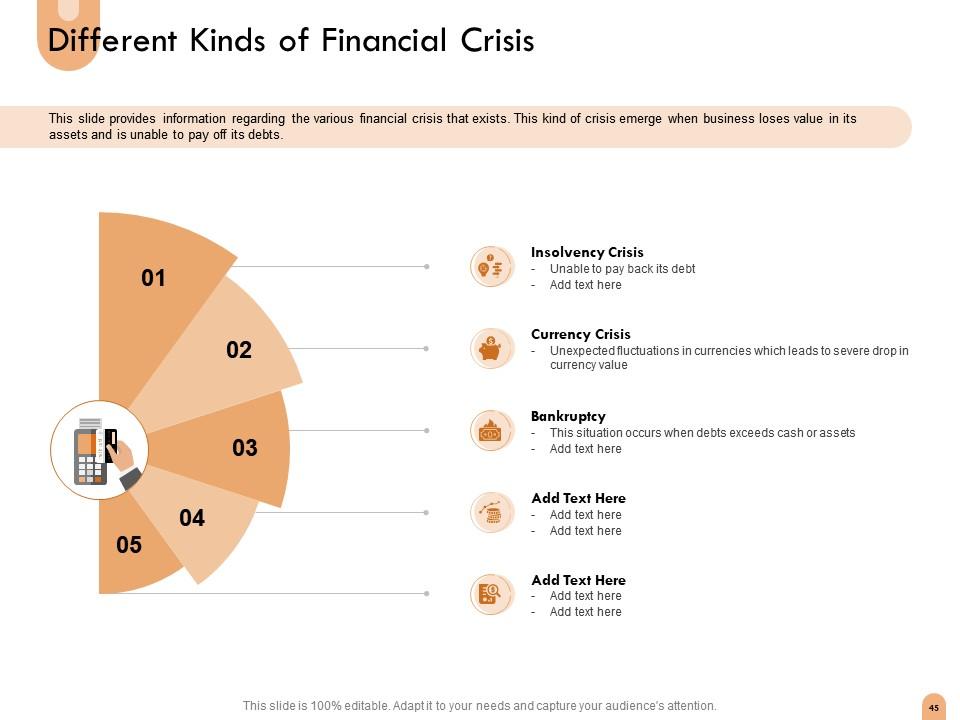
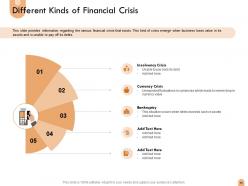
Slide 45: This slide presents Different Kinds of Financial Crisis like Insolvency Crisis, Currency Crisis, Bankruptcy, etc.
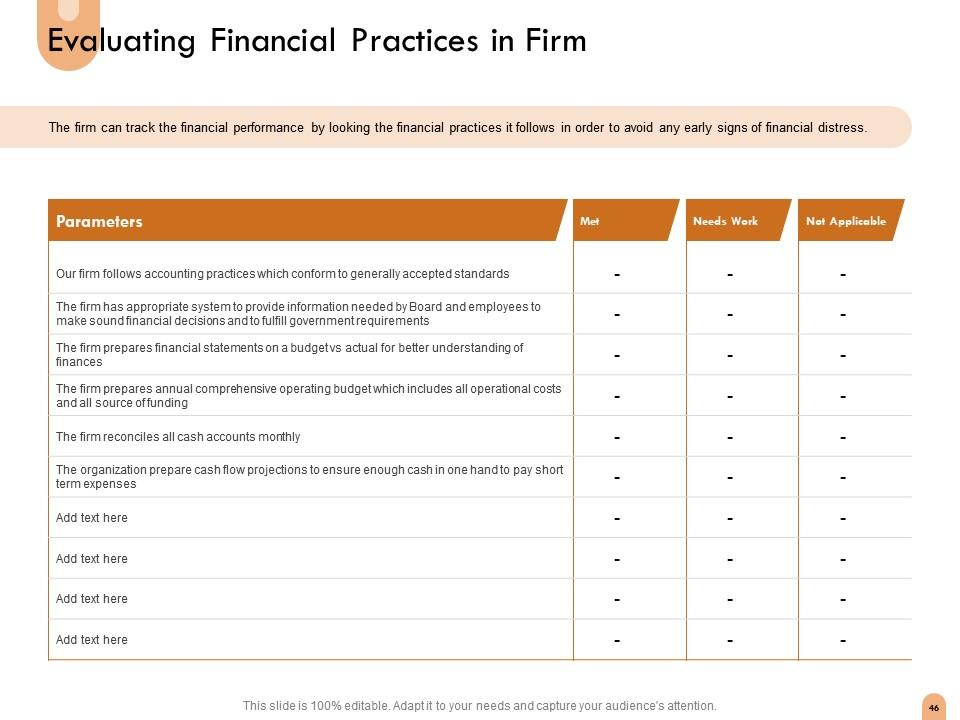
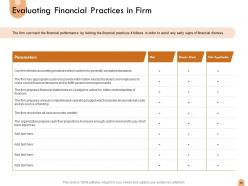
Slide 46: This slide displays Evaluating Financial Practices in Firm in order to avoid any early signs of financial distress.
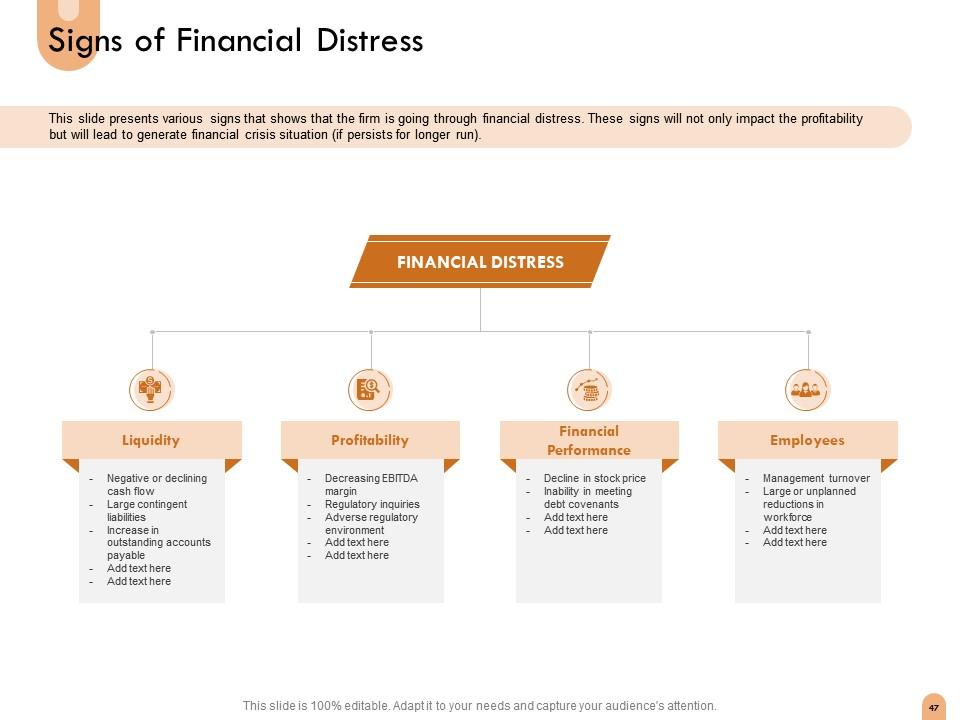
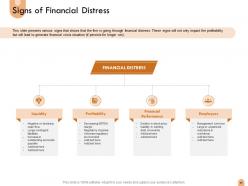
Slide 47: This slide represents Signs of Financial Distress describing- Liquidity, Profitability, Financial Performance, etc.
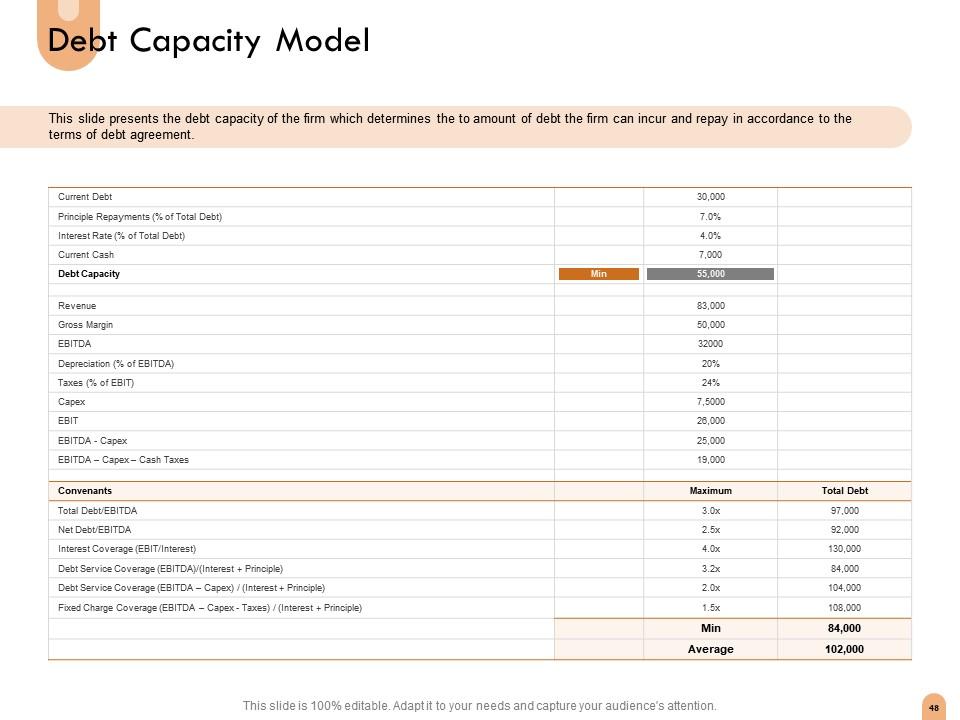
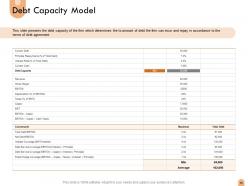
Slide 48: This slide showcases Debt Capacity Model to present the debt capacity of the firm.
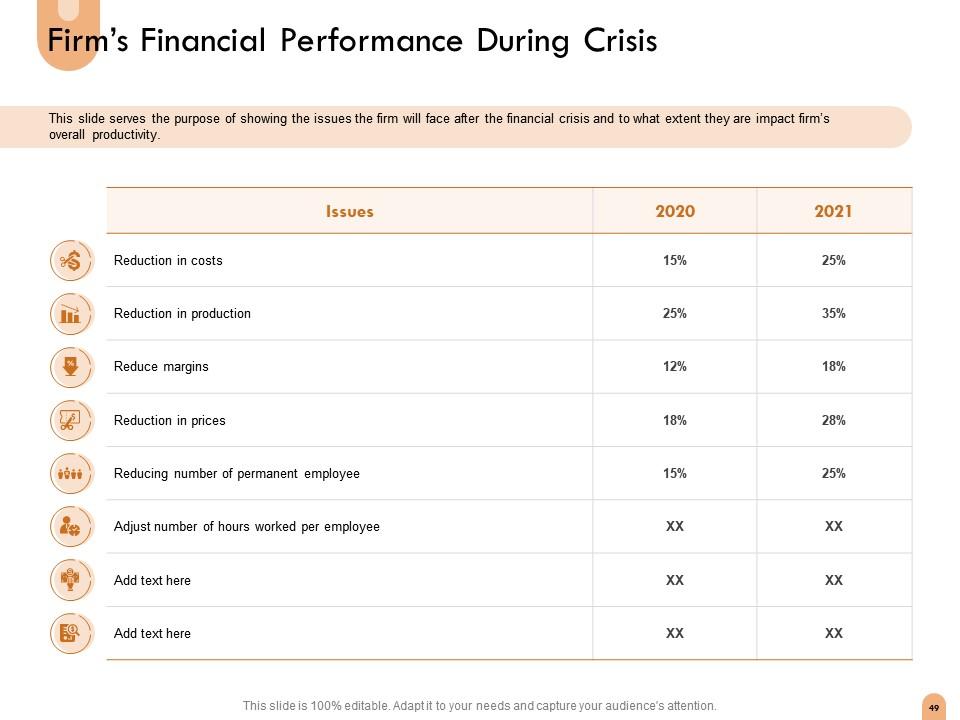
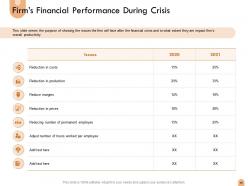
Slide 49: This slide shows Firm’s Financial Performance During Crisis.
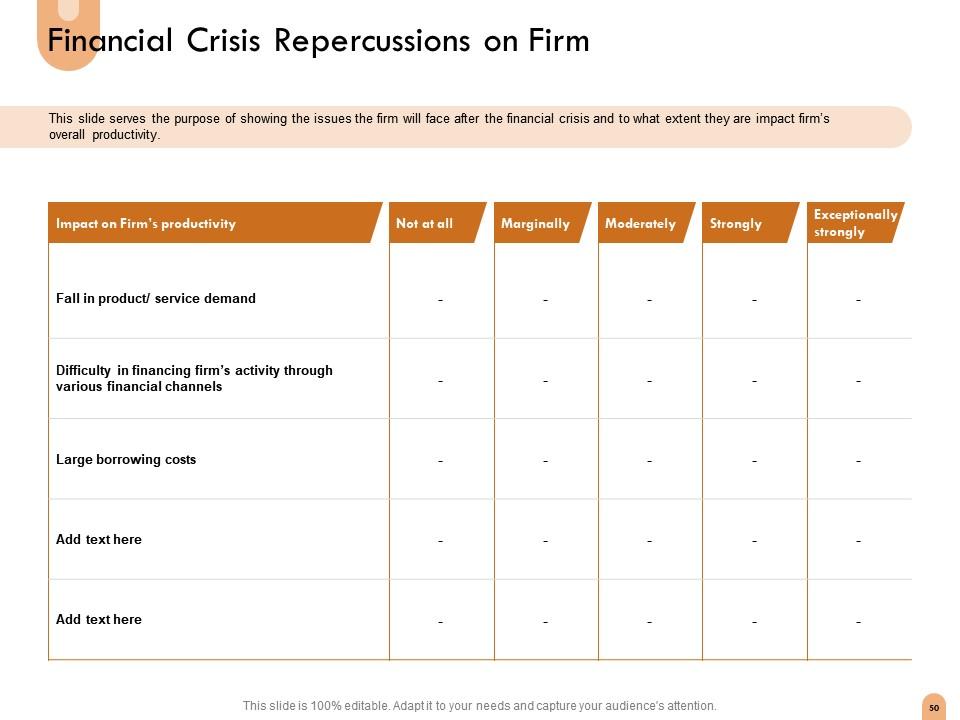
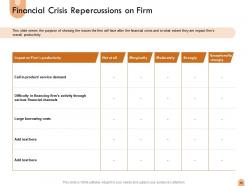
Slide 50: This slide displays Financial Crisis Repercussions on Firm.
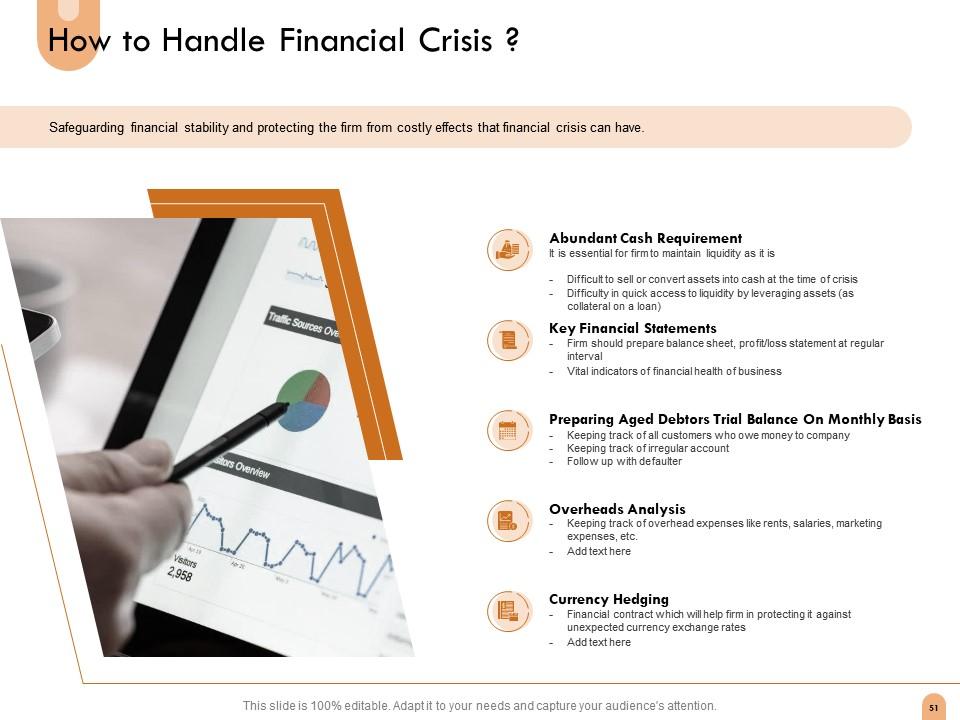
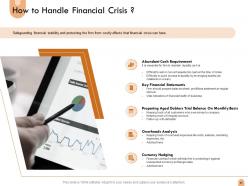
Slide 51: This slide represents How to Handle Financial Crisis ? describing- Currency Hedging, Overheads Analysis, Key Financial Statements, etc.
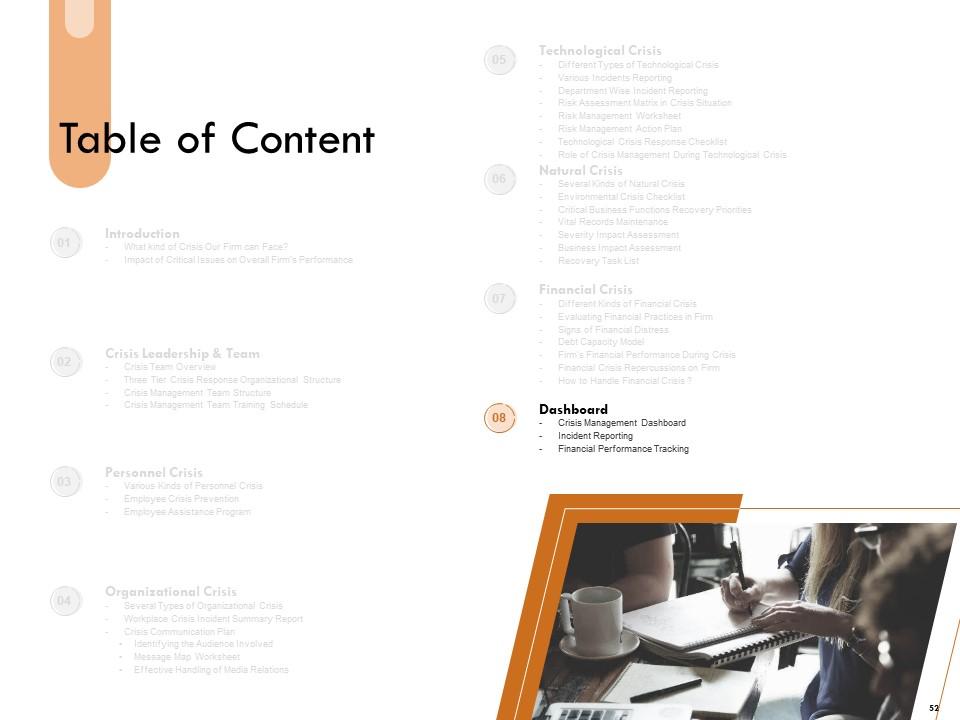
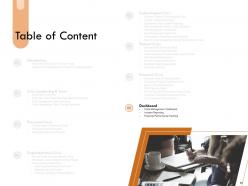
Slide 52: This slide shows Table of Content highlighting Dashboard.
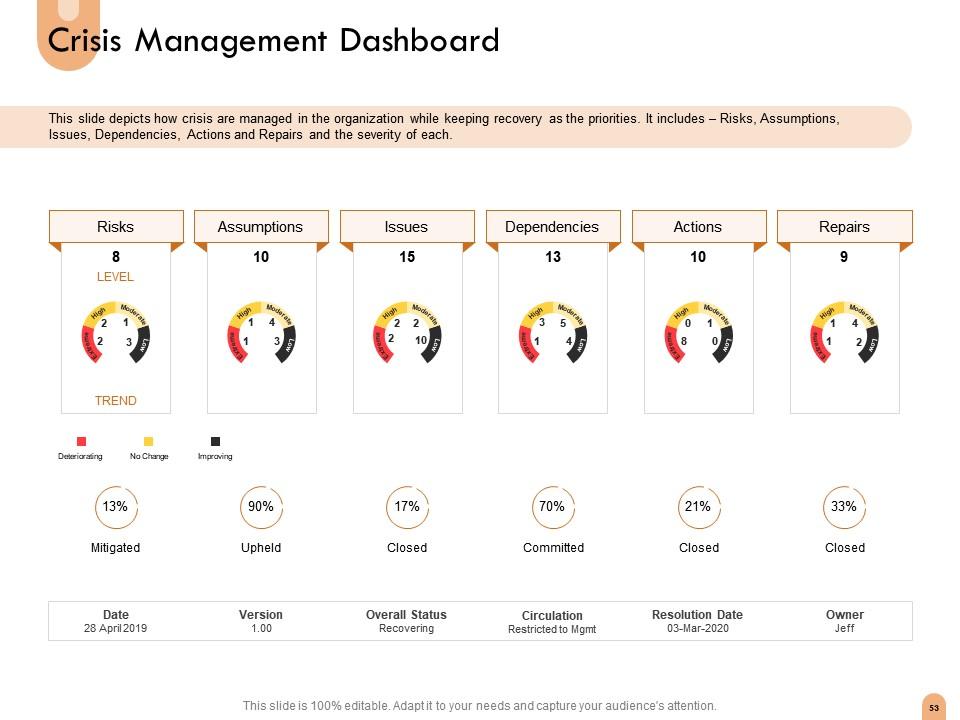
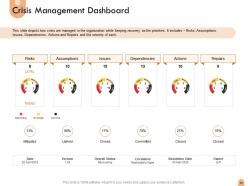
Slide 53: This slide represents Crisis Management Dashboard depicting how crisis are managed in the organization.
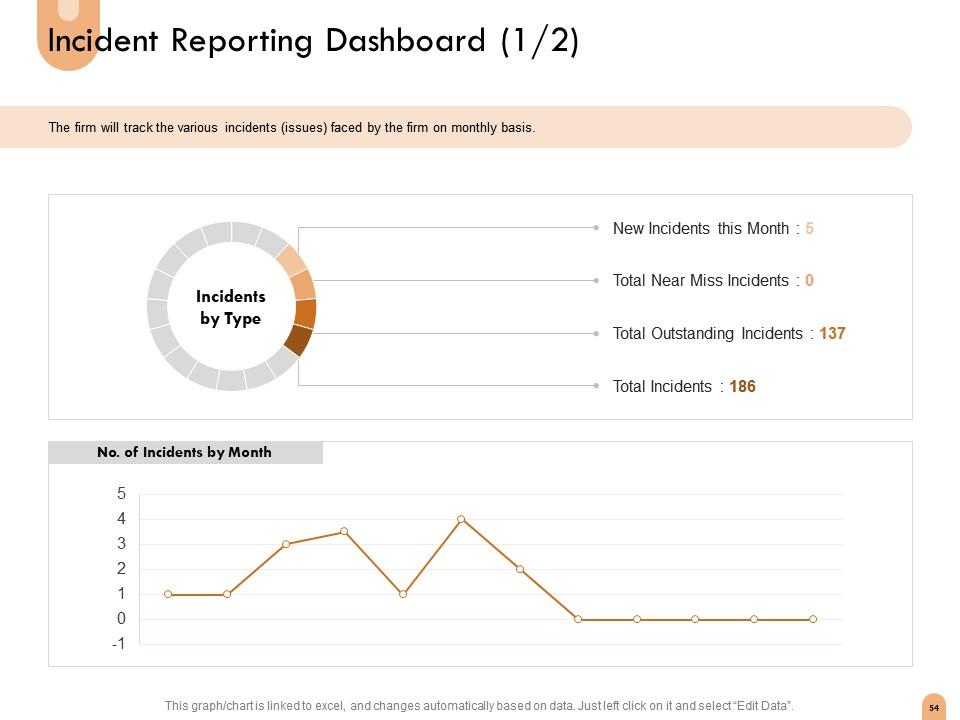
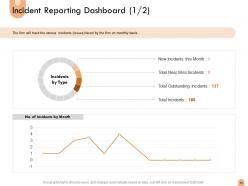
Slide 54: This slide showcases Incident Reporting Dashboard showing number of incidents on monthly basis.
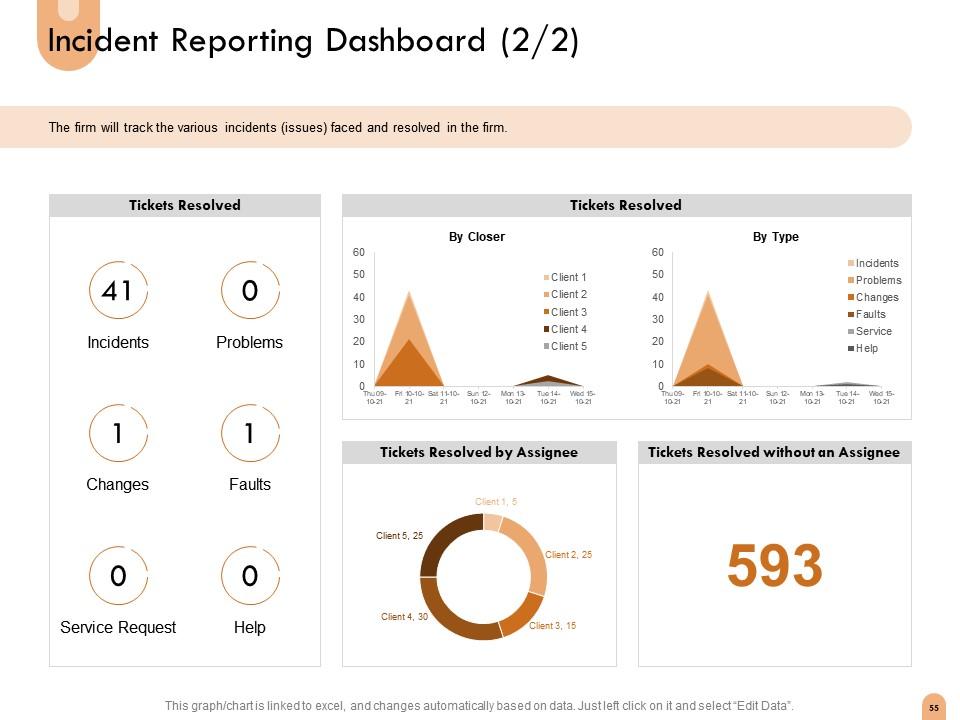
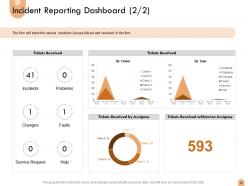
Slide 55: This slide shows Incident Reporting Dashboard describing- Tickets Resolved, Tickets Resolved without an Assignee, Tickets Resolved by Assignee, etc.
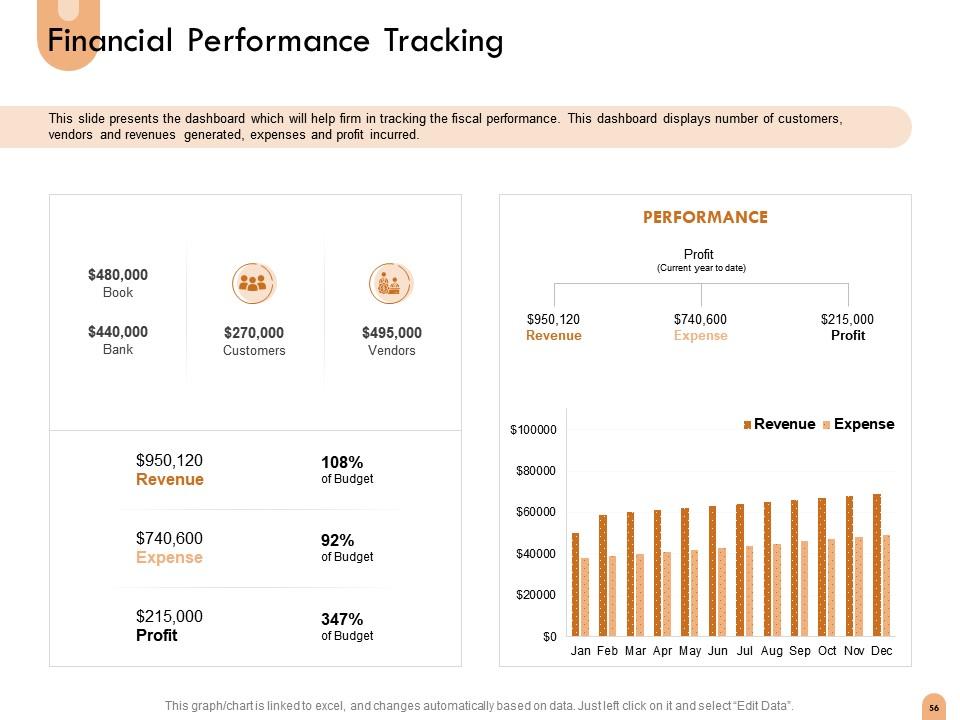
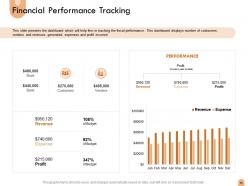
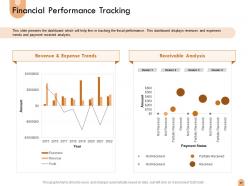
Slide 56: This slide represents Financial Performance Tracking with the help of bar graph.
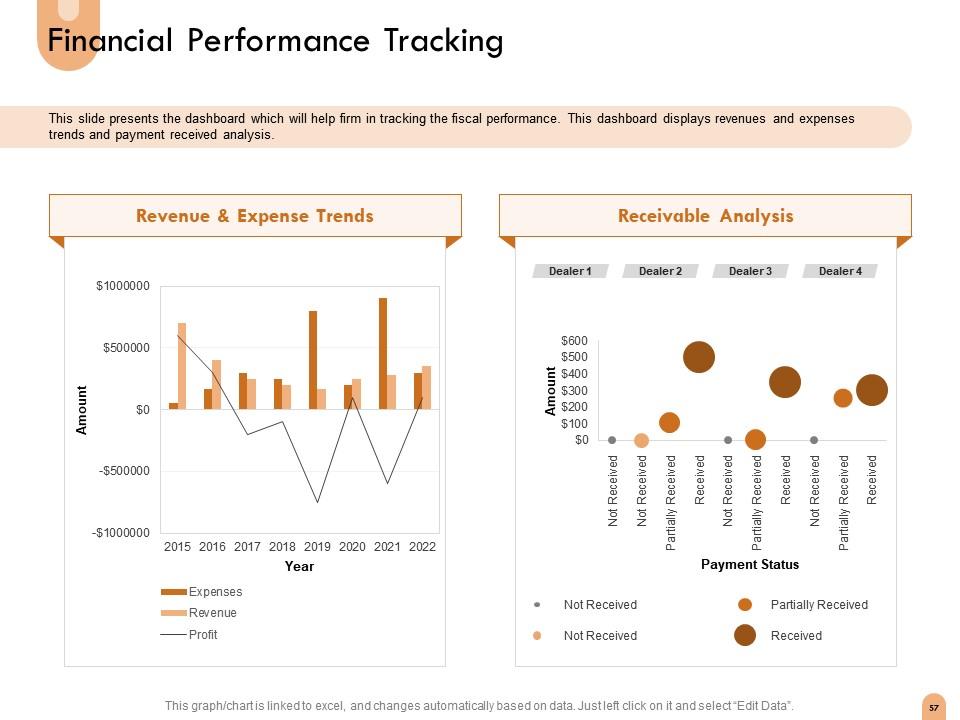
Slide 57: This slide showcases Financial Performance Tracking which will help firm in tracking the fiscal performance.
Slide 58: This slide shows Emergency Situation Management Deck Icons.
Slide 59: This is another slide continuing Emergency Situation Management Deck Icons.
Slide 60: This slide is titled as Additional Slides for moving forward.
Slide 61: This is About Us slide to show company specifications, etc.
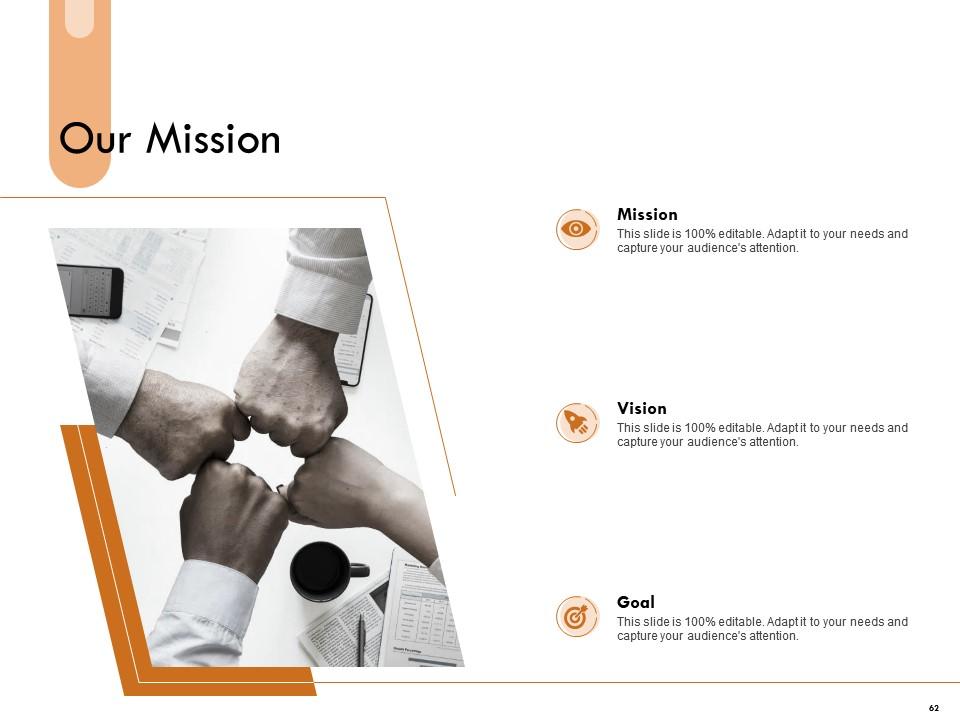
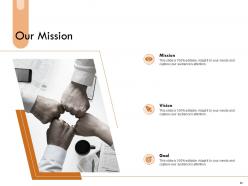
Slide 62: This is Our Mission slide. State your company mission here.
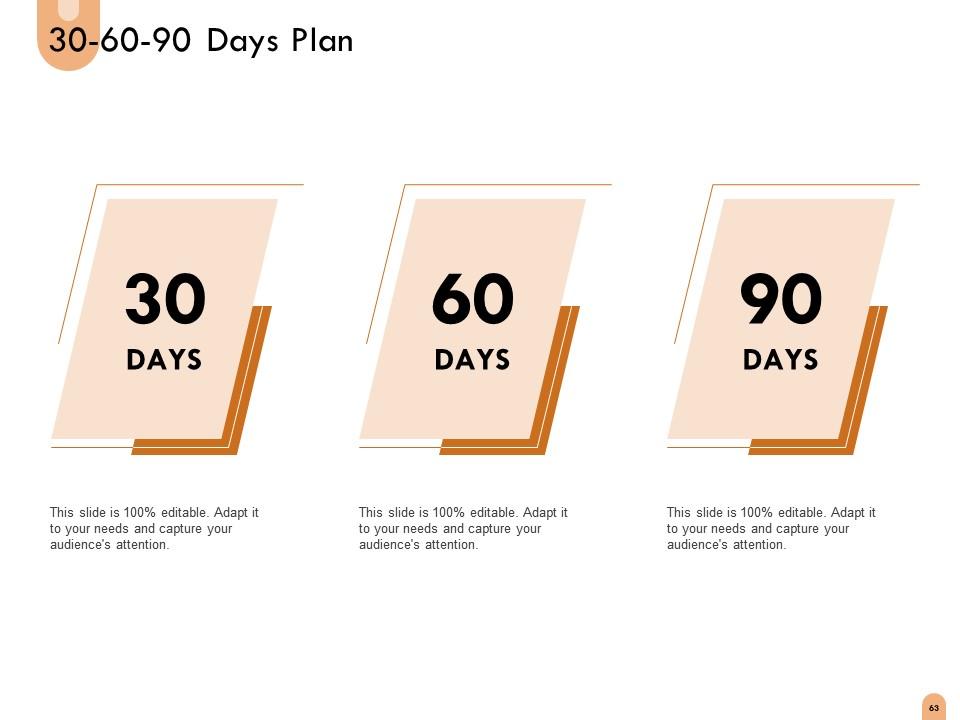
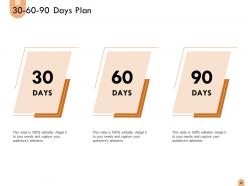
Slide 63: This slide shows 30-60-90 Days Plan with additional text boxes.
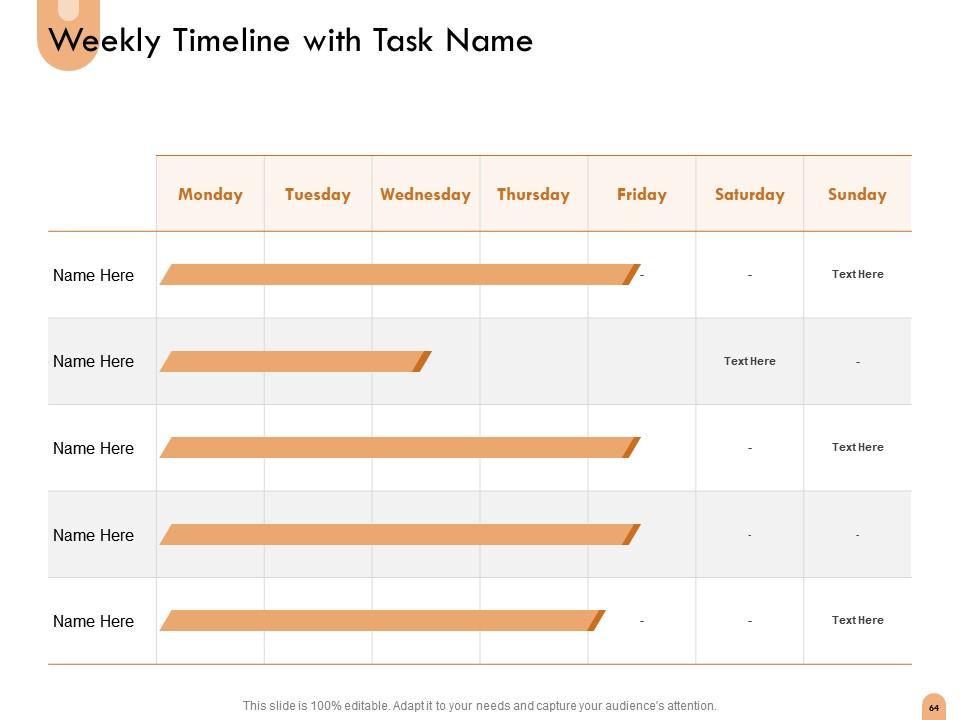
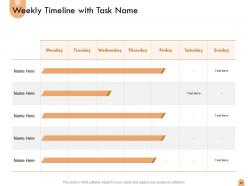
Slide 64: This slide presents Weekly Timeline with Task Name.
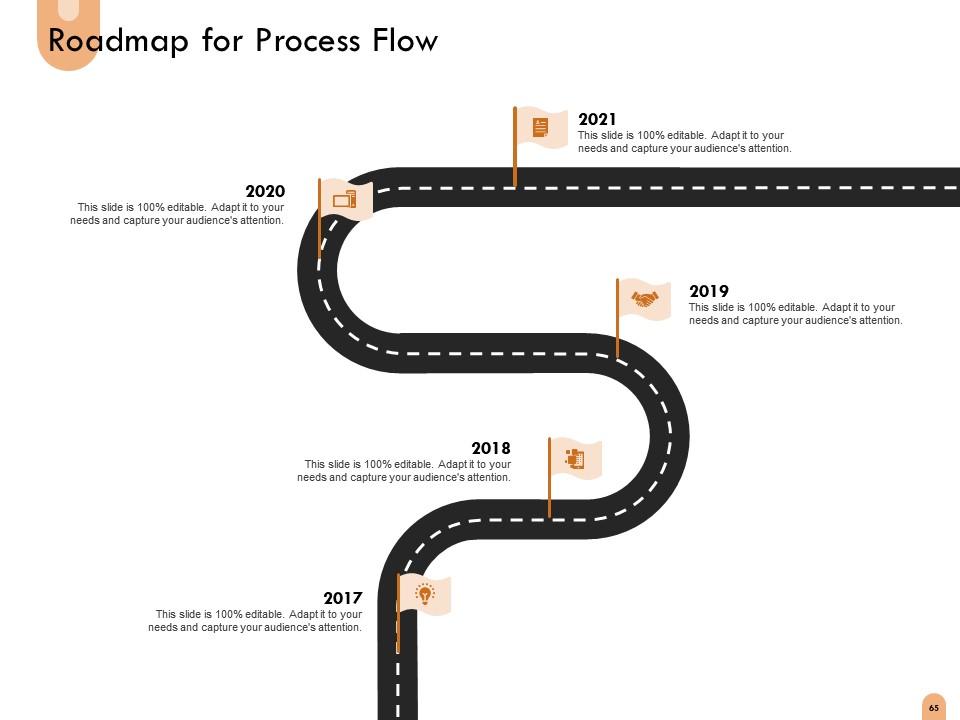
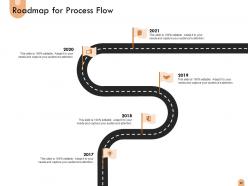
Slide 65: This slide shows Roadmap for Process Flow with related icons and text.
Slide 66: This is a Thank you slide with address, contact number and email address.
Emergency situation management deck powerpoint presentation slides with all 66 slides:
Use our Emergency Situation Management Deck Powerpoint Presentation Slides to effectively help you save your valuable time. They are readymade to fit into any presentation structure.
-
Visually stunning presentation, love the content.
-
The Designed Graphic are very professional and classic.
-
Topic best represented with attractive design.
-
Editable templates with innovative design and color combination.
-
Helpful product design for delivering presentation.
-
Informative design.
-
Excellent template with unique design.
