


Employee Career Progression Management Powerpoint Presentation Slides





Try Before you Buy Download Free Sample Product
 Impress Your
 Audience
 100%
100% Editable
 Save Hours
 of Time


SlideTeam brings to you the content ready Employee Career Progression Management PowerPoint Presentation Slides. Align competencies & career path for employee performance management using career development in HRM PPT graphics. Develop an employee’s career path strategy with the help of our self-explanatory talent management presentation deck. The professionally designed employee value proposition PowerPoint complete deck includes twenty-three ready-to-use slides such as employee value proposition components, categories, canvas framework to name a few. Incorporate employee career development plan PPT slides to showcase career development program ideas. Furthermore, the self-explanatory performance plan & development presentation deck can also be used to present related subjects & topics like succession planning, career development, performance management, training & development, performance improvement, employee development and many more. Utilize easy-to-use career development activities for employee’s PowerPoint templates to demonstrate career management best practices. Download this career path management PowerPoint presentation to recognize, retain & motivate your employees. Introduce changes with our Employee Career Progression Management Powerpoint Presentation Slides. Generate interest in a better approach.
People who downloaded this PowerPoint presentation also viewed the following :
Content of this Powerpoint Presentation
Slide 1: This slide introduces Employee Career Progression Management. State Your Company Name and begin.
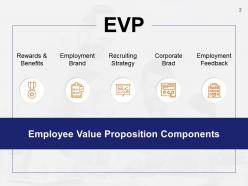
Slide 2: This slide shows Employee Value Proposition Components as- Rewards & Benefits, Employment Brand, Recruiting Strategy, Corporate Brand, Employment Feedback.
Slide 3: This slide presents Employee Value Proposition Categories as- Opportunity, Rewards, Work, People, Organization.
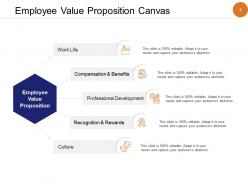
Slide 4: This slide displays Employee Value Proposition Canvas describing- Work Life, Professional Development, Compensation & Benefits, Culture, Recognition & Rewards.
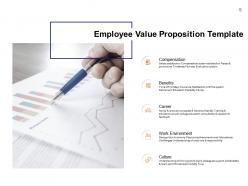
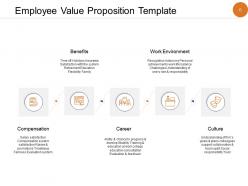
Slide 5: This slide shows Employee Value Proposition Template describing- Career, Culture, Work Environment, Compensation, Benefits.
Slide 6: This is an optional slide for Employee Value Proposition Template.
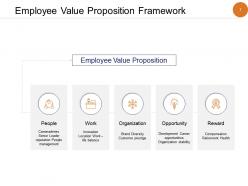
Slide 7: This slide showcases Employee Value Proposition Framework describing- People, Work, Opportunity, Reward, Organization.
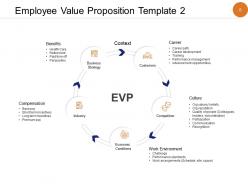
Slide 8: This slide shows Employee Value Proposition Template 2 describing- Career, Culture, Work Environment, Compensation, Benefits.
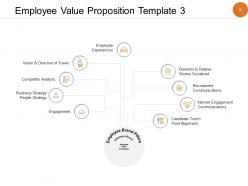
Slide 9: This slide presents Employee Value Proposition Template 3.
Slide 10: This slide displays icons for Employee Career Progression Management.
Slide 11: This slide is titled as Additional Slides for moving forward.
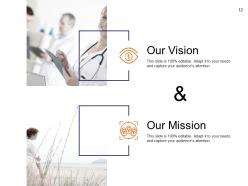
Slide 12: This is Our Mission & Our Vision slide with related imagery and text.
Slide 13: This is About Us slide to show company specifications etc.
Slide 14: This is Our Team slide with names and designation.
Slide 15: This is Our Goal slide. Show your firm's goals here.
Slide 16: This is Our Target slide. State your targets here.
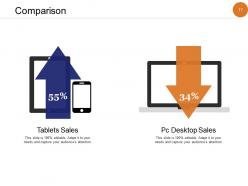
Slide 17: This is a Comparison slide to state comparison between commodities, entities etc.
Slide 18: This is a Timeline slide to show information related with time period.
Slide 19: This is a Quotes slide to convey message, beliefs etc.
Slide 20: This is an Idea Generation slide to state a new idea or highlight information, specifications etc.
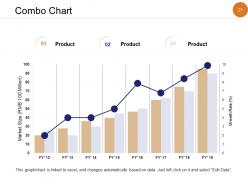
Slide 21: This slide displays Combo Chart with three products comparison.
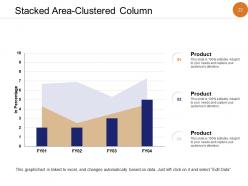
Slide 22: This slide shows Stacked Area-Clustered Column with three products comparison.
Slide 23: This is a Thank You slide with address, contact numbers and email address.
Employee Career Progression Management Powerpoint Presentation Slides with all 23 slides:
Use our Employee Career Progression Management Powerpoint Presentation Slides to effectively help you save your valuable time. They are readymade to fit into any presentation structure.


FAQs for Employee Career Progression Management
Key factors influencing career progression include continuous skill development, strategic networking, performance consistency, adaptability to change, and proactive career planning. These elements work together by enhancing professional visibility, building cross-functional expertise, and demonstrating leadership potential, with many organizations finding that employees who combine technical competence with strong relationship-building skills advance more rapidly.
Individuals can identify career goals effectively by conducting honest self-assessments of their strengths, values, and interests, researching industry trends and growth opportunities, seeking mentorship from senior professionals, and evaluating potential career paths against personal priorities. This strategic approach enables professionals to align their aspirations with market realities, ultimately creating focused development plans that deliver both personal fulfillment and competitive advantage in an increasingly dynamic workplace.
Mentorship serves as a strategic catalyst in career progression management by providing personalized guidance, industry insights, skill development opportunities, and professional networking connections. Through structured mentor relationships, professionals accelerate their career trajectories, navigate organizational complexities more effectively, and gain access to leadership perspectives, with many organizations finding that formal mentorship programs significantly enhance employee retention and advancement rates.
Organizations cultivate career growth cultures by implementing mentorship programs, providing regular skills training, creating clear advancement pathways, offering cross-functional project opportunities, and establishing transparent performance feedback systems. Through strategic combination of these approaches, companies enhance employee retention, boost engagement levels, and build stronger internal talent pipelines, with many finding that such investments ultimately deliver competitive advantage and reduced recruitment costs.
Employees can seek internal opportunities by networking across departments, volunteering for cross-functional projects, expressing career interests to managers during reviews, and actively monitoring internal job postings. Through strategic visibility initiatives, skill development programs, and mentorship relationships, professionals enhance their internal mobility while demonstrating value to leadership, ultimately positioning themselves for promotions and lateral moves within their organization.
Skill development directly accelerates career advancement by increasing marketability, expanding role opportunities, and demonstrating commitment to professional growth. Through continuous learning, professionals enhance their value proposition, qualify for leadership positions, and adapt to evolving industry demands, with many organizations prioritizing skilled talent for promotions and strategic initiatives, ultimately delivering faster career progression and increased earning potential.
Performance reviews support career progression by identifying strengths, addressing skill gaps, setting development goals, providing feedback alignment, and creating advancement roadmaps. Through structured evaluations, organizations enhance employee growth, streamline talent development, and deliver clearer promotion pathways, with many companies finding that regular reviews ultimately strengthen retention and accelerate internal mobility.
Common obstacles to career advancement include limited skill development opportunities, lack of mentorship, unclear promotion criteria, insufficient networking, and poor visibility to leadership. These challenges can be overcome by actively seeking cross-functional projects, finding internal mentors, regularly discussing career goals with managers, building strategic relationships across departments, and consistently communicating achievements to stakeholders, ultimately delivering enhanced professional growth and competitive positioning.
Networking significantly enhances career trajectory by providing access to hidden job opportunities, industry insights, mentorship guidance, and professional referrals that accelerate advancement. Through strategic relationship building, professionals gain exposure to senior leaders, learn about emerging trends, and receive recommendations for promotions, with many finding that strong networks deliver faster career growth and increased earning potential.
Personal branding is the strategic process of defining and communicating your unique professional value, expertise, and reputation across various platforms and interactions. It enables career advancement by enhancing visibility, establishing credibility, and differentiating you from competitors, with many professionals finding that strong personal brands attract better opportunities, higher salaries, and accelerated promotions.
Technology enhances career development through AI-powered skills assessments, personalized learning platforms, virtual mentoring systems, career pathway mapping tools, and predictive analytics for role matching. These solutions streamline talent development by identifying skill gaps, delivering targeted training, and connecting employees with relevant opportunities, ultimately enabling organizations to retain talent while employees accelerate their professional growth.
Continuous learning enables professionals to adapt to evolving technologies, industry trends, and market demands, while building expertise in emerging areas like digital transformation, data analytics, and strategic leadership. Through upskilling and reskilling initiatives, professionals enhance their value proposition, accelerate promotion opportunities, and maintain relevance in increasingly competitive job markets, ultimately delivering sustained career growth.
Employees should approach career progression conversations by preparing specific examples of their contributions, researching internal opportunities, and presenting clear development goals with timelines. These discussions work best when framed as collaborative planning sessions, with employees demonstrating initiative through skills assessments, seeking feedback on growth areas, and proposing concrete next steps that align with organizational needs.
**INPUT**: What are the best practices for setting achievable career milestones? **OUTPUT**: Best practices for setting achievable career milestones include defining specific skill targets, establishing measurable timeframes, aligning goals with industry trends, seeking mentorship guidance, and regularly reviewing progress markers. These strategic approaches streamline career development by enhancing focus, building relevant competencies, and maintaining momentum, with many professionals finding that structured milestone planning ultimately delivers faster advancement and greater job satisfaction.
Organizations measure career progression strategy effectiveness through employee retention rates, internal promotion percentages, skill development metrics, engagement survey scores, and succession planning readiness assessments. These measurements enable companies to track talent mobility, identify development gaps, and optimize advancement pathways, with many finding that comprehensive analytics ultimately deliver stronger retention, reduced recruitment costs, and enhanced organizational capability.
-
Awesomely designed templates, Easy to understand.