


Employee Evaluation Matrix With Performance Indicators




Try Before you Buy Download Free Sample Product
 Impress Your
Audience
 100%
Editable
 Save Hours
of Time


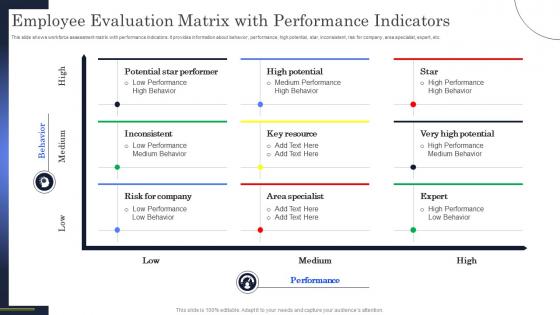
This slide shows workforce assessment matrix with performance indicators. It provides information about behavior, performance, high potential, star, inconsistent, risk for company, area specialist, expert, etc.
People who downloaded this PowerPoint presentation also viewed the following :
Employee Evaluation Matrix With Performance Indicators with all 6 slides:
Use our Employee Evaluation Matrix With Performance Indicators to effectively help you save your valuable time. They are readymade to fit into any presentation structure.






FAQs for Employee Evaluation Matrix
Honestly, I'd start with the basics - are they actually getting their work done and hitting targets? Communication and teamwork matter a lot too, plus how they handle problems when stuff goes sideways. Reliability is kind of a no-brainer but worth mentioning anyway. What really helps is using real examples instead of just saying "good job" or whatever - makes the whole conversation feel less awkward. Oh, and definitely think about how they take feedback. Some people get defensive which... yikes. Bottom line: be straight with them but fair, and always give them something actionable to work with.
Get everyone on the same page with scoring - that's huge. Train your managers so they're all measuring the same stuff instead of just winging it. Concrete examples work way better than fuzzy feedback like "needs improvement." Honestly? Have multiple people review each employee because bias is everywhere. I've watched managers basically rate people on whether they liked them or not, which is useless. Write everything down with actual dates and incidents. Oh, and 360 reviews help too - getting input from coworkers gives you the full picture. Two managers should look at the same person and come to similar conclusions if your system's working.
Honestly, feedback is what makes evaluations actually work instead of just being a total guessing game. I'd collect it constantly - during your regular check-ins, peer reviews, even from customer stuff. Don't wait until December like most people do (guilty as charged though). Make sure it's specific too, not just "Sarah's great!" or whatever. Keep a running log for each person throughout the year. Trust me, you'll feel like a genius when review season hits and you're not frantically trying to remember what happened six months ago. Way more fair for everyone.
Honestly, start with the hard numbers - they're way harder for people to dispute. But don't stop there because metrics miss so much of what actually matters at work. Get feedback from their teammates, watch how they handle problems, have them reflect on their own stuff too. I usually go like 60-70% data, the rest qualitative, but it depends on the job obviously. Oh and make a simple rubric that balances both sides equally - otherwise you'll accidentally lean too heavy on one without realizing it. Trust me on that one.
Oh man, biggest mistakes? Don't just focus on recent stuff - I always forget what happened in January by December. Also being super vague helps nobody. Personal grudges will totally mess with your judgment too. One thing that gets me every time - when someone crushes one project, I somehow forget they've been slacking on everything else. That halo effect is real! Take notes throughout the year so you're not scrambling. Never blindside them with "new" feedback either. And honestly? Skip the personality critiques. Stick to what they actually did or didn't do. Going in unprepared just makes it weird for everyone.
Honestly, tech makes evals so much less awful for everyone. Those performance platforms are game-changers - you can track goals and feedback as things happen instead of trying to remember what someone did last spring (which, let's be real, never works). 360-degree feedback tools automatically pull input from different people, and analytics dashboards show you patterns you'd totally miss otherwise. Some managers are using AI stuff now to spot skill gaps and suggest training. My advice? Just digitize whatever you're doing first, then slowly add the fancier features once you're not drowning in spreadsheets.
Honestly, just make it a conversation first. Ask them what they think went well and what didn't - most people are way more self-aware than you'd expect. When you do give feedback, get specific with examples instead of being vague about stuff. Always give them clear next steps too, not just "do better." I hate when managers do that. Frame problems as chances to grow rather than screw-ups. Oh, and don't save everything for the annual review - have regular check-ins so nothing blindsides them later.
Definitely schedule a real meeting for this - hallway chats never work for serious stuff. Focus on actual examples instead of vague "you need to improve" garbage (hate when managers do that). Be direct but not brutal, and honestly? Listen more than you talk. Let them respond and ask questions - nobody likes being lectured at. Frame it as helping them grow rather than just pointing out problems. Oh, and wrap up with concrete next steps so they're not left wondering what you actually want from them.
So basically, you gotta match your evaluations to what each job actually does. Sales people? Look at their numbers and how they handle clients. Developers need feedback on their code and whether they hit deadlines. Creative roles are totally different from analytical ones - honestly, cookie-cutter reviews are such a waste of time. Mix up your methods too. Peer reviews work great for some positions, client feedback for others. Leadership roles probably need the full 360 thing. Just think about what "doing well" looks like for each specific job and build your evaluation around that instead.
Dude, yes - feedback totally helps with both performance and morale. Think of it like giving someone directions instead of letting them wander around lost. People get way less anxious when they know where they stand and what needs work. Monthly 15-minute check-ins work great (way better than those awful annual reviews nobody likes). Your team will feel more supported, and honestly? You'll spot problems before they blow up. Most managers completely skip this step then act surprised when everyone seems checked out. It's such an easy win.
Here's the thing - make your evaluations crazy specific and focus on what's coming next, not just rehashing old stuff. Don't write "needs better communication." Write "will give weekly team updates and hit that Q2 presentation workshop." I've honestly seen so many evaluations that are completely worthless because they're vague as hell with zero action steps. Work with each person to nail down 2-3 solid goals, get them the training they need, and schedule follow-ups. If someone reads their eval and still doesn't know what they're supposed to do Monday morning, you basically failed at your job.
Skip the generic "rate your teamwork 1-10" stuff - it's useless. Instead, get them to walk you through actual situations. Like when did they last solve a tricky problem? What exactly did they do? I always ask about specific moments because that's where you see someone's real skills. Getting feedback from their teammates helps too, since soft skills are mostly about how you work with others anyway. The whole thing works better when you focus on concrete examples rather than... I don't know, abstract feelings about how "collaborative" someone thinks they are.
Honestly, just pick a few things and actually track them consistently - that's half the battle right there. Employee engagement scores before/after evaluations are solid. Retention rates matter too, especially for your best people. Are folks hitting those goals you set in reviews? That's pretty telling. The manager piece is huge though - survey employees about whether feedback actually helps or if it's just generic garbage. I'd also check if performance genuinely improves quarter to quarter. Don't overthink it with like 10 different metrics. Start with 2-3 that fit your company vibe and stick with those.
Definitely start with teaching them how to give decent feedback and set actual goals people can hit. The conversation part is huge too - most managers suck at listening and get all weird when someone pushes back. Document everything properly or you're screwed later. Oh, and make sure they know the legal stuff around bias because that can bite you. I'd say 4-6 hours upfront, then do refreshers every year. Honestly though, first figure out what your current managers are completely bombing at. That's where I'd focus first - no point training on stuff they already get.
So honestly? Do the formal reviews once a year - that's when you handle the big stuff like raises and promotions. But don't wait that long for actual feedback, that's kinda pointless. I'd say monthly check-ins are where you'll see real results. You can catch problems early, give props when they deserve it, and people stay way more engaged. The annual thing is like your official report card, but those regular chats? That's your real coaching time. Seriously, start doing monthly one-on-ones if you aren't already - game changer.
-
Great experience, I would definitely use your services further.
-
The designs by SlideTeam are honestly the best I have seen so far. Will be definitely coming back for more.