

Employee professional growth powerpoint presentation slides




Try Before you Buy Download Free Sample Product
 Impress Your
 Audience
 100%
100% Editable
 Save Hours
 of Time


Professional growth helps employees acquire, learn and execute new skills in their operations, also allows them to be aware of the changing industry trends. The development lets workers excel in their profession. Check out our professionally designed template on Employee Professional Growth for inspiring your teammates to do their best, manage resources well and create a vision into reality. The purpose of this proposal is to explain all the elements of leaders and leadership in the corporate world to clarify its importance and all the responsibilities associated with it. Firms can display the basics of management and corporate development in a creative manner using quotes and high-quality images for each topic. The template shows a complete theory for employee growth, its styles, categories, qualities of a good worker, etc., with the pros and cons of each. One can demonstrate the professional growth theories in the deck to make employees understand what elements make a worker an efficient leader based on their traits and skills. Organizations can study and guide development using a managerial grid, goal models, and more to explain their standards, financials, and professional routine. Talk to our expert team and customize this 100 percent editable template based on needs. Get access and download the proposal now.
People who downloaded this PowerPoint presentation also viewed the following :
Content of this Powerpoint Presentation
Slide 1: This slide introduces Employee Professional Growth State Your Company Name and begin.
Slide 2: This slide shows Agenda of Employee Intellectual Growth.
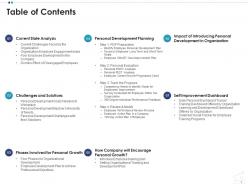
Slide 3: This slide presents Table of Content for the presentation.
Slide 4: This is another slide continuing Table of Content for the presentation.
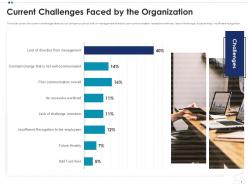
Slide 5: This slide covers the current challenges faced by our company.
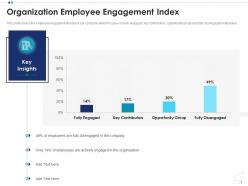
Slide 6: This slide shows Organization Employee Engagement Index.
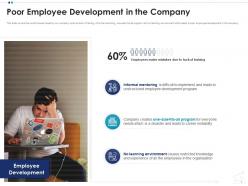
Slide 7: This slide displays Poor Employee Development in the Company.
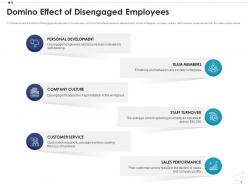
Slide 8: This slide covers the effect of disengaged employees in the company.
Slide 9: This slide shows Table of Content for the presentation.
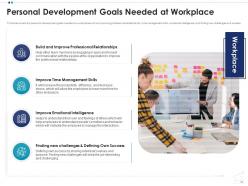
Slide 10: This slide presents Personal Development Goals Needed at Workplace.
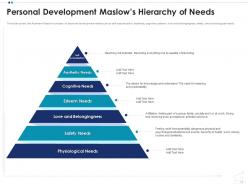
Slide 11: This slide shows Personal Development Maslow’s Hierarchy of Needs.
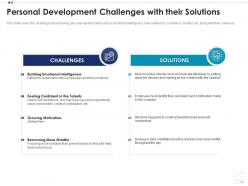
Slide 12: This slide covers the challenges faced during personal development.
Slide 13: This slide represents Table of Content for the presentation.
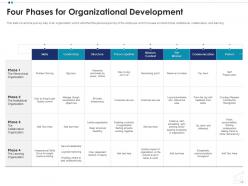
Slide 14: This slide covers the journey map of an organization which will affect the personal journey of the employee.
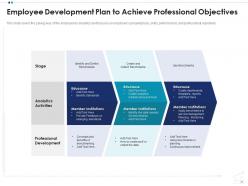
Slide 15: This slide displays the paving way of the employee to analytics and focuses on employee’s present place.
Slide 16: This slide shows Table of Content for the presentation.
Slide 17: This slide presents the challenges faced during personal development such as emotional intelligence.
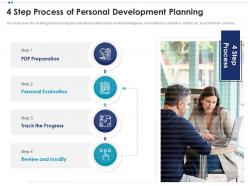
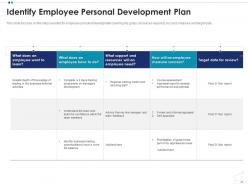
Slide 18: This slide focuses on the steps needed for employee personal development covering his goals.
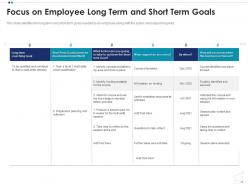
Slide 19: This slide shows Focus on Employee Long Term and Short Term Goals.
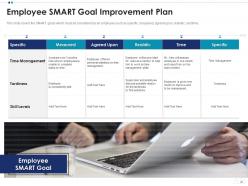
Slide 20: This slide covers the SMART goals which must be considered by an employee.
Slide 21: This slide shows Table of Content for the presentation.
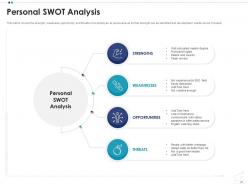
Slide 22: This matrix represents the strength, weakness, opportunity, and threats of an employee.
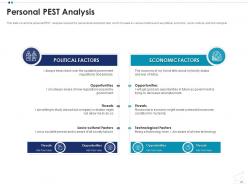
Slide 23: This slide displays the personal PEST analysis required for personal development plan.
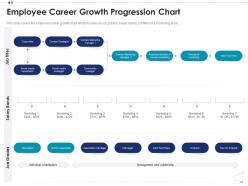
Slide 24: This slide covers the employee career growth chart which focuses on job grades.
Slide 25: This slide shows Table of Content for the presentation.
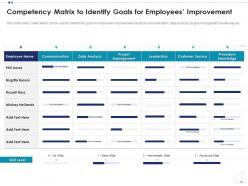
Slide 26: This slide represents matrix which can be used to identify the goals for employees.
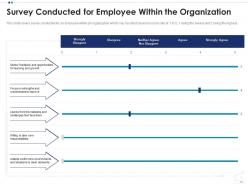
Slide 27: This slide covers survey conducted for an employee within an organization.
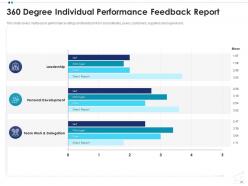
Slide 28: This slide displays multisource performance ratings and feedback from subordinates.
Slide 29: This slide shows Table of Content for the presentation.
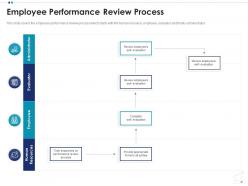
Slide 30: This slide covers the employee performance review process which starts with the human resource.
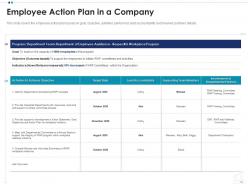
Slide 31: This slide presents the employee action plan based on goal, objective, activities performed, etc.
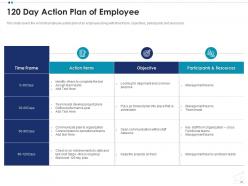
Slide 32: This slide covers the 4 month employee action plan of an employee along with time frame, objectives, participants and resources.
Slide 33: This slide represents Table of Content for the presentation.
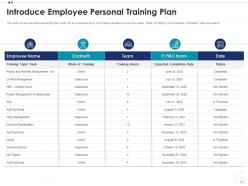
Slide 34: This slide displays the personal training plan made for an employee along with training details.
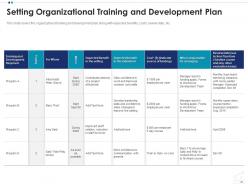
Slide 35: This slide covers the organizational training and development plan along with expected benefits.
Slide 36: This slide shows Table of Content for the presentation.
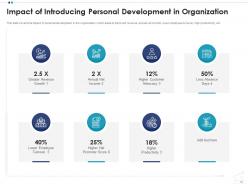
Slide 37: This slide covers the impact of personal development in the organization.
Slide 38: This slide presents Table of Content for the presentation.
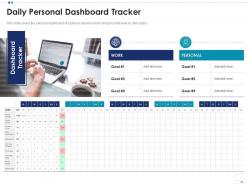
Slide 39: This slide displays the personal dashboard of a person based on work and personal level.
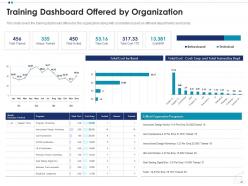
Slide 40: This slide covers the training dashboard offered by the organization along with cost details.
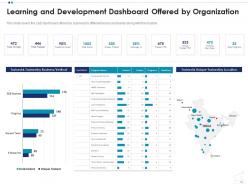
Slide 41: This slide shows Learning and Development Dashboard Offered by Organization.
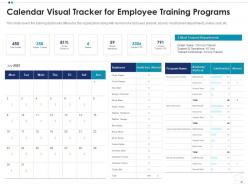
Slide 42: This slide covers the training dashboard offered by the organization along with number of employees.
Slide 43: This slide displays Icons for Employee Professional Growth.
Slide 44: This slide is titled as Additional Slides for moving forward.
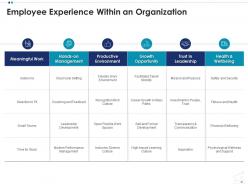
Slide 45: This slide shows Employee Experience within an Organization.
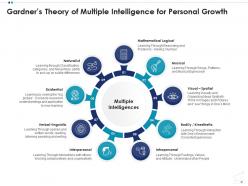
Slide 46: This slide represents Gardner’s Theory of Multiple Intelligence for Personal Growth.
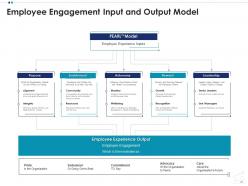
Slide 47: This slide shows Employee Engagement Input and Output Model.
Slide 48: This is About Us slide to show company specifications etc.
Slide 49: This is Our Mission slide with related imagery and text.
Slide 50: This slide shows 30 60 90 Days Plan with text boxes.
Slide 51: This slide shows Puzzle with related icons and text.
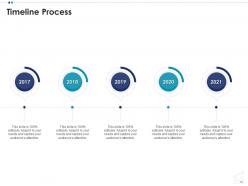
Slide 52: This is a Timeline slide. Show data related to time intervals here.
Slide 53: This slide shows Venn diagram with text boxes.
Slide 54: This slide shows Post It Notes. Post your important notes here.
Slide 55: This slide shows Roadmap with additional textboxes.
Slide 56: This is a Thank You slide with address, contact numbers and email address.
Employee professional growth powerpoint presentation slides with all 56 slides:
Use our Employee Professional Growth Powerpoint Presentation Slides to effectively help you save your valuable time. They are readymade to fit into any presentation structure.

FAQs for Employee professional growth
Start with a skills assessment - figure out what gaps you're actually dealing with. Most places just dump random training on people without this step, which is pretty pointless tbh. Create personalized development plans that mix real training, stretch projects, and coaching. Regular check-ins are crucial, not just those useless annual reviews. The real win is tying development directly to career growth - people need to see the connection. I'd honestly just survey your team first about their goals and current struggles. That'll show you exactly where to focus your energy.
Mix up your training formats - seriously makes a huge difference. Survey your team first to see how they actually like to learn. Some people are hands-on, others need to read through stuff first. Try workshops, online modules, maybe some mentoring sessions. Oh, and those "learning café" things where people rotate stations? Sounds cheesy but apparently works really well. Don't just stick with classroom training - throw in quick video tutorials too. Test different methods with one program first, see what clicks. Visual, auditory, kinesthetic learners all need different approaches.
Honestly? Mentorship programs are huge for development. Your employees get personalized guidance instead of figuring everything out the hard way. But here's what most companies mess up - they just randomly pair people together. Bad idea. You need to actually match based on goals and personalities. Set clear expectations upfront too (like how often they'll meet). Oh, and train your mentors! I know it sounds obvious, but most people think mentoring just comes naturally. Give them some basic coaching skills and you'll see way better results. It's seriously one of those things that works when done right.
So for tech platforms, I'd start with an LMS - tracks progress and you can assign stuff based on what each person actually needs. Mobile apps work great too, people can squeeze in quick lessons during lunch or whatever. VR is pretty cool for hands-on training if you're in manufacturing or healthcare. There's also AI platforms that'll create custom learning paths based on where someone's at skill-wise. Oh, and don't overlook internal stuff like wikis where your team shares knowledge with each other - that's often the most useful honestly. Pick one thing that fixes your biggest problem first, then build from there.
Okay so you'll want to track the obvious stuff first - completion rates, satisfaction scores, how much skills improved before vs after. But also look at retention and internal promotions for people who did the training compared to those who didn't. The real goldmine is checking if people actually use what they learned within 90 days. Like, have their managers do quick check-ins about behavior changes. Oh and don't sleep on engagement during the actual programs - are people showing up or just phoning it in? That tells you a lot about whether the content's even worth tracking in the first place.
Honestly, just ask your people what they actually want to learn - sounds obvious but most companies skip this step. Run quick surveys and one-on-ones to figure out the gap between what employees want vs. what you think they need. Look for patterns in their responses, then match those up with your business goals. Delivery methods matter too - some folks prefer workshops, others want online modules. I'd start small though, maybe just ask your team what they're interested in for next quarter? The worst training programs I've seen totally ignored employee input and wondered why nobody showed up.
Honestly, personalized development plans are total game-changers. Instead of throwing everyone into the same boring training, you actually sit down and figure out what each person wants to do with their career. People get way more motivated when they're building skills they actually care about. Plus retention goes through the roof - nobody wants to leave when they feel like you're investing in their future. I mean, it takes more effort upfront, but you'll spot your future leaders this way too. Just start with real conversations about where people want to grow. Works every time.
Honestly, just ask your team what skills they want to develop - that conversation alone makes a huge difference. People hate feeling stuck doing the same stuff forever, so when you actually invest in their growth, they feel valued and stick around. I've seen so many companies lose good people over like $5k when they could've kept them with some training opportunities. Development is probably your best retention tool, way better than ping pong tables or whatever. Engaged employees perform better too, obviously. But yeah, start with that simple question - you'll be shocked how much it matters to people.
Time and budget are the big ones, plus bosses who just don't get it. The whole "we're too busy" thing is honestly BS half the time - it's just bad planning. Instead of formal training sessions, try weaving development into what you're already doing. Job rotations work great, or pair people up for mentoring. Budget tight? Internal knowledge sharing costs nothing. Online courses are cheap too. Here's the thing though - you need leadership on board first. Show them hard numbers on how development affects turnover and performance. That's what actually gets their attention.
You've gotta model it first - be curious yourself and don't freak out when experiments fail. After any project (good or bad), ask "what'd we learn here?" and actually care about their answers. Budget for courses or conferences, whatever they're into. The thing is, most managers say they want innovation but then lose their minds the second something goes sideways. Celebrate when people share knowledge with each other too - that's honestly where the magic happens. Oh, and just straight up ask each person what they want to learn this quarter. Simple but works.
Honestly, training your people is probably the smartest move you can make. Skills improve, confidence goes up, and they actually want to stick around instead of jumping ship every six months. Quality work happens faster. Teams collaborate better - though I've seen some companies mess this up by doing those awful annual workshops nobody remembers. Monthly sessions work way better, or pair people up with mentors. When employees feel like you're betting on their future, they'll bust their ass for you. It's wild how much productivity jumps when people aren't constantly looking for the exit.
Honestly, just figure out where your biggest skill gaps are first - that's gonna give you the most bang for your buck. I'd do like 70% on the critical stuff that actually moves the needle for your business goals, then 30% on general professional development (people eat that up anyway). Track your ROI by watching performance improvements and retention rates. Oh, and employee satisfaction scores too - those matter more than you'd think. The whole trick is being smart about it instead of just buying whatever training sounds trendy. Set your metrics upfront so you can actually show leadership it's working.
Honestly, soft skills are what turn decent employees into people you actually want to promote. I'd start with mentoring programs and cross-team projects - gives people real practice with communication and problem-solving. Role-playing sounds super awkward but it actually works (who knew?). Regular feedback helps too, just don't make it feel like school. The biggest mistake? Treating this like a one-and-done workshop instead of ongoing development. Figure out what your team's weakest at first, then create situations where they can mess up and learn without major consequences.
Honestly, the ones who volunteer for extra stuff without being asked are usually your best bet. I always look for people who don't just hit their targets but actually blow past them. Adaptability matters too - like when everything's changing and they just roll with it instead of complaining. Don't just go with your gut though (learned that the hard way). Get input from managers AND peers, maybe throw in some formal assessments. The mentoring thing is huge - high-potential folks naturally help others grow. Oh, and definitely nail down what "high-potential" actually means for your company first, then measure everyone against those same standards.
Honestly, the biggest thing right now is AI creating personalized learning paths for people. Micro-learning is huge too - like bite-sized chunks instead of long training sessions. Companies are ditching separate training days and just building learning into whatever you're already doing at work. VR training is getting popular for technical stuff, but it's still pretty pricey. Oh, and peer mentoring programs are everywhere now. The shift toward skills-based development instead of just "here's training for your role" is really smart. People want more control over what they learn. I'd honestly just ask your team what they actually want to learn first - might surprise you what they say.
-
Awesomely designed templates, Easy to understand.
-
Use of icon with content is very relateable, informative and appealing.