

Employee Retention Opportunities Management Performance Development Gear Individual





Try Before you Buy Download Free Sample Product
 Impress Your
 Audience
 100%
100% Editable
 Save Hours
 of Time


Our Employee Retention Opportunities Management Performance Development Gear Individual are topically designed to provide an attractive backdrop to any subject. Use them to look like a presentation pro.
People who downloaded this PowerPoint presentation also viewed the following :
Employee Retention Opportunities Management Performance Development Gear Individual with all 12 slides:
Use our Employee Retention Opportunities Management Performance Development Gear Individual to effectively help you save your valuable time. They are readymade to fit into any presentation structure.







FAQs for Employee Retention Opportunities Management Performance
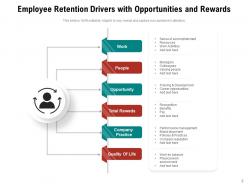
Employee retention hinges on several key factors, including competitive compensation packages, opportunities for professional growth and development, a positive and inclusive work environment, work-life balance initiatives, and strong leadership. These factors contribute to a sense of value and belonging among employees, leading to increased loyalty and reduced turnover, especially in sectors like technology and healthcare where talent is highly sought after.
Measuring employee retention effectiveness involves tracking key metrics such as turnover rates, employee satisfaction surveys, and internal mobility data. Organizations can analyze these metrics to identify trends, pinpoint areas for improvement, and assess the impact of implemented strategies. By comparing these metrics over time and across departments, businesses can gain valuable insights into the effectiveness of their retention initiatives, enabling data-driven decisions to enhance employee engagement and reduce turnover.
Company culture significantly impacts employee retention, playing a crucial role in attracting and keeping top talent. It encompasses factors like work-life balance, open communication, recognition programs, and a sense of belonging, which contribute to employee satisfaction and loyalty. For example, tech companies known for their innovative cultures and employee-centric values, like Google or Salesforce, often experience lower turnover rates than industries with less emphasis on these aspects. Ultimately, a strong company culture fosters a positive work environment where employees feel valued and motivated, leading to increased retention and reduced recruitment costs.
Employee engagement significantly impacts retention rates by fostering a sense of belonging, purpose, and value within the workforce. Organizations that prioritize employee engagement through initiatives like recognition programs, professional development opportunities, and open communication see reduced turnover rates, as employees feel more connected to their work and the company's mission. For example, financial institutions that invest in training and development programs experience significantly higher employee retention compared to those that do not, ultimately leading to a more stable and experienced workforce.
Effective onboarding practices encompass clear role expectations, comprehensive training programs, and a supportive company culture. These initiatives streamline the transition for new hires, equip them with the necessary skills, and foster a sense of belonging, ultimately leading to increased engagement and reduced turnover rates, with many organizations finding that robust onboarding directly correlates with higher retention in the first year.
Performance feedback and career development opportunities are key drivers of employee loyalty, as they demonstrate a commitment to individual growth and value. By providing regular, constructive feedback, organizations can help employees understand their strengths, areas for improvement, and how their contributions align with overall goals. Simultaneously, offering tailored career development paths, including training, mentorship, and opportunities for advancement, empowers employees to see a future within the company, leading to increased engagement and reduced turnover.
Employee retention strategies for small businesses on a budget include fostering a positive work culture, offering flexible work arrangements, providing opportunities for professional development, and recognizing employee contributions. These strategies can be implemented cost-effectively through initiatives like team-building activities, flexible scheduling options, mentorship programs, and regular appreciation gestures, ultimately leading to increased employee satisfaction, loyalty, and reduced turnover costs.
Remote and hybrid work models can significantly impact employee retention by offering flexibility and autonomy, which many employees value. These models can reduce commuting stress, increase work-life balance, and cater to diverse needs, leading to higher job satisfaction and a reduced likelihood of turnover. However, it's important to note that successful implementation requires strong communication, clear expectations, and robust technology to maintain engagement and a sense of belonging, especially for organizations with a predominantly remote workforce.
Employee wellness programs directly contribute to retention by fostering a culture of care and support, ultimately reducing turnover. These programs encompass initiatives like mental health resources, fitness benefits, and healthy lifestyle workshops, which not only improve employee well-being but also demonstrate a commitment to their overall success. For instance, financial services companies have found that comprehensive wellness programs lead to increased employee engagement and loyalty, resulting in significant cost savings associated with recruitment and training.
Diversity and inclusion initiatives contribute to a more stable workforce by fostering a sense of belonging and value among employees, leading to increased engagement and loyalty. While creating a more inclusive environment can require upfront investment, organizations like Google and Salesforce have found that these initiatives result in reduced turnover rates, improved employee morale, and a more innovative and adaptable workforce, ultimately driving better business outcomes.
Employee turnover can be driven by several factors, including lack of career growth opportunities, insufficient compensation, poor work-life balance, inadequate recognition, and a mismatch between employee values and company culture. Companies can mitigate these issues by offering competitive salaries and benefits, providing clear career paths and development opportunities, fostering a positive and inclusive work environment, recognizing and rewarding employee contributions, and regularly seeking employee feedback to address concerns. By proactively addressing these factors, organizations can significantly improve employee retention and cultivate a more engaged and loyal workforce.
Leadership development programs can significantly improve talent retention by empowering employees and fostering a culture of growth. These programs equip individuals with the skills and knowledge to advance their careers, leading to increased job satisfaction and a sense of belonging. Through mentorship, training, and tailored development plans, organizations demonstrate a commitment to their employees' success, ultimately reducing turnover and cultivating a high-performing workforce.
Compensation and benefits significantly impact employee turnover rates by influencing job satisfaction, financial security, and overall employee value proposition. While competitive salaries are crucial, comprehensive benefits packages, including healthcare, retirement plans, and work-life balance initiatives, demonstrate a company's commitment to employee well-being, ultimately leading to higher retention rates and reduced costs associated with recruitment and training. Financial services institutions, for example, are increasingly offering flexible work arrangements and student loan repayment assistance to attract and retain top talent.
Exit interviews can offer invaluable insights into why employees choose to leave, directly informing retention strategies. They reveal pain points such as lack of growth opportunities, inadequate compensation, or poor work-life balance, which can then be addressed through targeted initiatives. For example, financial services firms leveraging exit interview data have implemented personalized development plans, leading to increased employee satisfaction and reduced turnover rates.
Innovative practices to boost employee satisfaction and retention include flexible work arrangements, personalized learning and development programs, and enhanced mental health support. These approaches enable companies to attract and retain top talent by offering autonomy, growth opportunities, and a focus on well-being, ultimately leading to increased productivity and reduced turnover rates, especially in competitive industries like tech and healthcare.
-
Appreciate the research and its presentable format.
-
Presentation Design is very nice, good work with the content as well.