

Employee Rewards And Recognition Plan Building Strong Team Relationships Mkt Ss V




Try Before you Buy Download Free Sample Product
 Impress Your
Audience
 100%
Editable
 Save Hours
of Time


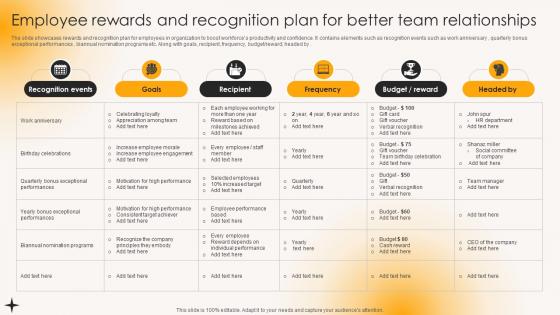
The slide showcases rewards and recognition plan for employees in organization to boost workforces productivity and confidence. It contAIns elements such as recognition events such as work anniversary , quarterly bonus exceptional performances , biannual nomination programs etc. Along with goals, recipient, frequency, budgetorreward, headed by.
People who downloaded this PowerPoint presentation also viewed the following :
Employee Rewards And Recognition Plan Building Strong Team Relationships Mkt Ss V with all 9 slides:
Use our Employee Rewards And Recognition Plan Building Strong Team Relationships Mkt Ss V to effectively help you save your valuable time. They are readymade to fit into any presentation structure.








FAQs for Employee Rewards And Recognition Plan Building Strong Team Relationships
Employee rewards and recognition programs deliver increased motivation, improved retention, enhanced productivity, stronger company culture, and boosted employee engagement across organizations. These strategic initiatives streamline talent management by reducing turnover costs, accelerating performance outcomes, and fostering loyalty, with many companies in sectors like retail, healthcare, and financial services finding that well-structured recognition programs ultimately drive competitive advantage and measurable business growth.
Organizations tailor recognition programs by identifying core values, selecting reward types that reflect cultural priorities, and incorporating company-specific traditions or symbols into recognition ceremonies. Through personalized approaches like peer-to-peer recognition systems, values-based awards, and culturally relevant celebration formats, companies enhance employee engagement, strengthen cultural alignment, and build meaningful connections, ultimately delivering higher retention and improved workplace satisfaction.
Technology enhances employee recognition initiatives through automated milestone tracking, real-time feedback platforms, peer-to-peer recognition systems, analytics dashboards, and mobile accessibility features. These digital solutions streamline recognition processes by enabling instant acknowledgments, personalizing rewards based on preferences, and providing data-driven insights into engagement patterns, ultimately delivering more meaningful employee experiences and stronger workplace cultures.
Peer-to-peer recognition enhances workplace morale by fostering trust, encouraging collaboration, and creating genuine appreciation among colleagues rather than top-down acknowledgment. This approach strengthens team bonds and increases engagement, with many organizations finding that employees feel more valued when recognized by peers, ultimately delivering improved retention, enhanced productivity, and stronger workplace culture across departments.
Effective remote and hybrid recognition strategies include virtual team celebrations, personalized digital recognition platforms, flexible rewards programs, regular one-on-one acknowledgments, and peer-to-peer appreciation systems. These approaches enhance engagement by delivering timely feedback, creating inclusive experiences across locations, and maintaining strong team connections, with many organizations finding that consistent digital recognition significantly improves retention and productivity.
Recognition events should occur monthly for team achievements and quarterly for major milestones, while individual recognition happens weekly through informal acknowledgments and peer nominations. This balanced frequency maintains momentum without causing recognition fatigue, with many organizations finding that consistent, varied recognition schedules enhance employee engagement, boost retention rates, and create sustained motivation across departments, ultimately delivering stronger performance outcomes.
Common mistakes include lack of personalization, infrequent recognition, focusing only on top performers, unclear criteria, and generic rewards that don't resonate with employees. Organizations often overlook these pitfalls, with many companies finding that successful programs require regular feedback, diverse recognition methods, and inclusive approaches that celebrate various contributions, ultimately delivering improved engagement, retention, and workplace culture.
Metrics and analytics measure recognition program effectiveness through participation rates, employee engagement scores, retention statistics, and performance indicators tied to recognition frequency. These data points enable organizations to track behavioral changes, identify which recognition types drive results, and optimize program ROI, with many companies finding that analytics-driven recognition strategies deliver measurable improvements in productivity and employee satisfaction.
Intrinsic rewards are internal satisfactions like personal growth, autonomy, and meaningful work, while extrinsic rewards include tangible incentives such as bonuses, promotions, recognition programs, and benefits. These reward types work synergistically, with intrinsic motivation driving long-term engagement and job satisfaction, while extrinsic rewards provide immediate recognition and goal achievement, ultimately creating comprehensive motivation strategies that enhance retention and performance across organizations.
Employee feedback shapes recognition practices by revealing preferred reward types, identifying recognition gaps, highlighting timing preferences, and uncovering what motivates different teams most effectively. Through surveys, focus groups, and regular check-ins, organizations can tailor their programs to match employee values, whether emphasizing public acknowledgment, professional development opportunities, or flexible benefits, ultimately creating more meaningful recognition that drives engagement and retention.
Innovative recognition methods for millennials and Gen Z include peer-to-peer recognition platforms, gamified achievement systems, personalized development opportunities, social media-style shout-outs, and flexible reward choices. These approaches enhance engagement by providing instant feedback, career growth pathways, and public acknowledgment, with many organizations finding that tech-enabled, customizable recognition programs significantly boost retention and performance.
Employee recognition significantly influences retention by creating emotional connection, increasing engagement levels, and demonstrating value appreciation, while enhancing job satisfaction through validation and career development opportunities. Organizations implementing comprehensive recognition programs, from healthcare systems to tech companies, often experience 31% lower turnover rates and higher productivity metrics, ultimately delivering competitive advantage through sustained talent retention and enhanced workplace culture.
Low-cost recognition strategies include public acknowledgments during team meetings, personalized thank-you notes, flexible work arrangements, peer nomination systems, and employee-of-the-month features on company social media. These approaches enhance workplace culture by fostering appreciation, boosting morale, and improving retention, with many small businesses finding that consistent, meaningful recognition delivers stronger employee engagement than expensive reward programs.
Organizations create inclusive recognition cultures by implementing peer-to-peer platforms, establishing diverse recognition categories, training managers on acknowledgment techniques, and providing multiple recognition channels like digital badges, team shoutouts, and celebration events. These approaches democratize appreciation by enabling cross-departmental recognition, empowering frontline employees to celebrate colleagues, and creating systematic touchpoints for acknowledgment, ultimately fostering engagement and building stronger team connections across all organizational levels.
Recognition and rewards enhance employee performance through increased motivation, higher engagement, improved self-esteem, and stronger organizational commitment. These psychological drivers streamline productivity by reducing turnover, accelerating goal achievement, and fostering collaborative environments, with many organizations finding that strategic recognition programs ultimately deliver enhanced retention rates and measurable performance improvements across departments.
-
I downloaded some of the presentations for work. They were simple to modify and saved me a lot of time and effort.
-
The designs are very attractive and easy to edit. Looking forward to downloading more of your PowerPoint Presentations.