

Employee Schedule Powerpoint Ppt Template Bundles




Try Before you Buy Download Free Sample Product
 Impress Your
 Audience
 100%
100% Editable
 Save Hours
 of Time


Our Employee Schedule Powerpoint Ppt Template Bundles are topically designed to provide an attractive backdrop to any subject. Use them to look like a presentation pro.
People who downloaded this PowerPoint presentation also viewed the following :
Employee Schedule Powerpoint Ppt Template Bundles with all 16 slides:
Use our Employee Schedule Powerpoint Ppt Template Bundles to effectively help you save your valuable time. They are readymade to fit into any presentation structure.
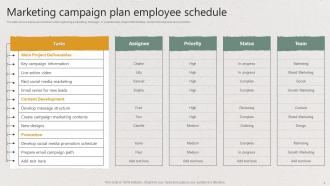
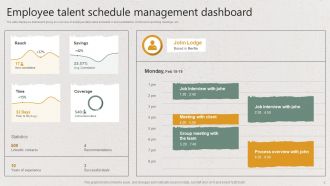
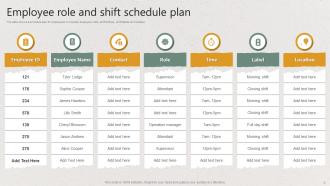
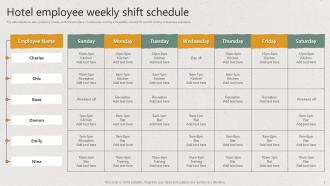
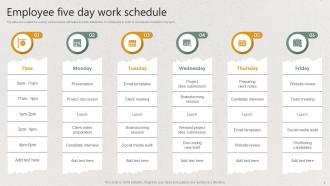






FAQs for Employee Schedule Powerpoint
**INPUT**: What are the key components of an effective employee schedule template? **OUTPUT**: Effective employee schedule templates include employee names and roles, shift times and dates, department assignments, contact information, and coverage protocols for absences. These components streamline workforce management by ensuring clear communication, minimizing scheduling conflicts, and enabling quick adjustments, with many organizations finding that well-structured templates reduce administrative overhead while enhancing operational efficiency. [Word count: 54 words]
Customizing an employee schedule template involves modifying shift patterns, adding role-specific requirements, incorporating break schedules, adjusting time formats, and integrating company policies. These modifications enable businesses to streamline workforce management by accommodating varying operational hours, seasonal demands, and compliance requirements, with many organizations finding that tailored templates reduce scheduling conflicts while enhancing productivity and employee satisfaction.
Digital employee schedule templates offer enhanced accessibility, real-time updates, automated conflict detection, improved communication, and seamless integration with payroll systems. These technologies streamline workforce management by reducing scheduling errors, enabling instant notifications of changes, and providing managers with analytics for optimal staffing, ultimately delivering greater operational efficiency and better employee satisfaction across organizations.
An employee schedule template improves team communication by providing centralized visibility into work assignments, shift changes, and coverage needs, while enhancing accountability through clear documentation of responsibilities and time commitments. This transparency enables managers to streamline coordination, reduce scheduling conflicts, and track performance metrics, with many organizations finding that structured scheduling delivers better resource allocation and ultimately stronger operational efficiency.
Popular software tools for employee scheduling include When I Work, Deputy, Shiftboard, Kronos, and BambooHR, along with customizable options like Microsoft Excel and Google Sheets. These platforms streamline workforce management by automating shift assignments, tracking availability, and managing time-off requests, with many retail chains and healthcare facilities finding that integrated scheduling solutions reduce administrative overhead while improving employee satisfaction and operational efficiency.
Incorporating shift swapping requires adding approval workflows, clear swap request procedures, and automated tracking systems to your template. These features streamline exchanges by establishing manager authorization protocols, deadline requirements for swap requests, and documentation trails, with many organizations finding that structured swap processes reduce scheduling conflicts while enhancing employee satisfaction and operational flexibility.
Ensuring labor law compliance involves incorporating mandatory break periods, overtime thresholds, maximum shift lengths, minimum rest intervals between shifts, and weekend work restrictions directly into your template structure. By building these regulatory requirements into automated calculations and visual alerts, organizations across retail, healthcare, and manufacturing sectors can prevent violations while streamlining workforce management, ultimately reducing legal risks and enhancing operational efficiency.
Color-coding in employee schedule templates enhances visualization by assigning distinct colors to different shifts, departments, employee roles, overtime hours, and time-off requests. This strategic approach streamlines workforce management by enabling managers to quickly identify staffing gaps, balance workloads, and optimize resource allocation, ultimately delivering improved operational efficiency and reducing scheduling conflicts across organizations.
Employee schedule templates for part-time workers should include flexible hour tracking, shift preference indicators, availability windows, maximum weekly hour limits, and multi-location assignments. These features streamline workforce management by accommodating varying schedules, preventing overtime violations, and optimizing staff allocation, with many retail and hospitality businesses finding that structured flexibility ultimately enhances both employee satisfaction and operational efficiency.
Employee feedback can be gathered through anonymous surveys, one-on-one meetings, team discussions, digital feedback platforms, and regular scheduling reviews with supervisors. These methods enable managers to identify scheduling conflicts, preferred shift patterns, and work-life balance concerns, ultimately delivering improved employee satisfaction and reduced turnover, with many organizations finding that structured feedback loops enhance operational efficiency and workforce retention.
Common mistakes include creating overly complex layouts, failing to account for labor law requirements, ignoring employee availability preferences, lacking flexibility for schedule changes, and omitting essential information like break times or overtime tracking. These design flaws can lead to compliance issues, reduced employee satisfaction, and operational inefficiencies, with many organizations finding that streamlined, legally compliant templates ultimately enhance workforce management and reduce administrative burden.
**INPUT**: How can I integrate employee availability and time-off requests into my schedule template? **OUTPUT**: You can integrate availability and time-off requests by creating dedicated columns for employee preferences, blackout dates, vacation requests, and approved leave status within your template. This systematic approach enables managers to view all constraints simultaneously while building schedules, ultimately reducing conflicts, minimizing last-minute changes, and ensuring adequate coverage across all shifts and departments. **Word count: 54 words**
An employee schedule template reduces overtime costs by optimizing shift coverage, identifying staffing gaps before they occur, and ensuring adequate personnel allocation across peak periods. Through strategic scheduling and workload distribution, organizations can minimize last-minute overtime needs, enhance operational efficiency, and maintain budget control, ultimately delivering significant cost savings while improving workforce productivity.
Employee schedules should be reviewed monthly for operational adjustments and quarterly for comprehensive template updates, with immediate revisions following significant changes in staffing, business volume, or operational procedures. Many organizations find that regular monthly reviews enable managers to identify scheduling patterns, optimize resource allocation, and address recurring conflicts, ultimately delivering improved workforce efficiency and employee satisfaction.
Best practices for training employees on schedule templates include providing comprehensive tutorials, hands-on practice sessions, creating step-by-step guides, offering ongoing support, and establishing clear accountability measures. These training approaches enhance adoption by ensuring employees understand functionality, reducing errors, and building confidence, with many organizations finding that structured training programs ultimately deliver improved scheduling accuracy, reduced administrative time, and better workforce coordination across departments.
-
The Designed Graphic are very professional and classic.
-
Awesome use of colors and designs in product templates.