

Employee Survey Results Powerpoint Ppt Template Bundles CRP





Try Before you Buy Download Free Sample Product
 Impress Your
Audience
 100%
Editable
 Save Hours
of Time


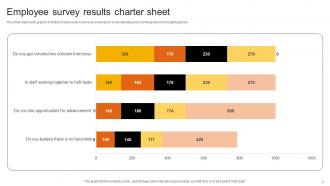
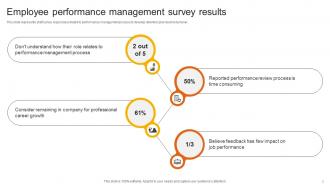
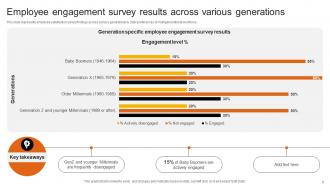
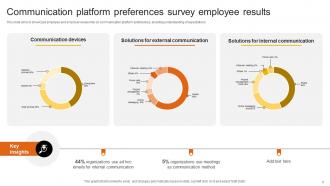
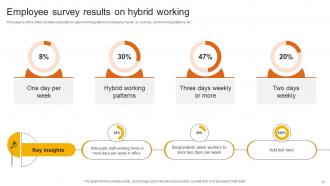
The comprehensive analysis of the employee survey results reveals insightful trends and sentiments. The feedback showcases a predominant satisfaction with the company culture, particularly highlighting appreciation for collaborative work environments and supportive managerial relationships. Employees express enthusiasm about professional growth opportunities while emphasizing the need for enhanced communication channels for constructive feedback. Concerns regarding work life balance and stress management have surfaced, indicating areas for improvement. Overall, the survey highlights a positive work atmosphere with room for targeted enhancements in communication strategies and support systems. These findings will serve as a cornerstone for implementing tailored initiatives aimed at further enriching employee experience and fostering a more harmonious workplace environment.
People who downloaded this PowerPoint presentation also viewed the following :
Employee Survey Results Powerpoint Ppt Template Bundles CRP with all 28 slides:
Use our Employee Survey Results Powerpoint Ppt Template Bundles CRP to effectively help you save your valuable time. They are readymade to fit into any presentation structure.












FAQs for Employee Survey Results Powerpoint Ppt
**INPUT**: What key themes emerged from the employee survey results? **OUTPUT**: Key themes from employee survey results typically include work-life balance concerns, communication effectiveness, career development opportunities, compensation satisfaction, and management quality. These insights enable organizations to prioritize strategic improvements in retention, productivity, and workplace culture, with many companies finding that addressing communication and development gaps delivers significantly higher engagement and competitive advantage. [Word count: 54 words]
Survey results reveal evolving workforce priorities, with remote work flexibility, mental health support, and career development opportunities showing increased importance compared to previous years. While traditional factors like compensation remain significant, organizations increasingly find that employees prioritize work-life balance and meaningful engagement, ultimately requiring strategic adjustments to retention and satisfaction programs.
Employee satisfaction improvements typically center on workplace flexibility, professional development opportunities, recognition programs, communication transparency, and work-life balance initiatives. Many organizations find that strategic investments in remote work options, skills training, and manager feedback systems deliver enhanced retention rates, increased productivity, and stronger employee engagement, ultimately creating competitive advantages in talent acquisition and organizational culture.
Human Resources, Marketing, and Product Development departments typically report the highest engagement levels, often exceeding company averages by 15-20% through strategic communication initiatives, collaborative project structures, and clear career advancement pathways. These departments leverage regular feedback mechanisms, cross-functional collaboration, and professional development opportunities, ultimately delivering stronger retention rates and enhanced productivity across organizational functions.
Employee survey findings reflect company culture through engagement levels, communication patterns, leadership trust scores, work-life balance indicators, and values alignment responses. These metrics reveal whether stated cultural principles translate into daily experiences, with many organizations finding that survey data uncovers gaps between intended culture and employee reality, ultimately enabling targeted improvements for stronger cultural alignment.
**INPUT**: What specific actions can be taken to address employee feedback? **OUTPUT**: Specific actions include implementing flexible work arrangements, enhancing communication channels, revising compensation structures, expanding professional development programs, and improving management training initiatives. These strategic responses streamline organizational culture by addressing core concerns, building employee trust, and ultimately delivering higher retention rates and productivity gains, with many companies finding that transparent follow-through significantly enhances workplace satisfaction.
Yes, employee survey results often reveal unexpected patterns in cross-departmental collaboration, generational workplace preferences, remote versus in-office productivity variations, and skill gap priorities that differ from leadership assumptions. These surprising insights require deeper analysis through follow-up interviews, focus groups, and departmental workshops, with many organizations finding that initial survey data uncovers hidden operational inefficiencies and untapped employee potential requiring strategic investigation.
Demographic factors significantly influence survey responses through varying perspectives shaped by generational differences, departmental roles, tenure length, and cultural backgrounds. These variations enable organizations to identify targeted improvement opportunities across different employee segments, with many companies finding that tailored engagement strategies based on demographic insights deliver more effective workplace interventions and higher overall satisfaction rates.
Employee turnover trends often correlate with survey results showing low engagement scores, inadequate career development opportunities, poor management relationships, insufficient compensation, and limited work-life balance. Organizations analyzing these connections can identify predictive patterns, enabling proactive retention strategies that address root causes, ultimately reducing turnover costs and enhancing workforce stability in competitive talent markets.
Management can leverage survey results to enhance communication by identifying feedback gaps, clarifying messaging channels, addressing transparency concerns, and tailoring communication styles to employee preferences. These insights enable organizations to implement targeted communication strategies, establish regular feedback loops, and create more open dialogue processes, with many companies finding that data-driven communication improvements significantly boost employee engagement and organizational alignment.
Workplace conditions significantly impact employee satisfaction through factors like physical environment, technology infrastructure, safety protocols, flexible work arrangements, and collaborative spaces. Organizations with well-designed offices, ergonomic furniture, and modern equipment often see higher engagement levels, while poor conditions can lead to decreased productivity and retention, ultimately affecting competitive advantage and operational efficiency.
**INPUT**: What benchmarks can be established based on the survey findings? **OUTPUT**: Employee survey findings enable organizations to establish benchmarks around engagement scores, retention rates, satisfaction metrics, performance indicators, and departmental comparisons across key areas. These benchmarks streamline organizational development by identifying improvement targets, tracking progress over time, and comparing against industry standards, ultimately delivering enhanced workplace culture and competitive talent advantage. [Word count: 54 words]
Survey results inform training programs by identifying skill gaps, performance challenges, preferred learning methods, and career development needs across different departments and roles. These insights enable organizations to design targeted training initiatives that address specific competencies, enhance employee satisfaction, and improve retention rates, with many companies finding that data-driven training programs deliver measurable improvements in productivity and engagement.
Data visualization tools include interactive dashboards, infographic templates, chart builders, presentation software, and statistical analysis platforms. These technologies streamline stakeholder communication by transforming complex survey responses into digestible visual formats, enabling faster decision-making and clearer insights, with many organizations finding that visual presentations significantly enhance engagement and understanding across departments.
Employee feedback can be integrated into strategic planning through systematic data analysis, cross-departmental collaboration sessions, and regular review cycles that align employee insights with organizational objectives. Companies increasingly use feedback analytics platforms to identify trends, prioritize initiatives based on workforce input, and create actionable roadmaps, ultimately delivering enhanced employee engagement and strategic alignment across all organizational levels.
-
“There is so much choice. At first, it seems like there isn't but you have to just keep looking, there are endless amounts to explore.”
-
Editable templates with innovative design and color combination.