


Employee wellbeing financial social increased efficiencies staff retention




Try Before you Buy Download Free Sample Product
 Impress Your
 Audience
 100%
100% Editable
 Save Hours
 of Time


Our Employee Wellbeing Financial Social Increased Efficiencies Staff Retention are topically designed to provide an attractive backdrop to any subject. Use them to look like a presentation pro.
People who downloaded this PowerPoint presentation also viewed the following :
Employee wellbeing financial social increased efficiencies staff retention with all 11 slides:
Use our Employee Wellbeing Financial Social Increased Efficiencies Staff Retention to effectively help you save your valuable time. They are readymade to fit into any presentation structure.
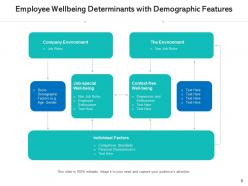
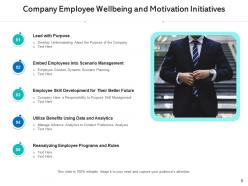
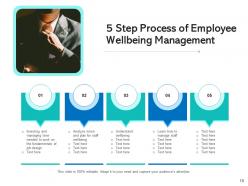
FAQs for Employee wellbeing financial social increased
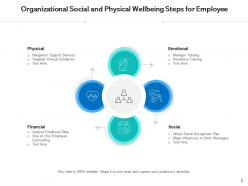
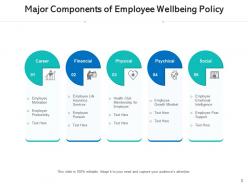
Key components of an effective employee wellbeing program include mental health support, flexible work arrangements, health screenings, fitness initiatives, financial wellness education, and stress management resources. These elements work synergistically by addressing physical, emotional, and financial stressors, with many organizations finding that comprehensive programs reduce healthcare costs, improve retention rates, and enhance overall productivity while creating more engaged workforces.
Organizations measure wellbeing initiative impact through employee engagement scores, absenteeism rates, turnover metrics, productivity indicators, and healthcare cost analysis. These comprehensive assessments enable companies to track improvements in workforce satisfaction, retention, and performance, with many organizations finding that regular pulse surveys and wellness program participation data ultimately deliver measurable ROI and competitive advantage.
Mental health serves as the foundation of employee wellbeing, directly influencing productivity, engagement, job satisfaction, workplace relationships, and retention rates. Organizations prioritizing mental health support through counseling services, stress management programs, and flexible work arrangements find that employees demonstrate higher performance levels, reduced absenteeism, and stronger team collaboration, ultimately delivering improved organizational culture and competitive advantage.
Companies foster remote wellbeing culture through regular virtual check-ins, flexible scheduling policies, mental health resources, dedicated wellness programs, and clear work-life boundaries. These initiatives enhance employee engagement by promoting open communication, providing stress management tools, and offering fitness stipulations, with many organizations finding that consistent wellness support ultimately delivers higher productivity and reduced turnover rates.
Innovative workplace physical wellbeing strategies include on-site fitness facilities, ergonomic workstation assessments, walking meetings, standing desks, and wellness challenges with wearable technology integration. These approaches enhance employee health by reducing sedentary behavior, preventing workplace injuries, and fostering active lifestyles, with many organizations finding that comprehensive physical wellness programs ultimately deliver higher productivity, reduced healthcare costs, and improved employee retention rates.
Employee wellbeing and productivity demonstrate a strong positive correlation, with healthier, more engaged employees delivering higher output, better quality work, and reduced absenteeism. Companies implementing comprehensive wellbeing programs, from flexible schedules to mental health support, typically see 15-25% productivity gains, while employees experience lower stress and greater job satisfaction, ultimately creating competitive advantage through enhanced organizational performance.
Organizations face challenges including budget constraints, low employee participation, measuring program effectiveness, leadership buy-in difficulties, and addressing diverse workforce needs across different demographics and locations. While initial costs and engagement barriers can be significant, many companies find that strategic communication, phased implementation, and data-driven approaches ultimately deliver improved retention, reduced healthcare costs, and enhanced productivity.
Leadership influences wellbeing initiative success by modeling healthy behaviors, allocating adequate resources, and consistently communicating program value throughout the organization. When executives actively participate in wellness activities, provide dedicated budgets, and integrate wellbeing into performance metrics, employees engage more meaningfully, ultimately delivering improved retention, reduced healthcare costs, and enhanced productivity.
**INPUT**: What resources are available for employees seeking support for mental health? **OUTPUT**: Mental health resources for employees include Employee Assistance Programs, on-site counseling services, mental health apps, peer support networks, and flexible wellness benefits. These support systems enhance workplace productivity by reducing absenteeism, improving employee retention, and fostering healthier work environments, with many organizations finding that comprehensive mental health initiatives ultimately deliver stronger team performance and competitive advantage. **Word count: 60 words**
Employee feedback shapes wellbeing programs by identifying specific stress points, preferred support services, and gaps in current offerings through surveys, focus groups, and regular check-ins. This data-driven approach enables organizations to customize mental health resources, flexible work arrangements, and wellness initiatives that directly address employee needs, ultimately delivering higher engagement rates and reduced turnover across diverse workplace environments.
Integrating wellbeing into core values delivers reduced absenteeism, enhanced productivity, improved talent retention, stronger employee engagement, and decreased healthcare costs. This strategic approach enables organizations to create more resilient workplace cultures while attracting top talent, with companies like Google and Microsoft finding that wellness-focused values ultimately drive competitive advantage and sustainable business growth.
Technology enhances employee wellbeing initiatives through wellness apps, mental health platforms, wearable devices, flexible work tools, and data analytics systems. These digital solutions streamline wellbeing programs by tracking health metrics, providing personalized support, and enabling remote work flexibility, with many organizations finding that integrated technology delivers improved employee satisfaction, reduced healthcare costs, and ultimately stronger workforce retention.
Companies must consider compliance with OSHA safety standards, ADA accommodation requirements, FMLA leave provisions, workers' compensation regulations, and mental health parity laws. These legal frameworks work together to create comprehensive protection, with many organizations finding that proactive wellbeing programs not only ensure compliance but also reduce liability risks while enhancing employee retention and organizational reputation.
Diversity and inclusion significantly enhance employee wellbeing strategies by creating psychologically safe environments, reducing workplace stress, and fostering belonging across all employee groups. These approaches enable organizations to address varied wellbeing needs through culturally responsive programs, flexible support systems, and inclusive mental health resources, ultimately delivering higher engagement, reduced turnover, and improved organizational performance.
Social connections at work significantly enhance employee wellbeing by fostering psychological safety, reducing stress levels, increasing job satisfaction, and creating supportive networks for professional growth. These workplace relationships streamline collaboration, minimize burnout through peer support, and deliver higher engagement rates, with many organizations finding that strong social bonds ultimately drive both individual resilience and organizational performance.
-
It saves your time and decrease your efforts in half.
-
Very well designed and informative templates.
-
Editable templates with innovative design and color combination.