

Employees Perks At Work Powerpoint Presentation Slides




Try Before you Buy Download Free Sample Product
 Impress Your
Audience
 100%
Editable
 Save Hours
of Time


Introduce benefits and rewards among your employees with our content ready Employees Perks at Work PowerPoint Presentation Slides. You can also present the employee benefits administration process of your company using this professionally designed staff incentives presentation deck. The ready-to-use staff benefits & incentives include twenty self-explanatory templates. This great collection of topic-specific employee compensation PPT visuals helps you to create an effective business PowerPoint presentation in no time. Incorporate job benefits PowerPoint templates to showcase benefits in kind and non-wage benefits companies offer to their employees. Effective perks & rewards strategies can attract and retain top talent. List down the types of benefits & incentives such as health insurance, paid vacations, meal breaks, social security, pay raise, achievement awards, perks, and bonuses, etc with the help of this ready to use benefits and perks presentation deck. Download this attention-grabbing compensation of the employee’s presentation deck to impress your audience. Subscribe to our Employees Perks At Work Powerpoint Presentation Slides and receive great value for your money. Be assured of finding the best projection to highlight your words.
People who downloaded this PowerPoint presentation also viewed the following :
Content of this Powerpoint Presentation
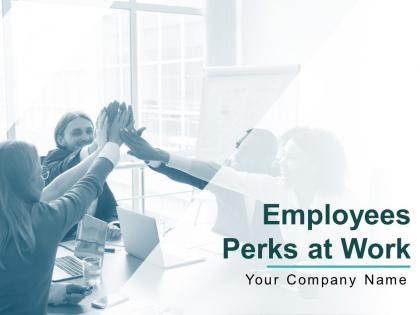
Slide 1: This slide introduces Employees Perks at Work. State Your Company Name and begin.
Slide 2: This is an Agenda slide. State your agendas here.
Slide 3: This slide shows Employee Benefits Template 1 describing- Social Security, Meal Breaks, Perks & Bonuses, Paid Vacation, Pay Raise, Health Insurance, Employees Allowance, Achievement Award.
Slide 4: This slide presents Employee Benefits Template 2. You can add or edit data as per requirements.
Slide 5: This slide represents Employee Benefits Template 3 with related imagery and text.
Slide 6: This slide displays Employee Benefits Template 4 with related icons and imagery. You can modify the template as per requirements.
Slide 7: This slide showcases Employee Benefits Template 5 describing- Medical, Vision, Dental, Prescriptions, Health & Wellness, Flex Spending, Learning.
Slide 8: This slide shows Employee Benefits Template 6 describing- Fun/ Activity Room, Medical, Dental, Vision, Casual Work Environment, Company Paid, Life Insurance, Company Events, Employee Referral Bonus, 401(k) Plan With Company Match, Paid Time-off & Paid Holidays, Voluntary Benefits, Flexible Schedules & Work From Home, Wellness/ Fitness Room, Work- Life Balance.
Slide 9: This slide presents Employee Benefits Template 6 describing- Employee Discount, Enabling Learning, Insurance, Employee Engagement, Vacation Holidays, Parenting Leaves, Work- Life Balance.
Slide 10: This slide displays Employee Benefits Template 8 describing- Union, Pay Raise, Employee Allowance, Health Insurance, Social Security.
Slide 11: This slide represents Employee Benefits Template 9.
Slide 12: This slide showcases Employee Benefits Template 10 describing- Health Insurance, Perks & Bonuses, Achievement Award, Meal Breaks, Social Security, Employees Allowance, Pay Raise, Paid Vacation.
Slide 13: This slide displays icons for Staff benefits and Incentives.
Slide 14: This slide is titled as Additional Slides for moving forward.
Slide 15: This is Our Mission slide with related imagery and text.
Slide 16: This is Our Team slide with names and designation.
Slide 17: This is About our Company slide to show company specifications etc.
Slide 18: This is an Idea Generation slide to state a new idea or highlight information, specifications etc.
Slide 19: This is a Timeline slide to show information related with time period.
Slide 20: This is a Thank you slide with address, contact numbers and email address.
Employees Perks At Work Powerpoint Presentation Slides with all 20 slides:
Use our Employees Perks At Work Powerpoint Presentation Slides to effectively help you save your valuable time. They are readymade to fit into any presentation structure.


FAQs for Employees Perks At Work
The most popular employee benefits include health insurance, retirement savings plans, paid time off, flexible work arrangements, and professional development opportunities. These benefits enhance employee satisfaction, retention, and productivity by addressing wellness needs, financial security, and work-life balance, with many organizations finding that comprehensive packages deliver significant competitive advantages in talent acquisition.
Employee benefits significantly influence retention and recruitment by enhancing job satisfaction, demonstrating organizational commitment, and creating competitive compensation packages that attract top talent. Companies offering comprehensive benefits like healthcare, retirement plans, and flexible work arrangements often experience lower turnover rates, reduced recruitment costs, and stronger employer branding, ultimately delivering sustained workforce stability and competitive advantage in tight labor markets.
Organizations can tailor benefits packages through flexible spending accounts, cafeteria-style benefit plans, remote work options, childcare assistance, mental health support, professional development stipends, and wellness programs. By offering these diverse options, companies enable employees to select benefits matching their life stages and priorities, ultimately enhancing retention and satisfaction while strengthening competitive advantage in talent acquisition.
Health and wellness programs serve as cornerstone elements of modern employee benefits, encompassing preventive healthcare, mental health support, fitness initiatives, stress management resources, and work-life balance programs. These comprehensive offerings enhance employee engagement, reduce healthcare costs, and minimize absenteeism, with many organizations finding that strategic wellness investments ultimately deliver improved productivity and competitive talent acquisition advantages.
Remote work arrangements significantly shift employee benefits expectations toward flexible, location-independent perks like home office stipends, enhanced technology support, mental health resources, and flexible scheduling options. Companies increasingly find that traditional benefits must evolve to include virtual wellness programs, co-working space allowances, and improved work-life balance initiatives, ultimately delivering greater employee satisfaction and competitive talent attraction.
Legal requirements for employee benefits vary significantly across regions, encompassing mandatory health insurance, paid leave, retirement contributions, unemployment insurance, and disability coverage. These regulations differ substantially between countries like the US, EU nations, and Asia-Pacific regions, with compliance ensuring workforce protection while enabling organizations to attract talent and maintain competitive advantage in increasingly regulated global markets.
Businesses can effectively communicate benefit value through personalized statements showing individual package worth, interactive workshops explaining plan details, mobile apps for easy access, and regular reminders about underutilized benefits. Through targeted communications and digital platforms, organizations enhance employee appreciation and utilization rates, with many companies finding that clear benefit communication significantly improves retention and satisfaction.
Innovative employee benefits include mental health stipends, flexible work arrangements, personalized learning budgets, wellness reimbursements, and childcare assistance programs. These strategic offerings enhance talent retention by addressing diverse employee needs, improving work-life balance, and demonstrating genuine care, with many organizations finding that comprehensive benefit packages significantly boost recruitment success and overall employee satisfaction.
Employee benefits vary significantly across industries based on talent competition, regulatory requirements, and workforce demographics, with technology companies offering extensive perks, healthcare organizations providing comprehensive medical coverage, and manufacturing focusing on safety incentives. This variation creates strategic advantages for talent acquisition and retention, with organizations increasingly customizing benefits packages to match industry standards and employee expectations, ultimately delivering competitive positioning in tight labor markets.
Employee feedback significantly shapes benefits evolution by revealing gaps between current offerings and actual employee needs, preferences, and life circumstances. Through regular surveys, focus groups, and direct communication, organizations can identify which benefits deliver value, which remain underutilized, and what new offerings employees prioritize, ultimately enabling companies to optimize their benefits investments while enhancing employee satisfaction and retention.
Technology streamlines benefits management through automated enrollment systems, self-service portals, AI-powered analytics, and integrated HR platforms that centralize all benefit information. These solutions enhance operational efficiency by reducing administrative burden, minimizing errors, and enabling real-time benefits tracking, while employees gain 24/7 access to their benefits information, ultimately delivering cost savings and improved employee satisfaction.
Comprehensive benefits packages typically represent 25-35% of total payroll costs, including health insurance, retirement contributions, paid time off, and supplemental coverage. While initial investments can be substantial, organizations increasingly find that robust benefits reduce turnover costs, enhance productivity, and improve recruitment outcomes, ultimately delivering competitive advantage through stronger employee retention.
Benefits programs promote diversity, equity, and inclusion through flexible paid time off for cultural observances, comprehensive healthcare covering diverse family structures, childcare support, mental health resources, and professional development funding. These strategic offerings enable organizations to attract talent from varied backgrounds, reduce barriers to workplace participation, and create inclusive environments where all employees can thrive, ultimately delivering competitive advantage in diverse markets.
Organizations should track employee satisfaction scores, benefits utilization rates, retention percentages, recruitment success metrics, and cost-per-employee ratios to evaluate program effectiveness. These measurements enable companies to optimize resource allocation, enhance employee experiences, and maintain competitive advantage, with many finding that comprehensive tracking ultimately delivers better workforce engagement and significantly lower turnover costs.
Employee engagement strongly correlates with benefits perception through enhanced job satisfaction, increased loyalty, and improved retention rates. Organizations offering comprehensive healthcare, flexible work arrangements, and professional development opportunities see significantly higher engagement scores, with many companies finding that employees who value their benefits package demonstrate 23% higher performance and reduced turnover intentions.
-
Understandable and informative presentation.
-
Colors used are bright and distinctive.
-
Commendable slides with attractive designs. Extremely pleased with the fact that they are easy to modify. Great work!
-
Easy to edit slides with easy to understand instructions.
-
Qualitative and comprehensive slides.