

Energy Sources For Electrolysis Green Hydrogen PPT Template ST AI SS





Try Before you Buy Download Free Sample Product
 Impress Your
Audience
 100%
Editable
 Save Hours
of Time


Discover the future of sustainable energy with our Energy Sources for Electrolysis Green Hydrogen PowerPoint Template. This professionally designed deck features insightful visuals and data, perfect for presentations on renewable energy, hydrogen production, and electrolysis technology. Elevate your message and inspire innovation in green energy solutions.
People who downloaded this PowerPoint presentation also viewed the following :
Energy Sources For Electrolysis Green Hydrogen PPT Template ST AI SS with all 9 slides:
Use our Energy Sources For Electrolysis Green Hydrogen PPT Template ST AI SS to effectively help you save your valuable time. They are readymade to fit into any presentation structure.








FAQs for Energy Sources For Electrolysis Green Hydrogen PPT Template
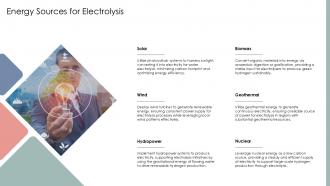
The primary renewable energy sources for green hydrogen electrolysis include solar photovoltaics, onshore and offshore wind, hydroelectric power, geothermal energy, and biomass systems. These technologies enable sustainable hydrogen production by delivering consistent, carbon-free electricity for water splitting processes, with many energy companies finding that combining multiple renewable sources optimizes operational efficiency and enhances grid stability for large-scale hydrogen manufacturing facilities.
Solar energy typically achieves 15-22% panel efficiency with consistent daytime output, while wind energy delivers 35-45% turbine efficiency but with variable generation patterns. Both renewable sources effectively power electrolysis for green hydrogen production, with many energy companies finding that hybrid solar-wind systems optimize capacity factors and minimize intermittency challenges, ultimately delivering more reliable hydrogen production and enhanced project economics.
Hydropower plays a crucial role in large-scale green hydrogen production by providing consistent, renewable electricity for electrolysis processes, offering advantages like reliable baseload power, grid stability, and cost-effective operation. Major hydroelectric facilities in regions like Norway, Canada, and the Pacific Northwest enable industrial-scale hydrogen production with predictable energy costs, ultimately delivering competitive green hydrogen for steel manufacturing, chemical processing, and transportation sectors.
Energy storage systems enhance renewable energy reliability for electrolysis by storing excess power during peak generation periods, smoothing intermittency fluctuations, and providing consistent electricity supply during low renewable output. These systems enable continuous hydrogen production operations, with battery installations and pumped hydro storage delivering grid stability, reducing production costs, and ultimately ensuring reliable green hydrogen output regardless of weather conditions.
Promising photovoltaic advancements for electrolysis include perovskite-silicon tandem cells, bifacial solar panels, concentrated photovoltaic systems, and advanced inverter technologies with maximum power point tracking. These innovations enhance energy conversion efficiency by delivering higher voltage outputs, reducing power losses, and enabling more stable electricity supply, with solar farms increasingly finding that direct coupling of advanced PV systems to electrolyzers significantly reduces green hydrogen production costs.
Local resource availability significantly determines electrolysis energy choices through proximity to renewable sources, grid infrastructure capacity, land suitability, and water access requirements. Coastal regions with abundant wind resources often favor offshore wind farms, while sunny desert areas leverage solar installations, and mountainous regions utilize hydroelectric power, with many hydrogen producers finding that strategic resource alignment reduces transmission costs and enhances project viability.
Using biomass for green hydrogen production presents both environmental benefits and considerations, including carbon neutrality potential, reduced fossil fuel dependence, and renewable resource utilization, while requiring careful management of land use impacts. Through sustainable sourcing practices, organizations can minimize deforestation risks and biodiversity concerns, with many energy companies finding that agricultural waste biomass delivers cleaner hydrogen production while supporting circular economy principles and rural economic development.
Geothermal energy enhances electrolysis feasibility by providing consistent baseload power, reducing operational costs, and enabling year-round hydrogen production without weather-dependent interruptions. This strategic combination delivers significant advantages in regions with geothermal resources, with many energy companies finding that geothermal-powered electrolysis facilities achieve higher capacity factors and lower levelized hydrogen costs than solar or wind alternatives.
Economic factors influencing energy source choice for large-scale electrolysis include electricity costs, capital expenditure requirements, grid stability pricing, renewable energy availability, and long-term price volatility. These considerations enable operators to optimize production costs, minimize operational risks, and secure competitive pricing, with many industrial facilities finding that strategic renewable energy partnerships ultimately deliver lower hydrogen production costs and enhanced market positioning.
Smart grid technology optimizes renewable energy supply to electrolysis systems by enabling real-time demand response, predictive energy scheduling, and automated load balancing across multiple sources. These intelligent networks facilitate seamless integration between solar and wind fluctuations with hydrogen production requirements, while many energy companies find that smart grids ultimately deliver cost reductions and enhanced operational efficiency.
Scaling electrolysis for green hydrogen production faces challenges including high capital costs, energy intensity requirements, electrolyzer durability limitations, grid integration complexities, and supply chain constraints for critical materials. While these present significant hurdles, many energy companies and manufacturers are finding that strategic investments in advanced electrolyzer technologies, renewable energy integration, and industrial partnerships ultimately deliver improved efficiency and competitive positioning in the expanding hydrogen economy.
Government policies significantly accelerate green hydrogen adoption through renewable energy subsidies, carbon pricing mechanisms, production tax credits, and mandated clean energy targets for industrial sectors. These frameworks enable energy companies, manufacturers, and utilities to justify substantial investments in solar and wind infrastructure for electrolysis, while carbon penalties make fossil fuel alternatives increasingly uncompetitive, ultimately delivering cost-effective pathways for large-scale hydrogen production.
Innovative hybrid systems combine solar-wind combinations, grid-connected renewable arrays, and energy storage integration with advanced electrolysis technologies like PEM and alkaline systems. These strategic combinations enable continuous hydrogen production despite renewable intermittency, with offshore wind-solar platforms and industrial microgrids delivering enhanced capacity factors, reduced costs, and improved grid stability for large-scale operations.
Geographical location significantly influences energy source selection through regional resource availability, climate patterns, and infrastructure capacity, with coastal areas favoring offshore wind, desert regions leveraging solar power, and mountainous areas utilizing hydroelectric resources. Countries like Chile and Australia capitalize on exceptional solar irradiance for large-scale hydrogen production, while Nordic nations harness abundant hydroelectric power, ultimately enabling regions to develop competitive advantages in the increasingly strategic global hydrogen economy.
Recent breakthroughs include advanced catalyst materials like single-atom catalysts, nanostructured electrodes, proton exchange membranes with enhanced conductivity, and alkaline electrolyzers with improved durability. These innovations streamline hydrogen production by reducing energy consumption, minimizing material costs, and extending operational lifespans, with renewable energy facilities increasingly finding that optimized electrolysis delivers competitive hydrogen pricing and enhanced grid integration capabilities.
-
Innovative and attractive designs.
-
Innovative and attractive designs.