

Enterprise Governance Of Information Technology EGIT Powerpoint Presentation Slides




Try Before you Buy Download Free Sample Product
 Impress Your
 Audience
 100%
100% Editable
 Save Hours
 of Time


This PowerPoint presentation gives a brief idea about the business problems and the need for IT governance implementation in the company. In this Enterprise Governance of Information Technology EGIT, we have discussed the overview of IT governance by covering its life-cycle, risk management, and compliance. In addition, this Information and Communications Technology Governance ICT Governance PPT contains different IT governance frameworks such as COBIT, ITIL, COSO, CMMI, FAIR, and strategic IT governance models. Furthermore, this Corporate Governance of Information Technology CGIT template includes the IT governance framework selection process, its domain such as a framework for the governance of enterprise IT, strategic management, benefits realization, risk optimization, and resource optimization. It also covers the training, budget, and RACI matrix for IT governance implementation. Moreover, this Corporate Governance of Information and Communications Technology PPT caters to effective implementation steps for IT governance in the company and its post-implementation impact. Lastly, the deck comprises the 30-60-90 days plan, an implementation roadmap, and a dashboard. Download our 100 percent editable and customizable template, which is also compatible with Google Slides.
People who downloaded this PowerPoint presentation also viewed the following :
Content of this Powerpoint Presentation
Slide 1: This slide introduces Enterprise Governance of Information Technology (EGIT). State your company name and begin.
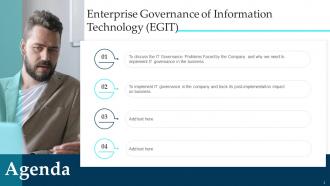
Slide 2: This slide states Agenda of the presentation.
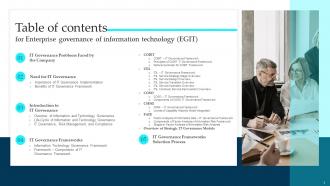
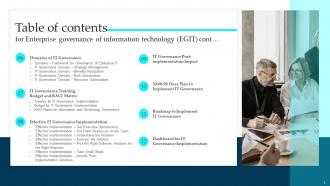
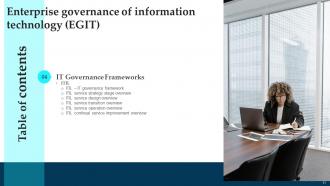
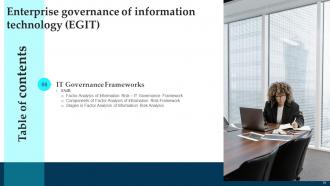
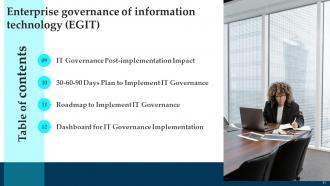
Slide 3: This slide presents Table of Content for the presentation.
Slide 4: This is another slide continuing Table of Content for the presentation.
Slide 5: This slide highlights title for topics that are to be covered next in the template.
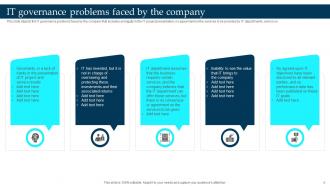
Slide 6: This slide shows IT Governance Problems Faced by the Company.
Slide 7: This slide highlights title for topics that are to be covered next in the template.
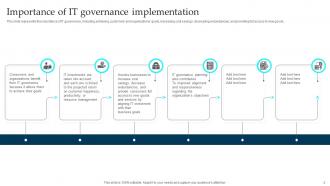
Slide 8: This slide presents Importance of IT Governance Implementation.
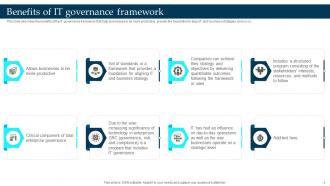
Slide 9: This slide describes the benefits of the IT governance framework.
Slide 10: This slide highlights title for topics that are to be covered next in the template.
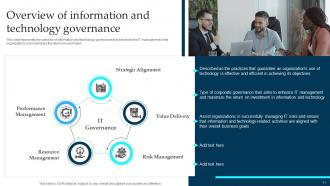
Slide 11: This slide displays Overview of Information and Technology Governance.
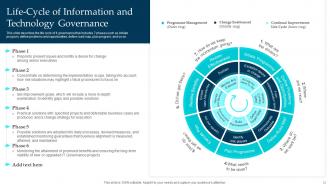
Slide 12: This slide represents Life-Cycle of Information and Technology Governance.
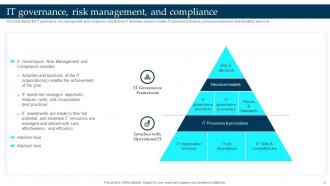
Slide 13: This slide showcases IT Governance, Risk Management, and Compliance.
Slide 14: This slide highlights title for topics that are to be covered next in the template.
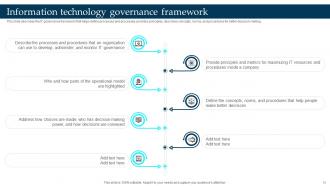
Slide 15: This slide describes the IT governance framework that helps define processes.
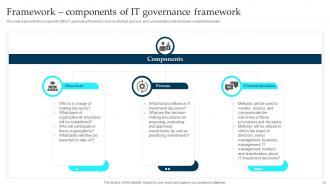
Slide 16: This slide represents the components of the IT governance framework.
Slide 17: This slide highlights title for topics that are to be covered next in the template.
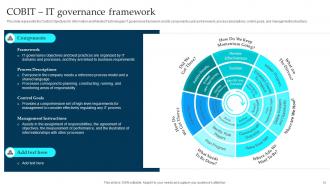
Slide 18: This slide represents the Control Objectives for Information and Related Technologies.
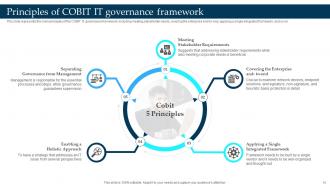
Slide 19: This slide showcases Principles of COBIT IT Governance Framework.
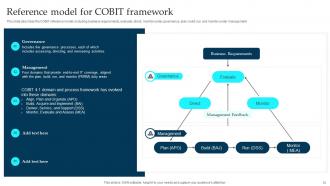
Slide 20: This slide displays Reference Model for COBIT Framework.
Slide 21: This slide highlights title for topics that are to be covered next in the template.
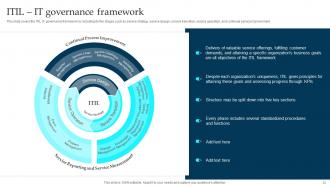
Slide 22: This slide covers the ITIL IT governance framework by including its five stages.
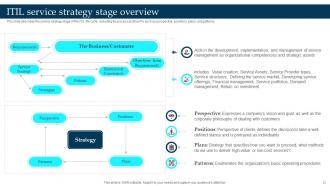
Slide 23: This slide describes the service strategy stage of the ITIL life cycle.
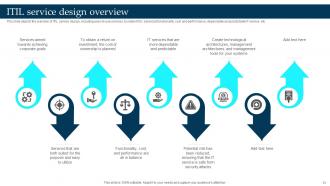
Slide 24: This slide depicts the overview of ITIL service design.
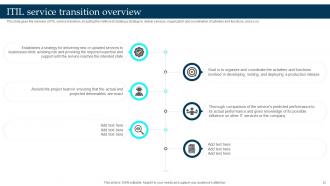
Slide 25: This slide gives the overview of ITIL service transition.
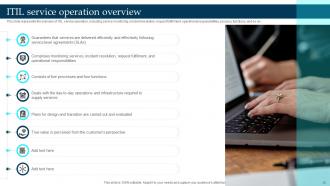
Slide 26: This slide represents the overview of ITIL service operation.
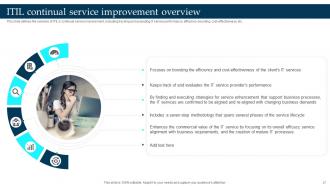
Slide 27: This slide showcases ITIL Continual Service Improvement Overview.
Slide 28: This slide highlights title for topics that are to be covered next in the template.
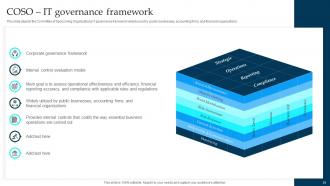
Slide 29: This slide depicts the Committee of Sponsoring Organizations IT governance framework.
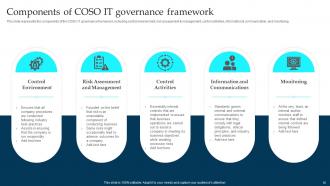
Slide 30: This slide represents Components of COSO IT Governance Framework.
Slide 31: This slide highlights title for topics that are to be covered next in the template.
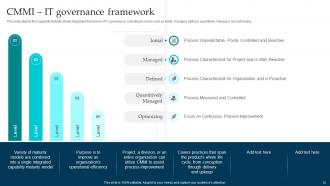
Slide 32: This slide depicts the Capability Maturity Model Integrated framework of IT governance.
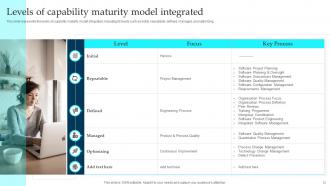
Slide 33: This slide showcases Levels of Capability Maturity Model Integrated.
Slide 34: This slide highlights title for topics that are to be covered next in the template.
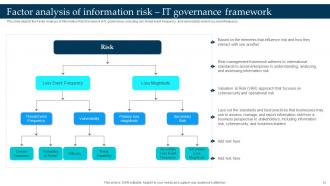
Slide 35: This slide depicts the Factor Analysis of Information Risk framework of IT governance.
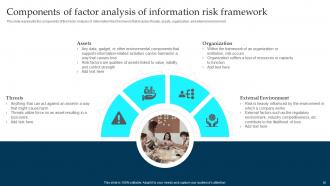
Slide 36: This slide shows Components of Factor Analysis of Information Risk Framework.
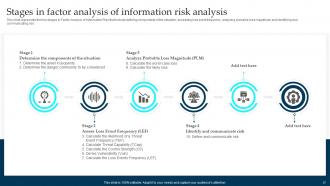
Slide 37: This slide presents Stages in Factor Analysis of Information Risk Analysis.
Slide 38: This slide highlights title for topics that are to be covered next in the template.
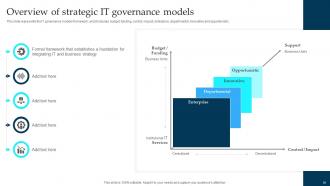
Slide 39: This slide represents the IT governance models framework.
Slide 40: This slide highlights title for topics that are to be covered next in the template.
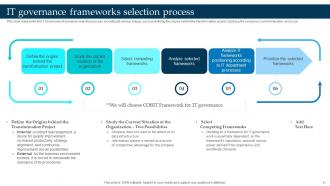
Slide 41: This slide showcases IT Governance Frameworks Selection Process.
Slide 42: This slide highlights title for topics that are to be covered next in the template.
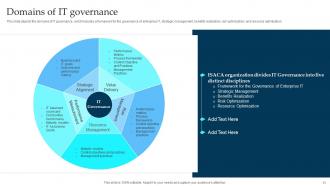
Slide 43: This slide depicts the domains of IT governance, and it includes a framework for the governance of enterprise IT.
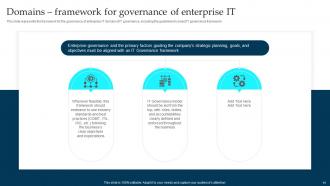
Slide 44: This slide represents the framework for the governance of enterprise IT.
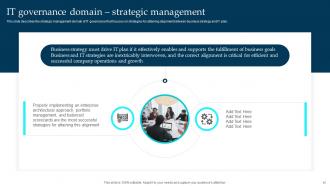
Slide 45: This slide describes the strategic management domain of IT governance.
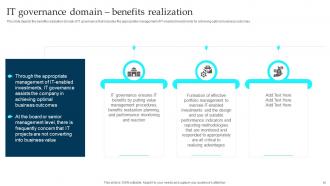
Slide 46: This slide depicts the benefits realization domain of IT governance.
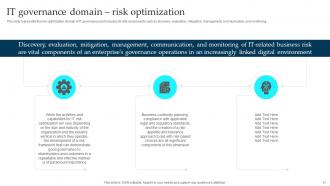
Slide 47: This slide represents the risk optimization domain of IT governance.
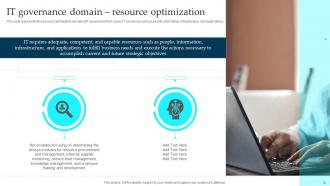
Slide 48: This slide showcases the resource optimization domain of IT governance.
Slide 49: This slide highlights title for topics that are to be covered next in the template.
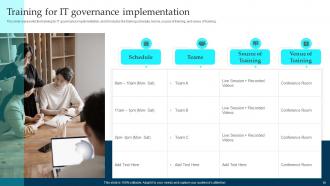
Slide 50: This slide shows Training for IT Governance Implementation.
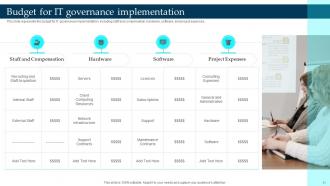
Slide 51: This slide presents Budget for IT Governance Implementation.
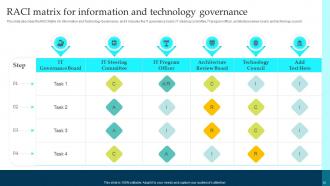
Slide 52: This slide displays RACI Matrix for Information and Technology Governance.
Slide 53: This slide highlights title for topics that are to be covered next in the template.
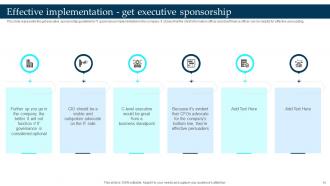
Slide 54: This slide represents the get executive sponsorship guideline for IT governance implementation.
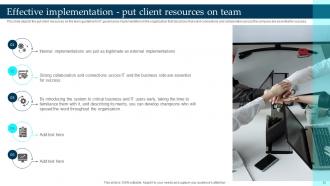
Slide 55: This slide depicts the put client resources on the team guideline for IT governance implementation.
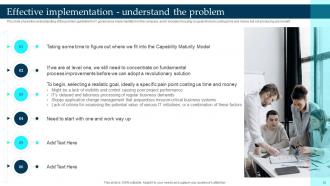
Slide 56: This slide shows the understanding of the problem guideline for IT governance implementation.
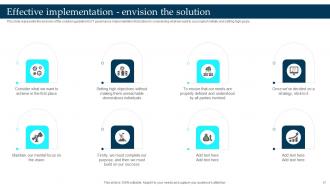
Slide 57: This slide represents the envision of the solution guideline for IT governance.
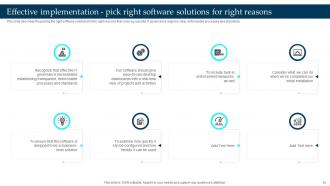
Slide 58: This slide describes the picking the right software solutions for the right reasons.
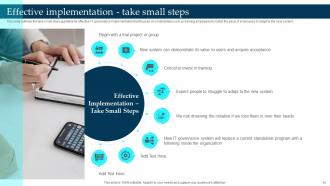
Slide 59: This slide outlines the take small steps guideline for effective IT governance implementation.
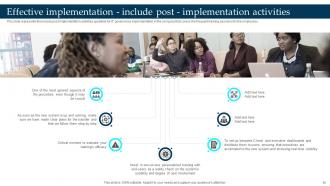
Slide 60: This slide represents the include post-implementation activities guideline for IT governance.
Slide 61: This slide highlights title for topics that are to be covered next in the template.
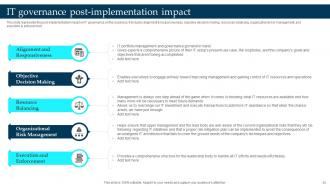
Slide 62: This slide showcases IT Governance Post-implementation Impact.
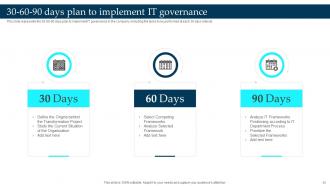
Slide 63: This slide displays 30-60-90 Days Plan to Implement IT Governance.
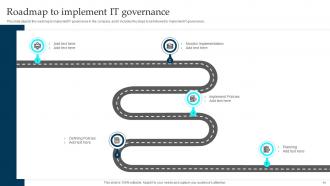
Slide 64: This slide shows Roadmap to Implement IT Governance.
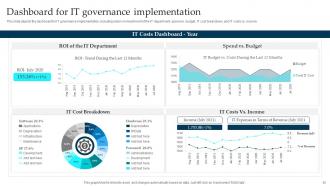
Slide 65: This slide presents Dashboard for IT Governance Implementation.
Slide 66: This slide contains all the icons used in this presentation.
Slide 67: This slide is titled as Additional Slides for moving forward.
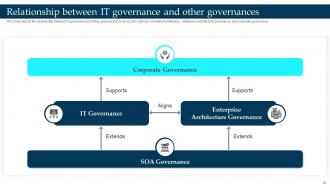
Slide 68: This slide displays Relationship between IT governance and other governances.
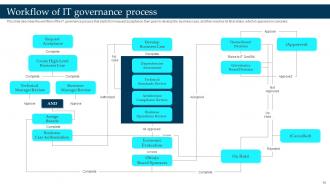
Slide 69: This slide represents Workflow of IT governance process.
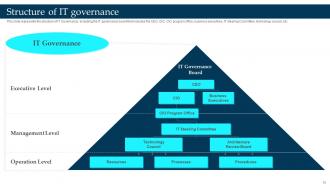
Slide 70: This slide showcases Structure of IT governance.
Slide 71: This is About Us slide to show company specifications etc.
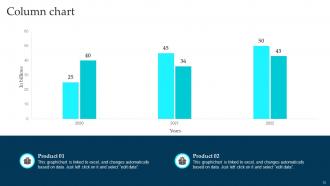
Slide 72: This slide displays Column chart with two products comparison.
Slide 73: This slide displays Mind Map with related imagery.
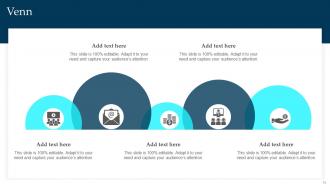
Slide 74: This slide depicts Venn diagram with text boxes.
Slide 75: This slide shows Post It Notes. Post your important notes here.
Slide 76: This is a Financial slide. Show your finance related stuff here.
Slide 77: This slide contains Puzzle with related icons and text.
Slide 78: This is a Thank You slide with address, contact numbers and email address.
Enterprise Governance Of Information Technology EGIT Powerpoint Presentation Slides with all 83 slides:
Use our Enterprise Governance Of Information Technology EGIT Powerpoint Presentation Slides to effectively help you save your valuable time. They are readymade to fit into any presentation structure.






FAQs for Enterprise Governance Of Information Technology EGIT
Key components include IT strategy alignment, risk management protocols, performance measurement systems, resource allocation frameworks, and compliance oversight mechanisms. These elements work together by ensuring strategic business-IT integration, minimizing operational risks, and optimizing resource utilization, with many organizations finding that structured governance ultimately delivers enhanced operational efficiency and competitive advantage.
Organizations align IT governance with business objectives by establishing clear strategic frameworks that connect technology investments directly to corporate goals, implementing cross-functional governance committees with both IT and business leaders, and creating performance metrics that measure IT contributions to revenue, efficiency, and competitive advantage. Through regular strategic reviews and integrated planning processes, companies ensure their technology decisions support business priorities, with many enterprises finding that this alignment accelerates innovation while optimizing resource allocation.
Risk management serves as a critical foundation for enterprise IT governance by identifying potential threats, assessing vulnerabilities, establishing compliance frameworks, and ensuring business continuity across digital operations. Through comprehensive risk assessments and mitigation strategies, organizations in sectors like financial services, healthcare, and manufacturing can minimize operational disruptions, protect sensitive data, and maintain regulatory compliance, ultimately delivering enhanced security posture and stakeholder confidence.
Companies use IT governance to drive digital transformation by establishing clear strategic alignment between technology investments and business objectives, creating accountability frameworks for digital initiatives, and implementing standardized processes for technology adoption. Through structured governance committees, organizations streamline decision-making, accelerate project approvals, and ensure resource allocation supports transformation goals, with many enterprises finding that formal IT governance ultimately delivers faster digital adoption and measurable competitive advantage.
IT governance success metrics include ROI on technology investments, project delivery timelines, system uptime and reliability, compliance audit results, and user satisfaction scores. These measurements enable organizations to assess operational efficiency, risk management effectiveness, and strategic alignment, with many enterprises finding that combining financial, operational, and stakeholder metrics delivers comprehensive visibility into governance performance and competitive advantage.
Organizations ensure regulatory compliance through effective IT governance by implementing comprehensive risk management frameworks, establishing clear data protection protocols, and maintaining robust audit trails across all systems. These governance structures enable banks, healthcare institutions, and financial services to streamline compliance processes, reduce regulatory violations, and enhance operational transparency, ultimately delivering cost savings and competitive advantage in increasingly regulated environments.
Effective cloud governance structures include centralized cloud centers of excellence, hybrid IT steering committees, federated management models with business unit accountability, automated policy enforcement frameworks, and cross-functional security oversight boards. These frameworks streamline resource allocation, cost optimization, and compliance management across distributed environments, with many organizations finding that combining centralized strategy with decentralized execution delivers enhanced operational efficiency and strategic agility.
Stakeholder engagement improves IT governance implementation by ensuring alignment between business objectives and technical decisions, fostering collaboration across departments, and securing necessary resources and buy-in. Through regular communication and feedback loops, organizations streamline decision-making processes, minimize resistance to change, and enhance accountability, with many enterprises finding that engaged stakeholders ultimately deliver faster project approvals and better strategic outcomes.
Organizations face challenges including unclear roles and responsibilities, resistance to change from IT and business units, lack of executive support, insufficient communication between stakeholders, and difficulty measuring governance effectiveness. These obstacles often stem from siloed departments, competing priorities, and inadequate change management, with many enterprises finding that successful frameworks require dedicated resources, strong leadership commitment, and phased implementation to overcome cultural barriers and achieve sustainable governance.
IT governance influences organizational decision-making by establishing clear frameworks for technology investments, risk management, and strategic alignment with business objectives. Through structured committees, standardized processes, and defined accountability measures, organizations streamline technology choices, enhance resource allocation, and ensure compliance, with many enterprises finding that robust governance delivers faster project approvals, reduced operational risks, and improved competitive positioning.
Best practices for documenting IT governance policies and procedures include establishing clear policy hierarchies, using standardized templates, ensuring regular review cycles, implementing version control systems, and maintaining accessibility through centralized repositories. These frameworks streamline compliance management by defining roles clearly, automating approval workflows, and tracking policy adherence, with many organizations finding that structured documentation ultimately delivers improved audit readiness and operational consistency.
Organizations evaluate and select IT governance frameworks by assessing their specific business objectives, regulatory requirements, industry standards, and organizational maturity levels. Through systematic analysis of frameworks like COBIT, ITIL, and ISO 27001, companies can determine alignment with their strategic goals, compliance needs, and operational capabilities, ultimately selecting frameworks that enhance decision-making processes and deliver measurable business value.
Technology can support IT governance through automated compliance monitoring, real-time performance dashboards, risk assessment tools, policy management systems, and integrated audit trails. These solutions streamline governance processes by providing continuous visibility into IT operations, automating regulatory reporting, and enabling data-driven decision making, with many organizations finding that centralized governance platforms ultimately deliver enhanced operational efficiency and stronger regulatory compliance.
Emerging technologies challenge traditional IT governance models by introducing new complexities around data privacy, cybersecurity, and regulatory compliance, while also creating opportunities for enhanced automation and decision-making. Organizations are increasingly adapting their governance frameworks to accommodate cloud computing, AI, and IoT deployments, with many financial institutions and healthcare providers finding that hybrid governance approaches enable better risk management and operational agility.
IT governance promotes accountability and transparency by establishing clear roles and responsibilities, implementing robust reporting mechanisms, and creating structured decision-making processes with defined oversight. Through regular performance metrics, audit trails, and stakeholder communication frameworks, organizations streamline governance workflows while ensuring all IT decisions are documented and traceable, ultimately delivering enhanced operational transparency and fostering a culture where teams are accountable for measurable business outcomes.
-
Informative design.
-
Editable templates with innovative design and color combination.