

Enterprise security operations powerpoint presentation slides





Try Before you Buy Download Free Sample Product
 Impress Your
Audience
 100%
Editable
 Save Hours
of Time


Our Enterprise Security Operations Powerpoint Presentation Slides are topically designed to provide an attractive backdrop to any subject. Use them to look like a presentation pro.
People who downloaded this PowerPoint presentation also viewed the following :
Content of this Powerpoint Presentation
Slide 1: This is the title slide illustrating Enterprise Security Operations.
Slide 2: This is a Table of Contents slide including Present Scenario Assessment, Security Operations Implementation Timeline, Impact Analysis, etc.
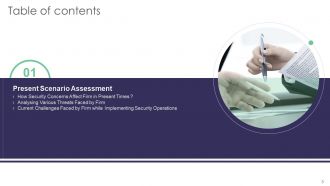
Slide 3: This is a table of contents slide showing the Present Scenario Assessment.
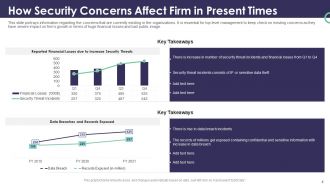
Slide 4: This slide portrays information regarding the concerns that currently exist in the organizations. It is essential for top-level management to keep a check on existing concerns as they have a severe impact on the firm’s growth in terms of huge financial losses and bad public image.
Slide 5: This slide portrays information regarding the various threats that are faced by firms at present times with their cause of the threat, risks associated with threats, the occurrence of threats, and monetary loss to the firm.
Slide 6: This slide portrays information regarding the present challenges faced by firms while implementing the SecOps system, including budget constraints, the absence of a pool of talent and expertise, and the lack of essential tools.
Slide 7: This is a table of contents slide showing Moving Towards Security Operations Collaboration.
Slide 8: This slide portrays information regarding the prerequisites that are essential for effective implementation of SecOps in terms of development and operations team, etc.
Slide 9: This slide portrays information regarding the assessment of the security maturity spectrum and the different stages associated with it, such as minimalists, reactive, concerned, advanced, and security mature, to determine the firm’s capability in handling safety.
Slide 10: This is a table of contents slide showing the Security Operations Implementation Timeline.
Slide 11: This slide provides information regarding the security operations system implementation timeline with key tasks and activities mentioned.
Slide 12: This slide provides the security operations system implementation timeline with key activities mentioned.
Slide 13: This is a table of contents slide showing the Developing Security Operations Centre.
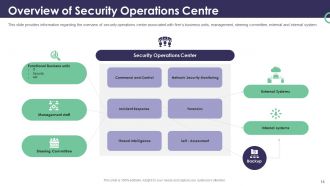
Slide 14: This slide provides an overview of the security operations center associated with the firm’s business units, management, steering committee, external and internal system.
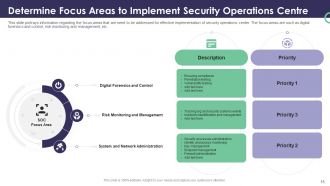
Slide 15: This slide portrays information regarding the focus areas that are needed to be addressed for effective implementation of the security operations center. The focus areas include digital forensics and control, risk monitoring and management, etc.
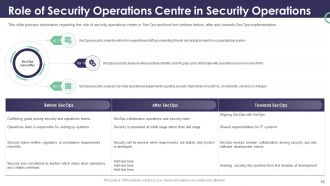
Slide 16: This slide portrays information regarding the role of the security operations center in SecOps and how firms behave before, after, and towards SecOps implementation.
Slide 17: This slide provides information regarding the development of the facility as a security operations center, which is built so that security staff will monitor enterprise systems, protect them against security breaches, and consistently identify and mitigate security risks.
Slide 18: This slide portrays the roles and responsibilities, and qualifications associated with staff available at Tier 1, 2, 3, and 4 levels at SOC structure.
Slide 19: This slide portrays information regarding the different security operations center deployment models from which firms can choose the suitable deployment model based on the characteristics associated with the Models.
Slide 20: This slide portrays how a firm will assess alternate sites for backup maintenance on certain parameters such as implementation cost, hardware, and telecommunication connection requirement, setup time, and location.
Slide 21: This is a table of contents slide showing the Handling Insider Attack.
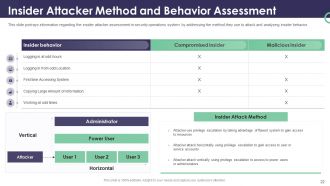
Slide 22: This slide portrays information regarding the insider attacker assessment in security operations systems by addressing the method they use to attack and analyze insider behavior.
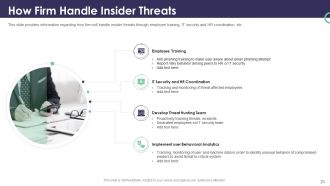
Slide 23: This slide provides information on how the firm will handle insider threats through employee training, IT security, HR coordination, etc.
Slide 24: This is a table of contents slide showing the Incident Management.
Slide 25: This slide provides information regarding the entire duration of the incident handling process, which occurs in various phases.
Slide 26: This slide will help the firm select the suitable automated incident management software that will handle existing security and privacy issues and predict upcoming incidents. The firm will choose effective software with features such as automated workflows, centralized platforms, etc.
Slide 27: This is a table of contents slide showing the Contingency Plan for Threat Handling in SecOps.
Slide 28: This slide portrays an information contingency plan for handling threats with the help of technical equipment that assist contingency solution and considerations.
Slide 29: This is a table of contents slide showing the Various Technologies for Effective SecOps Processes.
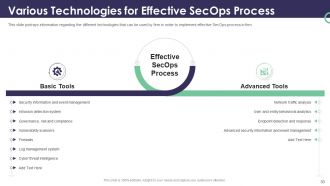
Slide 30: This slide portrays information regarding the different technologies that firms can use to implement effective SecOps processes in a firm.
Slide 31: This is a table of contents slide showing the Security and Operational Tasks Maintenance Checklist.
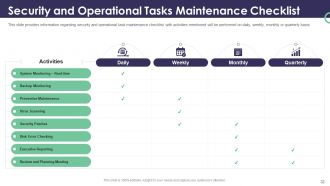
Slide 32: This slide provides information regarding the security and operational task maintenance checklist with activities mentioned that will be performed on a daily, weekly, monthly, or quarterly basis.
Slide 33: This is a table of contents slide showing the Various Metrics to Measure SecOps System Performance.
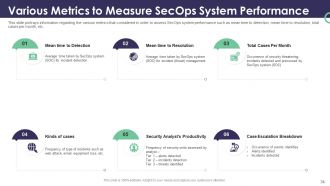
Slide 34: This slide portrays information regarding the various metrics that are considered in order to assess SecOps system performance, such as mean time to detection, mean time to resolution, total cases per month, etc.
Slide 35: This is a table of contents slides showing the Cost Associated to SecOps Implementation.
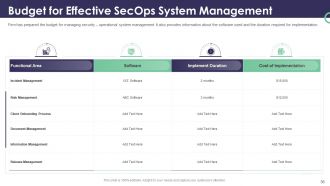
Slide 36: This slide represents how the Firm has prepared the budget for managing security – operational system management. It also provides information about the software used and the duration required for implementation.
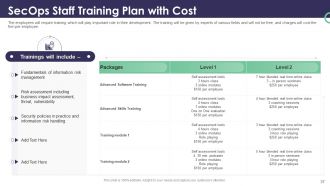
Slide 37: This slide depicts the employees will require training which will play an important role in their development. The training will be given by experts in various fields and will not be free, and charges will cost the firm per employee.
Slide 38: This is a table of contents slide showing the Impact Analysis.
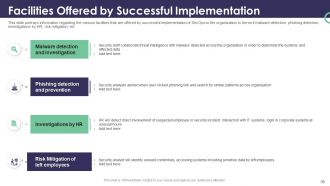
Slide 39: This slide portrays information regarding the various facilities offered by the successful implementation of SecOps in the organization in terms of malware detection, phishing detection, investigations by HR, risk mitigation, etc.
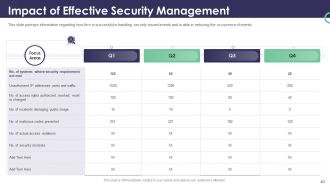
Slide 40: This slide portrays information regarding how the firm successfully handles security issues/events and can reduce the occurrence of events.
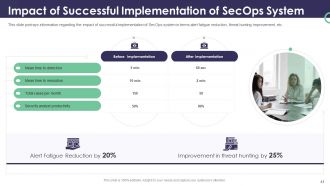
Slide 41: This slide portrays information regarding the impact of successful implementation of the SecOps system in terms of alert fatigue reduction, threat hunting improvement, etc.
Slide 42: This is a table of contents slide showing the Dashboard.
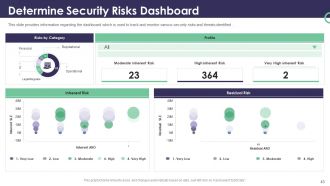
Slide 43: This slide provides information regarding the dashboard, which is used to track and monitor various security risks and threats identified.
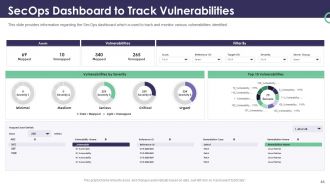
Slide 44: This slide provides information regarding the SecOps dashboard, which is used to track and monitor various vulnerabilities identified.
Slide 45: This is the Icons Slide for Enterprise Security Operations.
Slide 46: This slide presents the Additional Slides.
Slide 47: This slide provides the Mission for the entire company. This includes the vision, the mission, and the goal.
Slide 48: This slide shows the members of the company team with their name, designation, and photo.
Slide 49: This slide presents the Line Chart. It compares the data and shows trends over time.
Slide 50: This slide presents the Area Chart. It emphasizes the magnitude of change over time.
Slide 51: This slide presents a quote.
Slide 52: This slide presents the overall Target of the company and smaller targets within that primary Target.
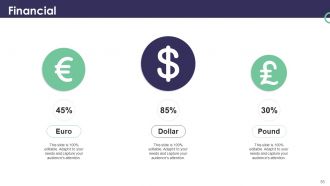
Slide 53: This slide presents the Financial data with the data’s numbers at minimum, medium, and maximum percentage.
Slide 54: This slide contains Post-It Notes that can express any brief thoughts or ideas.
Slide 55: This is a Thank You slide where details such as the address, contact number, and email address are added.
Enterprise security operations powerpoint presentation slides with all 55 slides:
Use our Enterprise Security Operations Powerpoint Presentation Slides to effectively help you save your valuable time. They are readymade to fit into any presentation structure.
-
Enterprise Security Operations
-
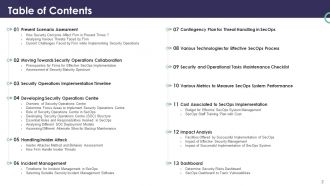
Table of Contents
-
Present Scenario Assessment
-
How Security Concerns Affect Firm in Present Times
-
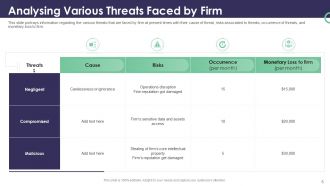
Analysing Various Threats Faced by Firm
-
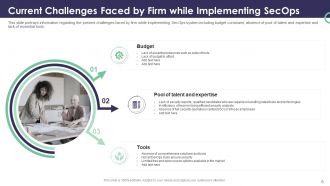
Current Challenges Faced by Firm while Implementing SecOps
-
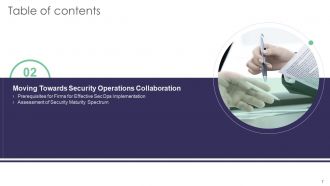
Moving Towards Security Operations Collaboration
-
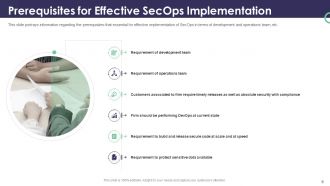
Prerequisites for Effective SecOps Implementation
-
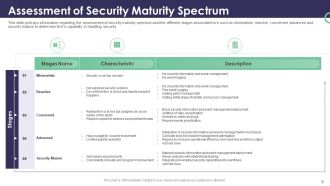
Assessment of Security Maturity Spectrum
-
Security Operations Implementation Timeline
-
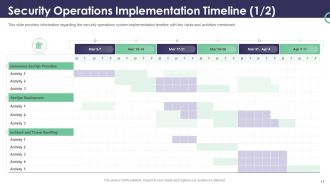
Security Operations Implementation Timeline 1 2
-
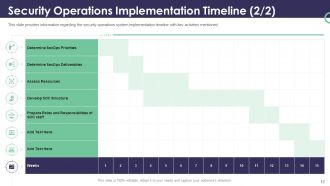
Security Operations Implementation Timeline 2 2
-
Developing Security Operations Centre
-
Overview of Security Operations Centre
-
Determine Focus Areas to Implement Security Operations Centre
-
Role of Security Operations Centre in Security Operations
-
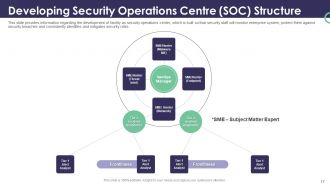
Developing Security Operations Centre SOC Structure
-
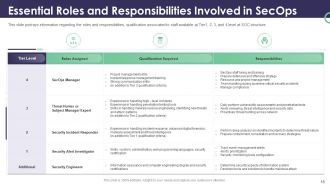
Essential Roles and Responsibilities Involved in SecOps
-
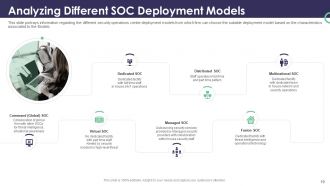
Analyzing Different SOC Deployment Models
-
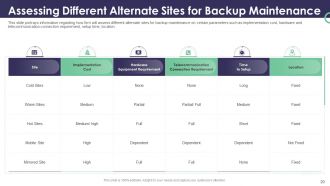
Assessing Different Alternate Sites for Backup Maintenance
-
Handling Insider Attack
-
Insider Attacker Method and Behavior Assessment
-
How Firm Handle Insider Threats
-
Incident Management
-
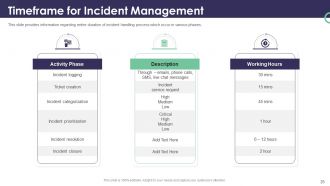
Timeframe for Incident Management
-
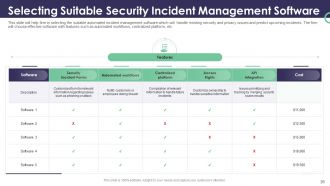
Selecting Suitable Security Incident Management Software
-
Contingency Plan for Threat Handling in SecOps
-
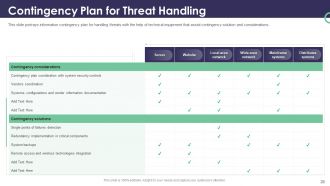
Contingency Plan for Threat Handling
-
Various Technologies for Effective SecOps Process
-
Various Technologies for Effective SecOps Process
-

Security and Operational Tasks Maintenance Checklist
-
Security and Operational Tasks Maintenance Checklist
-
Various Metrics to Measure SecOps System Performance
-
Various Metrics to Measure SecOps System Performance
-
Cost Associated to SecOps Implementation
-
Budget for Effective SecOps System Management
-
SecOps Staff Training Plan with Cost
-
Impact Analysis
-
Facilities Offered by Successful Implementation
-
Impact of Effective Security Management
-
Impact of Successful Implementation of SecOps System
-
Table of Contents Slide
-
Determine Security Risks Dashboard
-
SecOps Dashboard to Track Vulnerabilities
-
Enterprise Security Operations Icons Slide
-

Additional Slides
-
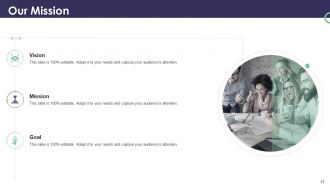
Our Mission
-
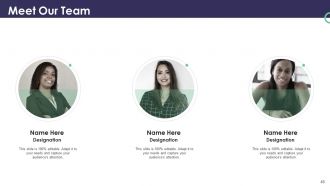
Meet Our Team
-
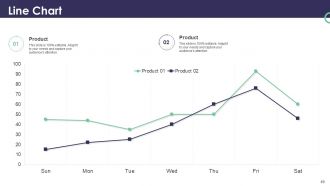
Line Chart
-
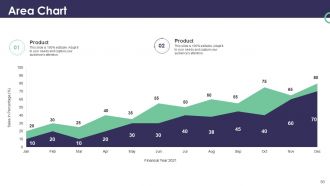
Area Chart
-

Quotes
-
Target
-
Financial
-
Post it Notes
-

Thanks for Watching
FAQs for Enterprise security operations
**INPUT**: What are the key components of an effective enterprise security operations center (SOC)? **OUTPUT**: Effective enterprise SOCs include security information and event management (SIEM) systems, threat intelligence platforms, incident response protocols, skilled security analysts, and automated orchestration tools. These components work together by enabling real-time threat detection, streamlining incident investigation, and accelerating response times, with many organizations finding that integrated SOC operations ultimately deliver enhanced security posture and operational efficiency. *[Word count: 58 words]*
Organizations can measure security operations success through key performance indicators including mean time to detection, incident response times, threat containment rates, security awareness training completion, and compliance audit scores. These metrics enable security teams to demonstrate operational efficiency, optimize resource allocation, and enhance threat response capabilities, with many enterprises finding that comprehensive measurement frameworks ultimately deliver improved risk management and stakeholder confidence.
Threat intelligence enhances security operations by providing contextual insights about emerging threats, attack patterns, and adversary tactics, enabling proactive defense strategies rather than reactive responses. Through integrated threat feeds and analysis platforms, organizations can prioritize vulnerabilities, streamline incident response workflows, and strengthen their security posture, with many enterprises finding that intelligence-driven operations significantly reduce detection times and improve overall cyber resilience.
Enterprise security incident response best practices include establishing clear escalation procedures, maintaining updated response playbooks, implementing automated threat detection systems, conducting regular team training, and ensuring comprehensive logging across all systems. These frameworks streamline security operations by enabling faster threat identification, coordinated response efforts, and systematic recovery processes, with many organizations finding that structured incident management significantly reduces breach impact and operational downtime.
Enterprises balance security needs with user experience through adaptive authentication, single sign-on solutions, and risk-based security protocols that adjust protection levels based on user behavior and context. These technologies streamline access for legitimate users while maintaining robust defenses, with many organizations finding that strategic implementation of zero-trust frameworks ultimately delivers both enhanced security and improved operational efficiency.
Essential technologies for modernizing security operations include SIEM platforms, SOAR automation, extended detection and response (XDR), threat intelligence feeds, and cloud security posture management tools. These technologies streamline incident response by centralizing threat detection, automating repetitive tasks, and providing comprehensive visibility across hybrid environments, with many organizations finding that integrated security stacks reduce response times while enhancing overall operational efficiency.
Automation improves security efficiency by streamlining threat detection, accelerating incident response, and reducing manual investigation tasks through intelligent alert prioritization and automated remediation workflows. Financial institutions and healthcare organizations increasingly leverage automated security orchestration to handle routine threats within minutes rather than hours, ultimately enabling security teams to focus on strategic initiatives while delivering faster threat containment and reduced operational costs.
Enterprise security operations face challenges including talent shortages, alert fatigue, fragmented security tools, limited visibility across complex infrastructures, and balancing security with business agility. These obstacles often result in delayed threat response, increased operational costs, and compliance gaps, with many organizations finding that strategic automation and integrated platforms help streamline workflows, reduce false positives, and ultimately deliver faster incident resolution while enhancing overall security posture.
Compliance requirements significantly reshape security operations by mandating specific monitoring protocols, audit trails, data protection measures, and incident response procedures. These regulations, while creating operational complexity, ultimately enhance security posture by establishing standardized frameworks, with many enterprises finding that compliance-driven investments in automated monitoring and documentation streamline both regulatory adherence and threat detection capabilities.
Key security operations metrics include mean time to detection (MTTD), mean time to response (MTTR), incident resolution rates, false positive ratios, and threat coverage percentages. These indicators enable organizations to assess operational efficiency, resource allocation effectiveness, and security posture strength, with many enterprises finding that comprehensive monitoring ultimately delivers faster incident response, reduced business impact, and enhanced competitive advantage in an increasingly complex threat landscape.
Organizations foster a security-first culture by implementing comprehensive training programs, establishing clear security policies, creating regular awareness campaigns, and integrating security into daily workflows. Through continuous education and leadership commitment, companies across industries like finance and healthcare enhance employee vigilance, reduce human error risks, and ultimately strengthen their overall security posture while maintaining operational efficiency.
Cloud computing transforms enterprise security operations by centralizing threat monitoring, automating incident response, and enabling real-time vulnerability management across distributed networks. Through cloud-based security platforms, organizations streamline compliance tracking, enhance data encryption protocols, and accelerate threat detection capabilities, while reducing infrastructure costs and improving scalability, ultimately delivering faster response times and more comprehensive protection.
Enterprise security teams need to monitor ransomware-as-a-service attacks, AI-powered phishing campaigns, supply chain vulnerabilities, cloud misconfigurations, and insider threats leveraging remote work environments. These evolving threat vectors challenge organizations through sophisticated social engineering, automated attack scaling, and third-party dependencies, with many enterprises finding that proactive threat intelligence and zero-trust architectures deliver enhanced resilience and faster incident response capabilities.
Collaboration between security operations and IT teams is critical for maintaining robust cybersecurity postures, as it enables faster incident response, streamlined threat detection, and coordinated system hardening. Through integrated workflows, organizations enhance visibility across their infrastructure, reduce response times during security events, and ultimately deliver stronger protection against evolving threats.
Third-party vendors provide specialized security services including managed detection and response, threat intelligence, vulnerability assessments, compliance auditing, and security tool integration that many enterprises lack internally. While this strategic combination enhances operational efficiency and access to expertise, organizations must carefully manage vendor risk through rigorous vetting processes, ultimately delivering comprehensive security coverage and competitive advantage.
-
Really like the color and design of the presentation.
-
Informative design.
-
Great designs, really helpful.
-
Colors used are bright and distinctive.