


Escalation management system powerpoint presentation slides




Try Before you Buy Download Free Sample Product
 Impress Your
 Audience
 100%
100% Editable
 Save Hours
 of Time


Escalation is a systematic management procedure for bringing a problem to the attention of a higher authority, as described by the projects escalation mechanism. Check out our efficiently designed Escalation Management System template. We have focused on the current state analysis of the company where the company is running on costs and project delays, challenges faced by project management, and issues faced by the manager have been discussed. We have outlined the escalation team structure and their roles. Furthermore, we have covered the various types of the escalation management system, such as hierarchical and functional. The main focus of this PowerPoint template is on the escalation approach wherein we have worked on process flowchart, identification, validation, analysis, tracking and reporting, etc. The implementation plan, impact of the escalation project, and various dashboards are covered in this module. Understanding how to use escalation management system techniques correctly is crucial for project managers. Escalation should be viewed as a professional activity carried out in a timely and efficient manner. Download the template now.
People who downloaded this PowerPoint presentation also viewed the following :
Content of this Powerpoint Presentation
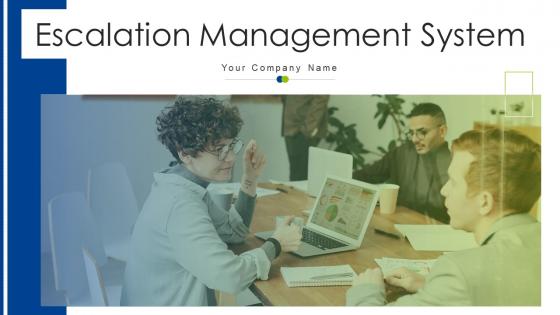
Slide 1: This slide introduces Escalation Management System. State Your Company Name and begin.
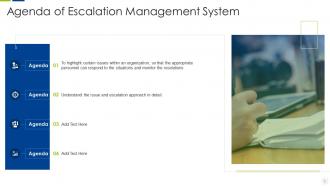
Slide 2: This slide shows Agenda of Escalation Management System.
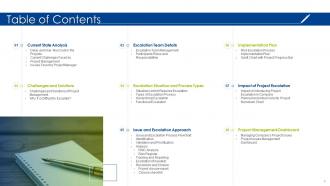
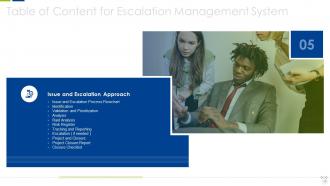
Slide 3: This slide presents Table of Content for the presentation.
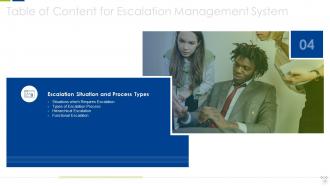
Slide 4: This slide displays title for topics that are to be covered next in the template.
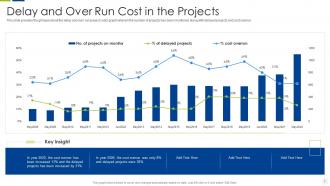
Slide 5: This slide represents delay and over run project costs graph wherein the number of projects has been monitored.
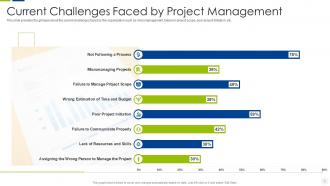
Slide 6: This slide showcases current challenges faced by the organization such as micromanagement, failure in project scope, etc.
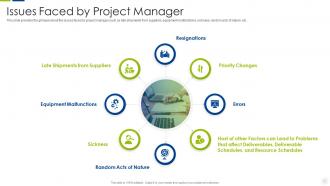
Slide 7: This slide shows issues faced by project manager such as late shipments from suppliers, equipment malfunctions, etc.
Slide 8: This slide presents title for topics that are to be covered next in the template.
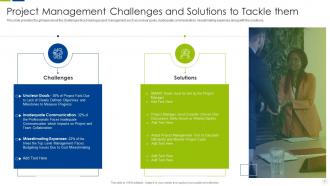
Slide 9: This slide displays Project management challenges and solutions to tackle them.
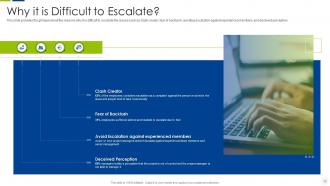
Slide 10: This slide represents reasons why it is difficult to escalate the issues such as clash creator, fear of backlash, etc.
Slide 11: This slide showcases title for topics that are to be covered next in the template.
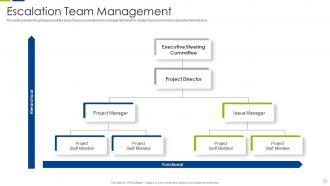
Slide 12: This slide shows project based escalation team management which is created based on hierarchical and functional teams.
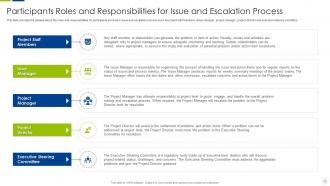
Slide 13: This slide presents Participants roles and responsibilities for issue and escalation process.
Slide 14: This slide displays title for topics that are to be covered next in the template.
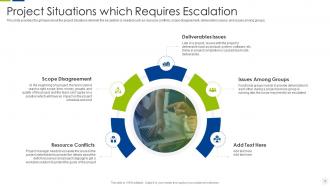
Slide 15: This slide represents project situations wherein the escalation is needed such as resource conflicts, scope disagreement, etc.
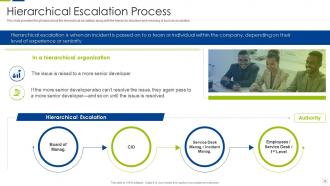
Slide 16: This slide showcases hierarchical escalation along with the hierarchy structure and meaning of such an escalation.
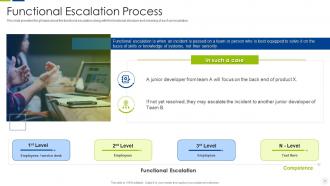
Slide 17: This slide shows functional escalation along with the functional structure and meaning of such an escalation.
Slide 18: This slide presents title for topics that are to be covered next in the template.
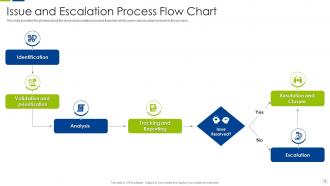
Slide 19: This slide displays issue and escalation process flowchart which covers various steps involved in this process.
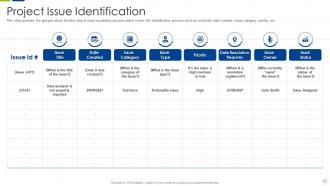
Slide 20: This slide represents first step of issue escalation process which covers the identification process.
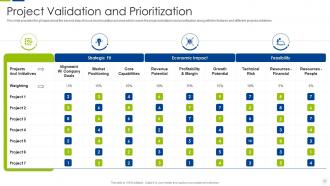
Slide 21: This slide showcases second step of issue and escalation process which covers the project validation and prioritization.
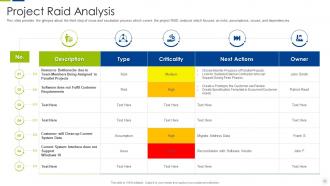
Slide 22: This slide shows third step of issue and escalation process which covers the project RAID analysis.
Slide 23: This slide presents current challenges faced by the organization such as customer churn rate, company’s revenues, etc.
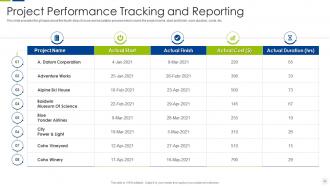
Slide 24: This slide displays fourth step of issue and escalation process which covers the project name, start and finish, etc.
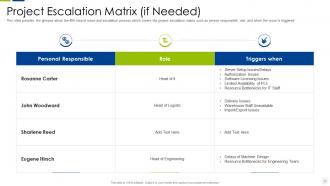
Slide 25: This slide represents fifth step of issue and escalation process which covers the project escalation matrix.
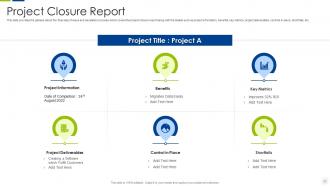
Slide 26: This slide showcases final step of issue and escalation process which covers the project closure report along with the details such as project information, benefits, etc.
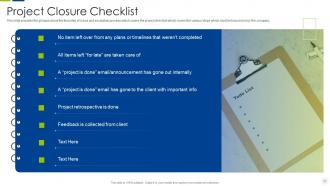
Slide 27: This slide shows final step of issue and escalation process which covers the project checklist.
Slide 28: This slide presents title for topics that are to be covered next in the template.
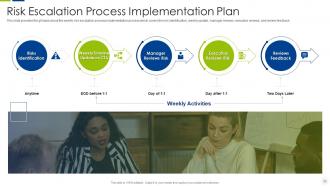
Slide 29: This slide displays weekly risk escalation process implementation process which covers the risk identification, weekly update, etc.
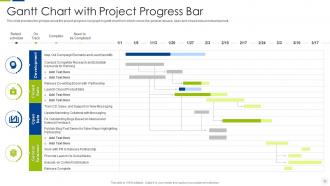
Slide 30: This slide represents Gantt Chart with Project Progress Bar.
Slide 31: This slide showcases title for topics that are to be covered next in the template.
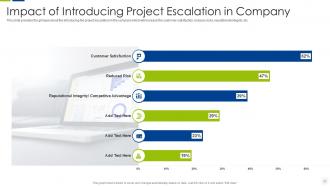
Slide 32: This slide shows Impact of Introducing Project Escalation in Company.
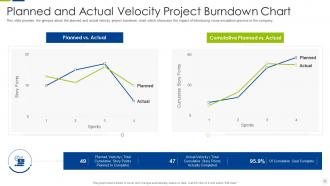
Slide 33: This slide presents Planned and Actual Velocity Project Burndown Chart.
Slide 34: This slide displays title for topics that are to be covered next in the template.
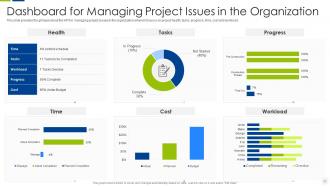
Slide 35: This slide represents Dashboard for Managing Project Issues in the Organization.
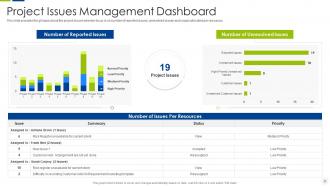
Slide 36: This slide showcases project issues wherein focus is on number of reported issues, unresolved issues and issues allocated per resources.
Slide 37: This slide displays Icons for Escalation Management System.
Slide 38: This slide is titled as Additional Slides for moving forward.
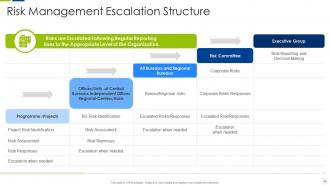
Slide 39: This slide shows Risk Management Escalation Structure.
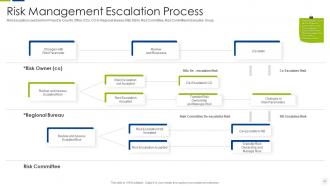
Slide 40: This slide presents Risk Management Escalation Process.
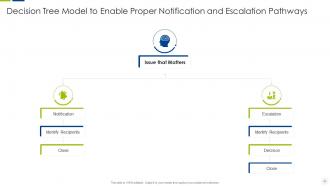
Slide 41: This slide displays Decision Tree Model to Enable Proper Notification and Escalation Pathways.
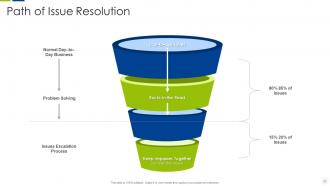
Slide 42: This slide represents Path of Issue Resolution
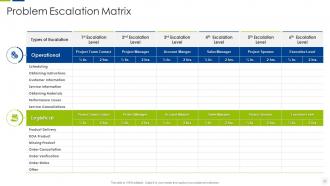
Slide 43: This slide showcases Problem Escalation Matrix
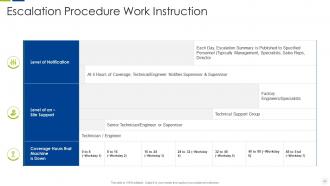
Slide 44: This slide shows Escalation Procedure Work Instruction
Slide 45: This is Our Mission slide with related imagery and text.
Slide 46: This is Our Team slide with names and designation.
Slide 47: This slide shows Post It Notes. Post your important notes here.
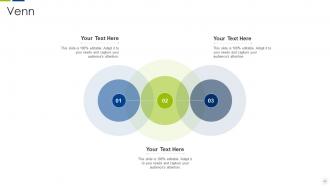
Slide 48: This slide depicts Venn diagram with text boxes.
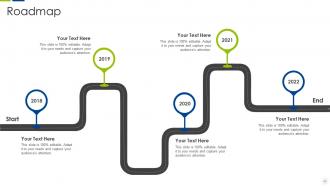
Slide 49: This slide presents Roadmap with additional textboxes.
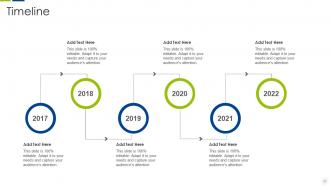
Slide 50: This is a Timeline slide. Show data related to time intervals here.
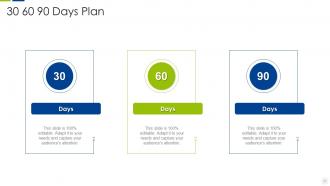
Slide 51: This slide provides 30 60 90 Days Plan with text boxes.
Slide 52: This is a Thank You slide with address, contact numbers and email address.
Escalation management system powerpoint presentation slides with all 57 slides:
Use our Escalation Management System Powerpoint Presentation Slides to effectively help you save your valuable time. They are readymade to fit into any presentation structure.










FAQs for Escalation management system
Key components of an effective escalation management system include clear escalation triggers, defined authority levels, automated routing protocols, response time standards, and comprehensive tracking mechanisms. These systems streamline issue resolution by ensuring faster decision-making, minimizing customer frustration, and enabling systematic problem-solving across departments, with many organizations finding that structured escalation processes significantly enhance operational efficiency and customer satisfaction outcomes.
An escalation management system enhances customer service by automatically routing complex issues to specialized agents, reducing resolution times, and ensuring consistent follow-up protocols. Through intelligent tiering and real-time tracking, organizations streamline complaint handling, minimize customer frustration, and deliver faster resolutions, with many service departments finding that structured escalation processes ultimately improve customer retention and satisfaction scores.
Automation enhances escalation management systems by routing incidents based on predefined criteria, triggering notifications at specific time intervals, and automatically escalating unresolved issues to higher support tiers. Through intelligent routing algorithms, organizations streamline response times, reduce manual oversight requirements, and ensure consistent service level adherence, ultimately delivering faster resolutions and improved customer satisfaction across service operations.
Common implementation challenges include resistance to change, unclear escalation criteria, inadequate staff training, poor system integration, and insufficient stakeholder buy-in. Organizations often struggle with defining appropriate escalation triggers and timeframes, while staff may resist new processes, but successful implementations typically deliver faster issue resolution and improved customer satisfaction across industries.
Data analytics improves escalation management decision-making by identifying patterns in issue frequency, predicting potential escalations before they occur, and optimizing resource allocation based on historical trends. Through predictive modeling and real-time dashboards, organizations streamline response times, reduce customer churn, and enhance operational efficiency, with many finding that data-driven insights ultimately deliver faster resolution rates and improved customer satisfaction.
Key metrics include escalation frequency rates, resolution timeframes, customer satisfaction scores, first-call resolution percentages, and cost per escalation incident. These indicators enable organizations to streamline operational efficiency, enhance customer experiences, and optimize resource allocation, with many service-oriented businesses finding that tracking these metrics ultimately delivers faster resolution times and improved competitive advantage.
An escalation management system adapts through customizable workflows, industry-specific triggers, role-based routing, automated priority scoring, and specialized integration capabilities. IT environments leverage technical severity classifications and on-call rotations, while customer service sectors emphasize response time thresholds and satisfaction metrics, with many organizations finding that tailored escalation paths ultimately streamline resolution processes and enhance operational efficiency.
Training and development ensures successful escalation management by building employee skills in conflict resolution, communication protocols, and decision-making frameworks, while establishing clear escalation pathways and response procedures. Through structured programs, organizations enhance staff confidence in handling complex situations, reduce resolution times, and improve customer satisfaction, with many companies finding that well-trained teams minimize unnecessary escalations while delivering more effective outcomes.
Organizations ensure clear communication pathways by establishing predefined escalation triggers, designated contact hierarchies, standardized notification protocols, automated alert systems, and documented response timeframes. Through centralized dashboards and real-time tracking tools, teams across departments like IT, customer service, and operations can seamlessly coordinate responses, ultimately reducing resolution times and enhancing operational efficiency.
Effective escalation documentation should include clear trigger criteria, defined roles and responsibilities, detailed contact hierarchies, specific timeframes for each escalation level, and standardized communication templates. These comprehensive guidelines enable organizations to maintain consistency across departments, reduce response delays, and ensure accountability, with many companies finding that well-documented processes significantly improve resolution rates and stakeholder satisfaction.
Technology integrations, particularly CRM systems, enhance escalation management by centralizing customer data, automating escalation triggers, and providing comprehensive case histories for faster resolution. Through seamless data sharing, support teams can access complete customer profiles, transaction histories, and previous interactions instantly, while automated workflows ensure issues reach appropriate specialists quickly, ultimately delivering more personalized service and reducing resolution times significantly.
Without a robust escalation management system, organizations face delayed issue resolution, frustrated customers, employee burnout, and significant revenue loss from unaddressed problems. These consequences compound quickly, with many businesses experiencing damaged reputation, increased operational costs, higher employee turnover, and lost competitive advantage, ultimately undermining customer trust and long-term profitability.
Feedback loops from escalated cases drive continuous improvement by identifying recurring issues, revealing process gaps, and highlighting training needs across customer service operations. Through systematic analysis of escalation patterns, organizations streamline resolution procedures, enhance agent capabilities, and strengthen preventive measures, ultimately reducing future escalation volumes while delivering superior customer experiences and operational efficiency.
Leadership should champion escalation management systems by establishing clear protocols, allocating adequate resources, and fostering open communication cultures that encourage timely issue reporting. Through visible support, regular training initiatives, and performance metrics integration, executives enable teams to resolve critical problems efficiently, minimize operational disruptions, and maintain customer satisfaction, ultimately delivering competitive advantage in service delivery.
Organizations measure escalation management system ROI by tracking resolution time reductions, customer satisfaction improvements, operational cost savings, and staff productivity gains. Through automated escalation workflows, companies typically see 30-40% faster issue resolution, reduced customer churn, and lower support overhead costs, with many finding that improved first-call resolution rates ultimately deliver significant competitive advantage.
-
The content is very helpful from business point of view.
-
Graphics are very appealing to eyes.