

Ethical Considerations In Logistics In Plant Logistics PPT Slides ST AI SS





Try Before you Buy Download Free Sample Product
 Impress Your
Audience
 100%
Editable
 Save Hours
of Time


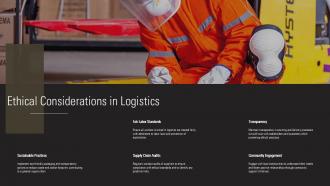
Explore our comprehensive PowerPoint presentation on Ethical Considerations in Plant Logistics. This deck delves into critical ethical issues, sustainable practices, and compliance strategies within logistics. Enhance your understanding and drive responsible decision-making in your organization with clear visuals and insightful content tailored for professionals in the field.
People who downloaded this PowerPoint presentation also viewed the following :
Ethical Considerations In Logistics In Plant Logistics PPT Slides ST AI SS with all 9 slides:
Use our Ethical Considerations In Logistics In Plant Logistics PPT Slides ST AI SS to effectively help you save your valuable time. They are readymade to fit into any presentation structure.








FAQs for Ethical Considerations In Logistics In Plant Logistics PPT Slides
Key ethical dilemmas in logistics include environmental sustainability versus cost efficiency, fair labor practices across global supply chains, transparency in sourcing and operations, data privacy in tracking systems, and balancing profit margins with social responsibility. These challenges particularly impact retail, manufacturing, and e-commerce sectors, with many companies finding that addressing ethical concerns ultimately delivers stronger brand reputation and customer loyalty.
Organizations ensure supply chain transparency through comprehensive mapping of suppliers and sub-suppliers, implementing blockchain technology for traceability, conducting regular third-party audits, and establishing clear reporting mechanisms for stakeholders. These approaches enable companies to track products from origin to consumer, monitor labor practices and environmental impacts, and respond quickly to potential issues, with many retail and manufacturing organizations finding that enhanced transparency ultimately delivers stronger brand trust, reduced compliance risks, and competitive advantage in increasingly conscious markets.
Sustainability serves as a cornerstone of ethical logistics, encompassing carbon footprint reduction, waste minimization, sustainable sourcing, responsible transportation methods, and circular supply chain practices. Through green technologies and strategic partnerships, companies streamline operations while reducing environmental impact, with many logistics providers finding that sustainable practices ultimately deliver cost savings, enhanced brand reputation, and competitive advantage in an increasingly environmentally conscious marketplace.
Labor practices significantly shape logistics ethics through worker safety standards, fair wage policies, reasonable working hours, and supply chain transparency measures. Poor practices, including warehouse worker exploitation and driver fatigue issues, create reputational risks and operational inefficiencies, while ethical employers in sectors like e-commerce and freight find that prioritizing employee welfare ultimately delivers improved retention, productivity, and competitive advantage.
Companies can mitigate human trafficking risks through comprehensive supplier audits, mandatory workforce verification, transparent supply chain mapping, regular on-site inspections, and whistleblower protection programs. These measures enhance operational integrity by establishing ethical partnerships, ensuring regulatory compliance, and building consumer trust, with many logistics organizations finding that proactive monitoring ultimately delivers competitive advantage while protecting vulnerable workers.
Technology enhances ethical decision-making in logistics through AI-powered supply chain transparency, blockchain tracking for authenticity verification, IoT sensors for environmental monitoring, and automated compliance systems. These solutions enable companies to identify labor violations, reduce carbon footprints, ensure fair trade practices, and maintain regulatory adherence, ultimately delivering sustainable operations while building consumer trust in an increasingly conscious marketplace.
Logistics companies have ethical responsibilities including ensuring fair payment terms, maintaining transparent communication, supporting supplier development programs, conducting regular compliance audits, and fostering long-term partnerships. These practices enable suppliers to improve working conditions, invest in sustainable operations, and deliver consistent quality, while logistics companies build resilient supply chains, reduce operational risks, and ultimately enhance customer satisfaction through reliable service delivery.
Cultural differences significantly impact global logistics ethics through varying labor standards, environmental regulations, business practices, and corruption tolerance levels across regions. Companies operating internationally must navigate these diverse ethical frameworks while maintaining consistent values, with many logistics firms finding that establishing universal ethical guidelines alongside local cultural sensitivity ultimately delivers stronger stakeholder trust and sustainable competitive advantage.
Organizations balance cost-effectiveness with ethical sourcing by implementing strategic supplier partnerships, leveraging technology for supply chain transparency, and adopting long-term sustainability frameworks that reduce risks and operational costs. While ethical sourcing requires upfront investment, companies in manufacturing, retail, and pharmaceuticals increasingly find that responsible practices enhance brand reputation, minimize regulatory risks, and ultimately deliver competitive advantage through consumer trust and operational efficiency.
Frameworks for evaluating ethical logistics practices include sustainability audits, labor standards assessments, supply chain transparency protocols, environmental impact measurements, and corporate social responsibility scorecards. These comprehensive evaluation tools enable organizations to assess providers across multiple dimensions, from carbon footprint reduction to fair labor practices, ultimately delivering more responsible supply chain partnerships and enhanced brand reputation in increasingly conscious markets.
Stakeholder engagement is crucial for addressing ethical logistics issues, as it ensures transparency, builds trust, and enables collaborative solutions across supply chains. Through regular dialogue with suppliers, customers, communities, and regulatory bodies, companies can identify ethical gaps, implement sustainable practices, and create accountability frameworks, ultimately delivering enhanced reputation and competitive advantage in increasingly conscious markets.
Consumer awareness significantly drives ethical behavior in logistics companies by creating market pressure for transparency, sustainable practices, and responsible supply chain management. With increasingly conscious consumers demanding ethical sourcing and environmentally friendly delivery options, logistics companies enhance their operations through carbon-neutral shipping, fair labor practices, and sustainable packaging, ultimately delivering competitive advantage and stronger brand loyalty.
Logistics firms can effectively communicate their ethical commitment through transparent sustainability reports, third-party certifications, regular client updates on responsible sourcing practices, and detailed documentation of labor standards compliance. Many companies in manufacturing and retail increasingly partner with logistics providers who demonstrate measurable ethical outcomes, ultimately finding that transparent communication about fair wages, environmental initiatives, and supply chain integrity delivers competitive advantage and stronger client relationships.
Unethical logistics practices can severely damage brand reputation through consumer boycotts, negative media coverage, regulatory penalties, and loss of stakeholder trust. These consequences ultimately result in decreased market share, reduced customer loyalty, and diminished competitive advantage, with many companies finding that recovery from reputation damage requires years of consistent ethical practices and transparency initiatives.
Ethical training can be integrated through comprehensive onboarding modules, regular workshops on responsible sourcing and environmental compliance, scenario-based case studies, and ongoing certification programs. Many logistics companies are embedding these programs into career development pathways, with organizations in manufacturing and retail finding that structured ethical education enhances decision-making quality, reduces compliance risks, and ultimately strengthens stakeholder trust and operational integrity.
-
“Thank you to the SlideTeam. Your presentations look really skillful and have made my life so much easier.”
-
I’m not a design person, so I couldn’t make a presentation to save my life. Thankfully, they have all kinds of templates that I regularly use for my work.