

Evaluating Company Overall Health With Financial Planning And Analysis Powerpoint Presentation Slides






Try Before you Buy Download Free Sample Product
 Impress Your
 Audience
 100%
100% Editable
 Save Hours
 of Time


Over the last few years, CFOs are being asked to provide relevant business insights to executive-level managers for quick decision-making. That is where our financial planning and analysis presentation comes into play and will assist the businesses in monitoring the organizations overall financial health and provide accurate advice to business leaders. Grab our professionally designed Evaluating Company Overall Health with Financial Planning and Analysis PowerPoint presentation, which covers sections such as introduction to financial planning and defining the capabilities of the financial planning and analysis team. Afterward, the deck caters to a section through which managers can select the best financial planning and analysis software tool for reporting and forecasting. The PPT also covers a section of the financial analysis course which will assist the employees in analyzing the balance sheet and assessing the financial position. Furthermore, the module includes a section on the development and execution of a contingency plan which can be used to overcome financial risks. Going forward, the company can monitor its financial health using various tools such as financial statements and accounting ratios. At last, it covers a few dashboards which will allow the finance and accounting teams to track the organizations revenue and profitability. Get access now.
People who downloaded this PowerPoint presentation also viewed the following :
Content of this Powerpoint Presentation
Slide 1: This slide introduces Evaluating Company Overall Health with Financial Planning and Analysis. State Your Company Name and get started.
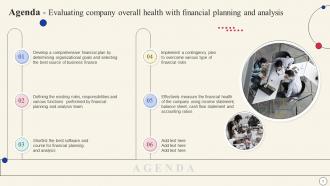
Slide 2: This slide depicts the Agenda of the presentation.
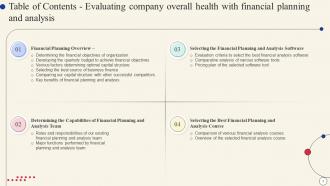
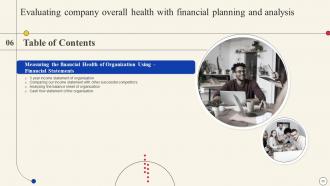
Slide 3: This slide reveals the Table of Contents.
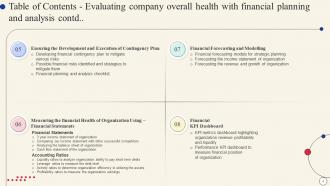
Slide 4: This is yet another slide continuing the Table of Contents.
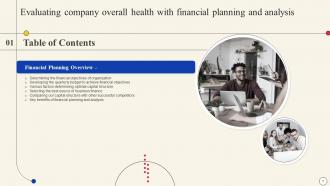
Slide 5: This slide includes the Title for the topics to be covered in the next template.
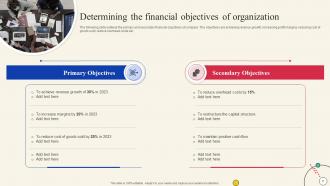
Slide 6: This slide focuses on the Determination of the financial objectives of organization.
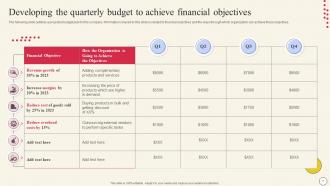
Slide 7: This slide includes the Development of the quarterly budget to achieve financial objectives.
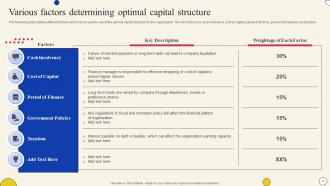
Slide 8: This slide deals with the Various factors determining optimal capital structure.
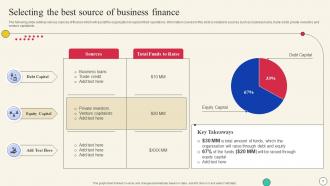
Slide 9: This slide depicts the procedure for Selecting the best source of business finance.
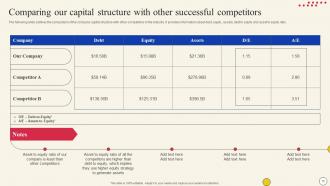
Slide 10: This slide incorporates the Comparison of the capital structure with other successful competitors.
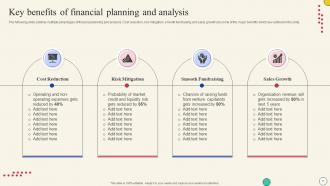
Slide 11: This slide shows the Key benefits of financial planning and analysis.
Slide 12: This slide includes the Heading for the Topics to be discussed in the upcoming template.
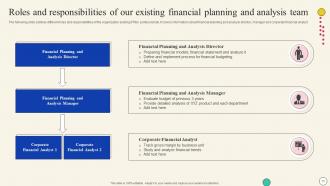
Slide 13: This slide lists the Roles and responsibilities of our existing financial planning and analysis team.
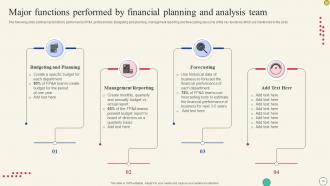
Slide 14: This slide highlights the Major functions performed by financial planning and analysis team.
Slide 15: This slide reveals the Heading for the ideas to be discussed in the forth-coming slide.
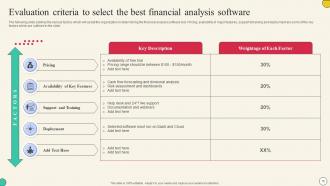
Slide 16: This slide deals with the Evaluation criteria to select the best financial analysis software.
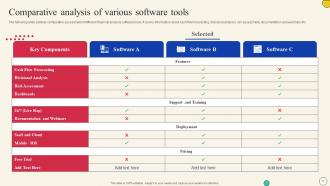
Slide 17: This slide showcases the Comparative analysis of various software tools.
Slide 18: This slide covers the Pricing plan of the selected software tool.
Slide 19: This slide incorporates the Title for the Contents to be covered in the next slide.
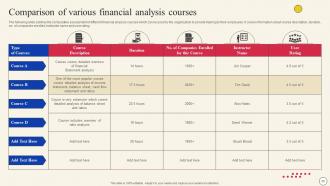
Slide 20: This slide describes the Comparison of various financial analysis courses.
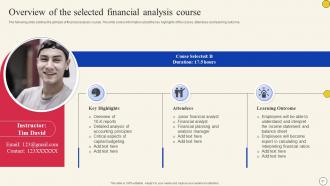
Slide 21: This slide presents the Overview of the selected financial analysis course.
Slide 22: This slide displays the Heading for the Topics to be discussed in the following template.
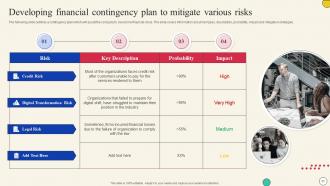
Slide 23: This slide elucidates the Development of financial contingency plan to mitigate various risks.
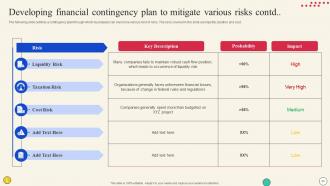
Slide 24: This is yet another slide continuing the Development of financial contingency plan to mitigate various risks.
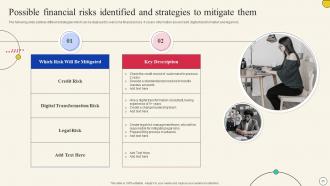
Slide 25: This slide covers the Topic of Possible financial risks identified and strategies to mitigate them.
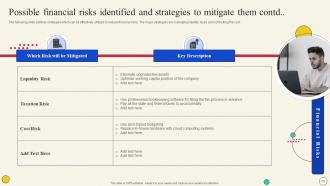
Slide 26: This is another slide continuing the Possible financial risks identified and strategies to mitigate them.
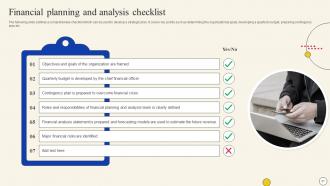
Slide 27: This slide showcases the Financial planning and analysis checklist.
Slide 28: This slide elucidates the Title for the Topics to be covered in the next template.
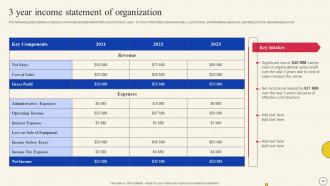
Slide 29: This slide exhibits the 3 year income statement of organization.
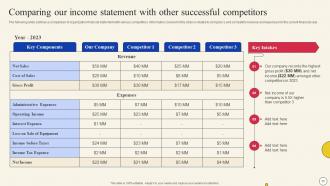
Slide 30: This slide focuses on Comparing the Company's income statement with other successful competitors.
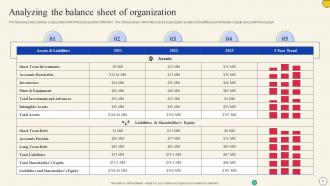
Slide 31: This slide deals with Analyzing the balance sheet of organization.
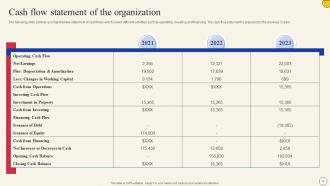
Slide 32: This slide depicts the Cash flow statement of the organization.
Slide 33: This slide includes the Title for the Contents to be covered in the upcoming templates.
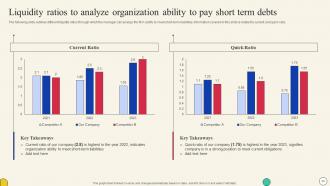
Slide 34: This slide illustrates the Liquidity ratios to analyze organization ability to pay short term debts.
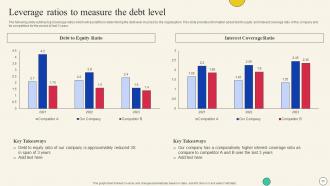
Slide 35: This slide exhibits the Leverage ratios to measure the debt level.
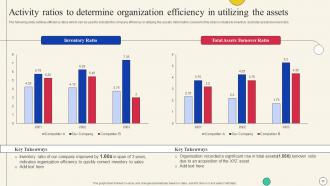
Slide 36: This slide potrays the Activity ratios to determine organization efficiency in utilizing the assets.
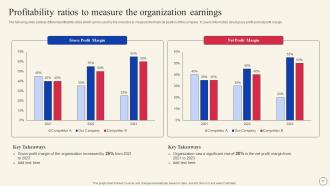
Slide 37: This slide depicts the Profitability ratios to measure the organization earnings.
Slide 38: This slide contains the Heading for the ideas to be discussed further.
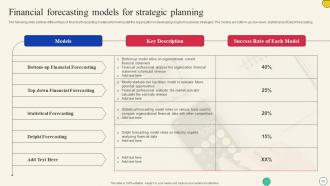
Slide 39: This slide showcases the Financial forecasting models for strategic planning in a tabular form.
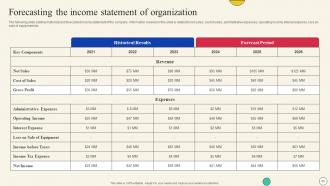
Slide 40: This slide reveals the Forecasts of the income statement of the organization.
Slide 41: This slide incorporates the Forecasting of the revenue and growth of the Company.
Slide 42: This slide includes the Title for the Topics to be covered in the next template.
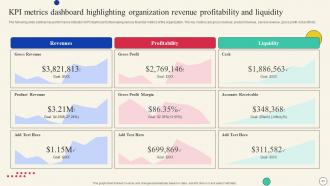
Slide 43: This slide shows the KPI metrics dashboard highlighting organization revenue profitability and liquidity.
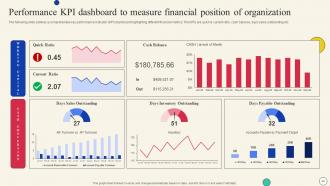
Slide 44: This sldie illustrates the Performance KPI dashboard to measure financial position of the organization.
Slide 45: This is the Icons slide including all the Icons used in the presentation.
Slide 46: This is titled as the Additional slides for giving some extra information.
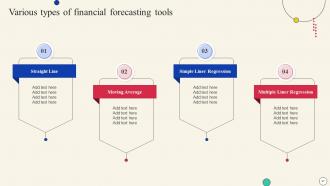
Slide 47: This slide highlights the Various types of financial forecasting tools.
Slide 48: This is the About us slide. List your Company information here.
Slide 49: This is Our Team slide for providing information related to the team members.
Slide 50: This slide is titled as Our mission. State your Organization's mission here.
Slide 51: This slide reveals the SWOT analysis.
Slide 52: This slide is the Puzzle slide with related imagery.
Slide 53: This slide displays the 30 60 90 days plan for effective planning.
Slide 54: This slide includes the Post it notes for reminders and deadlines.
Slide 55: This is the Roadmap slide depicting the journey of the institution.
Slide 56: This slide includes the Quotes for boosting the morale of the employees.
Slide 57: This is the Thank You slide for acknowledgement.
Evaluating Company Overall Health With Financial Planning And Analysis Powerpoint Presentation Slides with all 62 slides:
Use our Evaluating Company Overall Health With Financial Planning And Analysis Powerpoint Presentation Slides to effectively help you save your valuable time. They are readymade to fit into any presentation structure.















FAQs for Evaluating Company Overall Health With Financial Planning And Analysis
Key indicators in financial health evaluation include liquidity ratios, debt-to-equity ratios, profitability margins, cash flow patterns, and working capital management. These metrics enable organizations to assess operational efficiency, identify potential risks, and make strategic decisions, with many financial institutions and corporations finding that comprehensive evaluation ultimately delivers better resource allocation and competitive positioning.
Cash flow analysis significantly impacts financial health by revealing spending patterns, identifying potential shortfalls, and highlighting opportunities for improved resource allocation. Through detailed tracking of income and expenses, individuals and businesses can make strategic decisions about investments, debt management, and emergency fund building, ultimately delivering better financial stability and long-term wealth preservation.
Credit scores serve as critical indicators of financial health by reflecting payment history, credit utilization, account age, credit mix, and recent inquiries. These numerical assessments enable lenders, employers, and financial institutions to quickly evaluate creditworthiness and risk levels, with many banks and mortgage companies finding that higher scores correlate with lower default rates, ultimately delivering faster loan approvals and better interest rates for consumers.
Individuals should perform comprehensive financial health evaluations quarterly, with monthly check-ins on key metrics like spending, savings rates, and debt levels. This regular assessment enables timely adjustments to budgeting, investment strategies, and financial goals, while major life events such as job changes, marriage, or home purchases may warrant additional evaluations to maintain optimal financial trajectory.
**INPUT**: What financial tools can assist in tracking personal net worth effectively? **OUTPUT**: Effective net worth tracking tools include Personal Capital, Mint, YNAB, Quicken, and Tiller, along with comprehensive spreadsheet templates and portfolio management platforms. These solutions streamline financial monitoring by consolidating accounts, automating asset valuations, and providing real-time insights, with many individuals finding that regular tracking enhances financial decision-making and accelerates wealth-building strategies. **Word count: 54 words**
Budgeting directly influences financial health assessments by establishing spending controls, tracking cash flow patterns, and creating measurable financial benchmarks that evaluators analyze. Through systematic budget management, individuals and organizations demonstrate fiscal discipline, debt reduction capabilities, and resource allocation efficiency, with banks and financial institutions finding that consistent budgeting practices significantly enhance creditworthiness and loan approval rates.
Common financial pitfalls include excessive debt-to-equity ratios, insufficient cash flow reserves, overreliance on single revenue streams, inadequate expense tracking, and poor working capital management. These warning signs often manifest in retail businesses through inventory mismanagement, while service companies face client concentration risks, ultimately compromising operational stability and growth potential.
Investments significantly impact financial health evaluation by providing insight into wealth growth potential, risk tolerance, portfolio diversification, and long-term financial planning strategies. Through comprehensive analysis of asset allocation, performance metrics, and alignment with financial goals, advisors assess investment efficiency, identify optimization opportunities, and ensure portfolios support overall financial objectives, ultimately delivering enhanced wealth accumulation and strategic financial security.
Essential retirement savings benchmarks include having one times your annual salary saved by age 30, three times by 40, six times by 50, and ten times by retirement age. These milestones help evaluate progress toward financial security, with many financial advisors finding that consistent contributions of 10-15% of income, combined with employer matching programs, ultimately delivers long-term wealth accumulation and retirement readiness.
Debt-to-income ratios reveal financial wellbeing by comparing monthly debt payments to gross income, indicating repayment capacity, credit risk levels, and overall financial stability. Financial institutions and employers increasingly use these ratios for loan approvals, mortgage qualifications, and employment decisions, with ratios below 36% typically signaling healthy financial management and improved borrowing opportunities.
Professional help during financial health evaluation offers objective analysis, specialized expertise, personalized strategy development, comprehensive risk assessment, and access to advanced financial tools. Financial advisors, CPAs, and consultants bring industry knowledge that enables businesses and individuals to identify overlooked opportunities, streamline debt management, and optimize investment strategies, ultimately delivering improved cash flow and long-term financial stability.
Economic changes significantly impact personal financial health assessments by altering income stability, investment valuations, debt-to-income ratios, and employment prospects. During market volatility, individuals must reassess emergency fund adequacy, retirement planning strategies, and risk tolerance levels, with many finding that diversified portfolios and flexible budgeting approaches ultimately deliver greater resilience against economic uncertainty.
Emergency savings serves as a critical buffer against unexpected expenses, job loss, or economic downturns, with financial advisors typically recommending three to six months of living expenses. This financial cushion enhances overall stability by reducing debt dependency, enabling strategic investment opportunities, and providing peace of mind, ultimately delivering stronger credit profiles and long-term wealth building capacity.
Lifestyle choices significantly impact long-term financial evaluations through spending patterns, debt accumulation, savings rates, and investment capacity. Choices like homeownership versus renting, education investments, and healthcare decisions create cascading effects on wealth building, with many financial advisors finding that consistent lifestyle discipline ultimately delivers stronger portfolio performance and retirement security.
Strategies include debt consolidation, expense optimization, emergency fund building, diversified investment allocation, and automated savings programs. These approaches streamline financial management by reducing interest payments, eliminating unnecessary costs, and creating sustainable growth pathways, with many organizations and individuals finding that systematic implementation delivers improved cash flow, reduced financial stress, and enhanced long-term stability.
-
Great product with effective design. Helped a lot in our corporate presentations. Easy to edit and stunning visuals.
-
Requested a complete pitch deck. Delivered immediately and with high quality well researched content.