


Everything About Commercial Banking Powerpoint Presentation Slides Fin CD V





Try Before you Buy Download Free Sample Product
 Impress Your
 Audience
 100%
100% Editable
 Save Hours
 of Time


Our Everything About Commercial Banking Powerpoint Presentation Slides Fin CD V are topically designed to provide an attractive backdrop to any subject. Use them to look like a presentation pro.
People who downloaded this PowerPoint presentation also viewed the following :
Content of this Powerpoint Presentation
Slide 1: This slide showcase title Everything About Commercial Banking. State Your Company Name
Slide 2: This slide presents Agenda for everything about commercial banking.
Slide 3: This slide exhibit Table of content.
Slide 4: This slide shows Table of Content for the presentation.
Slide 5: This slide shows details about commercial banks which can be used to understand the meaning od commercial banks.
Slide 6: This slide shows roadmap which contains detailed information about history and evolution of commercial banking over time.
Slide 7: This slide shows graph which represent present and forecasted size of global commercial banking market.
Slide 8: This slide shows detailed information which can be sued to understand the importance of commercial banks in a country’s economy.
Slide 9: This slide shows Table of Content for the presentation.
Slide 10: This slide shows information about various products and services offered by commercial banking sector in the market to their customers.
Slide 11: This slide diagram which can be used to differentiate between primary, secondary and other functions of commercial banks.
Slide 12: This slide shows Table of Content for the presentation.
Slide 13: This slide shows information regarding key primary functions of commercial banks.
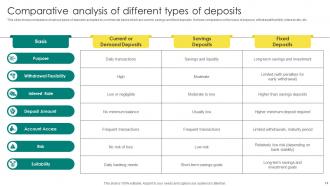
Slide 14: This slide shows comparison of various types of deposits accepted by commercial banks which are current, savings and fixed deposits.
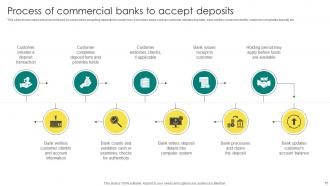
Slide 15: This slide shows steps which are followed by banks while accepting deposits for customers.
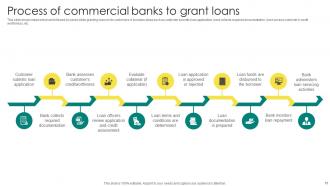
Slide 16: This slide shows steps which are followed by banks while granting loans to its customers.
Slide 17: This slide shows Table of Content for the presentation.
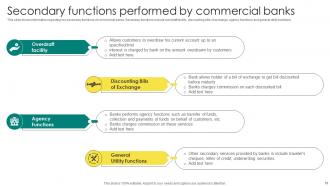
Slide 18: This slide shows information regarding key secondary functions of commercial banks.
Slide 19: This slide shows Table of Content for the presentation.
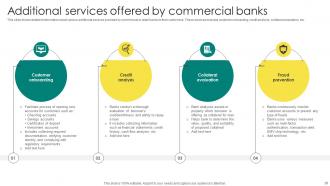
Slide 20: This slide shows detailed information about various additional services provided by commercial or retail banks to their customers.
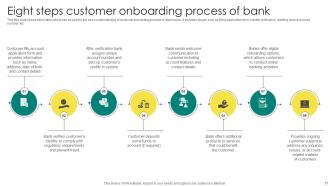
Slide 21: This this slide shows information which can be used to get basic understanding of customer onboarding process of retail banks.
Slide 22: This slide shows information regarding key asset management functions of commercial banks.
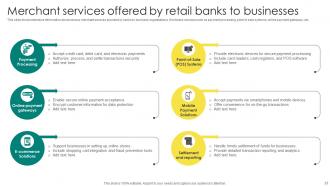
Slide 23: This slide shows extensive information about various merchant services provided by banks to business organizations.
Slide 24: This slide shows Table of Content for the presentation.
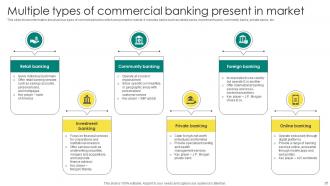
Slide 25: This slide shows information about various types of commercial banks which are present in market.
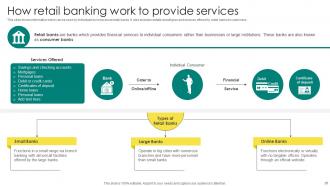
Slide 26: This slide shows information which can be used by individuals to know about retail banks.
Slide 27: This slide shows detailed information about working of investment banks.
Slide 28: This slide shows information which can be used by individuals to get understanding about community or regional banks.
Slide 29: This slide depicts extensive details about private banks which can be used by high net worth individuals to get personalized banking services.
Slide 30: This slide shows information which can be used to understand the concept of international banks.
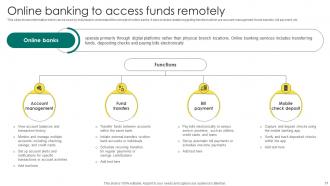
Slide 31: This slide shows information which can be used by individual to understand the concept of online banks.
Slide 32: This slide shows Table of Content for the presentation.
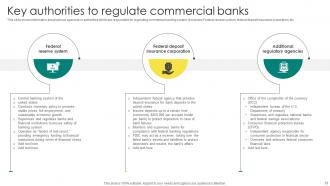
Slide 33: This slide shows information about various agencies or authorities which are responsible for regulating commercial banking system.
Slide 34: This slide depicts some basic elements of regulations which all the banks are bound to follow globally irrespective of their jurisdiction.
Slide 35: This slide shows extensive information which can be used by individuals to get basic understanding regarding Basel accords.
Slide 36: This slide shows information about various tools which are used to regulate and control commercial banks in a country.
Slide 37: This slide contains details regarding various reasons for which commercial banks are regulated.
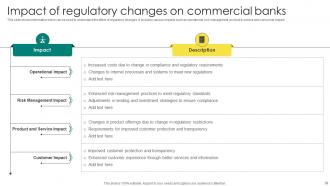
Slide 38: This slide shows information which can be used to understand the effect of regulatory changes.
Slide 39: This slide shows Table of Content for the presentation.
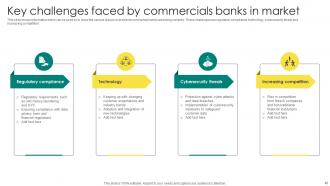
Slide 40: This slide shows information which can be used by to know the various issues or problems commercial banks are facing currently.
Slide 41: This slide shows Table of Content for the presentation.
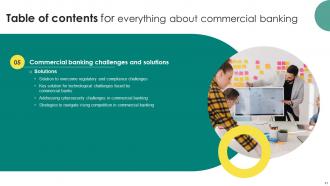
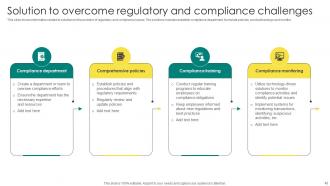
Slide 42: This slide shows information related to solutions to the problem of regulatory and compliance issues.
Slide 43: This slide shows information related to solutions to the problem of technological issues.
Slide 44: This slide shows extensive details regarding various solutions which can be used against cyberthreats by banks.
Slide 45: This slide shows detailed information regarding various solutions which can be used to tackle the issues related to increasing competition.
Slide 46: This slide shows Table of Content for the presentation.
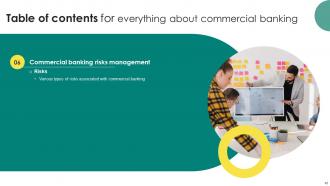
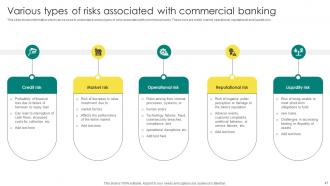
Slide 47: This slide shows information which can be used to understand various types of risks associated with commercial banks.
Slide 48: This slide shows Table of Content for the presentation.
Slide 49: This slide shows details regarding the key strategies which can be used by commercial banks to mitigate credit risk.
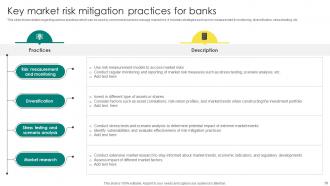
Slide 50: This slide shows details regarding various practices which can be used by commercial banks to manage market risk.
Slide 51: This slide shows details regarding various strategies which can be used by commercial banks to manage operational risk.
Slide 52: This slide shows information which can be used to understand how to manage reputational risk of commercial banks.
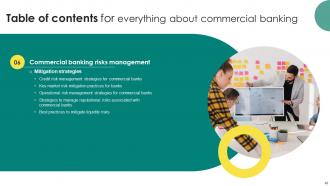
Slide 53: This slide shows information which can be used to understand how to manage liquidity risk associated with commercial banks.
Slide 54: This slide shows Table of Content for the presentation.
Slide 55: This slide shows overview of digital wallets which can be used to understand what are digital wallet.
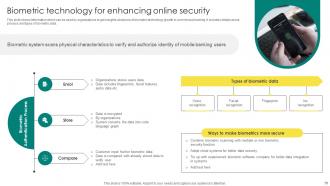
Slide 56: This slide shows information which can be used by organizations to get insights about use of biometric technology growth in commercial banking.
Slide 57: This slide shows the details of applying artificial intelligence and chatbots in commercial banking for better customer experience.
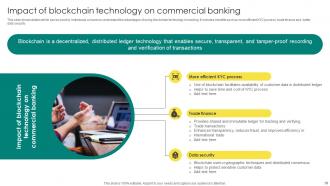
Slide 58: This slide shows details which can be used by individuals or banks to understand the advantages of using blockchain technology in banking.
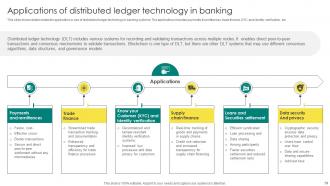
Slide 59: This slide shows details related to application or use of distributed ledger technology in banking systems.
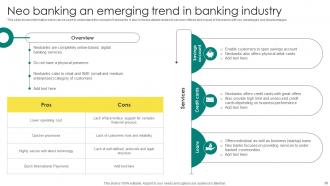
Slide 60: This slide shows information which can be used to understand the concept of Neobanks.
Slide 61: This slide shows details of ABCD technology integration i.e., artificial intelligence, block chain, cloud space and data.
Slide 62: This slide shows Table of Content for the presentation.
Slide 63: This slide shows various tips which can be used by commercial banks to build positive customer relationships.
Slide 64: This slide shows various strategies which can be used by bank managers to manage relationship with customers.
Slide 65: This slide shows details about various practices which can be adopted by bank representatives while communicating with customers.
Slide 66: This slide shows extensive details about two techniques which are cross-selling and upselling to maintain good relationship with banking customer.
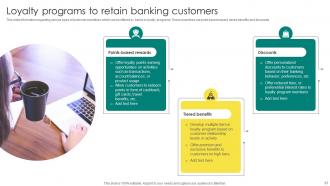
Slide 67: This slide information regarding various types of customer incentives which can be offered by banks in loyalty programs.
Slide 68: This slide shows Table of Content for the presentation.
Slide 69: This slide shows information which can be used to understand the major components of commercial banking in corporate social responsibilities.
Slide 70: This slide shows extensive information regarding the importance of corporate social responsibility in commercial banking.
Slide 71: This slide shows Table of Content for the presentation.
Slide 72: This slide shows information regarding various key performance indicators or metrics which can be used to measure or analyse the performance of commercial banks.
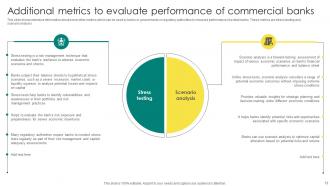
Slide 73: This slide shows extensive information about some other metrics which can be used by banks or governments or regulatory authorities to measure performance.
Slide 74: This slide shows Table of Content for the presentation.
Slide 75: This slide information regarding digital services and technologies which will be used by commercial banking industry in future.
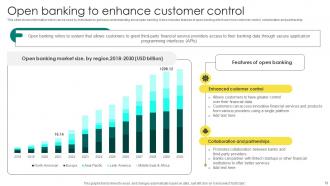
Slide 76: This slide shows information which can be used by individuals to get basic understanding about open banking.
Slide 77: This slide contains detailed information about integration of API in banking industry.
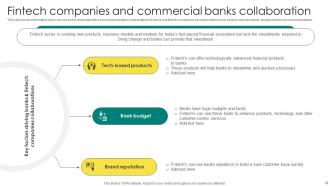
Slide 78: This slide shows information which can be used to understand the reasons behind future collaborations of banks and fintech companies.
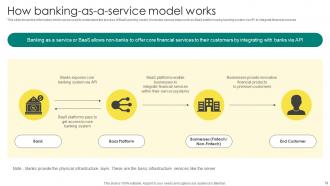
Slide 79: This slide shows the information which can be used to understand the process of BaaS working model.
Slide 80: This slide shows Table of Content for the presentation.
Slide 81: This slide shows details regarding the multiple types of requirements which need to be fulfilled before starting a new bank in Unites States of America.
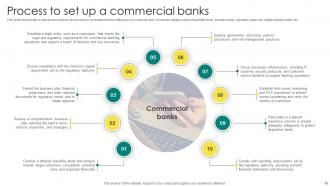
Slide 82: This slide shows step by step process which can be used or considered while setting up a commercial bank.
Slide 83: This slide shows Table of Content for the presentation.
Slide 84: This slide shows detailed information about market penetration strategy which was adopted by Bank of America to increase customer base.
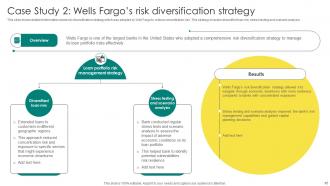
Slide 85: This slide shows detailed information about risk diversification strategy which was adopted by Well Fargo to reduce concentration risk.
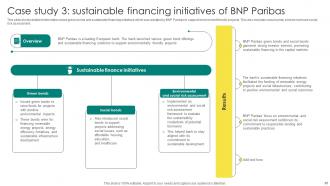
Slide 86: This slide shows detailed information about green bonds and sustainable financing initiatives which was adopted by BNP Paribas.
Slide 87: This slide showIcons slide for everything about commercial banking
Slide 88: This is a Thank You slide with address, contact numbers and email address.
Everything About Commercial Banking Powerpoint Presentation Slides Fin CD V with all 96 slides:
Use our Everything About Commercial Banking Powerpoint Presentation Slides Fin CD V to effectively help you save your valuable time. They are readymade to fit into any presentation structure.













































FAQs for Everything About Commercial Banking Powerpoint Presentation Slides
Commercial banks serve essential economic functions including accepting deposits, providing loans to businesses and individuals, facilitating payments through checking and electronic systems, offering credit services, and managing foreign exchange transactions. These institutions streamline capital allocation by connecting savers with borrowers, enable businesses to expand operations through accessible financing, and enhance economic stability, with many organizations finding that reliable banking partnerships ultimately deliver improved cash flow management and competitive operational advantages.
Interest rates significantly impact commercial banks by influencing their net interest margin, which determines profitability through the spread between deposit costs and lending revenues. Higher rates enable banks to charge more for loans while managing deposit competition, though they may reduce loan demand, while lower rates compress margins but stimulate borrowing activity, ultimately requiring strategic balance between volume and profitability across economic cycles.
Commercial banks facilitate international trade by providing letters of credit, trade financing, documentary collections, and foreign exchange services to businesses engaged in cross-border transactions. Through specialized trade finance departments, banks enable importers and exporters to mitigate payment risks, access working capital, and navigate currency fluctuations, while offering competitive exchange rates and hedging instruments, ultimately streamlining global commerce and reducing transaction costs.
Digital banking and fintech have revolutionized commercial banking by streamlining loan approvals, automating risk assessments, enhancing customer onboarding, and enabling real-time payment processing. These technologies deliver faster transaction speeds, reduced operational costs, and improved customer experiences, while traditional banks increasingly partner with fintech companies to remain competitive in an evolving financial landscape.
Commercial banking operates under comprehensive regulatory frameworks including Basel III capital requirements, Anti-Money Laundering (AML) protocols, Consumer Financial Protection Bureau (CFPB) guidelines, Federal Reserve supervision, and regional banking authorities. These regulations enhance operational transparency, risk management, and customer protection by standardizing capital reserves, transaction monitoring, and compliance reporting, ultimately delivering greater financial stability and consumer trust while enabling banks to compete more effectively in increasingly regulated markets.
Commercial banks assess credit risk through credit scoring models, financial statement analysis, collateral evaluation, debt-to-income ratios, and payment history reviews. These comprehensive assessments enable banks to streamline loan approvals while minimizing default risks, with many financial institutions finding that automated scoring systems combined with human expertise ultimately delivers faster processing and better risk management across their lending portfolios.
Commercial banks manage liquidity risks during volatile conditions through diversified funding sources, maintaining adequate cash reserves, stress testing scenarios, and establishing credit facilities with central banks and other institutions. These strategies enable banks to meet withdrawal demands while continuing lending operations, with many financial institutions finding that proactive liquidity management ultimately delivers operational stability and maintains customer confidence during economic uncertainty.
Capital adequacy ratios measure a bank's financial stability by comparing capital reserves to risk-weighted assets, ensuring institutions can absorb losses while maintaining operations. These ratios enable regulatory compliance, enhance investor confidence, and support sustainable lending practices, with many commercial banks finding that strong capital positions deliver competitive advantages in loan pricing, deposit attraction, and long-term growth strategies.
Commercial banks contribute to local economic development by providing business loans, supporting small enterprises, facilitating infrastructure financing, and enabling capital formation within communities. Through lending to local businesses, banks help create employment opportunities, stimulate entrepreneurial ventures, and foster economic growth, with many regional banks finding that targeted community investments ultimately strengthen both local economies and their own customer bases.
Digital transformation, artificial intelligence, blockchain technology, open banking platforms, and enhanced cybersecurity measures are revolutionizing commercial banking operations. These innovations streamline loan processing, automate risk assessment, and deliver personalized customer experiences, with many financial institutions finding that strategic technology adoption enables faster decision-making, reduced operational costs, and stronger competitive positioning in an increasingly digital marketplace.
Commercial banks can enhance customer experience through digital transformation initiatives, personalized service offerings, omnichannel communication platforms, AI-powered chatbots, and streamlined account management systems. These strategic approaches enable banks to deliver faster transaction processing, 24/7 customer support, and tailored financial solutions, while many institutions find that proactive engagement and seamless digital experiences significantly boost customer retention and competitive advantage.
Commercial banks leverage data analytics through customer behavior analysis, risk assessment modeling, fraud detection systems, personalized product recommendations, and operational efficiency optimization. These technologies enable banks to streamline loan approvals, enhance customer experiences, and minimize financial risks, with many institutions finding that predictive analytics delivers faster services, reduced costs, and ultimately stronger competitive advantage in an increasingly digital banking landscape.
Commercial banks should prioritize transparency in fees and terms, ensure fair lending practices without discrimination, protect customer data privacy, maintain confidentiality of financial information, and provide honest financial advice. These ethical foundations build long-term trust while enabling banks to deliver superior customer experiences, reduce regulatory risks, and ultimately gain competitive advantage in an increasingly scrutinized financial services landscape.
Economic downturns significantly impact commercial bank solvency and profitability through increased loan defaults, reduced lending demand, and declining asset values. These conditions compress net interest margins, elevate provision expenses for bad debts, and strain capital ratios, with many institutions finding that diversified revenue streams and robust risk management ultimately determine their resilience during challenging economic cycles.
Commercial banks offer comprehensive services including deposits, loans, and payment processing to businesses and individuals, while credit unions are member-owned cooperatives with limited membership and investment banks focus on securities, mergers, and capital markets. These distinctions create different operational models, with commercial banks serving broader markets through extensive branch networks, credit unions delivering personalized service to specific communities, and investment banks specializing in complex financial transactions for corporations and institutional clients.
-
“Easy to use. I always wanted to have a quick search for products and SlideTeam has helped me have it.”
-
Professional and unique presentations.