

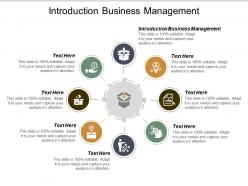
Introduction business management ppt powerpoint presentation portfolio examples cpb





Try Before you Buy Download Free Sample Product
 Impress Your
Audience
 100%
Editable
 Save Hours
of Time


Break free from any and all fears with our Introduction Business Management Ppt Powerpoint Presentation Portfolio Examples Cpb. They dispel all apprehensions.
People who downloaded this PowerPoint presentation also viewed the following :
Introduction business management ppt powerpoint presentation portfolio examples cpb with all 5 slides:
Inspire folks to combine forces with our Introduction Business Management Ppt Powerpoint Presentation Portfolio Examples Cpb. Advocate joint effort.



FAQs for Introduction business management ppt powerpoint presentation
You need clear goals and solid financial planning first. Team leadership is huge too - honestly, I think that's where most people mess up. Get your operational processes down pat and track your performance metrics religiously. Risk management saved my butt more times than I can count, so don't skip that part. Market analysis and competitive intel will keep you from making dumb moves. Here's the thing though - it all has to click together. Do an audit of where you're at now, find your worst gaps, and hit those hard first. Start there and build out.
Honestly, you need both the money stuff and the day-to-day operations metrics. Revenue growth and profit margins are obvious ones to watch. But employee satisfaction and customer retention? Those matter way more than people think. Track how fast you're hitting project deadlines too - that tells you if things are actually running smoothly or just look good on paper. Oh, and don't forget ROI and whether you're meeting those big strategic goals you set. Pick maybe 5-7 metrics that actually matter for your specific business and check them monthly. Trust me, drowning in data helps nobody.
Honestly, leadership is what makes or breaks management. Without it, you're just bossing people around instead of actually inspiring them to do good work. I made that mistake early on - yikes. Start with listening better and communicating clearly. Give feedback regularly, not just during those awkward annual reviews everyone hates. Be confident when making decisions but don't shut out your team's input. Oh, and here's what actually works: pick one thing to focus on this week. Then ask your team for real feedback about how you lead. They'll tell you stuff you never realized about yourself.
Dude, tech can totally transform how you run things. Project management tools help track everything, CRM systems keep your customers organized, and analytics give you solid data to work with. The automation stuff? Game changer - I'm talking hours saved every week on boring repetitive tasks. Cloud tools are pretty great too since your team can work from literally anywhere. Oh, and don't try to overhaul everything at once - that's a recipe for chaos. Just pick one annoying process that's driving you crazy and tackle that first. You'll be amazed at the difference it makes.
Honestly? Cash flow problems will probably hit you first - that stuff kills way more businesses than crappy ideas ever do. Then you've got the whole hiring nightmare, plus trying to keep up when the market shifts. I'd start with some basic financial planning so you're not scrambling every month. Building a decent team culture helps with retention too, but that takes time. Oh, and stay super close to your customers - they'll tell you what's coming before anyone else does. Communication breakdowns are brutal too. Figure out which one's destroying you right now and tackle that first.
Look, engaged employees are the difference between a team that shows up and one that actually gives a damn. Higher productivity, better customer service, less turnover - all that good stuff comes from people who care. Disengaged workers? They're just expensive seat-warmers doing the bare minimum. But when someone's actually invested, they'll go above and beyond and solve problems before you even know they exist. Honestly, I've seen teams transform when leadership starts paying attention to this stuff. Run some pulse surveys or regular check-ins to see where you stand, then actually do something with the feedback.
Start with psychological safety - your team won't pitch crazy ideas if they're worried about looking stupid. Google's 20% time thing? That actually works when you give people real space to experiment. Also celebrate the smart failures, which honestly feels weird at first but pays off. Mix up your teams - innovation happens when different people collide. Those approval chains that take forever? Kill them. They're creativity killers. Here's what I'd do: ask your team straight up what's blocking their best ideas right now, then just... remove those roadblocks one by one.
Don't treat risk assessment like some separate boring task - just weave it into what you're already doing. I always throw in quick "what could blow up?" questions during team meetings. Sounds dramatic but trust me, it works. For bigger projects, keep simple risk lists and actually update them monthly (not just create and forget). Your team needs to speak up about potential issues early - waiting never helps. Oh and do quarterly reviews to see what you missed vs what actually happened. You'll start noticing patterns pretty fast.
Honestly, data analytics just cuts through all the guesswork. Instead of wondering why sales dipped last month, you'll actually know. Seasonal patterns become obvious, cash flow problems show up before they bite you, and you can finally see which marketing campaigns are worth the money. Customer segments start making sense too - like realizing your weekend buyers behave totally different than weekday ones. I'd say pick one thing that's bugging you about your business and start there. Once you see how helpful it is (and it really is), you can branch out to other areas.
Look, change management is basically your survival kit when everything's constantly shifting around you. Markets never stay put, tech evolves daily, and customer demands? Forget about it. Your team will get overwhelmed and push back on every pivot without solid processes in place. I've seen it happen way too many times. The trick is getting buy-in early and actually explaining WHY you're changing things - people aren't mind readers. You need clear steps they can follow. Honestly, just pick one small upcoming change and walk your team through it systematically. That's how you stop scrambling and start thriving instead.
Yeah totally doable on a tight budget! Google Workspace is your friend for collaboration stuff. One-on-ones don't cost anything except time, and honestly? Most fancy management software is just overpriced nonsense for small teams anyway. Document what you're already doing first, then spot your biggest headaches. Regular processes help way more than expensive tools - just be consistent with whatever you pick. Oh and don't try fixing everything at once, that's a recipe for burnout. Maybe tackle one problem area each month instead.
Honestly, cross-functional teams are a game changer for cutting through departmental BS. You get marketing, ops, finance, and tech all talking to each other instead of playing telephone. Decisions happen way faster when everyone's already caught up. Different people spot different problems too, so you catch stuff early. Your team picks up skills outside their usual bubble - which is pretty cool actually. Just make sure someone's clearly in charge of wrangling everyone, or it'll turn into a total mess. I've seen teams spin their wheels for weeks without good coordination.
Don't just slap sustainability on top of what you're already doing - weave it right into everything. Set some actual measurable goals that connect to your business strategy. Train managers to think about environmental and social impact with every decision, whether that's hiring or sourcing or whatever. I'd start with regular audits and make someone own the progress tracking (otherwise it just gets forgotten). The trick is showing your team how this stuff actually drives business results. Nobody wants to feel like they're just checking boxes for the sake of it, you know? Break it into smaller pieces so it doesn't feel impossible.
Honestly, Agile is a game-changer for flexibility. When stuff inevitably changes (and it always does), you can actually pivot instead of being stuck with some rigid plan from six months ago. Your team gets to see wins every few weeks rather than grinding toward some far-off deadline. Customer feedback comes way earlier too, which saves you from those epic project disasters. The whole collaborative thing breaks down departmental silos - though that part can be messy at first. I'd say try it with just one team before going all-in company-wide. Way less risky that way.
Honestly, communication is like 90% of being a good manager. You can't delegate properly or give decent feedback without it. When managers suck at communicating, everything falls apart - missed deadlines, confused employees, the whole mess. But the ones who nail it? Their teams actually want to work for them. I've watched some pretty mediocre managers climb the ladder just because people understood what they wanted. Be direct but don't forget to actually listen when your team talks back. Oh, and avoid those weird corporate phrases that make you sound like a robot.
No Reviews