

Executing Strategies To Boost SEM Campaign Results Powerpoint Ppt Template Bundles DK MD





Try Before you Buy Download Free Sample Product
 Impress Your
Audience
 100%
Editable
 Save Hours
of Time


Our Executing Strategies To Boost SEM Campaign Results Powerpoint Ppt Template Bundles DK MD are topically designed to provide an attractive backdrop to any subject. Use them to look like a presentation pro.
People who downloaded this PowerPoint presentation also viewed the following :
Content of this Powerpoint Presentation
Slide 1: This slide introduces Executing Strategies to Boost SEM Campaign Results. Commence by stating Your Company Name.
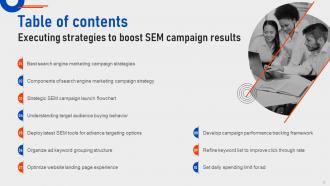
Slide 2: This slide includes the Table of contents.
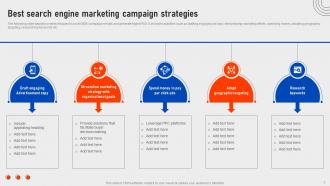
Slide 3: The following slide depicts some techniques to boost SEM campaign results and generate higher ROI.
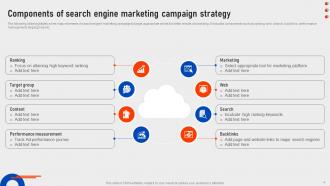
Slide 4: This slide highlights the Components of search engine marketing campaign strategy.
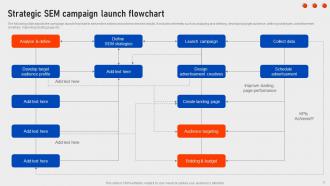
Slide 5: This slide showcases the Strategic SEM campaign launch flowchart.
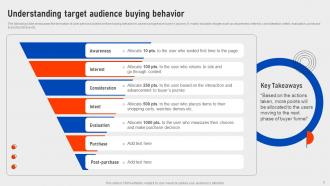
Slide 6: This slide focuses on Understanding target audience buying behavior.
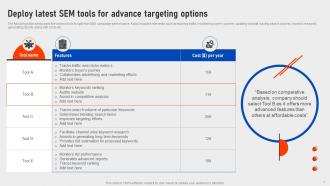
Slide 7: This slide aims to Deploy latest SEM tools for advance targeting options.
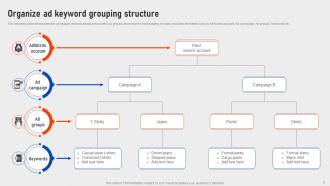
Slide 8: The following slide showcases the campaign keyword structure to control ad groups and ensure smart bidding.
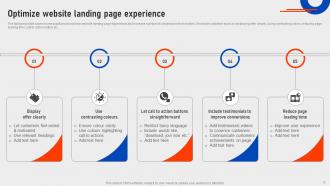
Slide 9: This slide covers some practices to improve website landing page experience and increase number of conversions from visitors.
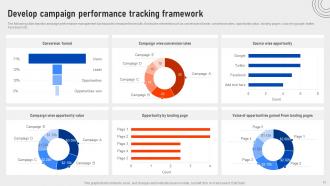
Slide 10: This slide depicts campaign performance management dashboard to measure the results.
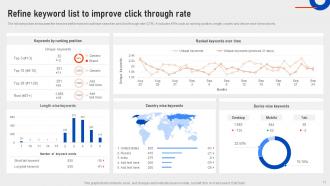
Slide 11: This slide showcases the keyword performance to optimize searches and click through rate (CTR).
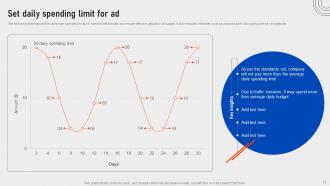
Slide 12: This slide presents the campaign spending by day to achieve best results and ensure effective utilization of budget.
Slide 13: This is the Thnak You slide for acknowledgement.
Executing Strategies To Boost SEM Campaign Results Powerpoint Ppt Template Bundles DK MD with all 18 slides:
Use our Executing Strategies To Boost SEM Campaign Results Powerpoint Ppt Template Bundles DK MD to effectively help you save your valuable time. They are readymade to fit into any presentation structure.






FAQs for Executing Strategies To Boost SEM Campaign Results Powerpoint Ppt Template
A successful SEM strategy includes comprehensive keyword research, compelling ad copy creation, strategic bid management, landing page optimization, and continuous performance analytics. These components work together by targeting relevant audiences, maximizing ad visibility, and converting clicks into customers, with many businesses finding that integrated SEM approaches deliver higher ROI and sustainable competitive advantage.
Keyword research enhances SEM campaigns by identifying high-converting search terms, analyzing competitor strategies, and uncovering long-tail opportunities that align with user intent. Through strategic keyword selection, businesses streamline ad targeting, reduce cost-per-click expenses, and improve quality scores, with many e-commerce and service companies finding significantly higher conversion rates and better ROI.
Ad copy serves as the critical bridge between search queries and user clicks, directly influencing click-through rates, quality scores, and conversion rates through compelling headlines, relevant messaging, and clear value propositions. Optimization involves A/B testing different variations, incorporating target keywords naturally, and aligning copy with landing page content, with many businesses finding that personalized, benefit-focused messaging significantly improves campaign ROI and competitive positioning.
Ad extensions enhance SEM performance by providing additional information, increasing ad real estate, improving click-through rates, and boosting Quality Scores. Through sitelinks, callouts, structured snippets, and location extensions, businesses deliver more relevant information to potential customers, ultimately increasing visibility and conversions while reducing cost-per-click in competitive search landscapes.
Key SEM metrics include click-through rates, conversion rates, cost-per-click, quality scores, and return on ad spend, alongside impression share and cost-per-acquisition tracking. These performance indicators enable businesses to optimize campaign efficiency, reduce acquisition costs, and maximize ROI across search platforms, with many organizations finding that consistent monitoring delivers significantly improved competitive positioning.
Budget management significantly impacts SEM effectiveness by determining bid competitiveness, keyword coverage, ad positioning, and campaign duration across search platforms. Strategic allocation enables advertisers to maximize reach during peak conversion periods, target high-value keywords, and maintain consistent visibility, while poor budgeting leads to limited exposure, missed opportunities, and ultimately reduced ROI and competitive disadvantage.
A/B testing refines SEM campaigns by comparing ad copy variations, landing page designs, keyword bidding strategies, and audience targeting parameters to identify top-performing elements. Through systematic testing of headlines, call-to-action buttons, and bid adjustments, marketers can optimize click-through rates, conversion rates, and cost-per-acquisition, ultimately delivering higher ROI and competitive advantage in search marketing.
Common SEM pitfalls include poor keyword research, inadequate negative keyword lists, generic ad copy, ignoring mobile optimization, and insufficient bid management. These mistakes often result in wasted budgets and low conversion rates, with many businesses finding that strategic keyword targeting, compelling ad messaging, and continuous performance monitoring ultimately deliver higher ROI and competitive advantage.
Long-tail keywords benefit SEM strategies by delivering higher conversion rates, lower competition costs, and more targeted traffic from users with specific search intent. These detailed phrases enable businesses to capture niche audiences, reduce cost-per-click expenses, and improve quality scores, with many e-commerce and service-based companies finding enhanced ROI through strategic long-tail targeting.
Landing page optimization is crucial in SEM because it directly impacts conversion rates, quality scores, and campaign ROI by ensuring alignment between ad messaging and page content. Through strategic optimization, businesses enhance user experience, reduce bounce rates, and maximize ad spend efficiency, with many e-commerce and service companies finding significantly improved conversion rates and lower acquisition costs.
Seasonality significantly impacts SEM campaigns through fluctuating search volumes, keyword costs, and consumer behavior patterns across different periods like holidays, weather changes, and industry cycles. Successful strategies adapt by adjusting budgets during peak seasons, incorporating seasonal keywords, modifying ad copy to reflect timely offers, and analyzing historical data to predict trends, ultimately enabling businesses to maximize ROI while capitalizing on seasonal opportunities.
Search engine marketing encompasses both paid advertising and organic optimization strategies, while search engine optimization focuses specifically on improving organic search rankings through content, technical improvements, and link building. SEM delivers immediate visibility through paid campaigns alongside long-term organic growth, with many businesses finding that this strategic combination maximizes search presence, drives qualified traffic, and ultimately delivers faster customer acquisition and sustained competitive advantage.
Remarketing enhances SEM effectiveness by re-engaging previous website visitors with targeted ads, increasing conversion rates through personalized messaging, and reducing cost-per-acquisition by focusing on warm prospects. This strategic combination enables businesses to capture users who showed initial interest, with many e-commerce and service companies finding significantly improved ROI and faster sales cycles.
SEM performance tracking tools include Google Ads reporting, Microsoft Advertising Intelligence, SEMrush, Ahrefs, Google Analytics, and Moz Pro. These platforms streamline campaign optimization by monitoring click-through rates, conversion tracking, and keyword performance, with many digital marketing teams finding that integrated dashboards ultimately deliver comprehensive insights and competitive advantage in increasingly data-driven advertising landscapes.
Local targeting enhances SEM results for small businesses by focusing ad spend on nearby customers, using location-specific keywords, and leveraging geo-targeted campaigns that reduce competition costs. Small retailers, restaurants, and service providers find that geographic radius targeting, local keyword optimization, and community-focused ad copy deliver higher conversion rates and better ROI than broad targeting approaches.
-
Every time I ask for something out-of-the-box from them and they never fail in delivering that. No words for their excellence!
-
Loved the fact that SlideTeam provides clean, high-definition, and professional PowerPoint products.