

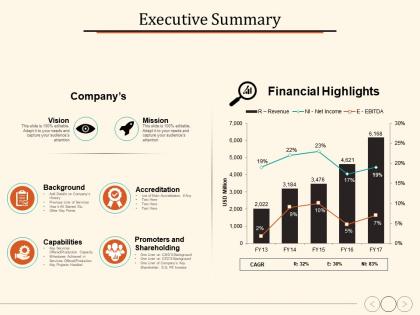
Executive summary background accreditation capabilities vision mission




Try Before you Buy Download Free Sample Product
 Impress Your
 Audience
 100%
100% Editable
 Save Hours
 of Time


Improve your chances of getting that all clear with our Executive Summary Background Accreditation Capabilities Vision Mission. Folks will feel driven to give you the go ahead.
People who downloaded this PowerPoint presentation also viewed the following :
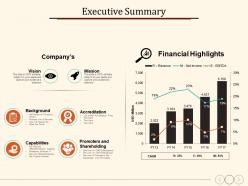
Executive summary background accreditation capabilities vision mission with all 5 slides:
Cocoon your audience with our Executive Summary Background Accreditation Capabilities Vision Mission. They will feel safe amongst your views.
FAQs for Executive summary background accreditation
Think of accreditation like a quality stamp on your presentation template. It shows your audience that the content meets industry standards and got checked by legit organizations. When you slap those accreditation logos on there or mention you're following their guidelines, you're basically riding on their reputation - which honestly works pretty well. Super helpful when presenting to people who don't know you yet, since they can see someone else already vouched for your work. I'd definitely put any relevant accreditations right up front on your title slide where everyone can see them.
First thing - figure out which accreditation body actually matters for your industry. They'll have specific criteria you need to hit, and trust me, the generic stuff online won't help much. Download their standards docs and do a honest comparison of where you are vs. where you need to be. Internal audits are your friend here - catch problems before they do. Oh, and definitely talk to companies who've already been through this process. They usually know shortcuts that aren't written anywhere. One more thing - don't wait until the last minute to apply. You'll probably need time for fixes.
National ones stick to whatever standards your country uses. International accreditation works across borders with global criteria - way more recognized everywhere. Honestly, it depends on where you're planning to do business. Going international costs more and drags on longer, but you'll get credibility pretty much anywhere. National's quicker and won't break the bank, though it might not count for much outside your home turf. Like, if you're thinking ISO versus some local certification - totally different ballgame. I'd figure out which markets you actually want to hit first, then work backwards from there.
Oh man, accreditation stuff is such a pain but yeah it totally dictates your template design. You've gotta build in space for all their required logos and disclaimer text right from the start - can't just slap them on later. The worst part? These elements usually need the best spots on your slides, so you're designing around them instead of making them fit your layout. Some accrediting bodies even mandate specific fonts or colors (so fun, right?). Just make sure your master templates have designated areas for all that compliance text so people don't accidentally mess up and create something that won't pass review.
So they're gonna check if your curriculum actually works and if your professors know their stuff. Student outcomes are huge - like, are people actually learning what you say they're learning? Your facilities and support services matter too. Oh, and financial stability is critical because nobody wants their degree from a school that goes belly-up next year (seen it happen). They'll look at retention rates, graduation stats, how you track your own progress. Honestly, the whole thing's pretty thorough. Start keeping records of everything now - you'll thank me later when review time comes.
Think of accreditation like a trust badge - it makes people way less skeptical right off the bat. Instead of you telling customers "hey, we're awesome," you've got a third-party organization backing you up, which honestly just hits different. People see those certifications and immediately feel more confident about buying from you. The trick is actually showing them off properly though. Don't hide your accreditations in some tiny footer nobody reads. Put them front and center on your website, brochures, wherever customers are making decisions. Just make sure they're actually relevant to what you're selling - random certifications won't help much.
Honestly, accredited templates are a game changer for training programs. They give you instant credibility and cover all those industry standards you'd probably stress about missing. The content's already been validated by experts, so you're not starting from scratch - which saves a ridiculous amount of time. Your employees actually get real certifications they can show off on LinkedIn too, which is always a nice bonus. But here's the big thing: compliance coverage. Most accredited templates already handle regulatory stuff that's easy to overlook otherwise. I'd start by figuring out which accreditation bodies matter in your industry first, then work from there.
So here's the thing about accredited templates - they're actually built for this stuff. Multiple formats covering the same material: visual diagrams, text explanations, interactive bits, hands-on activities. Pretty smart if you ask me. You can dial up or down the complexity depending on who you're training. Most use universal design principles (sounds fancy but just means accessible from day one). The cool part? Accreditation bodies make this inclusivity mandatory, so you're not shooting in the dark trying to figure out what works. You get frameworks that are already tested with diverse groups.
Oh yeah, you'll definitely want to check that stuff first! Healthcare's probably the biggest pain - they need CME accreditation for medical presentations. Financial services has compliance rules too, especially for investment advice. Legal education needs CLE credits, and engineering/architecture usually require continuing ed accreditation as well. Honestly the whole system's kind of a mess to navigate. But seriously, check with your industry's governing body before you start creating anything - trust me, it's way easier than redoing everything later because you missed some random requirement.
Honestly, automation is huge for this stuff. You can set up systems that automatically check your templates against compliance standards and catch issues before you even submit. The version control tracking alone will save you so much headache - I wish we'd done this sooner at my last job. Most platforms can auto-fill documentation fields too. Just make sure whatever you pick actually plays nice with your current systems, otherwise you're just creating another mess to deal with. I'd start by figuring out where you're wasting the most time, then find tools that fix those specific problems first.
Documentation gaps will kill you - seriously, start collecting everything now. Your team won't get the new standards right away, so budget extra time for training. Mock assessments are clutch, trust me on this one. Resource allocation gets messy because you need people focused on prep but can't pause normal work. Oh, and those deadlines? Way tighter than they seem upfront. Assign someone to own each requirement or stuff falls through cracks. I'd say start like 6 months earlier than feels necessary - sounds excessive but you'll thank yourself later.
So accreditation basically means you're stuck updating your presentation templates whenever standards change. Super annoying, honestly. When accrediting bodies revise their requirements, your templates need to match - new formatting, different content sections, updated criteria. The constant review cycles keep you tweaking layouts and fixing required elements. But hey, at least it stops your materials from looking outdated? My take: design flexible templates from day one. Trust me on this one. Otherwise you'll be doing complete rebuilds every time they decide to shake things up, which happens more than you'd think.
So peer review is basically what makes educational accreditation legit. Subject experts look over your materials - content accuracy, teaching methods, all that stuff. They're checking if you meet the standards and will tell you what needs fixing. Honestly, these reviewers really know their field, so don't submit garbage thinking you'll slide by. The whole point is giving your resources credibility so schools will actually trust them. It's like getting your work vetted by the people who wrote the textbooks (which some of them probably did). Bottom line: solid content gets you through, weak stuff doesn't.
Honestly, accreditation is like having a golden ticket when you're trying to win clients. Slap those logos everywhere - website, business cards, even your presentation templates. I've literally watched companies beat out competitors just because they had the right credentials. It's wild how much that stuff matters. Train your sales people to mention it right off the bat when they're pitching. Oh, and definitely emphasize how accredited providers get better results than the other guys. Clients eat that up because they're always worried about picking the wrong vendor. Makes their decision way easier.
Honestly, AI's gonna completely flip how we handle accreditation for presentation tools. New standards are coming - data privacy, accessibility, LMS compatibility, all that stuff. Security's getting way tighter since everyone's still working remotely. Manual reviews are such a pain right now, so automation can't come soon enough. Mobile compatibility and real-time collab features? Those'll be mandatory, not just bonus points. Oh, and interoperability requirements are definitely expanding too. You should probably start mapping out where your current tools fall short compliance-wise. That way you won't be scrambling when the new rules drop.
No Reviews