

Exploring Cryodesiccation The Science Of Freeze Drying PPT PowerPoint ST AI





Try Before you Buy Download Free Sample Product
 Impress Your
Audience
 100%
Editable
 Save Hours
of Time


Unlock the secrets of cryodesiccation with our comprehensive PowerPoint presentation. Dive into the science of freeze drying, exploring its applications, benefits, and techniques. Perfect for professionals and researchers, this deck offers insightful visuals and expert analysis to enhance your understanding of this innovative preservation method.
People who downloaded this PowerPoint presentation also viewed the following :
Exploring Cryodesiccation The Science Of Freeze Drying PPT PowerPoint ST AI with all 42 slides:
Use our Exploring Cryodesiccation The Science Of Freeze Drying PPT PowerPoint ST AI to effectively help you save your valuable time. They are readymade to fit into any presentation structure.












FAQs for Exploring Cryodesiccation The Science Of Freeze Drying PPT
Cryodesiccation is a freeze-drying process that removes moisture from materials by freezing them and then sublimating ice directly into vapor under vacuum conditions, bypassing the liquid phase entirely. Unlike conventional heat-based drying methods that can damage sensitive compounds, this approach preserves structural integrity, nutritional content, and bioactive properties, with pharmaceutical companies, food manufacturers, and biotechnology firms finding that it delivers superior product quality and extended shelf life.
Cryodesiccation applications in the food industry include instant coffee production, pharmaceutical-grade supplements, premium freeze-dried fruits, emergency food supplies, and specialty ingredients for processed foods. This technology enables manufacturers to preserve nutritional content, extend shelf life, and reduce storage costs, with many food companies finding that cryodesiccated products deliver superior quality and competitive advantage.
Temperature significantly impacts cryodesiccation by controlling sublimation rates, moisture removal efficiency, and product stability throughout the freeze-drying cycle. Lower temperatures enhance structural preservation and reduce degradation, while controlled temperature gradients optimize drying times, with pharmaceutical and biotechnology companies finding that precise temperature management delivers superior product quality, extended shelf life, and enhanced therapeutic efficacy.
Sublimation and desorption are the core mechanisms in cryodesiccation, where frozen water directly transitions to vapor while bound moisture is removed from material surfaces through controlled temperature and pressure manipulation. These processes enable pharmaceutical manufacturers, food processors, and biotechnology companies to achieve superior product preservation, extended shelf life, and maintained structural integrity, ultimately delivering enhanced quality and reduced storage costs compared to conventional drying methods.
Cryodesiccation offers significant advantages including superior structural preservation, extended shelf life, reduced storage costs, minimal contamination risk, and enhanced stability at room temperature. Through freeze-drying technology, research institutions and pharmaceutical companies achieve better sample integrity, streamlined logistics, and reduced dependency on expensive cold-chain systems, ultimately delivering cost-effective preservation solutions.
Cryodesiccation improves pharmaceutical shelf life by removing moisture at extremely low temperatures, preserving molecular structure, preventing degradation, and maintaining potency for extended periods. This freeze-drying process enables vaccines, antibiotics, and biologics to remain stable without refrigeration, ultimately delivering cost-effective storage solutions and enhanced global distribution capabilities for pharmaceutical companies.
Cryodesiccation equipment includes freeze-dryers with vacuum chambers, condenser coils, vacuum pumps, temperature controllers, and pressure monitoring systems. These technologies streamline preservation by removing moisture at low temperatures, maintaining product integrity, and enabling extended shelf life, with pharmaceutical manufacturers, food processors, and research laboratories finding that automated systems deliver consistent results while reducing operational costs.
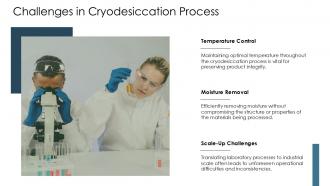
Cryodesiccation challenges include high energy costs, complex equipment maintenance requirements, extended processing times, potential product degradation risks, and significant initial capital investment. While these limitations present operational considerations, many pharmaceutical and biotechnology companies find that strategic implementation ultimately delivers superior product stability and extended shelf life, providing competitive advantage in increasingly demanding preservation markets.
Cryodesiccation significantly influences food texture by creating porous, lightweight structures while maintaining original shape, and preserves flavor compounds more effectively than traditional drying methods through low-temperature processing. Through freeze-drying technology, food manufacturers achieve enhanced rehydration properties, concentrated flavors, and extended shelf life, with many snack food and ingredient companies finding that this process delivers premium quality products while maintaining nutritional integrity.
Cryodesiccation facilitates storage and transport by removing moisture through sublimation while maintaining structural integrity, significantly extending shelf life and eliminating refrigeration requirements during distribution. This process enables pharmaceutical companies, biotechnology firms, and food manufacturers to streamline logistics, reduce transportation costs, and deliver temperature-sensitive products globally, ultimately enhancing operational efficiency and market reach.
Cryodesiccation safety measures include proper ventilation systems, personnel protective equipment, temperature monitoring protocols, emergency shutdown procedures, and specialized training programs. These precautions streamline operations by preventing cryogenic injuries, maintaining product integrity, and ensuring regulatory compliance, with pharmaceutical and biotechnology facilities finding that comprehensive safety protocols ultimately deliver enhanced operational efficiency and reduced liability risks.
Recent research has advanced cryodesiccation understanding through improved freeze-drying protocols, enhanced vacuum control systems, optimized temperature cycling methods, and better preservation matrix formulations. These technological improvements enable pharmaceutical companies, biotechnology firms, and research institutions to achieve superior product stability, reduced processing times, and enhanced recovery rates, ultimately delivering more cost-effective preservation solutions.
Cryodesiccation presents both environmental challenges and opportunities compared to traditional drying methods, requiring higher initial energy consumption for freezing but eliminating heat-based processing and reducing chemical preservative needs. While the technology demands significant electricity for vacuum systems and refrigeration, it ultimately delivers superior product quality with minimal waste generation, enhanced shelf stability, and reduced packaging requirements, with many pharmaceutical and food processing companies finding that the strategic combination streamlines operations while minimizing overall environmental footprint.
Moisture content significantly affects cryodesiccation efficiency by determining sublimation rates, processing time, and energy requirements throughout the freeze-drying cycle. Higher initial moisture levels require extended processing periods and increased energy consumption, while optimized moisture control enables faster cycle times, reduced operational costs, and improved product quality, with pharmaceutical and food processing industries finding that precise moisture management ultimately delivers enhanced preservation outcomes and competitive manufacturing efficiency.
Cryodesiccation trends include expanded pharmaceutical applications, enhanced food processing integration, advanced biotechnology preservation, and emerging cosmetics formulations. These developments streamline product stability, reduce contamination risks, and enable longer shelf lives, with pharmaceutical and nutraceutical companies increasingly finding that cryodesiccation delivers superior ingredient preservation and ultimately enhanced competitive advantage in quality-sensitive markets.
-
They had the topic I was looking for in a readymade presentation…helped me meet my deadline.
-
Thanks to SlideTeam, we have an ideal template to present all the info we need to cover. Their slides give our numbers and projections a more clear and enchanting look.