

External Environment Analysis Powerpoint Ppt Template Bundles





Try Before you Buy Download Free Sample Product
 Impress Your
Audience
 100%
Editable
 Save Hours
of Time


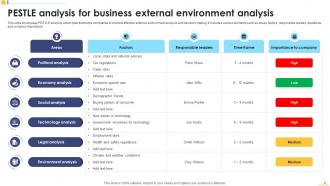
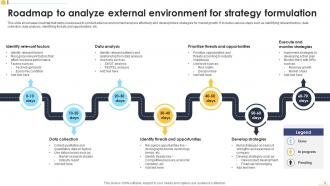
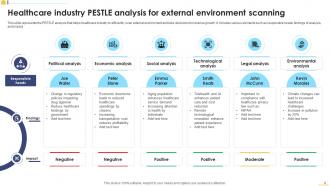
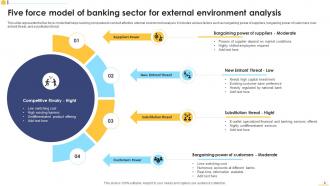
Introducing our comprehensive PowerPoint presentation on External Environment Analysis. In todays rapidly evolving business landscape, understanding the external forces and influences is paramount. This presentation is your indispensable guide to conducting a thorough environmental scan, assessing external factors, and performing macroenvironmental analysis. Dive deep into the nuances of PESTEL analysis Political, Economic, Social, Technological, Environmental, Legal to gain valuable insights into your industrys dynamics. Explore the intricacies of industry analysis to identify opportunities and threats, enabling you to make informed strategic decisions. Equip your team with the knowledge and tools needed to adapt, innovate, and thrive in a dynamic marketplace. Our External Environment Analysis PowerPoint is your key to staying ahead of the competition by comprehensively assessing the factors that shape your business landscape. Elevate your strategic planning with this essential resource.
People who downloaded this PowerPoint presentation also viewed the following :
External Environment Analysis Powerpoint Ppt Template Bundles with all 20 slides:
Use our External Environment Analysis Powerpoint Ppt Template Bundles to effectively help you save your valuable time. They are readymade to fit into any presentation structure.













FAQs for External Environment Analysis Powerpoint
The external environment encompasses economic conditions, competitive landscape, regulatory frameworks, technological advancements, social trends, and political factors that influence business operations. These components create both opportunities and challenges, with companies in sectors like retail adapting to digital transformation, financial institutions navigating regulatory changes, and manufacturers responding to supply chain disruptions, ultimately determining strategic positioning and competitive advantage.
Political stability significantly influences market entry strategies by affecting investment risk assessments, regulatory predictability, and operational security considerations. Companies entering stable regions typically pursue aggressive expansion through direct investment, joint ventures, or acquisitions, while unstable environments often require cautious approaches like licensing partnerships or phased market entry, with many multinational corporations finding that political stability ultimately determines their long-term strategic commitment levels.
Economic indicators influence consumer purchasing behavior through employment rates, inflation levels, interest rates, and income growth, directly shaping spending confidence and discretionary income availability. During economic uncertainty, consumers typically reduce non-essential purchases and prioritize necessities, while positive indicators like job growth and wage increases encourage increased spending on luxury items, travel, and major purchases, ultimately driving market demand fluctuations.
Businesses can effectively analyze social and cultural trends through consumer surveys, social media monitoring, demographic research, focus groups, and cultural trend reports. These methods enable organizations to identify shifting values, lifestyle changes, and emerging preferences, with retailers like fashion brands and food companies finding that proactive trend analysis delivers better customer alignment, enhanced product relevance, and competitive market positioning.
Technological advancements fundamentally reshape competitive landscapes by creating new market opportunities, disrupting traditional business models, and enabling innovative service delivery methods. Companies leveraging emerging technologies like AI, automation, and digital platforms gain significant competitive advantages through enhanced operational efficiency, faster customer response times, and reduced costs, ultimately forcing industry-wide transformation and strategic repositioning.
Environmental regulations drive industry transformation by establishing compliance standards, mandating emission reductions, and requiring sustainable resource management across operations. These frameworks compel organizations to innovate through cleaner technologies, circular economy practices, and green supply chains, with sectors like manufacturing, energy, and automotive finding that regulatory alignment ultimately delivers competitive advantages, operational efficiencies, and enhanced market positioning.
Companies can assess competitive threats through market intelligence gathering, competitor benchmarking, SWOT analysis, patent monitoring, and customer feedback analysis. These strategies enable organizations to track competitor pricing, product launches, and market positioning across industries like retail, technology, and financial services, ultimately delivering strategic insights that enhance competitive advantage and inform proactive business decisions.
Companies leverage demographic shifts through market segmentation analysis, consumer behavior mapping, product development adaptation, geographic expansion planning, and targeted marketing strategies. By analyzing aging populations, urbanization trends, and changing household compositions, businesses can identify underserved segments, develop tailored offerings, and strategically position themselves in emerging markets, ultimately delivering competitive advantage and sustained growth.
International trade agreements significantly influence market access, regulatory frameworks, tariff structures, and competitive dynamics that organizations must navigate. These agreements reshape supply chain strategies, pricing models, and expansion opportunities across borders, with companies in manufacturing, agriculture, and technology sectors finding that understanding trade provisions enables strategic positioning, cost optimization, and ultimately delivers competitive advantages in increasingly interconnected global markets.
Changes in consumer preferences significantly impact the external environment by altering market demand, competitive dynamics, pricing strategies, and product development priorities. These shifts compel businesses to adapt their offerings, marketing approaches, and operational strategies, with companies in retail, food service, and technology finding that responsiveness to evolving preferences delivers sustained competitive advantage and customer loyalty.
Tools for external environment analysis include PESTLE analysis, Porter's Five Forces, competitive intelligence platforms, SWOT analysis, and scenario planning frameworks. These methodologies streamline strategic planning by identifying market opportunities, assessing competitive threats, and evaluating regulatory changes, with many organizations finding that comprehensive external analysis ultimately delivers better risk management and sustainable competitive advantage.
Understanding external economic factors enables businesses to mitigate risks by anticipating market fluctuations, adjusting pricing strategies, and diversifying revenue streams accordingly. Through comprehensive economic analysis, organizations can proactively hedge against inflation, prepare for interest rate changes, and optimize supply chains, ultimately delivering greater financial resilience and competitive advantage in volatile markets.
Natural disasters and climate change significantly influence industry operations through supply chain disruptions, infrastructure damage, regulatory compliance requirements, and shifting consumer demands. These environmental factors compel organizations to enhance operational resilience, adopt sustainable practices, and develop contingency planning strategies, with many manufacturing, agriculture, and logistics companies finding that proactive adaptation ultimately delivers competitive advantage and long-term viability.
Media coverage and public perception directly influence a company's reputation by shaping stakeholder trust, investor confidence, and consumer behavior through news stories, social media discussions, and public commentary. In today's interconnected landscape, companies like Tesla or Johnson & Johnson experience immediate market impacts from coverage, with positive media enhancing brand value while negative perception can reduce sales and complicate strategic initiatives.
Globalization creates both opportunities and challenges for local businesses by expanding market access, intensifying competition, and introducing complex regulatory environments across multiple jurisdictions. While local companies can leverage global supply chains, digital platforms, and international partnerships to scale operations, they must also navigate cultural differences, currency fluctuations, and increasingly sophisticated competitive pressures, ultimately requiring strategic adaptability.
-
Their professional templates are very impressive, even my manager was curious about the source. I am very grateful.
-
Easily Editable.