Facility Security Powerpoint Ppt Template Bundles CRP
Try Before you Buy Download Free Sample Product
Audience
Editable
of Time
Effective facility security is paramount for safeguarding assets, personnel, and sensitive information. A comprehensive Physical Security Plan PSP ensures a robust defense against potential threats. Implementing access control measures, surveillance systems, and intrusion detection technologies is vital. Regular security assessments and drills help identify vulnerabilities and enhance response capabilities. Collaborating with local law enforcement and emergency services strengthens the overall security posture. Employee training on security protocols fosters a vigilant workforce. Continuous monitoring and updates to security systems, coupled with a proactive risk management approach, contribute to a resilient and adaptive facility security framework, ultimately ensuring a safe and secure environment for all stakeholders.
People who downloaded this PowerPoint presentation also viewed the following :
Content of this Powerpoint Presentation
Slide 1: This slide introduces Facility Security. State your company name and begin.
Slide 2: This slide implement comprehensive access control systems, surveillance cameras, and employee training to safeguard food plant facilities through fencing, single entrance etc.
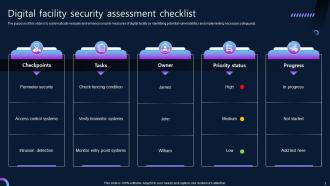
Slide 3: This slide systematically evaluate and enhance security measures of digital facility by identifying potential vulnerabilities and implementing necessary safeguards.
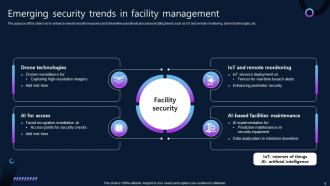
Slide 4: This slide enhance overall security measures and streamline operational processes including trends such as IoT and remote monitoring, drone technologies, etc.
Slide 5: This slide develop a comprehensive security strategy for an industrial facility to safeguard personnel, assets, and operations through assessing facility vulnerabilities etc.
Slide 6: This slide implement comprehensive security measures such as advanced access control systems, surveillance cameras, and alarm systems to safeguard business storage facilities.
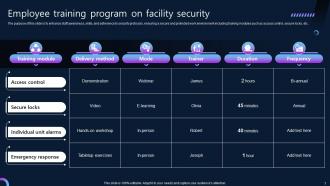
Slide 7: This slide enhance staff awareness, skills, and adherence to security protocols, ensuring a secure and protected work environment including training modules such as access control etc.
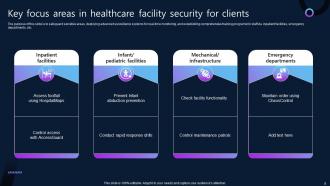
Slide 8: This slide safeguard sensitive areas, deploying advanced surveillance systems for real-time monitoring, and establishing comprehensive training programs for staff via inpatient facilities etc.
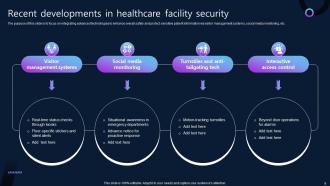
Slide 9: This slide focus on integrating advanced technologies to enhance overall safety and protect sensitive patient information via visitor management systems, social media monitoring, etc.
Slide 10: This slide implementing multi-faceted approach to enhance chemical facility security and mitigate potential threats including solutions such as cybersecurity.
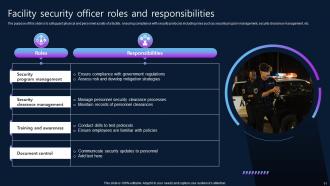
Slide 11: This slide safeguard physical and personnel assets of a facility, ensuring compliance with security protocols including roles such as security program management etc.
Slide 12: This slide assess and verify adherence to regulatory requirements and industry standards, identifying potential vulnerabilities including use cases such as commercial buildings etc.
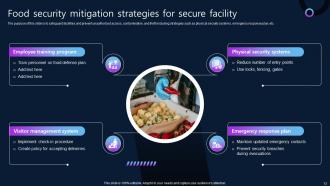
Slide 13: This slide safeguard facilities and prevent unauthorized access, contamination, and theft including strategies such as physical security systems, emergency response plan, etc.
Slide 14: This slide implement comprehensive security measures, including surveillance systems, access control, employee training, and regular audits such as access control systems, cash handling, etc.
Slide 15: This slide enhance physical security, prevent unauthorized access, and mitigate potential threats in manufacturing plants and industrial facilities such as contingency plan etc.
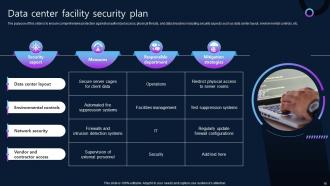
Slide 16: This slide ensure comprehensive protection against unauthorized access, physical threats, and data breaches including security aspects such as data center layout, environmental controls etc.
Slide 17: This slide develop a comprehensive facility security recovery management plan for transportation hubs to ensure rapid response, resilience, and restoration of operations.
Slide 18: This slide safeguard modern agricultural facilities against physical threats and cyber attacks, ensuring integrity and productivity of operation such as motion-activated lights etc.
Slide 19: This slide displays Facility security icon for asset protection.
Slide 20: This slide presents Facility security icon to ensure employee safety.
Slide 21: This slide displays Facility security icon for quick response to incidents.
Slide 22: This is a Thank You slide with address, contact numbers and email address.
Facility Security Powerpoint Ppt Template Bundles CRP with all 30 slides:
Use our Facility Security Powerpoint Ppt Template Bundles CRP to effectively help you save your valuable time. They are readymade to fit into any presentation structure.
FAQs for Facility Security Powerpoint Ppt
Key components of an effective facility security plan include access control systems, surveillance monitoring, perimeter security, emergency response protocols, and personnel security procedures. These integrated security measures streamline protection by controlling entry points, monitoring activities continuously, and establishing clear incident response frameworks, with many organizations finding that comprehensive facility security ultimately delivers reduced risk exposure, enhanced operational continuity, and improved stakeholder confidence.
Risk assessment methodologies enhance facility security by systematically identifying vulnerabilities, evaluating threat probabilities, and prioritizing resource allocation based on actual risk levels rather than assumptions. Through comprehensive risk matrices and scenario planning, organizations streamline security investments, minimize operational disruptions, and deliver targeted protection strategies, with many facilities finding that data-driven approaches ultimately reduce costs while significantly improving overall security effectiveness.
Technology serves as the backbone of modern facility security through surveillance cameras, access control systems, intrusion detection sensors, biometric scanners, and automated monitoring platforms. These integrated systems enhance security by providing real-time threat detection, comprehensive coverage of blind spots, and detailed incident documentation, with many organizations finding that automated responses significantly reduce security breaches while lowering operational costs.
Access control systems mitigate unauthorized entries by requiring authentication through keycards, biometrics, PINs, or mobile credentials before granting facility access, while maintaining detailed entry logs and real-time monitoring capabilities. These systems enable organizations to restrict access by time, location, and personnel clearance levels, ultimately delivering enhanced security transparency, reduced theft incidents, and comprehensive audit trails for compliance requirements.
Best practices for facility security training include regular protocol workshops, hands-on emergency simulations, role-specific security procedures, incident response drills, and continuous awareness updates. These comprehensive training approaches enhance organizational security by building staff competency, reducing response times, and creating security-conscious workplace cultures, with many institutions finding that consistent training programs ultimately deliver improved threat detection, faster emergency responses, and stronger overall facility protection.
Organizations balance security with welcoming environments by implementing layered access controls, using friendly but thorough visitor management systems, and designing transparent security checkpoints that feel hospitable rather than intimidating. Through strategic placement of security measures, clear wayfinding, and trained personnel who prioritize customer service, businesses create seamless experiences that maintain safety while enhancing visitor comfort and confidence.
Securing sensitive information requires implementing access controls, encryption protocols, surveillance systems, employee training programs, and secure storage solutions. These measures work by restricting unauthorized access, monitoring facility activities, and ensuring data protection compliance, with many organizations finding that layered security approaches significantly reduce breach risks while maintaining operational efficiency.
Facility layout significantly impacts security by controlling access points, optimizing surveillance coverage, creating natural barriers, and enabling rapid emergency response. Strategic design elements like centralized entrances, clear sightlines, and compartmentalized zones help security teams monitor activities more effectively, while proper lighting and traffic flow patterns ultimately enhance overall protection and operational efficiency.
Legal and compliance considerations in facility security include data protection regulations, workplace safety standards, privacy laws, access control requirements, and emergency response protocols. These frameworks help organizations streamline regulatory adherence while enhancing operational security, with many institutions finding that strategic compliance integration ultimately delivers reduced liability risks and stronger stakeholder confidence.
Incident response plans can be effectively implemented through comprehensive staff training, regular drills, clear communication protocols, designated response teams, and updated emergency procedures. These strategies streamline coordination by establishing roles, automating alerts, and ensuring swift decision-making, with many facilities finding that regular testing and cross-departmental collaboration ultimately delivers faster response times and minimized security disruptions.
Collaboration with local law enforcement enhances facility security through shared intelligence, coordinated emergency response protocols, faster incident resolution, and joint training exercises. This strategic partnership enables organizations to leverage police expertise, receive priority response during emergencies, and access threat assessments, ultimately delivering stronger security postures and reduced response times across manufacturing, retail, and corporate facilities.
Emergency preparedness drills strengthen facility security by testing response protocols, identifying vulnerabilities in evacuation procedures, and ensuring staff familiarity with security systems during crisis situations. These exercises enable organizations to streamline coordination between security teams and emergency responders, while ultimately delivering faster response times and enhanced protection, with many facilities finding that regular drills significantly improve their overall security readiness.
Securing multi-tenant facilities involves managing diverse security requirements, controlling access across multiple zones, coordinating with various tenant protocols, and maintaining consistent monitoring standards. These challenges require strategic technology integration, standardized access control systems, and comprehensive surveillance solutions, with many property managers finding that centralized security platforms streamline operations while reducing costs and enhancing tenant safety.
Organizations ensure continuous improvement in facility security by conducting regular risk assessments, implementing updated technology solutions, training staff on emerging threats, and establishing feedback loops with security personnel. Through systematic monitoring and evaluation, companies can identify vulnerabilities, adapt to evolving security challenges, and enhance protective measures, ultimately delivering stronger asset protection and operational resilience in an increasingly complex threat landscape.
Emerging security technology trends include AI-powered surveillance systems, biometric access controls, IoT-integrated sensors, cloud-based security management platforms, and predictive analytics tools. These technologies enhance facility protection by automating threat detection, streamlining access management, and enabling real-time monitoring, with many organizations finding that integrated approaches deliver improved security outcomes while reducing operational costs.
-
Definitely recommend SlideTeam to all who need help with PowerPoint presentations. Their design team can create anything you need.
-
I am extremely pleased with these PPT slides that we used for our event. They were easy to modify and came out great in all aspects!