


Factors Affecting Interpersonal Relationship Skill




Try Before you Buy Download Free Sample Product
 Impress Your
 Audience
 100%
100% Editable
 Save Hours
 of Time


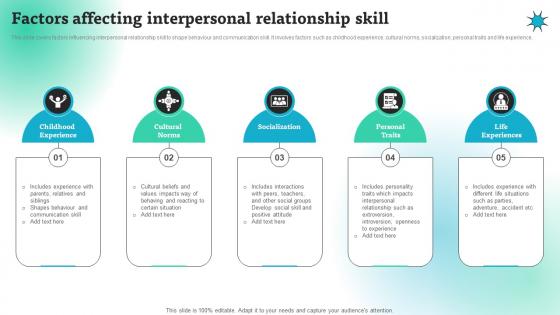
This slide covers factors influencing interpersonal relationship skill to shape behaviour and communication skill. It involves factors such as childhood experience, cultural norms, socialization, personal traits and life experience.
People who downloaded this PowerPoint presentation also viewed the following :
Factors Affecting Interpersonal Relationship Skill with all 9 slides:
Use our Factors Affecting Interpersonal Relationship Skill to effectively help you save your valuable time. They are readymade to fit into any presentation structure.








FAQs for Factors Affecting
Communication serves as the foundation for interpersonal relationships by enabling trust building, emotional connection, conflict resolution, and mutual understanding between individuals. Through active listening, clear expression, and empathetic dialogue, people in organizations, teams, and personal networks develop stronger bonds, resolve misunderstandings more effectively, and ultimately create more collaborative environments that enhance both personal satisfaction and professional productivity.
Emotional intelligence enhances workplace relationships by improving communication clarity, fostering empathy during conflicts, and enabling better recognition of colleagues' emotional states and needs. Through enhanced self-awareness and social skills, professionals navigate team dynamics more effectively, build stronger collaborative partnerships, and create more supportive work environments, ultimately delivering improved productivity and reduced workplace tension.
Common barriers to interpersonal communication include poor listening skills, cultural differences, emotional states, language barriers, and preconceived assumptions. These obstacles can significantly impact workplace collaboration, client relationships, and team dynamics across industries, with many organizations finding that addressing communication barriers through training and awareness programs ultimately delivers improved productivity, stronger partnerships, and enhanced organizational culture.
Cultural differences impact interpersonal relationships by influencing communication styles, behavioral expectations, and value systems that shape how people interact, build trust, and resolve conflicts. Organizations with diverse teams increasingly find that understanding these differences enhances collaboration, reduces misunderstandings, and ultimately delivers stronger workplace relationships and improved business outcomes across global markets.
Active listening improves relationship dynamics by fostering trust, reducing misunderstandings, and demonstrating genuine respect for others' perspectives and emotions. Through focused attention, empathetic responses, and thoughtful feedback, individuals can strengthen personal and professional connections, resolve conflicts more effectively, and create environments where meaningful dialogue thrives, ultimately delivering deeper intimacy and collaborative success.
Effective conflict resolution strategies include active listening, empathy building, clear communication, compromise negotiation, and collaborative problem-solving. These approaches streamline relationship dynamics by addressing root causes, minimizing misunderstandings, and fostering mutual respect, with many organizations finding that structured mediation processes and emotional intelligence training ultimately deliver stronger team cohesion and enhanced workplace productivity.
Trust serves as the foundational element that determines interpersonal connection depth, influencing communication openness, vulnerability levels, conflict resolution effectiveness, and long-term relationship sustainability. In workplace teams, family dynamics, and friendships, trust enables authentic dialogue, reduces defensive behaviors, and fosters collaborative problem-solving, with many organizations finding that trust-based relationships ultimately deliver enhanced teamwork, reduced turnover, and stronger performance outcomes.
Healthy interpersonal relationships feature mutual respect, open communication, trust, emotional support, and balanced boundaries, while unhealthy ones involve manipulation, poor communication, jealousy, control, and disrespect. These relationship dynamics significantly impact workplace productivity, team collaboration, and organizational culture, with many companies finding that fostering healthy interpersonal skills among employees ultimately enhances performance and reduces turnover.
Technology influences interpersonal relationships by enhancing global connectivity, enabling real-time communication, and facilitating relationship maintenance across distances, while also creating challenges through reduced face-to-face interaction and digital miscommunication. Organizations increasingly find that strategic technology integration streamlines team collaboration and strengthens professional networks, ultimately delivering enhanced productivity and meaningful connections when balanced with personal interaction.
Empathy plays a foundational role in interpersonal relationships by enabling deeper understanding, fostering trust, and creating emotional connections between individuals. Through active listening, perspective-taking, and emotional validation, empathy helps people navigate conflicts more effectively, build stronger team dynamics in workplace settings, and ultimately deliver more meaningful personal and professional relationships that enhance collaboration and mutual support.
Effective feedback requires timing, specificity, and emotional intelligence, focusing on behaviors rather than personality while creating safe, two-way dialogue. Through active listening, acknowledging emotions, and framing suggestions constructively, individuals and teams enhance communication, build trust, and strengthen relationships, with many organizations finding that structured feedback processes ultimately deliver improved collaboration and workplace performance.
Social media presents both challenges and opportunities for face-to-face relationships by reducing in-person interaction frequency, creating comparison pressures, and shifting communication preferences toward digital channels. However, it also enables relationship maintenance across distances, facilitates initial connections, and helps organizations enhance employee engagement, with many finding that strategic balance delivers stronger interpersonal connections.
Establishing boundaries involves clearly communicating your limits, expectations, and values while consistently enforcing them through respectful but firm responses. This approach enhances relationship quality by reducing misunderstandings, preventing burnout, and building mutual respect, with many professionals finding that well-defined boundaries ultimately strengthen trust and improve both personal satisfaction and workplace productivity.
Couples can maintain intimacy through regular date nights, open emotional communication, physical affection beyond intimacy, shared goal-setting, and intentional quality time together. These approaches strengthen connection by fostering vulnerability, creating new experiences, and prioritizing partnership needs, with many long-term couples finding that consistent effort ultimately delivers deeper emotional bonds and relationship satisfaction.
Personality types significantly influence communication patterns, conflict resolution approaches, emotional expression methods, and decision-making styles within relationships. Extroverts often thrive with direct communication while introverts prefer deeper, reflective conversations, with many couples finding that understanding these differences enhances relationship satisfaction, reduces misunderstandings, and ultimately creates more harmonious partnerships through strategic adaptation and mutual respect.
-
Content of slide is easy to understand and edit.
-
Incredibly beautiful designs that will help you get noticed! These eye-catching templates are perfect for corporate presentations that can be altered to fit any occasion or taste.