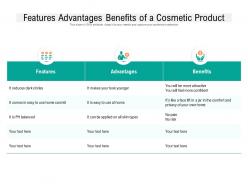
Features advantages benefits of a cosmetic product

Features advantages benefits of a cosmetic product
Slide 1 of 2
Favourites Favourites

Try Before you Buy Download Free Sample Product

Audience Impress Your
Audience
Editable 100%
Editable
Time Save Hours
of Time
The Biggest Sale is ending soon in
0
0
:
0
0
:
0
0
Presenting this set of slides with name Features Advantages Benefits Of A Cosmetic Product. The topics discussed in these slides are Features, Advantages, Benefits. This is a completely editable PowerPoint presentation and is available for immediate download. Download now and impress your audience.

People who downloaded this PowerPoint presentation also viewed the following :

FAQs for Features advantages benefits of

Key sensory attributes include texture, fragrance, color, absorption rate, and skin feel after application. These characteristics significantly influence purchasing decisions, with consumers often preferring lightweight formulations that absorb quickly, pleasant but not overpowering scents, and textures that enhance application experience, ultimately driving brand loyalty and repeat purchases.

Ingredient transparency and sourcing significantly enhance consumer trust by demonstrating ethical practices, quality commitment, and safety standards. Brands that openly share ingredient origins, manufacturing processes, and sustainability practices build stronger relationships with increasingly conscious consumers, with many cosmetic companies finding that transparent labeling and responsible sourcing ultimately deliver competitive advantage and customer loyalty.

Packaging design significantly impacts cosmetic product perception through visual aesthetics, material quality, functional usability, brand consistency, and tactile experience. Premium materials like glass or weighted containers enhance perceived luxury, while intuitive dispensing mechanisms and cohesive brand elements build consumer trust, ultimately driving purchase decisions and brand loyalty in an increasingly competitive beauty market.

FDA regulations, EU Cosmetic Regulation, ISO 22716 (Good Manufacturing Practices), CPSR safety assessments, and ingredient restriction databases represent the most crucial regulatory standards for cosmetic safety attributes. These frameworks streamline compliance by establishing clear testing protocols, manufacturing standards, and ingredient safety thresholds, with many beauty brands finding that adherence ultimately delivers enhanced consumer trust and competitive market advantage.

Sustainability and eco-friendliness significantly influence cosmetic purchasing decisions by driving demand for cruelty-free testing, recyclable packaging, natural ingredients, and ethical sourcing practices. These environmental considerations enable brands to attract conscious consumers, enhance brand loyalty, and command premium pricing, with many beauty companies finding that sustainable product lines deliver competitive differentiation and stronger customer retention in an increasingly environmentally-aware market.

Brand reputation significantly influences perceived effectiveness by establishing trust, credibility, and quality expectations that shape consumer experiences with cosmetic formulations. Research shows consumers often experience enhanced satisfaction with products from reputable brands, with many finding that established names in skincare and beauty deliver greater confidence in results, ultimately creating a psychological amplifier that enhances actual product performance through increased user compliance and positive expectations.

Dermatological tests and clinical trials are crucial for establishing cosmetic product credibility, providing scientific validation for safety claims, efficacy statements, and ingredient performance. These rigorous assessments enable brands to demonstrate measurable results, reduce liability risks, and build consumer trust, with many premium skincare companies finding that clinical backing significantly enhances market positioning and regulatory compliance globally.

Psychological factors include brand prestige, packaging aesthetics, price anchoring, social validation, and perceived quality associations. Luxury cosmetics leverage aspirational identity and status signaling through premium materials and exclusive positioning, while budget products emphasize value and accessibility, with many consumers finding that higher prices create expectation bias that enhances perceived effectiveness and desirability.

Fragrance and color attributes enhance cosmetic user experiences by creating emotional connections, reinforcing brand identity, and providing sensory satisfaction during application. These elements work together to transform routine beauty tasks into pleasurable rituals, with many cosmetic brands finding that signature scents and appealing colors significantly increase customer loyalty and product repurchase rates.

Current innovations include airless packaging systems, cushion compacts, waterless formulations, microencapsulation technology, and temperature-activated textures. These advancements streamline application processes, enhance product longevity, and deliver personalized experiences, with many beauty brands finding that innovative textures significantly improve consumer satisfaction and competitive positioning in an increasingly crowded market.

Cultural differences significantly influence cosmetic product interpretation through varying beauty standards, color symbolism, ingredient preferences, and packaging expectations across regions. While Western markets often prioritize anti-aging benefits, Asian consumers frequently emphasize brightening and sun protection, with many global brands finding that localizing product messaging, shade ranges, and formulation claims ultimately delivers stronger market penetration and customer loyalty.

Emerging trends in multifunctional cosmetic products include hybrid skincare-makeup formulations, SPF-infused foundations, anti-aging serums with color correction, probiotic-enhanced moisturizers, and sustainable packaging innovations. These multifunctional approaches streamline beauty routines by combining treatment benefits with aesthetic enhancement, ultimately delivering cost efficiency and convenience, with many consumers increasingly prioritizing products that maximize both time and value.

Inclusivity in cosmetics manifests through diverse shade ranges, formulations for different skin types and sensitivities, and culturally sensitive ingredient choices that address varied beauty needs. Marketing strategies increasingly feature diverse models, authentic representation across ethnicities and ages, and messaging that celebrates individual beauty, with many brands finding that inclusive approaches significantly expand market reach and enhance customer loyalty.

Effective metrics include Net Promoter Score, repurchase rates, product reviews and ratings, customer retention rates, and return/exchange frequencies. These measurements enable beauty brands to assess satisfaction across product performance, packaging appeal, and overall experience, with many cosmetic companies finding that combining quantitative data with qualitative feedback delivers comprehensive insights for product optimization and competitive advantage.

Social media and influencer endorsements significantly reshape cosmetic brand perception by amplifying authenticity, trustworthiness, and desirability through peer recommendations and visual demonstrations. These platforms enable brands to showcase product efficacy, build emotional connections, and enhance perceived quality, with beauty companies increasingly finding that strategic influencer partnerships deliver higher engagement rates, expanded market reach, and ultimately stronger brand loyalty among target demographics.

Ratings and Reviews

0% of 100
Write a review
Most Relevant Reviews

No Reviews