

Financial asset management through mitigating risks and diversifying investment portfolio complete deck





Try Before you Buy Download Free Sample Product
 Impress Your
Audience
 100%
Editable
 Save Hours
of Time


Our Financial Asset Management Through Mitigating Risks And Diversifying Investment Portfolio Complete Deck are topically designed to provide an attractive backdrop to any subject. Use them to look like a presentation pro.
People who downloaded this PowerPoint presentation also viewed the following :
Content of this Powerpoint Presentation
Slide 1: This slide introduces Financial Asset Management Through Mitigating Risks and Diversifying Investment Portfolio. State Your Company name and start.
Slide 2: This slide displays Content of the presentation.
Slide 3: This slide displays Content of the presentation.
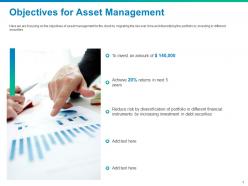
Slide 4: This slide shows Objectives for Asset Management
Slide 5: This slide depicts the purposes for the asset management like reaching financial goals or saving for retirement
Slide 6: This slide displays Content of the presentation.
Slide 7: This slide gives the glimpse of our approach where in we are focusing on clients objective that are inflation hedge, principle preservation, portfolio diversification etc. and providing them the alternative investment types along with strategies, investment approach and objectives for the same
Slide 8: This slide lists the characteristics like annualized return, standard deviation, maximum decline, correlation to equities and correlation to fixed income on basis of which strategies are being evaluated. Where S&P 500 is the Index of the share market
Slide 9: This slide displays Content of the presentation.
Slide 10: This slide shows that presently client has invested money in listed funds and the problems with the current invested scheme
Slide 11: This slide shows Content of the presentation.
Slide 12: This slide covers snapshot of all the investment options with associated risk, tenure, liquidity and 5 years returns
Slide 13: In this template we are covering the top performing funds with different categories and their estimate returns over 1 to 5 years
Slide 14: In this template we are covering the top performing funds of the companies for investing in the market
Slide 15: This slide shows the Content of the presentation.
Slide 16: In this slide we have covered allocation of Funds according to conservative, balanced and growth ETF portfolio which states that Conservative ETF Portfolio seeks to provide a combination of income and moderate long-term capital growth by investing in equity and fixed income securities, Balanced ETF Portfolio seeks to provide long-term capital growth with a moderate level of income by investing in equity and fixed income securities and Growth ETF Portfolio seeks to provide long-term capital growth by investing in equity and fixed income securities
Slide 17: This slide covers the allocation of funds according to portfolio where 30 percent is being invested in multi cap funds 25 percent in large cap funds and 15 percent in midcap funds. This allows diversification of portfolio and minimize the risk
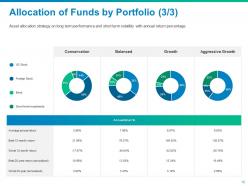
Slide 18: This slide describes Asset allocation strategy on long term performance and short term volatility with annual return percentage.
Slide 19: This slide displays Content.
Slide 20: In this slide we are covering various types of equities and debt funds and comparing them on the bases of risk score, volatility and weight
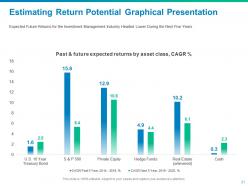
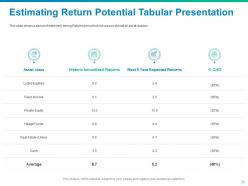
Slide 21: This slide is about Estimating Return Potential Graphical Presentation
Slide 22: This slide shows a period of extremely strong Returns per unit of risk across almost all asset classes
Slide 23: This is Icon Slide for Financial Asset Management.
Slide 24: This slide is titled as Additional Slides for moving forward.
Slide 25: This slide shows that exchange traded funds grew at a 21.7% CAGR and mutual fund growth is beginning to stall, ETF growth continues to expand.
Slide 26: This slide shows Wealth Industry Trends.
Slide 27: This slide depicts Wealth Industry Trends.
Slide 28: This slide depicts Types of Assets Investment. Here we are covering types of assets in which users can invest like domestic and international equities, fixed income and bonds
Slide 29: This slide displays Types of Assets Investment.
Slide 30: This slide shows Return on Investment.
Slide 31: This slide displays Our Mission, Vision and Goals.
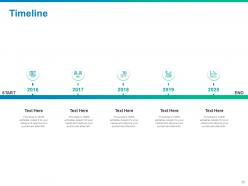
Slide 32: This slide shows Timeline process.
Slide 33: This is Quotes slide to highlight inspirational quotes.
Slide 34: This is Thank you slide with Contact details.
Financial asset management through mitigating risks and diversifying investment portfolio complete deck with all 34 slides:
Use our Financial Asset Management Through Mitigating Risks And Diversifying Investment Portfolio Complete Deck to effectively help you save your valuable time. They are readymade to fit into any presentation structure.










FAQs for Financial asset management through mitigating risks and diversifying investment
Key components include diversification across asset classes, risk assessment and tolerance evaluation, regular portfolio rebalancing, performance monitoring, and strategic asset allocation aligned with financial goals. These elements work together to optimize returns while managing exposure, with many institutional investors and wealth management firms finding that systematic rebalancing and disciplined risk management ultimately deliver sustained growth and capital preservation.
Technology and automation enhance financial asset management through real-time portfolio monitoring, automated rebalancing, predictive analytics, and intelligent risk assessment tools. These solutions streamline operations by reducing manual errors, accelerating transaction processing, and enabling data-driven investment decisions, with many financial institutions finding significantly improved operational efficiency and enhanced client portfolio performance.
Risk assessment serves as the foundation of financial asset management, enabling portfolio diversification, informed investment decisions, regulatory compliance, and strategic asset allocation across different market conditions. Through comprehensive risk analysis, financial institutions and investment firms can minimize potential losses, optimize returns, and maintain balanced portfolios, with many organizations finding that systematic risk assessment ultimately delivers better client outcomes and competitive advantage.
Asset managers balance short-term gains with long-term wealth preservation through strategic diversification, dynamic portfolio allocation, and disciplined risk management frameworks. By implementing core-satellite strategies, utilizing tactical asset allocation adjustments, and maintaining consistent rebalancing schedules, they deliver immediate performance while protecting capital, with many institutional portfolios finding that measured approaches ultimately enhance sustainable returns.
Market volatility significantly impacts asset management by requiring dynamic risk assessment, accelerated portfolio rebalancing, and enhanced stress testing protocols. Through advanced analytics and real-time monitoring, portfolio managers adapt allocation strategies, implement hedging mechanisms, and adjust liquidity reserves, with many institutions finding that proactive volatility management ultimately delivers improved risk-adjusted returns and competitive advantage.
Investors should approach diversification by spreading investments across asset classes, geographic regions, sectors, and investment timeframes to minimize risk exposure. This strategic combination enables portfolio resilience during market volatility, reduces dependence on single-sector performance, and enhances long-term growth potential, with many institutional investors finding that balanced diversification ultimately delivers more consistent returns while protecting against significant losses.
Best practices for monitoring and evaluating asset performance include establishing clear KPIs, conducting regular portfolio reviews, implementing real-time tracking systems, performing benchmark comparisons, and maintaining detailed risk assessments. These approaches streamline decision-making by providing comprehensive visibility, enabling proactive adjustments, and delivering data-driven insights, with many financial institutions finding that systematic monitoring ultimately enhances returns while minimizing exposure risks.
Behavioral finance impacts asset management by revealing how cognitive biases, emotional decision-making, and psychological factors influence investment choices, portfolio construction, and risk assessment. Through behavioral analysis, asset managers can identify client biases like loss aversion and overconfidence, ultimately designing more effective investment strategies and improving long-term portfolio performance.
Essential liquidity assessment tools include bid-ask spreads, trading volume analysis, market depth indicators, liquidity ratios, and time-to-sale metrics. These instruments enable portfolio managers and financial institutions to evaluate asset convertibility by measuring transaction costs, market impact, and execution timeframes, ultimately delivering enhanced risk management and strategic asset allocation in increasingly volatile markets.
Asset managers effectively communicate portfolio performance through regular reporting, transparent risk disclosures, benchmark comparisons, and interactive presentations that clearly explain investment strategies and market conditions. These approaches enhance stakeholder trust by providing contextualized performance data, addressing concerns proactively, and demonstrating strategic decision-making processes, ultimately strengthening client relationships and competitive positioning.
Key trends shaping financial asset management include artificial intelligence for portfolio optimization, ESG investing mandates, blockchain for transaction transparency, robo-advisors for accessibility, and real-time analytics platforms. These technologies streamline decision-making, enhance risk assessment, and automate compliance processes, with many investment firms finding that strategic integration delivers faster client services, reduced operational costs, and significant competitive advantage.
Regulatory changes significantly reshape financial asset management strategies by requiring enhanced compliance frameworks, modified risk assessment protocols, and updated reporting mechanisms. These evolving requirements drive institutions to adopt more sophisticated monitoring systems, diversify portfolio approaches, and implement stronger governance structures, ultimately delivering greater transparency and risk mitigation while maintaining competitive returns in an increasingly regulated environment.
Tax optimization strategies within asset management include tax-loss harvesting, strategic asset location, retirement account maximization, municipal bond utilization, and timing capital gains distributions. These approaches streamline portfolio efficiency by reducing tax burdens, enhancing after-tax returns, and maximizing compounding benefits, with many investment firms finding that coordinated tax planning ultimately delivers superior long-term wealth accumulation for clients.
ESG factors can be integrated into financial asset management through screening processes, impact measurement frameworks, stakeholder engagement protocols, and sustainability-focused portfolio construction. These approaches enable asset managers to evaluate long-term risks, enhance investment performance, and meet regulatory requirements, while delivering competitive returns and supporting sustainable business practices across diverse market sectors.
Managing alternative assets presents both liquidity and valuation challenges compared to traditional investments, requiring specialized expertise, longer investment horizons, and complex due diligence processes. While traditional stocks and bonds offer daily pricing and easy trading, alternatives like private equity, real estate, and hedge funds demand sophisticated risk assessment and portfolio management strategies, ultimately delivering diversification benefits for institutions willing to navigate their operational complexities.
-
Commendable slides with attractive designs. Extremely pleased with the fact that they are easy to modify. Great work!