

Financial management ppt powerpoint presentation show





Try Before you Buy Download Free Sample Product
 Impress Your
 Audience
 100%
100% Editable
 Save Hours
 of Time


Jack up your importance with our Financial Management Ppt Powerpoint Presentation Show. Elevate the image folks have of you.
People who downloaded this PowerPoint presentation also viewed the following :
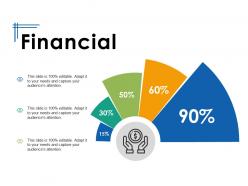
Financial management ppt powerpoint presentation show with all 5 slides:
Eradicate any apprehensions folks may harbor with our Financial Management Ppt Powerpoint Presentation Show. Be able to clarify your intentions.




FAQs for Financial management ppt
Key components include cash flow management, budgeting and forecasting, expense tracking, financial reporting, and strategic planning for growth. These elements work together by providing real-time visibility into financial health, enabling data-driven decisions, and optimizing resource allocation, with many small businesses finding that integrated financial management ultimately delivers improved profitability and sustainable competitive advantage.
Budgeting and forecasting improve cash flow management by providing predictive insights, identifying potential shortfalls, and enabling proactive financial planning. Through systematic revenue projections and expense tracking, organizations can optimize payment schedules, secure financing when needed, and maintain operational liquidity, with many businesses finding that strategic forecasting ultimately delivers better vendor relationships and enhanced financial stability.
Organizations can minimize financial risks through diversification, comprehensive insurance coverage, robust cash flow management, regular financial audits, and strategic hedging against market volatility. These approaches enable businesses to protect against economic downturns, operational disruptions, and unexpected costs, with many companies finding that proactive risk management ultimately delivers enhanced stability and competitive advantage.
Financial management directly impacts business performance by optimizing cash flow, controlling costs, maximizing profitability, and ensuring strategic resource allocation across operations. Through effective budgeting and financial planning, organizations streamline decision-making processes, minimize financial risks, and accelerate growth initiatives, with many companies finding that disciplined financial management ultimately delivers competitive advantage and sustainable scalability.
Technology revolutionizes financial management through automated accounting, real-time analytics, cloud-based platforms, AI-driven forecasting, and integrated payment systems. These innovations streamline operations by reducing manual errors, accelerating reporting cycles, and enhancing decision-making capabilities, with many organizations finding that digital transformation ultimately delivers improved cash flow visibility and competitive advantage.
Companies create aligned financial management plans by establishing clear financial metrics tied to strategic objectives, conducting thorough scenario planning, implementing regular performance reviews, and ensuring cross-departmental collaboration between finance and operations teams. Through integrated budgeting processes, organizations streamline resource allocation, enhance decision-making transparency, and deliver measurable outcomes, with many finding that this strategic alignment ultimately accelerates growth while minimizing financial risks.
Financial management focuses on strategic planning, investment decisions, risk assessment, and capital allocation to maximize organizational value, while accounting emphasizes recording, classifying, and reporting financial transactions for compliance and historical documentation. Financial management drives forward-looking decisions like budgeting and forecasting, whereas accounting provides the foundational data, with many organizations finding that integrating both functions enhances operational efficiency and strategic decision-making capabilities.
Businesses optimize capital structure by balancing debt and equity financing, leveraging tax advantages of debt, minimizing cost of capital, and aligning funding with growth strategies. Through strategic debt management, companies reduce interest expenses, enhance return on equity, and maintain financial flexibility, with many organizations finding that optimal leverage ratios significantly improve profitability while preserving operational resilience.
Best practices for managing working capital efficiently include optimizing inventory levels, accelerating receivables collection, extending payables strategically, implementing cash flow forecasting, and maintaining strong supplier relationships. These approaches streamline operations by reducing carrying costs, improving cash conversion cycles, and enhancing liquidity management, with many organizations finding that strategic working capital optimization delivers improved financial flexibility and competitive advantage.
External economic factors influence financial management decisions by affecting interest rates, inflation, currency values, market conditions, and regulatory environments. Through strategic adaptation to these variables, organizations adjust their investment strategies, debt management, cash flow planning, and risk assessment approaches, with many financial institutions and corporations finding that proactive economic monitoring ultimately delivers enhanced resilience and competitive positioning.
Organizations should prioritize revenue growth rate, profit margins, cash flow, return on investment (ROI), and debt-to-equity ratios for comprehensive performance evaluation. These metrics enable leadership teams to assess operational efficiency, financial stability, and strategic positioning, with many companies finding that tracking these indicators together delivers deeper insights into business health and competitive advantage.
Financial management drives sustainable business practices by optimizing resource allocation, implementing cost-effective green technologies, and measuring environmental ROI alongside traditional metrics. Through strategic budgeting and performance tracking, organizations streamline operations, reduce waste, and enhance energy efficiency, with many companies finding that sustainability investments ultimately deliver long-term cost savings and competitive advantage.
Common financial management challenges faced by startups include cash flow management, accurate financial forecasting, expense control, securing funding, and establishing proper accounting systems. These obstacles often stem from limited resources, unpredictable revenue streams, and rapid growth phases, with many emerging companies finding that implementing structured financial processes early enables better investor relationships and sustainable scaling.
Financial literacy is crucial across all organizational levels, enabling employees to make informed decisions about budgets, investments, resource allocation, and strategic planning while understanding business performance metrics. With many companies finding that financially literate teams drive better operational efficiency, cost management, and strategic outcomes, this knowledge ultimately delivers competitive advantage and enhanced decision-making capabilities throughout the organization.
Financial management plays a crucial role in mergers and acquisitions through due diligence assessment, valuation analysis, financing structure optimization, and post-merger integration planning. These strategic financial processes enable organizations to identify synergies, minimize risks, and maximize shareholder value, with many companies finding that thorough financial management ultimately delivers smoother transactions and enhanced competitive positioning.
No Reviews