

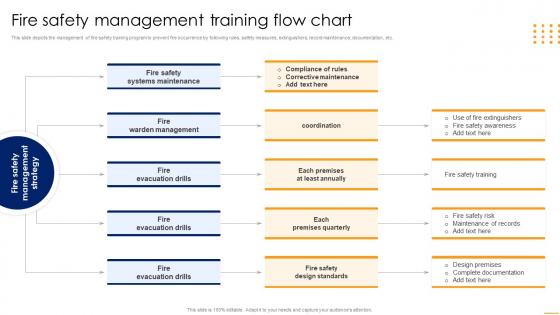
Fire Safety Management Training Flow Chart




Try Before you Buy Download Free Sample Product
 Impress Your
 Audience
 100%
100% Editable
 Save Hours
 of Time


This slide depicts the management of fire safety training program to prevent fire occurrence by following rules, safety measures, extinguishers, record maintenance, documentation, etc.
People who downloaded this PowerPoint presentation also viewed the following :
Fire Safety Management Training Flow Chart with all 9 slides:
Use our Fire Safety Management Training Flow Chart to effectively help you save your valuable time. They are readymade to fit into any presentation structure.








FAQs for Fire Safety Management
**INPUT**: What are the key components of an effective fire safety management plan? **OUTPUT**: Effective fire safety management plans include risk assessments, evacuation procedures, detection systems, employee training programs, and regular equipment maintenance schedules. These components work together by identifying potential hazards, ensuring swift emergency response, and maintaining operational continuity, with many organizations finding that comprehensive planning significantly reduces both safety risks and insurance costs while enhancing regulatory compliance.
Organizations assess fire risks through comprehensive fire audits, hazard identification surveys, building system evaluations, emergency response reviews, and regulatory compliance checks. These assessments examine structural vulnerabilities, equipment conditions, and evacuation procedures, with many institutions finding that regular professional evaluations combined with employee safety training ultimately delivers enhanced protection and reduced insurance costs.
Employee training serves as the foundation of effective fire safety management, encompassing evacuation procedures, equipment usage, hazard identification, emergency response protocols, and prevention techniques. Through comprehensive training programs, organizations significantly reduce response times, minimize panic during emergencies, and enhance overall workplace safety, with many companies finding that well-trained employees become proactive safety advocates who identify risks before incidents occur.
Businesses must comply with OSHA fire safety standards, NFPA codes, local building regulations, emergency evacuation requirements, and industry-specific protocols like healthcare or manufacturing guidelines. These comprehensive standards streamline workplace protection by mandating proper equipment installation, regular inspections, and employee training programs, with many organizations finding that proactive compliance ultimately delivers reduced insurance costs, enhanced employee safety, and competitive operational advantages.
Technology enhances fire safety management through smart detection systems, IoT sensors, AI-powered analytics, automated suppression systems, and real-time monitoring platforms. These solutions streamline emergency response by providing instant alerts, predicting fire risks, and enabling remote monitoring, with many hospitals, manufacturing facilities, and commercial buildings finding that integrated systems significantly reduce response times and minimize property damage.
Fire prevention strategies in high-risk environments include automated sprinkler systems, flame-resistant materials, comprehensive evacuation planning, regular safety audits, and employee training programs. These approaches work together by minimizing ignition sources, containing potential fires, and ensuring rapid response, with manufacturing facilities and chemical plants finding that integrated prevention systems significantly reduce incident rates while enhancing operational safety.
Fire safety best practices include conducting regular scheduled drills, establishing clear evacuation routes, assigning trained floor wardens, maintaining updated emergency contact systems, and ensuring accessibility compliance for all occupants. These procedures streamline emergency response by reducing evacuation times, enhancing employee preparedness, and meeting regulatory requirements, with many organizations finding that consistent practice ultimately delivers improved safety outcomes and operational confidence.
Businesses can develop comprehensive fire safety policies by conducting thorough risk assessments, establishing clear evacuation procedures, implementing regular training programs, maintaining detection and suppression systems, and defining emergency response protocols. This strategic approach enables organizations across sectors like manufacturing, hospitality, and healthcare to minimize risks, ensure regulatory compliance, and protect employees while reducing potential operational disruptions and liability costs.
Fire safety officers manage risk assessments, emergency planning, staff training, equipment maintenance, and regulatory compliance within organizations. These professionals streamline safety protocols by conducting regular inspections, coordinating evacuation procedures, and ensuring fire suppression systems remain operational, with many companies finding that dedicated officers significantly reduce liability while enhancing employee protection and business continuity.
Incident reporting and investigation improve fire safety management by identifying root causes, revealing system weaknesses, and preventing recurring incidents through comprehensive analysis and corrective actions. Through detailed documentation and forensic examination, organizations streamline safety protocols, enhance emergency response procedures, and strengthen prevention measures, with many facilities finding that systematic incident analysis ultimately delivers reduced risks and improved compliance across operations.
Fire safety equipment maintenance measures include regular inspections, professional servicing, staff training, documentation protocols, and compliance audits. Through systematic scheduling and digital tracking systems, organizations across industries like manufacturing, healthcare, and hospitality ensure operational readiness, regulatory compliance, and enhanced safety outcomes, ultimately delivering cost-effective protection and reduced liability risks.
Businesses should approach fire safety in multi-tenant buildings through coordinated emergency planning, shared responsibility protocols, unified communication systems, and regular joint drills with all occupants. This collaborative approach enables faster evacuations, clearer accountability structures, and comprehensive risk mitigation, with many commercial complexes finding that integrated safety management significantly reduces response times and enhances overall building security.
Communication serves as the foundation of effective fire safety management, encompassing emergency notification systems, regular safety training, clear evacuation procedures, coordination between safety teams, and ongoing awareness campaigns. Through integrated communication strategies, organizations streamline emergency response times, enhance staff preparedness, and ensure seamless coordination during incidents, with many institutions finding that robust communication protocols significantly reduce evacuation times and improve overall safety outcomes.
Organizations can incorporate fire safety by conducting comprehensive risk assessments, integrating fire prevention protocols into operational procedures, establishing emergency response teams, and implementing regular training programs across all departments. This strategic approach enables companies to minimize property damage, ensure regulatory compliance, and protect employee safety, while reducing insurance costs and maintaining business continuity, with many finding that proactive fire safety measures ultimately deliver competitive advantages through enhanced operational resilience.
Common fire safety management challenges include inadequate risk assessments, insufficient training programs, outdated detection systems, poor emergency evacuation procedures, and limited budget allocations for safety upgrades. These obstacles can be overcome by implementing comprehensive safety audits, regular staff training sessions, and systematic equipment upgrades, with many organizations finding that proactive fire safety strategies ultimately reduce insurance costs, minimize operational disruptions, and enhance overall workplace security.
-
I came across many PowerPoint presentations with excellent creatives and I believe they would be beneficial to my work.
-
SlideTeam is the way to go when you are in a time crunch. Their templates have saved me many times in the past three months.