

Fitness powerpoint presentation slides





Try Before you Buy Download Free Sample Product
 Impress Your
Audience
 100%
Editable
 Save Hours
of Time


Motivate and help your clients achieve their fitness goals with the help of Fitness Coach PowerPoint Presentation Slides. The presentation gives detailed information about the company overview with the leadership team, fitness consultant, and a training program. Demonstrate the need for fitness culture in the company by using this complete deck. Barriers and solutions to fitness can also be presented with these PPT visuals. Take the assistance of this ready-to-use health PPT slide deck to give an overview of the fitness industry by showcasing the market size, the number of health and fitness clubs worldwide. These engaging PowerPoint visuals allow you to organize fitness challenges in your company in an effective manner. Discuss the number of activities that are offered to employees to keep them healthy and fit. You can perform a cost analysis for fitness consulting by using health training PowerPoint themes. The presentation also discusses the impact of fitness consulting on insurance costs. Also, describe the effect of introducing fitness consulting in the business by quickly downloading our professionally designed gym PPT presentation.
People who downloaded this PowerPoint presentation also viewed the following :
Content of this Powerpoint Presentation
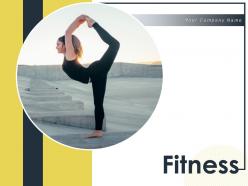
Slide 1: This slide introduces Fitness. Mention Your Company Name
Slide 2: This slide displays Objective of Fitness Consulting.
Slide 3: This slide shows Table of Contents.
Slide 4: This slide displays Table of Contents of the presentation.
Slide 5: The purpose of this slide is to provide the details of the company’s background, services offered, etc
Slide 6: This slide provides the details of the news where our company is covered as newspaper headlines showing the growth of the company.
Slide 7: The purpose of this slide is to provide the details of our leadership team covering vice president, CEO, executive director, and director.
Slide 8: The purpose of this slide is to provide the details of our leading team members with their years of experience and services offered by them.
Slide 9: This slide provides the different training programs offered by our company such as one-on-one, tandem, on-site, and corporate plans.
Slide 10: This slide displays Table of Content
Slide 11: This slide provides the fitness industry overview for the year 2018 along with the market size, number of health and fitness clubs worldwide.
Slide 12: This slide provides the demand of mHealth apps during the year 2015 to 2026, to track the wellbeing using smartphones.
Slide 13: This slide provides the fitness industry trends for the year 2019 such as wearable technology, HIIT, online group training, bodyweight training and training for older adults.
Slide 14: This slide displays Table of Content
Slide 15: This slide provides the need for fitness culture in your company due to increased absenteeism, costly health insurance, workplace stress, team building, etc.
Slide 16: This slide provides the barriers faced by employees for a fitness routine such as lack of time, lack of motivation, lack of resources, and solutions to overcome such barriers.
Slide 17: This slide provides the ways we can help your company to improve employee's fitness by providing a healthy lifestyle, creating worksite culture, conducting data evaluation, and developing health care costs.
Slide 18: This slide displays Table of Content.
Slide 19: This slide provides the challenges which can be offered to the employees to motivate them towards fitness.
Slide 20: This slide provides the challenges which can be offered to the employees to motivate them towards fitness.
Slide 21: This slide provides the physical activities offered to the employees with the date, time duration and seat availability.
Slide 22: This slide provides the recreational games in the office to keep employees healthy and fit such as table tennis and basketball match.
Slide 23: This slide provides the 7-day meal plan to the employees with a 1500 calorie budget goal.
Slide 24: This slide covers the health check-ups offered by us to the employees along with its costs such as medical & physical examination, laboratory investigations, and various other tests.
Slide 25: This slide displays Table of Content
Slide 26: This slide covers the cost analysis of fitness consulting, wherein we have four package options such as bronze, silver, gold and platinum.
Slide 27: This slide covers the checklist of fitness consulting, wherein we have four package options such as bronze, silver, gold and platinum with its costs.
Slide 28: This slide displays Table of Content
Slide 29: This slide covers the steps required to start a fitness program in the company such as assessing employee fitness level, design employee fitness program, assemble equipment, beginning a fitness program, and monitoring employee progress.
Slide 30: This slide displays Table of Content
Slide 31: This slide shows the graph focusing on the impact of fitness consulting on the insurance costs faced by the company.
Slide 32: This slide covers the impact of introducing fitness consulting in the business such as a decrease in health care costs, absenteeism, better work performance, and teamwork.
Slide 33: This slide covers the dashboard wherein we have covered employee health and fitness progress after consultation services offered by our company.
Slide 34: This slide covers the dashboard wherein goals and challenges of an employee is evaluated along with the monthly active users.
Slide 35: This slide covers the dashboard wherein users, campaigns, monthly enterprise scores, insurance, etc. are covered for the employees.
Slide 36: This slide displays Table of Content
Slide 37: This slide provides the different training programs offered by our company such as one-on-one, tandem, on-site, and corporate plans.
Slide 38: This slide covers the client transformation stories wherein customers are sharing their fitness growth with our company
Slide 39: This slide covers the client transformation stories wherein customers are sharing their fitness growth with our company
Slide 40: This is Icons Slide Fitness.
Slide 41: This slide is titled as Additional Slides for moving forward.
Slide 42: This slide displays Daily Physical Activity Log
Slide 43: This slide shows Daily activity log
Slide 44: This is About Us slide to showcase Company specifications.
Slide 45: This is Our team slide with Names and Designations.
Slide 46: This is 30,60,90 Days Plan slide.
Slide 47: This slide shows Roadmap process.
Slide 48: This slide depicts Timeline process.
Slide 49: This slide shows Financial with Minimum, Maximum and Medium.
Slide 50: This is Thank you slide with Contact details.
Fitness powerpoint presentation slides with all 50 slides:
Use our Fitness Powerpoint Presentation Slides to effectively help you save your valuable time. They are readymade to fit into any presentation structure.


FAQs for Fitness
Effective beginner workout routines include bodyweight exercises, basic strength training, cardiovascular activities, flexibility work, and progressive resistance training. These approaches enhance fitness by building foundational strength, improving endurance, and establishing sustainable habits, with many fitness professionals finding that combining 2-3 weekly strength sessions with regular cardio delivers optimal results while minimizing injury risk.
Fitness progress can be measured through strength gains, endurance improvements, body composition changes, flexibility increases, and performance metrics like speed or repetition counts. These comprehensive indicators enable individuals to track meaningful developments across cardiovascular health, muscle development, and functional capacity, with many fitness enthusiasts finding that multiple measurement approaches ultimately deliver more accurate progress assessment and sustained motivation than weight alone.
Nutrition provides essential fuel for workouts, supports muscle recovery, maintains energy levels, and optimizes body composition for peak performance. Key guidelines include consuming balanced macronutrients with adequate protein for muscle repair, timing carbohydrates around workouts for energy, staying hydrated, and eating whole foods over processed options, with many athletes finding that consistent nutritional habits ultimately deliver enhanced endurance, faster recovery, and improved fitness outcomes.
Individuals maintain fitness motivation through goal-setting, routine variety, progress tracking, social accountability, and reward systems. These strategies work by creating measurable milestones, preventing boredom through diverse activities, and building supportive communities, with many fitness enthusiasts finding that combining structured programs with personal incentives delivers sustained engagement and long-term health outcomes.
Strength training benefits include increased muscle mass, enhanced bone density, improved metabolic rate, better functional movement, and reduced injury risk. These adaptations streamline daily activities, workplace productivity, and long-term health outcomes, with many fitness professionals finding that clients experience faster progress, greater confidence, and ultimately sustained lifestyle changes that deliver competitive advantages in both personal and professional settings.
**INPUT**: How do different types of cardio exercises compare in terms of effectiveness for weight loss? **OUTPUT**: High-intensity interval training (HIIT) typically delivers the highest calorie burn and metabolic boost, while steady-state activities like running, cycling, and swimming provide consistent fat burning with lower recovery demands. These approaches enable individuals to optimize weight loss by combining interval training for accelerated metabolism, endurance activities for sustained calorie expenditure, and varied routines for long-term adherence, ultimately delivering comprehensive fitness results. [Word count: 60 words]
Injury prevention best practices include proper warm-up routines, progressive overload training, maintaining correct form, adequate rest periods, and listening to your body's signals. These approaches streamline workout safety by reducing muscle strain, preventing overuse injuries, and optimizing recovery time, with many fitness enthusiasts finding that consistent application ultimately delivers sustainable progress and long-term athletic performance.
Mindfulness and mental health practices contribute to overall fitness by reducing stress-related cortisol levels, improving sleep quality, and enhancing motivation for physical activity. These approaches help fitness enthusiasts and athletes maintain consistent workout routines, recover more effectively from training sessions, and develop better body awareness, ultimately delivering improved performance and sustainable wellness habits.
Group fitness classes enhance motivation through social energy, peer encouragement, structured schedules, instructor guidance, and shared goal achievement, while solo workouts offer flexibility and personalized pacing. Many fitness enthusiasts find that group settings deliver increased accountability, consistent attendance, and competitive motivation, ultimately enabling better long-term adherence and faster results through community support.
Technology enhances fitness journeys by providing real-time health monitoring, personalized workout recommendations, progress tracking, and social accountability features. Through wearable devices and mobile applications, fitness enthusiasts streamline goal setting, automate data collection, and receive tailored guidance, with many gyms and wellness centers finding that integrated technology solutions ultimately deliver improved member engagement and measurable health outcomes.
Common fitness misconceptions include believing that more exercise always equals better results, that muscle soreness indicates effectiveness, that cardio is superior to strength training, and that dramatic changes happen quickly. Many beginners find that balanced approaches combining strength training, cardiovascular exercise, and adequate recovery deliver sustainable progress, while avoiding burnout and injury risks.
Effective balance involves alternating cardio and strength training on different days, combining both within single sessions, and adjusting intensity based on specific fitness goals. Many fitness enthusiasts find that performing strength training 2-3 times weekly with cardio on alternate days maximizes muscle development while improving cardiovascular health, ultimately delivering enhanced endurance, lean muscle mass, and metabolic efficiency for sustainable long-term results.
Children require movement-based activities focusing on coordination, flexibility, and strength development, while seniors benefit from low-impact exercises emphasizing balance, mobility, and bone density maintenance. Athletes need sport-specific training combining power, endurance, and recovery protocols, with many fitness professionals finding that tailored demographic approaches ultimately deliver better adherence rates, reduced injury risk, and sustainable long-term health outcomes.
Rest and recovery are crucial for fitness success, preventing injury, muscle repair, protein synthesis, and performance optimization. Effective strategies include active recovery through light walking or yoga, prioritizing 7-9 hours of quality sleep, proper hydration and nutrition timing, and scheduled rest days, with many athletes finding that strategic recovery ultimately enhances training outcomes and long-term athletic development.
Emerging fitness trends include wearable technology integration, virtual reality workouts, AI-powered personal training, functional movement patterns, and recovery-focused programming. These innovations enhance workout efficiency by providing real-time feedback, personalized adaptations, and immersive experiences, while delivering improved performance tracking, reduced injury risk, and ultimately sustainable fitness outcomes for diverse lifestyle needs.
-
Appreciate the research and its presentable format.
-
Topic best represented with attractive design.
-
Visually stunning presentation, love the content.
-
Awesomely designed templates, Easy to understand.
-
Professional and unique presentations.
-
Visually stunning presentation, love the content.